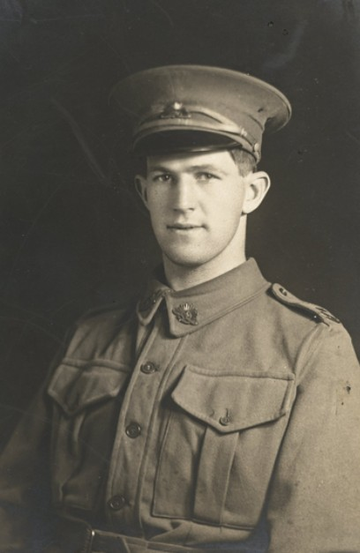
Thornton Gainsborough CLARKE
Eyes blue, Hair black, Complexion dark
Thornton Gainsborough “Tom” Clarke – “A true son; a good sport; a brave soldier!”
Can you help us identify Tom?
Thornton Gainsborough “Tom” Clarke’s body was never found after the Battle of Fromelles and there are no records of his burial.
A mass grave was found in 2008 at Fromelles, a grave the Germans dug for 250 Australian soldiers they recovered after the battle. As of 2024, 180 of these soldiers have been able to be identified via DNA testing.
Tom may be among these remaining 70 unidentified men. There is still a chance to identify him — but we need help. We welcome all branches of his family to come forward to donate DNA to help with his identification, especially those especially from the Clarke or Cooke family lines.
See the DNA box at the end of the story for what we do know about his family.
If you know anything of contacts for Tom, please contact the Fromelles Association.
Early Life
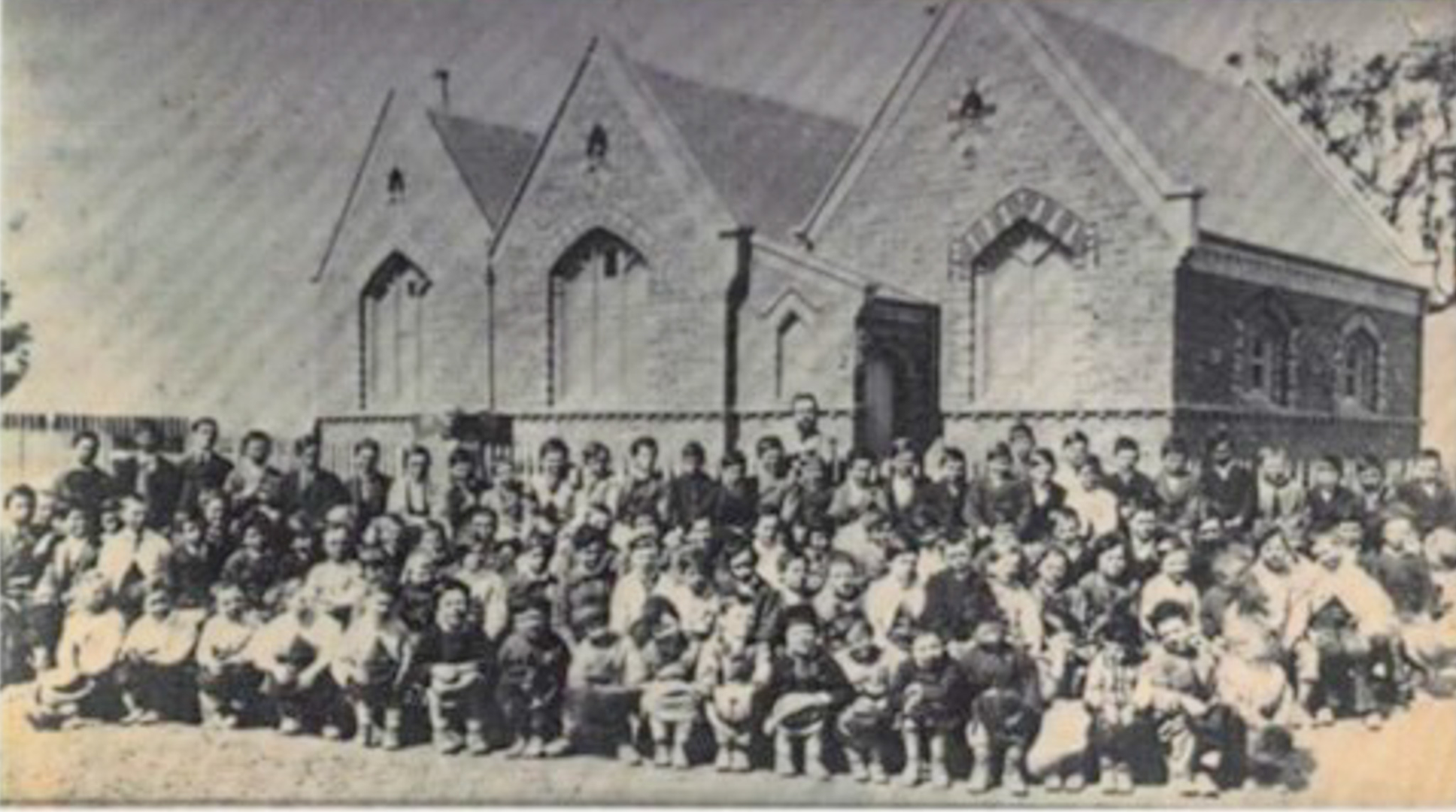
Thornton Gainsborough Clarke, known as “Tom,” was born on 27 November 1891 in Essendon, Victoria, the only son of Arthur Clarke and Rebecca Ann Clarke (née Cooke). He had three sisters Edith, Iris and Bertha. The family lived first in Essendon and later in Glenhuntly. Tom’s father Arthur was well known in newspaper circles in Melbourne, having worked for over 50 years for The Age. Tom attended the Essendon State School and after this, he trained as an electrical engineer, working with G. Weymouth Pty Ltd in Richmond.
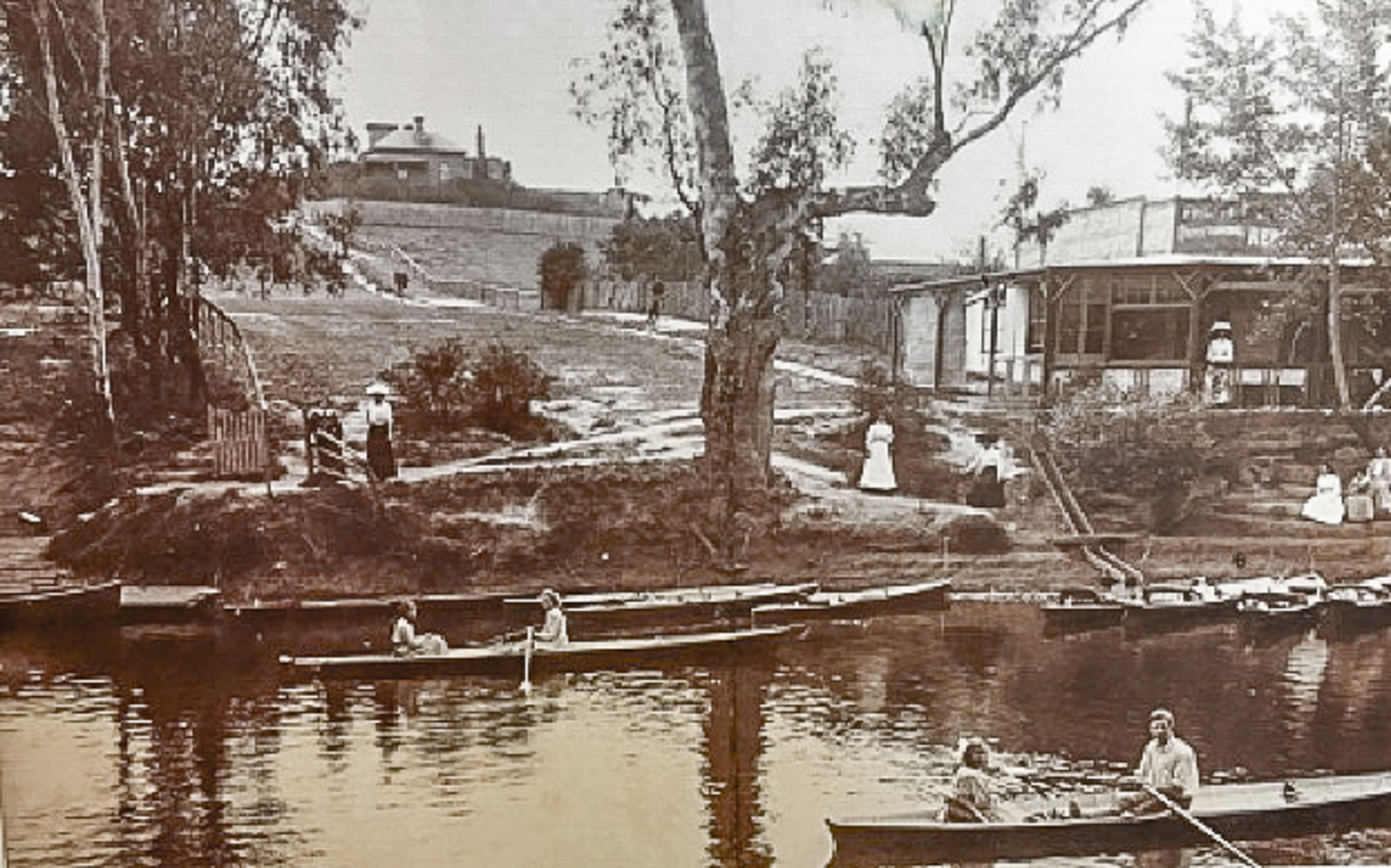
Tom enjoyed a vibrant social life. In December 1912, his parents hosted a coming-of-age celebration for him at “Rudder Grange,” Fairfield, attended by family and friends. “The young people cruised about in boats, returning at 7 o’clock for tea, which was served on the upper balcony. The table decorations were carried out in autumnal brown and gold shades... Dainty lanterns were suspended, giving the whole a most picturesque setting.”
Source - Grand Operetta, “Cinderella.” (19 December 1912). Punch (Melbourne, Vic.: 1900–1918; 1925), p. 43. http://nla.gov.au/nla.news-article175804984
Tom also had an impressive sporting career as a footballer. After an early stint with Mount Lyell, he joined Fitzroy Football Club in 1911, playing four matches in the VFL. He then transferred to the Essendon Association Football Club (VFA), where he became one of Victoria’s most admired players. Between 1910 and 1915, he played 88 games and kicked 218 goals and was the VFA’s leading goalkicker in 1913 and 1914.
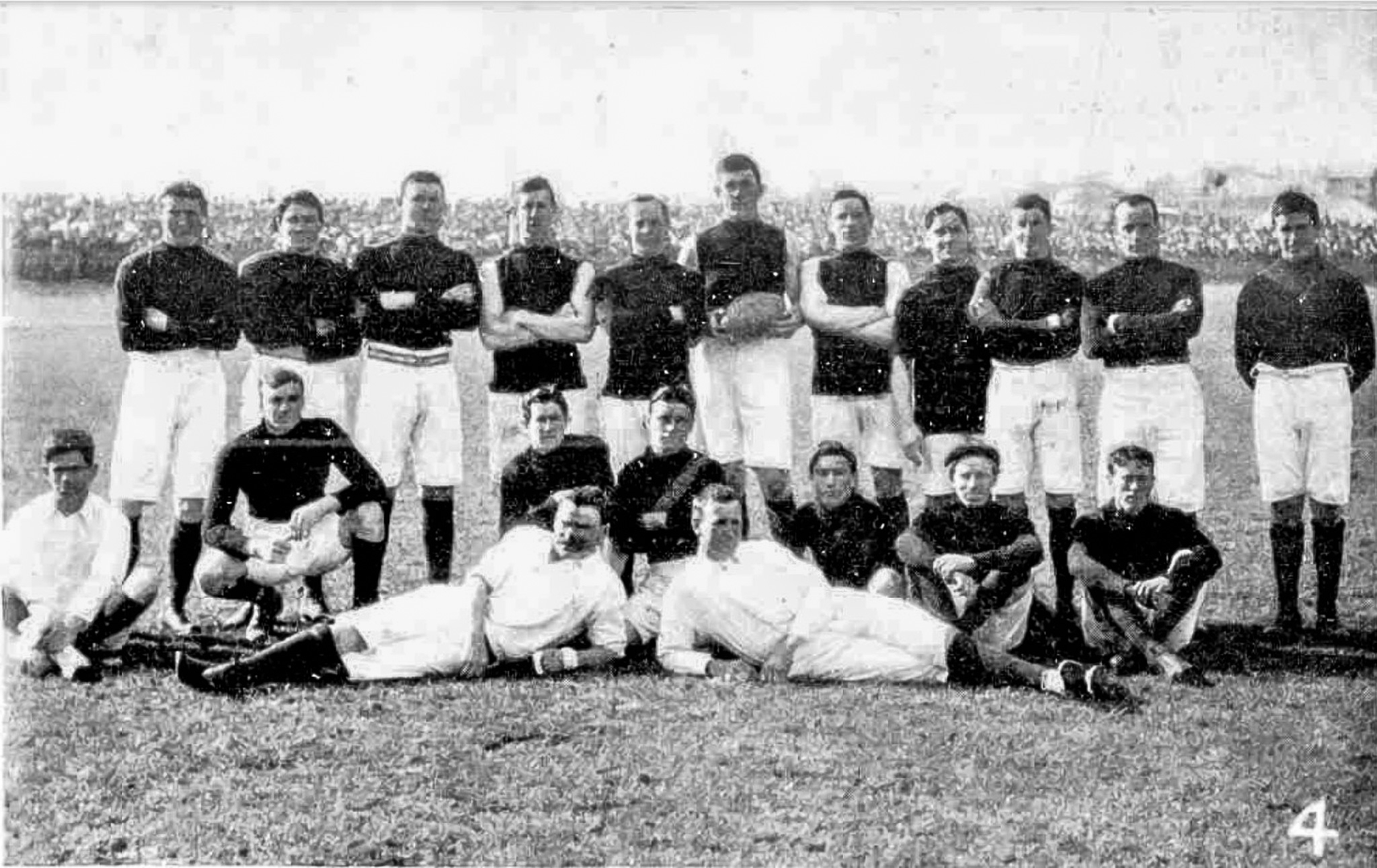
(Tom believed to be centre back row, he was 6 feet tall in his boots)
In June 1915, Tom married Annie Muriel Walker. The couple settled in Preston, naming their home on Cramer Street “Athelstone”. Their only son, Thornton Vernon Clarke, was born on 4 March 1916 — while his father was already serving overseas with the AIF.
Off to War - Gallipoli and Fromelles
Tom was at the height of his football career when war broke out in 1914 - a champion goalkicker and admired leader both on and off the field. Known to Essendon fans simply as “Tom,” he was regarded as one of the Association’s finest forwards. By mid-1915, like many of his sporting peers, he answered the call to serve. He enlisted in Melbourne on 7 July 1915 and was assigned to the 8th Battalion, 9th Reinforcement. After a short period of military training, he left Australia aboard the SS Makarini on 15 September 1915.
After landing in Egypt, he then was sent to Gallipoli in December, just before the withddrawal of the Australians. While there were no major battles when he was there, the troops were still at war and he was involved with tunnelling activities and heavy labour. He described working “running long saps into and under hills” — including one known as Lady Galway’s Tunnel — and long days carrying water bags up and down the slopes of Victoria Gully. His reflections revealed both the exhaustion and the pride of the men who endured the campaign:
“I believe the people in Melbourne had an idea [the evacuation] was to take place; but we did not know till about two days before we actually moved. All our battalion got off safe and sound. It was altogether a wonderful military movement, and the men behaved themselves at their best. It paid them to do so, for a single blunder might have meant the losing of a great many lives... I have seen some brave men since we left home, but the men who run the trawlers, barges and launches in and out each night, and never know when a shell or a rifle bullet will catch them, deserve all praise... Somehow I can’t say that I ever felt afraid of being shot.”
News of Tom continued to be of interest back home:
“The many Essendon friends of Corporal Thornton C. (‘Tom’) Clarke, Essendon’s (Association) well-known goal-kicker, will be glad to hear that he is still hale and hearty, and his present address is ‘On the Canal, Egypt.’ He played several games of football while at Lemnos, before going to the front, and was appointed captain of the 8th Battalion’s team. He says, writing on board the transport from Lemnos to Egypt:—‘I expect my captainship will extend to Egypt, and I hope to have a few good games over there.”
He arrived back in Egypt in early January. With the ‘doubling of the AIF’ as it expanded at that time from two infantry divisions to five, major reorganisations were underway. The 60th Battalion was raised in Egypt on 24 February 1916 at the 40,000-man training camp at Tel-el-Kebir, about 110 km northeast of Cairo and Tom was assigned to this new unit. Roughly half of the soldiers were Gallipoli veterans from the 8th Battalion, a predominantly Victorian unit, and the other half were fresh reinforcements from Australia. Tom was promoted to Lance Corporal and shortly thereafter to Corporal. His military training continued, necessary to build the bonds necessary for the fighting to come. In mid-March, the 60th were inspected by H.R.H the Prince of Wales.
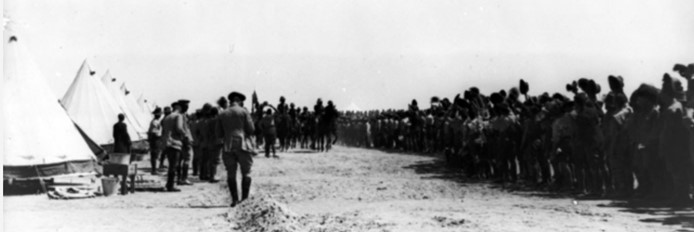
After a month of training at the large camp at Tel-el-Kebir, they had a two+ day, 50 km march in thermometer-bursting heat across the Egyptian sands from Tel-el-Kebir to Ferry Post, near the Suez Canal. Prior to marching, only ½ pint of water per bottle was available.
Source- AWM4 23/15/1 15th Brigade War Diaries Feb-Mar 1916 p 6.
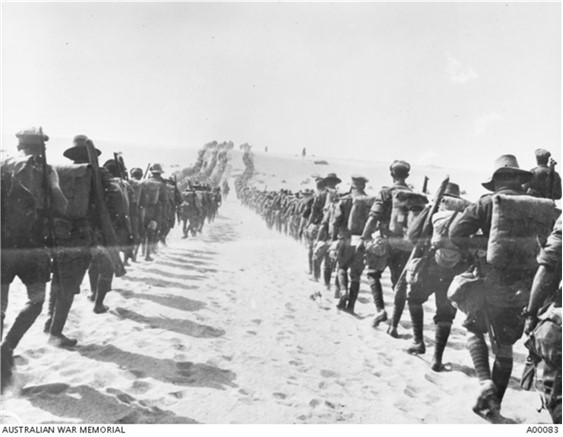
They remained at Ferry Post until 1 June continuing their training and guarding the Suez Canal from any potential threats posed by the Ottoman Army. Their time in Egypt was not all work, however. A 5th Division Sports Championship was held on 14 June, which was won by the 60th’s 15th brigade. While there is no specific mention of Tom, he surely was a key participant. Three days later they received orders to begin the move to the Western Front and boarded trains to Alexandria. The majority of the battalion, 30 officers and 948 other ranks, embarked in Alexandria on the transport ship Kinfauns Castle on 18 June 1916.
After a stop in Malta, they disembarked in Marseilles on 29 June and were immediately put on trains, arriving in Steenbecque in northern France, 35 km from Fleurbaix on 2 July. This area near Fleurbaix was known as the “Nursery Sector” – a supposedly relatively quiet area where inexperienced Allied troops could learn the harsh realities of Western Front trench warfare against the Germans. But the quiet times and the training period did not last long. On the 7th they began their move to the front, arriving in Sailly on the 9th. Now just a few kilometres from the front, their training continued, although with a higher intensity, I’m sure. The move to Fleurbaix continued and 60th were into the trenches for the first time on 14 July.
The Battle of Fromelles
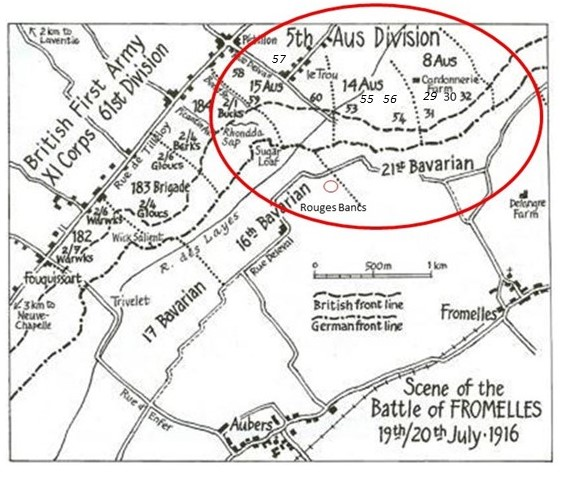
The battle plan had the 15th Brigade located just to the left of the British Army. The 59th and 60th Battalions were to be the lead units for this area of the attack, with the 58th and 57th as the ‘third and fourth’ battalions, in reserve. The main objective for the 15th Brigade was to take the trenches to the left of a heavily armed, elevated German defensive position, the ‘Sugar Loaf’, which dominated the front lines. If the Sugar Loaf could not be taken, the other battalions would be subjected to murderous enfilade fire from the machine-guns and counterattacks from that direction.
As they advanced, they were to link up with the 59th and 53rd Battalions and the British on their flanks. The 60th Battalion faced an especially difficult position in the assault, right across from the ‘Sugar Loaf’. On 17 July, they were in position for the major attack against the Sugar Loaf position, but it was postponed due to unfavourable weather. There was a gas alarm, but luckily it was just that. Two days later, Zero Hour for advancing from their front-line trenches was to be 5.45 PM, but the Germans knew this attack was coming and were well-prepared. They opened a massive artillery bombardment on the Australians at 5.15 PM, causing chaos and many casualties.
A fellow soldier, Private Bill Boyce (3022, 58th), summed the situation up well:
“What have I let myself in for?”
The Aussies went over the parapet at 5:45 PM in four waves at 5 minute intervals, but then lay down to wait for the support bombardment to end at 6.00 PM. A & B Companies were in the first two waves, Tom’s C Company & D Company in the next two. Casualties were immediate and heavy. The 15th Brigade War Diaries captures the intensity of the early part of the attack – “they were enfiladed by machine guns in the Sugar Loaf and melted away.”

The British 184th Brigade just to the right of the 59th met with the same resistance, but at 8.00 PM they got orders that no further attacks would take place that night. However, the salient between the troops limited communications, leaving the Australians to continue without British support from their now exposed right flank. It was reported that some got to within 90 yards of the enemy trenches. One soldier said he “believed some few of the battalion entered enemy trenches and that during the night a few stragglers, wounded and unwounded, returned to our trenches.”
Source - AWM4 23/77/6, 60th Battalion War Diaries, July 1916, page 3.
Fighting continued through the night. With known high casualties in the 60th, they were relieved by the 57th Battalion at 7.00 AM. Roll call was held at 9.30 AM. In the ‘Official History of the War’, C.W. Bean said:
“of the 60th Battalion, which had gone into the fight with 887 men, only one officer and 106 answered the call.”
To get some perspective of the battle, when Charles Bean, Australia’s official war historian, attended the battlefield two and half years later, he observed a large quantity of bones, torn uniforms and Australian kit still on the battlefield. The final impact of the battle on the 60th was that 395 soldiers were killed or died of wounds, of which 315 were not able to be identified.
Tom’s Fate
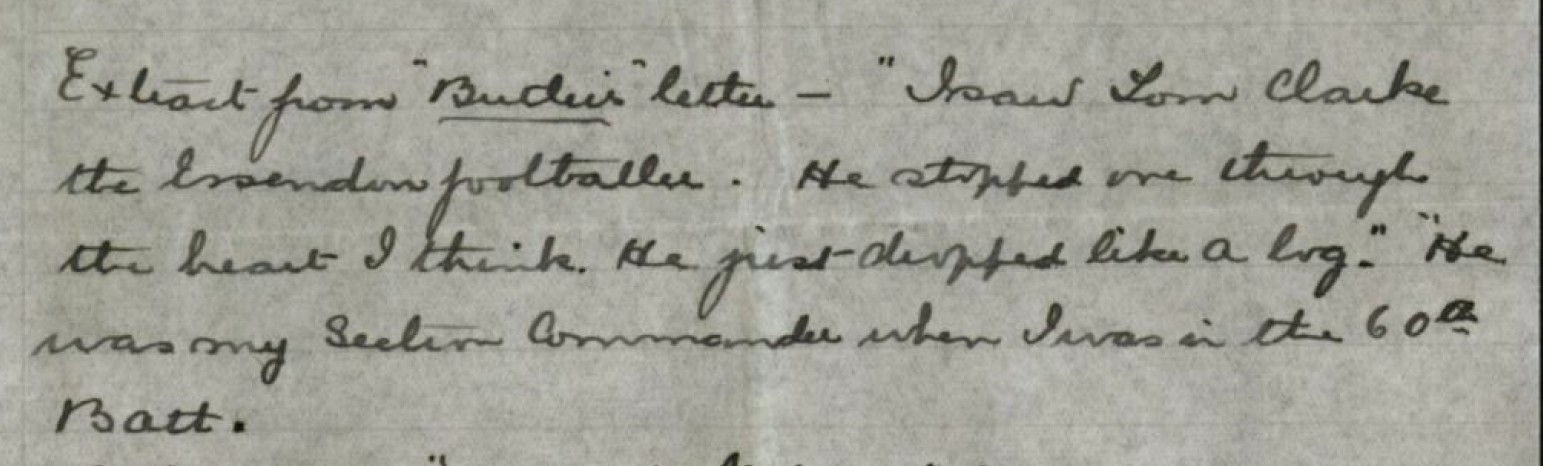
Among those who fell that night was Corporal Thornton Gainsborough “Tom” Clarke. It took months to check hospital and POW records and gather witness statements. While the details vary a bit among the witnesses (understandable), it is clear Tom was killed in the early stages of the attack. Tom’s brother-in-law, Captain V.E. Walker, collected a number of letters from Tom’s mates about Tom’s fate:
“I saw Tom Clarke, the Essendon footballer. He stopped one through the heart, I think. He just dropped like a log. He was my section commander when I was in the 60th Battalion.”
Private Peter McKenna (2640) said - “He passed Clarke hit through the neck dead.”
Private L. Baker (3379, 57th Bn):
“I was told that Corporal T.G Clarke was shot through the temples and killed outright at Fromelles.”
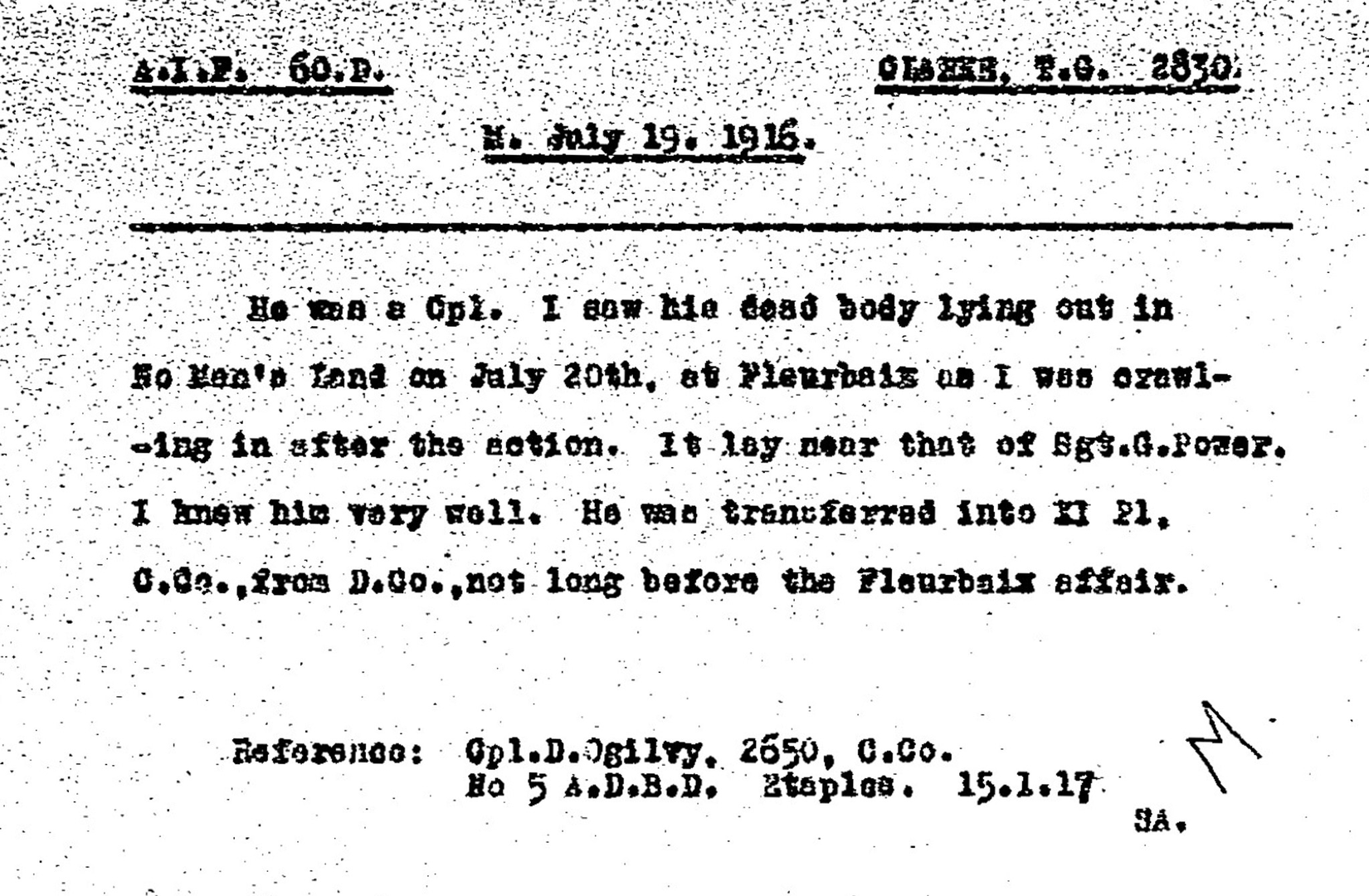
Corporal D. Ogilvy (2650) reported that he saw Tom’s body in No-Man’s-Land on the 20th. Two Red Cross reports about Sergeant G. Power said that he had died about 60-100 yards from the Australian trenches, so this could also be where Tom was killed.
Source - Australian Red Cross Wounded and Missing Files – 43A Sergeant George Power, p4, p5
After the Battle
In the weeks following the battle, hundreds of families back in Australia waited anxiously for news. For Annie Clarke, newly married and caring for her infant son, the report was just that Tom was “missing”. The news was met with sorrow in Melbourne. The Essendon Gazette carried word in September 1916 that he was missing, describing him as:
“Champion goal-kicker of the Association for the last two seasons, playing for Essendon. He left for the front exactly twelve months ago, and was in the evacuation of Gallipoli.”
With the agonizing uncertainty of no information available to the family, Tom’s parents, wrote to Miss Vera Deakin, founder of the Australian Red Cross Wounded and Missing Enquiry Bureau in London on 16 October. As Arthur had known her father through his long career at The Age newspaper, he made a deeply personal appeal:
“Both Mrs Clarke and myself, having known your father for many years in the old days, and having had association with him in long connection with “The Age”, embolden me to write to you…My only son, Thornton Gainsborough Clarke, left Melbourne in the A.I.F. on 15th September 1915. He was in Gallipoli for some weeks and was in the evacuation… The last letter we received from him was written on board a transport at Marseilles… We afterwards received a Service Card bearing a stamp to say the date 19.7.16, but it had no particulars on it. No further news has come to hand.”
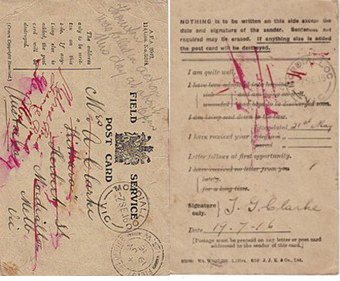
Comment written on front: “Thornton was killed in action this day at about 6pm.” Annie was often seen weeping over these postcards
Arthur closed with characteristic courtesy and restrained grief, “Thanking you beforehand for any trouble that you may take in this matter, and hoping that your father’s indifferent health will be much improved ere this reaches you.” The Red Cross Bureau responded with compassion and professionalism, reassuring the family that enquiries were ongoing:
“We are making every effort to obtain reliable information, and should any further word be received, it will be forwarded immediately.”
Miss Deakin also wrote to the family, “I trust you and Mrs Clarke will be upborne with the knowledge that he paid the supreme & glorious” and “Also with the knowledge that he was spared any suffering.”
Source: NAA, B2455, Clarke, T G, p. 45
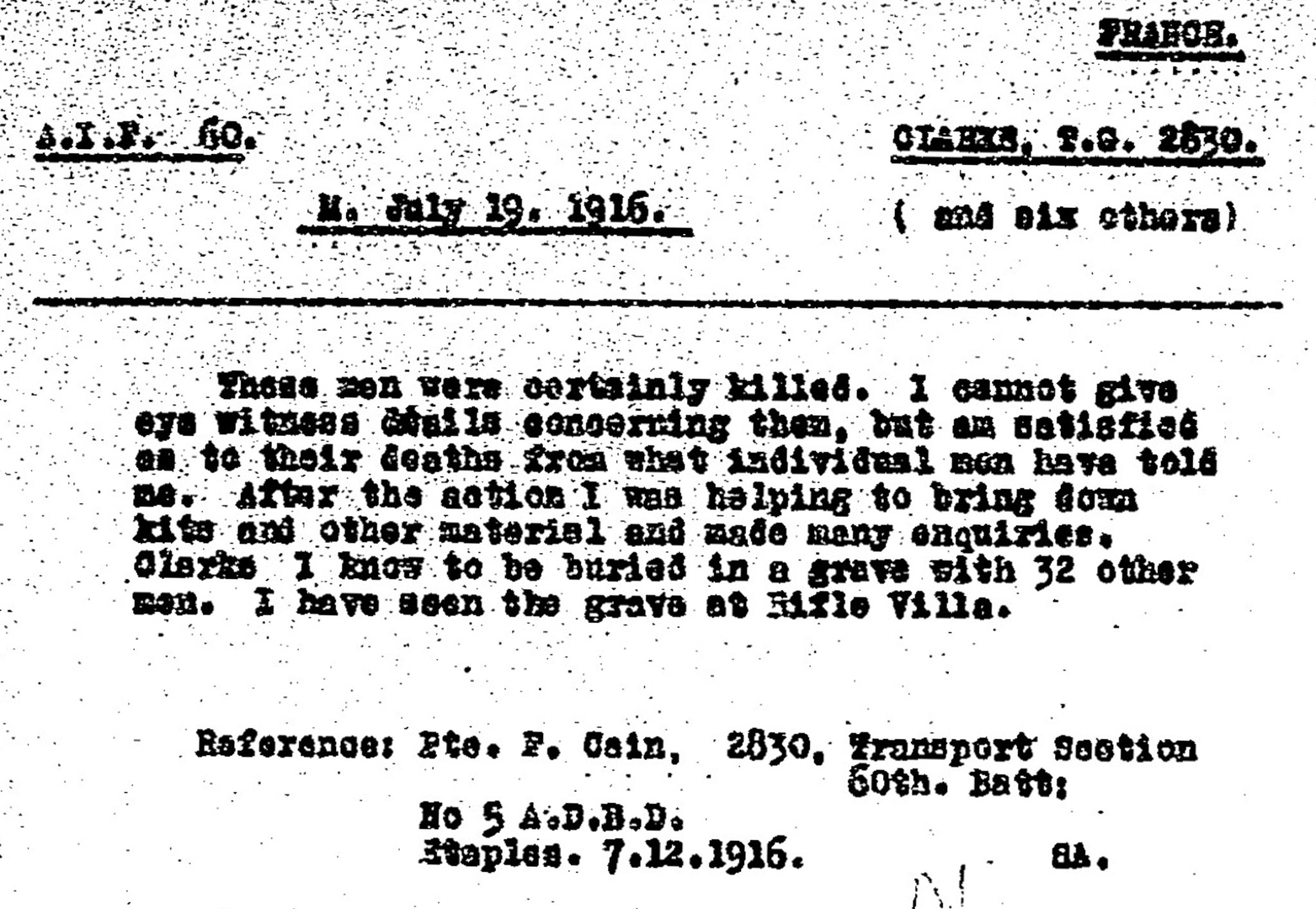
As above, the findings were not encouraging. However, rather than being missing, Private Thomas Caine (2383) reported that Tom had been buried with 32 other men at Rifle Villa, an aid post at Rue du Bois, suggesting he had not been left in No-Man’s-Land as in other reports. However, there are no records to confirm this…he was missing.
A Court of Enquiry held in the field on 4 August 1917 concluded that Corporal Thornton Gainsborough Clarke had been killed in action on 19 July 1916. He was awarded the 1914-15 Star Medal, the British War Medal, the Victory medal and a Memorial Plaque and a Memorial Scroll. His family placed a touching tribute three years later, remembering the son and brother they had lost:
“A true son; a good sport; a brave soldier!”
In 1934, his father’s obituary reflected the enduring pride and loss felt by the Clarke family:
“Mr. Arthur Clarke, of Parkdale, and formerly of Essendon, who for over half a century was well known in newspaper circles in Melbourne, died on Saturday. … He is survived by a widow and three daughters. His only son, Thornton, a prominent Essendon footballer, was killed in the Great War.”
Tom’s Devotion
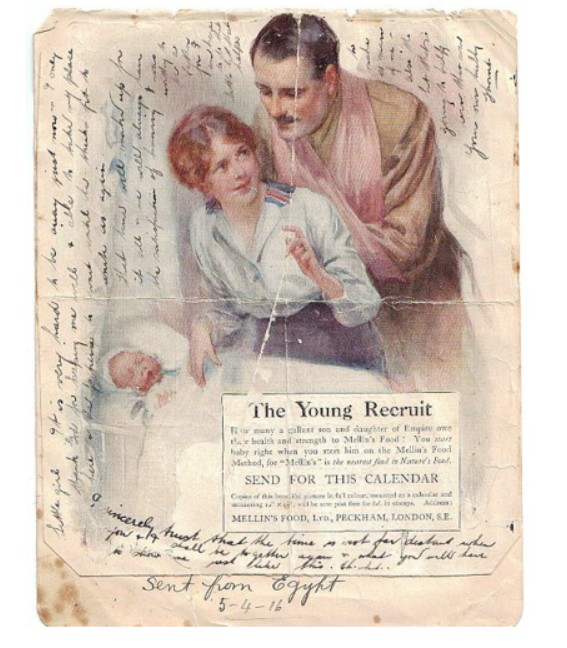
Tom had written a heartfelt letter to Annie while in Egypt in May 1916, revealing the depth of his devotion and sense of duty:
“Little girl, it is very hard to be away just now, and I only thank God for keeping me well and able to take my place here, and the patience to wait until He thinks fit to unite us again. That time will make up for it all, and we will always have the satisfaction of knowing I was worthy to be a father, for I am here to do that little bit that helps to make a man of me — and also the bit that is going to help win this war. Your own hubby, Thornt.”
I sincerely trust that the time is not far distant when you and I will be together again and what you have to show me just like this”
He never saw his son, Thornton Vernon Clarke, who was born shortly after his departure for overseas service. Their son later serve with distinction as Flight Lieutenant T. V. Clarke, DFC, during the Second World War. Annie never remarried. She lived quietly for sixty years, raising their boy and keeping Tom’s letters — treasured reminders of a husband whose words from Egypt revealed both his courage and tenderness. She died in 1976, still proud, and still carrying the memory of the man she had lost at Fromelles.
Tom is commemorated at:
- V.C. Corner Australian Cemetery and Memorial, Fromelles, France
- Australian War Memorial Roll of Honour (Panel 164)
- Essendon State School No. 483 Roll of Honor
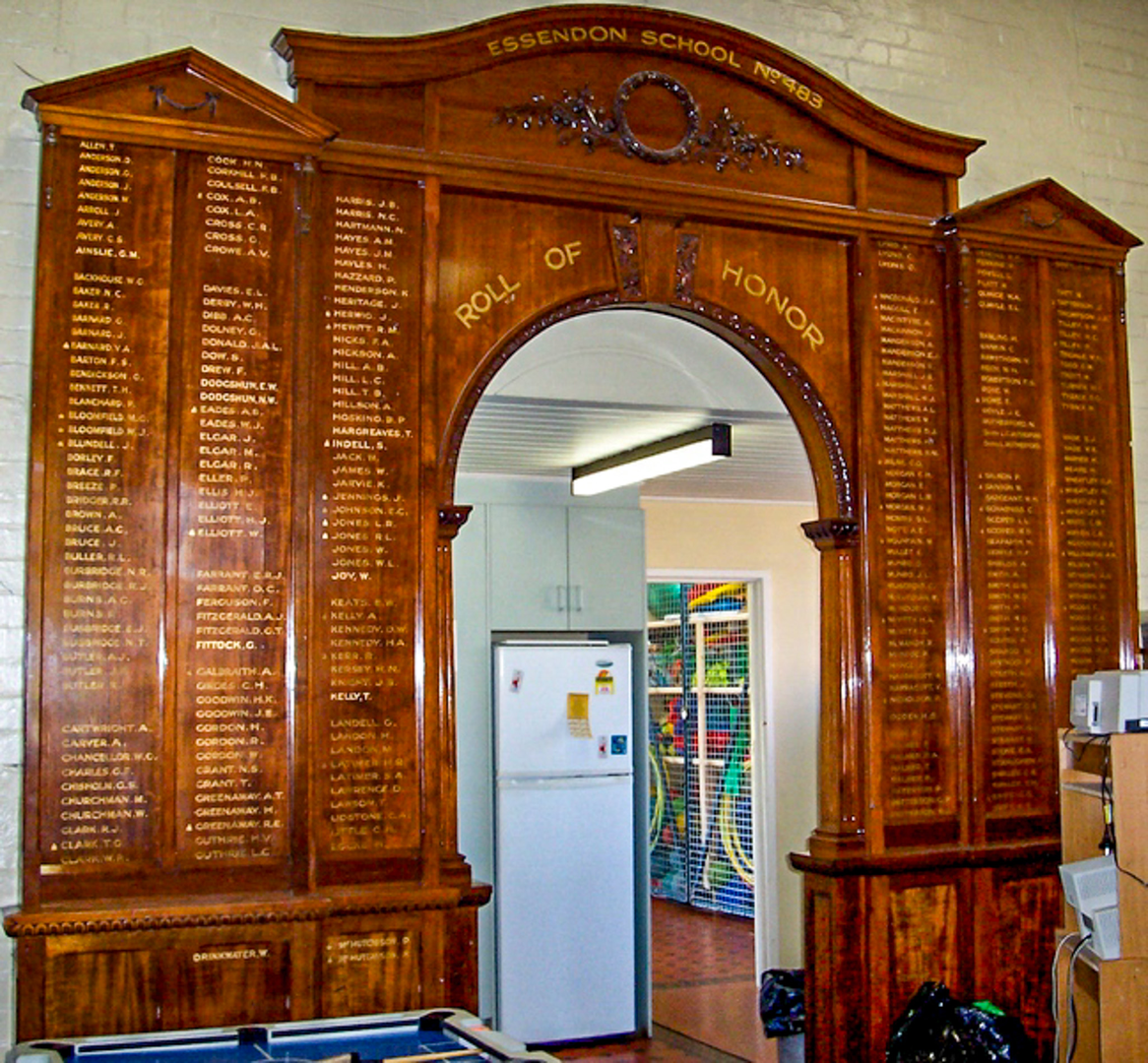
Finding Tom
Despite the report of Tom being buried at Rifle Villa, his remains were not recovered; he has no known grave. After the battle, the Germans recovered 250 Australian soldiers and placed them in a burial pit at Pheasant Wood. This grave was discovered in 2008 and since then efforts have been underway to identify these soldiers by DNA testing from family members.
As of 2025, 180 of the soldiers have been identified, including two of the 315 unidentified soldiers from the 60th Battalion. We welcome all branches of Tom’s family to come forward to donate DNA to help with his identification. If you know anything of family contacts, particularly those from the Clarke or Cooke family lines, please contact the Fromelles Association.
We hope that one day Tom will be named and honoured with a known grave. Please visit Fromelles.info to follow the ongoing identification project and Tom’s story.
DNA samples are being sought for family connections to
| Soldier | Thornton Gainsborough Clarke (1891–1916) |
| Parents | Arthur Clarke (1854–1934) and Rebecca Ann Cooke (1859–1940) |
| Siblings | Edith Ada (1882–1968) m Wilkinson | ||
| Iris May (1888–1963) m Reg Dakin | |||
| Bertha Rosalind (1894–1971) |
| Grandparents | |||
| Paternal | Henry Clarke and Sarah Higget | ||
| Maternal | Edmond David Cooke (1821–1896) and Mary Ann Cay (1828–1900) |
NB Son Thornton Vernon Clarke AIF WW2. He married Rhona Ley Miles and had two sons, and three grandsons Clarke.
Links to Official Records
Seeking DNA Donors

Contacts
(Contact: carla@fromelles.info or geoffrey@fromelles.info).
(Contact: army.uwc@defence.gov.au or phone 1800 019 090).
Donations
If you are able, please contribute to the upkeep of this resource.
(Contact: bill@fromelles.info ).