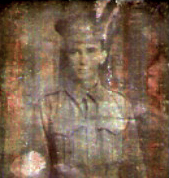
Arthur Reginald MAXWELL
Eyes grey, Hair brown, Complexion Unknown
Arthur Reginald Maxwell - A Son of Two Cities
Can you help us identify Reggie?
Arthur Reginald (Reggie) Maxwell’s body was never found after the Battle of Fromelles, and there are no records of his burial.
A mass grave was found in 2008 at Fromelles, a grave the Germans dug for 250 Australian soldiers they recovered after the battle. As of 2024, 180 of these soldiers have been able to be identified via DNA testing.
Reggie may be among these remaining 70 unidentified men. There is still a chance to identify him — but we need help. We welcome all branches of his family to come forward to donate DNA to help with his identification, especially those with roots in Maryborough and Ipswich, Queensland. His great grandparents originated in Glasgow, Hull, Yorkshire and County Caven Ireland.
See the DNA box at the end of the story for what we do know about his family.
If you know anything of contacts for Reggie, please contact the Fromelles Association.
The Memorial Tree
There is a long, sweeping avenue in Brisbane’s Yeronga Memorial Park lined with majestic Queensland shade trees. It was planted by the then Stephens Shire community as a lasting expression of public gratitude to honour the 96 local lives lost in various battle zones in World War 1. For the most part the atmosphere along this cool, shaded avenue is one of peace, serenity and contemplation.
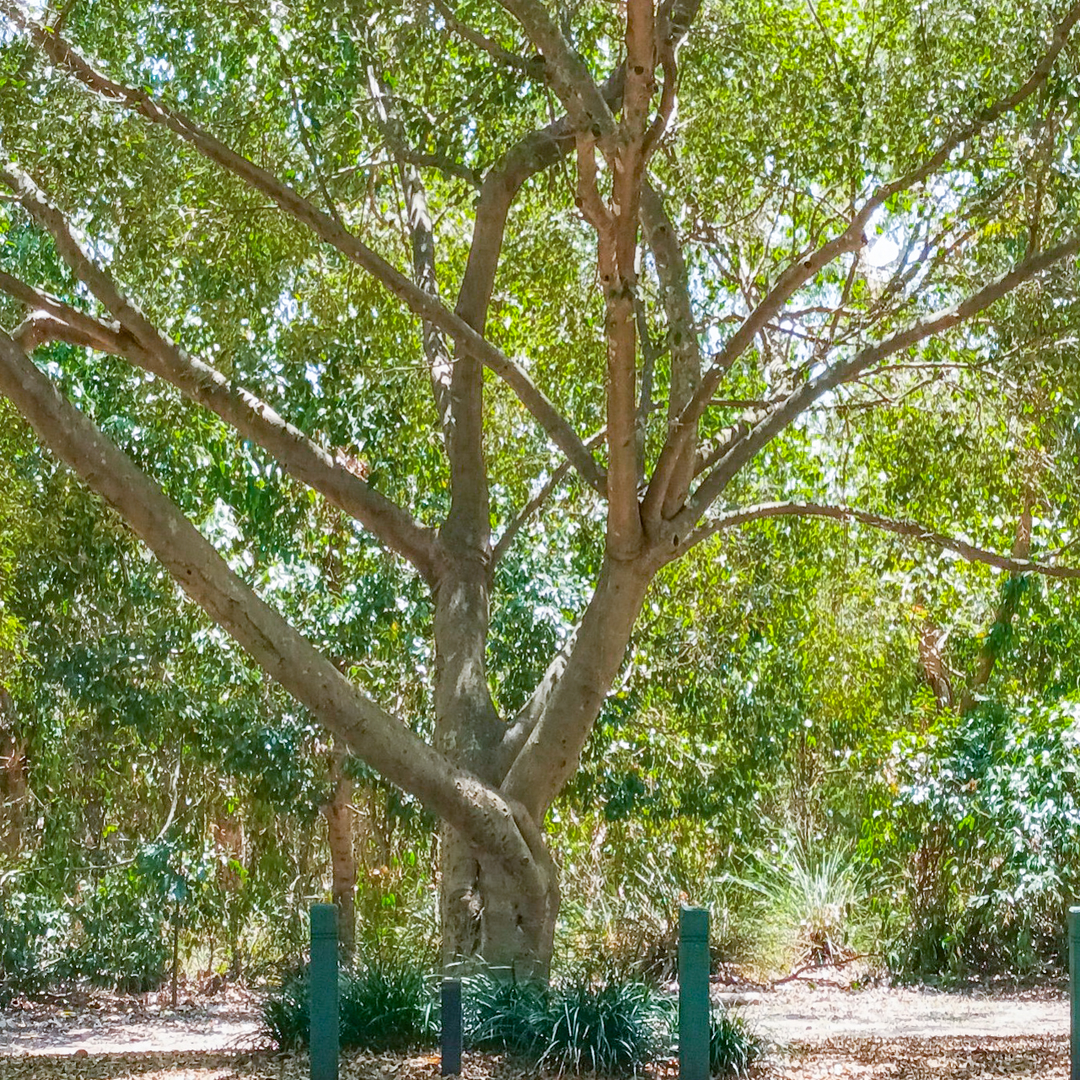
(original tree planted in 1918)
Not so under the tree dedicated to Private Arthur Reginald Maxwell, killed in action at Fromelles July 20, 1916. His tree overlooks the gate of the local primary school, and for generation after generation, it has silently witnessed scenes of lively activity, with the daily buzz, laughter, and sometimes tears of small children at lessons and at play.
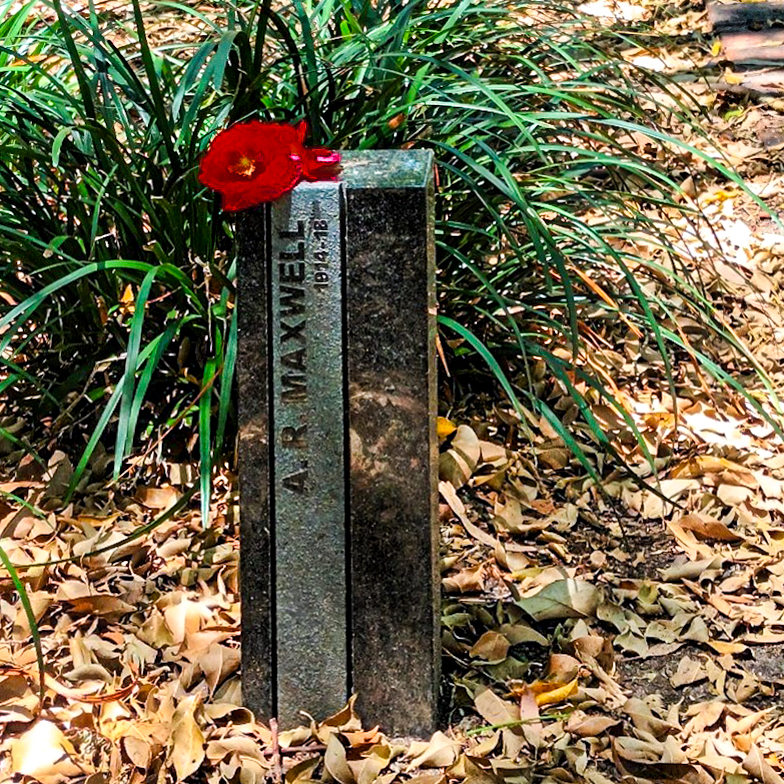
By night, however, the hush that descends under those spreading branches seems to invite the story of his young life to be re-told and remembered.
Early Life
Arthur Reginald Maxwell (known as Reggie) was born on 14 August 1895, the third of five children and the second son of Arthur Frederick Maxwell and Isabel Bain, who were married in 1891. Like both their parents, Reggie and his siblings were born in Maryborough, Queensland:
- Frances Anne Isabel Maxwell (1892 – 1966)
- Charles Herbert Garfield Maxwell (1893 – 1942) Stoker, Royal Australian Navy
- Arthur Reginald Maxwell (1895 – 1916) Private, 30th Battalion, killed at Fromelles
- Victor Alexander Maxwell (1897 – 1971) Private, 49th Battalion, wounded and gassed in France, returned to Australia 1919
- Ida Alma Maxwell (1899 – 2001)
Arthur (senior) was a railway employee in Maryborough and also spent five years with the local militia, known as the Wide Bay Regiment. The family lived in Walker Street, with young Reggie going to school at the Central State School nearby – the oldest state school in the town (1862) and the same school his father attended a generation earlier.

In 1909 the family left Maryborough and moved to Clara street, Fairfield, in Brisbane. By this time Reggie had left school and found work as an iron bedstead maker at Mr. May’s Bedstead Works at Albion. In 1915, however, life for the Maxwell family of Clara Street was to undergo a momentous change. When war broke out, all four men in the family – Arthur senior (then 44 years old), Arthur Reginald (then 19 and underage), Charles Herbert Garfield (already a stoker in the Navy), and later, younger son Victor - answered the call to arms to serve their country. This left only two to maintain the Maxwell household – Isabel and her youngest daughter Ida.
Off to War
Reggie was one month short of his 20th birthday when he enlisted on 19 July 1915, not quite two weeks after his father had enlisted. Reggie was a small man, only 5 ft 2 ins tall and weighing just 118 lbs, but what he lacked in stature, he made up for in determination to serve. As he was under 21, he needed his parents’ permission to enlist. Below is the official consent form both his parents willingly signed.
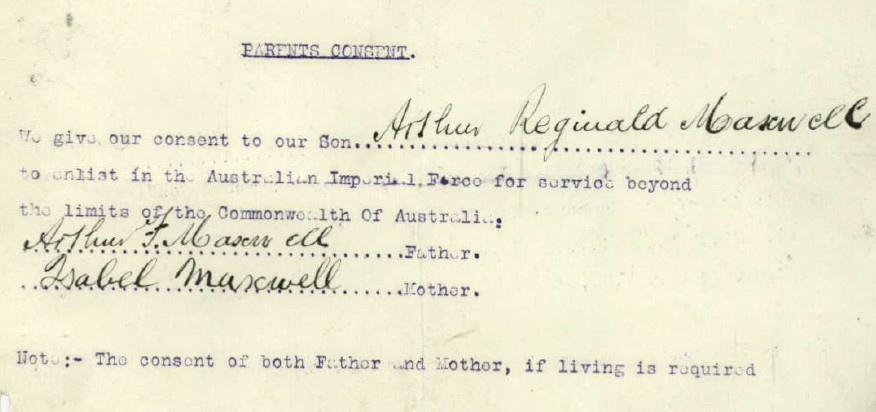
Now, as newly minted Private Number 3557, he was assigned to the 11th Reinforcements of the 9th Infantry Battalion. After a short period of military training, he embarked from Brisbane on 5 October 1915 aboard HMAT A69 Warilda, bound for Egypt. With a reorganization underway there was a large number of recruits arriving in Egypt. Reggie was allotted to the 49th Infantry Battalion on 20 February 1916 and then a month later he was transferred again, but this time to join his father in the 30th Battalion, A Company.
They were at the Ferry Post camp guarding the Nile at the time. His time with his father was short, however, as his father injured his spine only a few days after Reggie had joined the 30th. Arthur was later returned to Australia. After a few months in the heat and the sand, the 30th left Egypt for the Western Front on 16 June 1916 on HMAT Hororata, arriving in Marseilles on 23 June. After landing, they were immediately embarked on a 60+ hour train ride to Hazebrouck, 30 km from Fleurbaix. On 29 June he was at the camp in Morbecque. Private F.R. Sharp (2154) wrote home about the trip:
“From the time we left Marseilles until we reached our destination was nothing but one long stretch of farms and the scenery was magnificent.” “France is a country worth fighting for.”
The area near Fleurbaix was known as the “Nursery Sector” – a supposedly relatively quiet area where inexperienced Allied troops could learn the harsh realities of Western Front trench warfare against the Germans. But the quiet times and the training period did not last long. Training now included the use of gas masks and they also would have heard the heavy artillery from the front lines. On 8 July they were headed to the front lines, first to Estaires, 20 km and the next day 11 km to Erquinghem, where they were billeted at Jesus Farm. Reggie got his first ‘taste’ of being in the front lines at 9.00 PM on 10 July.
Battle of Fromelles

The overall plan at Fromelles was to use brigades from the Australian Fifth Division to conduct a diversionary assault on the German trenches. The 30th Battalion’s role was to provide support for the attacking 31st and 32nd Battalions by digging trenches and providing carrying parties for supplies and ammunition. They would be called in as reserves if needed for the fighting. The attack was initially planned for 17 July, but it was postponed due to the weather. In his final letter home Charles Albert Woods (2194 30th Bn) summed up the situation he found himself in:
“Since writing last we have shifted from ‘somewhere in France’ to ‘somewhere else in France,’ and are now in the trenches. Whilst writing this the shells are whistling over our heads a ‘treat.’ We are all provided with steel helmets to lessen the danger of being hit in the head with shrapnel, and also with gas helmets, to put on while a gas attack is being made on us.”
Then, on 19 July, Reggie and the 29 officers and 927 other ranks of the 30th Battalion were into battle. Zero Hour for the Australian advance from their front-line trenches was to be 5.45 PM, but the Germans knew this attack was coming and were well-prepared. They opened a massive artillery bombardment on the Australians at 5.15 PM, causing chaos and many casualties. The 32nd’s charge over the parapet began at 5.53 PM and the 31st’s at 5.58 PM. There were machine gun emplacements to their left and directly ahead at Delrangre Farm and there was heavy artillery fire in No-Man’s-Land.
While not in the initial rush, the 30th was close behind digging trenches, carrying ammunition and repairing communication trenches, all while under fire. While suffering significant losses, the initial assaults were successful and by 6.30 PM the Aussies were in control of the German’s 1st line system (Trench B in the diagram below), which was described as “practically a ditch with from 1 to 2 feet of mud and slush at the bottom”.
Source - AWM4 23/49/12, 32nd Battalion War Diaries, July 1916, page 11

While their role was to be in support, commanders on scene made the decision to use the 30th as much-needed fighting reinforcements. A necessary act, but it had consequences as it interfered with the planned flow of supplies. B and C Companies were the first to be brought in.
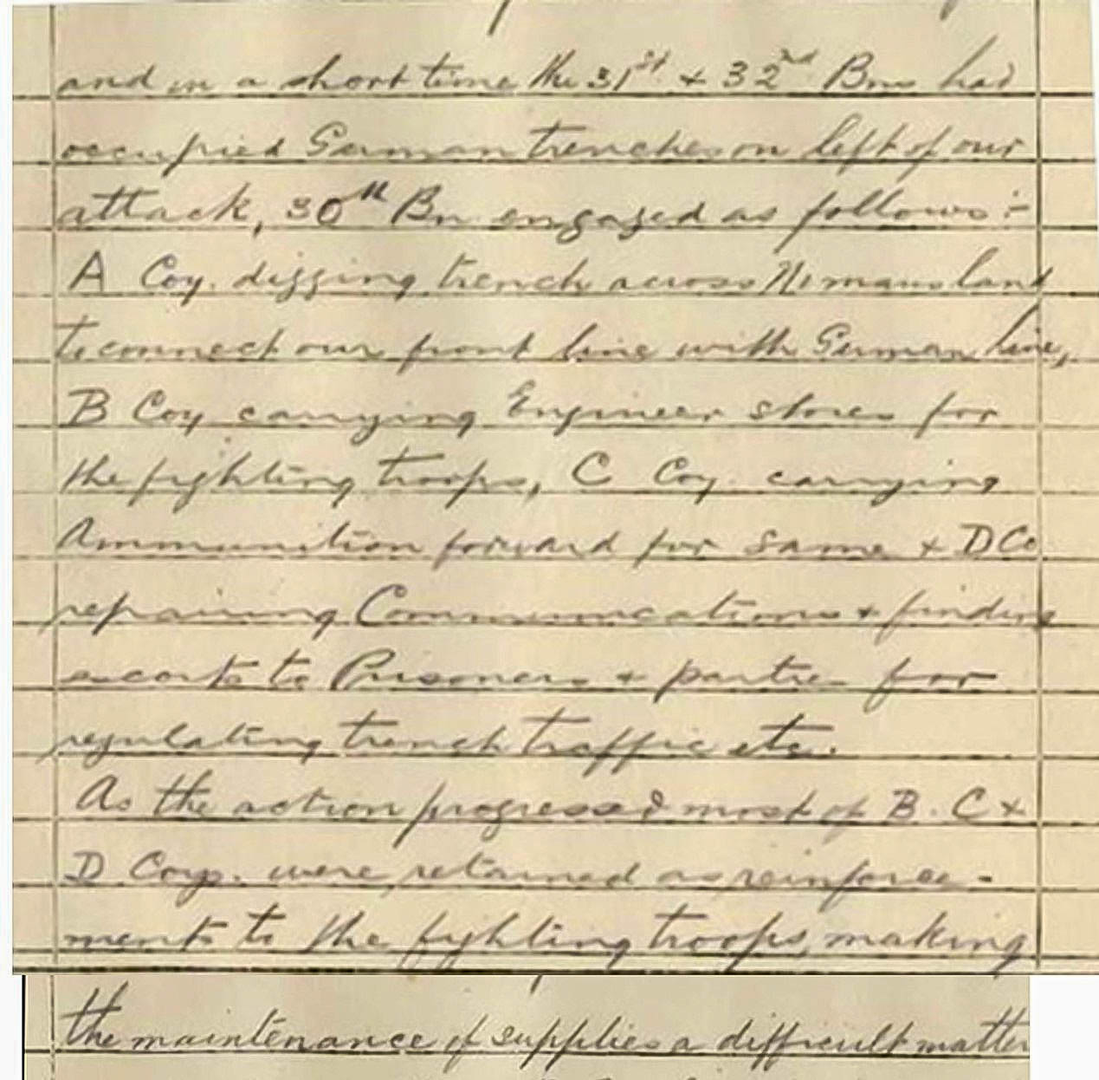
By 8.30 PM the Australians’ left flank had come under heavy bombardment with high explosives and shrapnel. Return bombardment support was provided and they were told that “the trenches were to be held at all costs”.
Source - AWM4 23/49/12, 32nd Battalion War Diaries, July 1916, page 12
When the 30th was formally called to provide fighting support at 10.10 pm, Lieutenant-Colonel Clark of the 30th reported:
“All my men who have gone forward with ammunition have not returned. I have not even one section left.”
Fighting continued through the night. The Australians made a further charge at the main German line beyond Trench B, but they were low on grenades, there was machine-gun fire from behind from the emplacement at Delangre Farm and they were so far advanced that they were getting shelled by both sides. At 4.00 AM the Germans began an attack from the Australian’s left flank, bombing and advancing into Trench A (map).
Given the Australian advances that had been made earlier, portions of the rear Trench E had been left almost empty, which then enabled the Germans to be in a position to surround the soldiers. At 5.30 AM the Germans attacked from both flanks in force and with bombing parties. Having only a few grenades left, the only resistance the 31st could offer was with rifles:
“The enemy swarmed in and the retirement across No Mans’ Land resembled shambles, the enemy artillery and machine guns doing deadly damage.”
By 10.00 AM on the 20th, the Germans had repelled the Australian attack and the 30th Battalion were pulled out of the trenches. The nature of this battle was summed up by Private Jim Cleworth (784) from the 29th:
"The novelty of being a soldier wore off in about five seconds, it was like a bloody butcher's shop."
Initial figures of the impact of the battle on the 30th were 54 killed, 230 wounded and 68 missing, which included Reggie. To get some perspective of the battle, when Charles Bean, Australia’s official war historian, attended the battlefield two and half years later, he observed a large quantity of bones, torn uniforms and Australian kit still on the battlefield. The ultimate total was that 125 soldiers of the 30th Battalion were either killed or died from wounds and of this total, 80 were missing/unidentified.
Reggie’s Fate
News of the battle reached the local papers at the end of August, with Reggie reported as ‘missing’. Presumably the family was notified directly. However, given the nature of the battle and the level of casualties, hard news about the missing took a much longer time to sort out as the Army and the Red Cross worked their way through battalion records, hospitals, witnesses and POW information. Even with this, there was no resolution of what happened to Reggie and even what was available was conflicting.
Two sources were, at least, potentially hopeful news – Captain Jim Chapman:
“Last seen in No Man’s Land. Further enquiries are being made”
and F.W. Hughes (1567):
“…official confirmation that he is a Prisoner of War in Germany.”
But the third source was from George William Clarke (4462) via Lieutenant Douglas Vincent and this was that Reggie had been killed by a shell.

Despite months of the family being worn down by the protracted waiting and hoping back home, no further trace was found. The bitter truth was finally announced by a Court of Enquiry held on 23 July 1917:
“Previously reported missing now pronounced by Court of Enquiry KILLED IN ACTION”
After the Battle
Reports in Brisbane newspapers soon made the sad news all too real for the distressed family:
“Mr. A. F. Maxwell, of Fairfield, has received news that his second son, Arthur Reginald, who was reported as missing since July 20, 1916, was killed in action at Armentieres. The sad news was conveyed to him by Col. Chaplain Dr Merrington.”
On the same day, Arthur’s family echoed this announcement with a quiet, brief family acknowledgement of their own in The Telegraph, Brisbane.
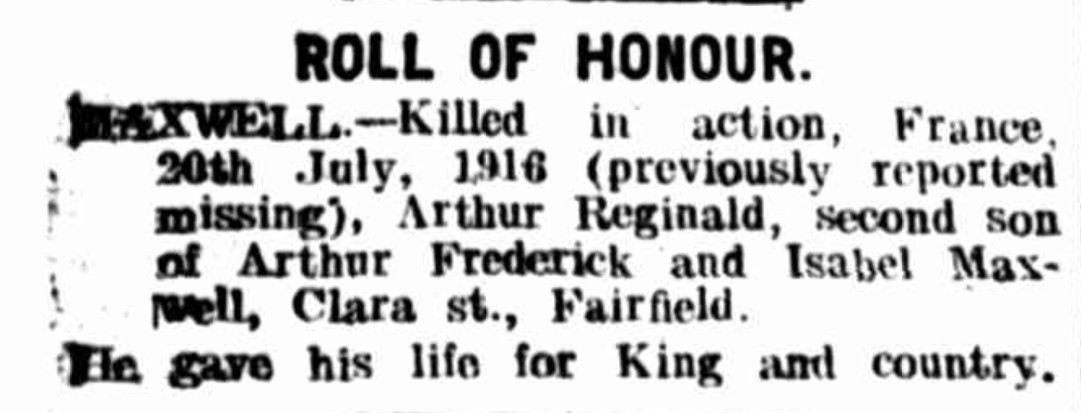
Reggie was awarded the 1914-15 Star Medal, the British War Medal, the Victory Medal, a Memorial Plaque and a Memorial Scroll.
Family at War
All four men in the Maxwell family served their country willingly and loyally.
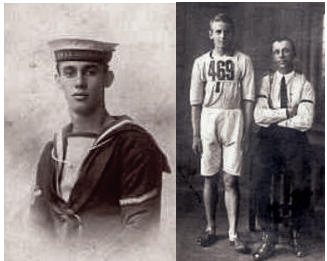
Father – Lance Corporal Arthur Frederick Maxwell (1269)
Reggie’s father, Arthur, who was 44 years old when he had enlisted just a few days before Reggie, was assigned to the newly formed 30th Battalion. Arthur arrived in Suez, Egypt on 11 December 1915 and went to the large camp at Tel-el-Kebir. With his maturity and some previous military experience, Arthur was appointed to Lance Corporal immediately after he arrived. While guarding the Nile at Ferry Post and just after Reggie was assigned to join him in the 30th, Arthur developed symptoms of paresis (weakness and loss of muscle movement in his arms).
He was transferred to the 15th Field Ambulance then sent to hospital in Heliopolis, where spinal nerve damage was confirmed. He was invalided home 24 June 1916, not having made it to active service in France. He was officially discharged on 23 August, a month after Reggie had been killed at Fromelles.
Brother - Stoker Charles Herbert Maxwell
Reggie’s elder brother Charles Herbert Maxwell (known as Garf ) was already a stoker in the Royan Australian Navy when WW1 broke out, having joined the Navy on 30 September 1912. He served aboard HMAS Cerberus, HMAS Encounter, and HMAS Australia and saw service in New Guinea and across the Pacific during the early stages of the war before he was discharged in 1919. He returned to Brisbane and worked as an engine driver until he died in 1942.
Brother – Private Victor Alexander Maxwell
Younger brother Victor Alexander Maxwell enlisted on 11 June 1917, also at the age of 19 years and 10 months. Even after Reggie’s death, his mother gave her consent for him to join. Victor served in France, in the 49th Battalion. After he was gassed in May 1918,he spent months in hospital until he was invalided to the UK in September. He ended his service and returned home to Australia on the Euripides on 3 March 1919 to resume his job with the Queensland railways, working as a locomotive fireman and driver across Cairns, Gympie, and Ipswich.
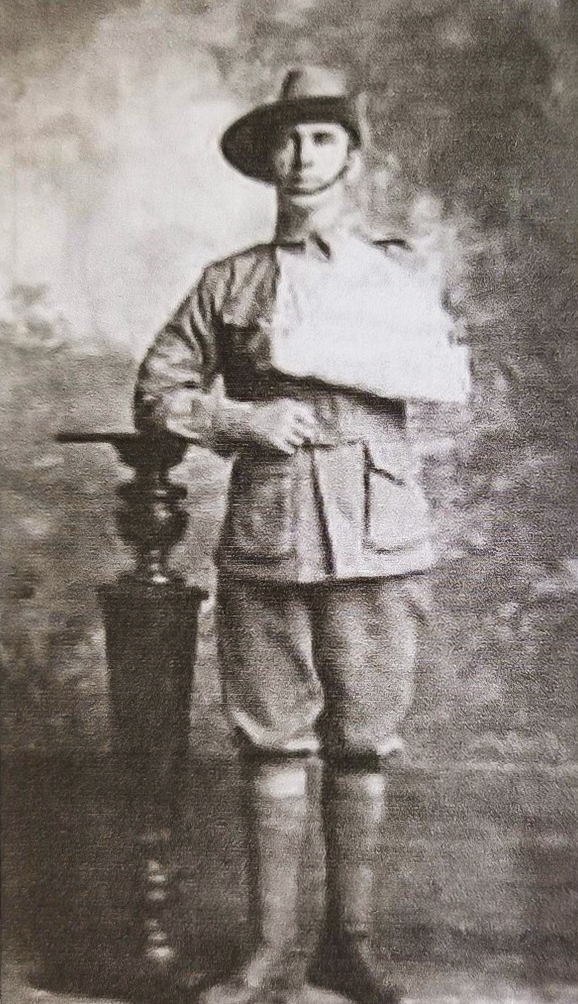
He married Violet Muriel Richards in 1933 and lived a long life until his passing at 74. The Maxwell family exemplified the selfless service and sacrifice of so many Australian families. There is only one damaged photograph left to show what Arthur Reginald looked like, but he will indeed be remembered.
Private Arthur Reginald Maxwell, remembered
Arthur’s body was never identified, and he has no known grave. He is commemorated on the Panel 2 at V.C. Corner Australian Cemetery Memorial Fromelles, on the Australian Memorial of Honour (Panel 117) and also by memorials closer to his home. There is a fine silky oak honour board which dominates the office wall of the Central State primary school in Maryborough. It is an exact replica of the original which was destroyed in the library fire in 1989. On it, in gold lettering, are the names of all those past pupils who served in the various war zones of WW1.

Reggie's name is there, accompanied by the names of his father and brothers. In the adjacent column are the names of the Tedford brothers, one of whom, Thomas Henry, was also killed in action at Fromelles the day before Reggie. Military ties with the past are still strong in this Heritage City. None of these are anonymous names, but a genuine roll call of valued sons of old Maryborough families; each soldier with a short biography recorded in a booklet kept close by - not just to keep their personal identities alive, but collectively to weave this era into the proud military history of the town. Individual profiles are recorded in the Maryborough Central state school Anzacs, by Jenny Elliott.
A similar commitment exists in another Queensland city, 800 km north of Maryborough. In 2012, Mackay North High School, as part of their 'Lest we Forget' history course, sent a group of students to France and gave each student the task of delivering a eulogy for a particular soldier. Reggie Maxwell was one of those chosen. And 300 km from Maryborough, but only a couple of hundred metres from Clara Street, Fairfield where Arthur used to live, his name is listed on a marble scroll in the impressive sandstone cenotaph, as well as on the Annerley Stephens Shire Council Residents Honour Board No1.

Arthur Reginald Maxwell, a son of two cities - Maryborough, where he was born and lived until he was 14, and Fairfield, where he grew to be a young man. Slight of stature but stout of heart - his is certainly a name forever linked with a wartime sacrifice that is not to be forgotten.
Finding Reggie
Reggie’s remains were not recovered, he has no known grave. After the battle, the Germans recovered 250 Australian soldiers and placed them in a burial pit at Pheasant Wood. This grave was discovered in 2008 and since then efforts have been underway to identify these soldiers by DNA testing from family members. As of 2024, 180 of the soldiers have been identified, including 26 of the 80 unidentified soldiers from the 30th Battalion.
We welcome all branches of Reggie’s family - from Maryborough and Ipswich, Queensland and from his great grandparents who originated in Glasgow, Hull, Yorkshire and County Caven Ireland - to come forward to donate DNA to help with his identification. If you know anything of family contacts, please contact the Fromelles Association. We hope that one day Reggie will be named and honoured with a known grave.
Please visit Fromelles.info to follow the ongoing identification project and Reggie’s story. We would also like to acknowledge support for this story from the Annerley Stephens History Group Inc and the Central State School principal and staff, as well as others in the area.
DNA samples are being sought for family connections to
| Soldier | Arthur Reginald Maxwell (1895 – 1916) |
| Parents | Arthur Frederick Maxwell (18 November 1870 - 10 March 1946) b. Maryborough, QLD, d. Brisbane QLD and Isabel Bain (27August 1871 – 4 November 1957) b. Maryborough, QLD, d. Brisbane QLD |
| Siblings | Frances Anne Isabel Maxwell (1892 – 1966) b. Maryborough, QLD d. Brisbane QLD, m. Norman White | ||
| Charles Herbert Garfield Maxwell (1893 – 1942) b. Howard, QLD, d. Maryborough, QLD | |||
| Victor Alexander Maxwell (1897 – 1971) b. Maryborough, QLD, d. Ipswich, QLD, m Violet Richards | |||
| Ida Alma Maxwell (1899 – 2001) b. Maryborough, QLD, d. Brisbane QLD, m Cecil Brown |
| Grandparents | |||
| Paternal | John James Maxwell (1845 – 1905) b. Brisbane, QLD, d. Petersham NSW and Anne Abel (1844-1898) | ||
| Maternal | Wiliam Edward Bain (1844-1916) b. Maryborough, QLD, d. Brisbane QLD and Elizabeth Chapman (1845-1881) b. Maryborough, QLD, d. Brisbane QLD |
Seeking DNA Donors

Contacts
(Contact: carla@fromelles.info or geoffrey@fromelles.info).
(Contact: army.uwc@defence.gov.au or phone 1800 019 090).
Donations
If you are able, please contribute to the upkeep of this resource.
(Contact: bill@fromelles.info ).