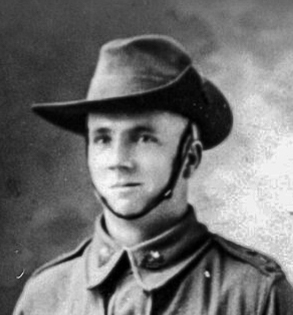
Charles MONDY
Eyes blue, Hair fair, Complexion fair
Charles Mondy — A Husband, Father and Lewis Gunner of the 54th Battalion
Can you help find Charles?
Charles Mondy’s body was never found after the Battle of Fromelles and there are no records of his burial.
A mass grave was found in 2008 at Fromelles, a grave the Germans dug for 250 Australian soldiers they recovered after the battle. As of 2024, 180 of these soldiers have been able to be identified via DNA testing.
Charles may be among these remaining unidentified men. There is still a chance to identify him - but we need help. We welcome all branches of his family to come forward to donate DNA to help with his identification. If you believe you are connected to the Mondy, Cupitt, or Colton families - particularly those with roots in Sydney, Liverpool (UK), or the Isle of Man - please contact the Fromelles Association of Australia.
See the DNA box at the end of the story for what we do know about his family. (Note – birth/marriage/death records have variations - Mondy/Monday/Mundy)
If you know anything of contacts for Charles, please contact the Fromelles Association.
Early Life
Charles Mondy was born on 4 August 1891 in Sydney, New South Wales to James Ernest Mondy and Louisa Mary Cubitt. Theirs’ was a complex family that had been shaped by migration, loss and new beginnings. (Note there are several spellings for both Mondy and Cubitt in the formal records) Charles’ father, James Ernest Mondy, was born in Douglas on the Isle of Man in 1851. He was raised partly in Lancashire and worked as a shoemaker. James married Alice Dyson in England and they had four children between 1876 and 1881 – Henry, James Arthur, Lucy and Ernest.
However, in 1888, James migrated to Australia, leaving his wife and four children in England. They all remained in England. Alice died when she was 84, she did not remarry. Charles’s mother, Louisa was, born at Braidwood, NSW, to John Cubitt and Charlotte (nee) King. Her father died the year Louisa was born. Her mother remarried to Patrick Mulligan in 1863 and they had eight children, so Louisa grew up as the eldest in this family of nine Mulligans. Louisa had two children before she and James came together - Mary Louise in 1885, but she died as an infant, and Ernest Harold in 1887.
James and Louisa then had six children between 1890 and 1899. They did not marry until 1903. There are no records of a divorce between James and his first wife Alice. So, Charles grew up with five brothers, with Louisa’s large family providing the aunts, uncles and cousins:
- Ernest Harold (1887-1976)
- Lilian (1890–1891)
- Charles (1891-1916) – (No. 2636) KIA Fromelles
- Nellie (1892–1892)
- James Ernest (1894–1977) - (No. N27148) WW2
- John Joseph “Jack” (1897–1975) – (No. 3168) wounded in France in August 1916
- Alfred Henry (1899–1950) – (No. 95121) WW2 NX16960
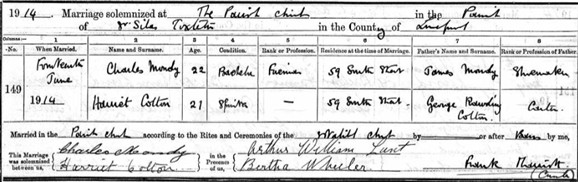
The family lived among the busy terraces and small streets of inner Sydney, including Reservoir Street and Crown Street in Darlinghurst. Although Charles’ enlistment papers list him simply as a labourer, his daughter Lucille later wrote to the Army confirming that before the war he had worked as a merchant seaman. Like many young Sydney men of the waterfront suburbs, he likely performed labouring duties aboard coastal or merchant vessels, but he certainly did the long haul sails to Liverpool. We do not know if Charles’ father James had kept in contact with his family in Lancashire, but Charles did travel to England and in April 1914 married Harriet Colton of Toxteth, Liverpool. The couple returned to Sydney in May 1915.
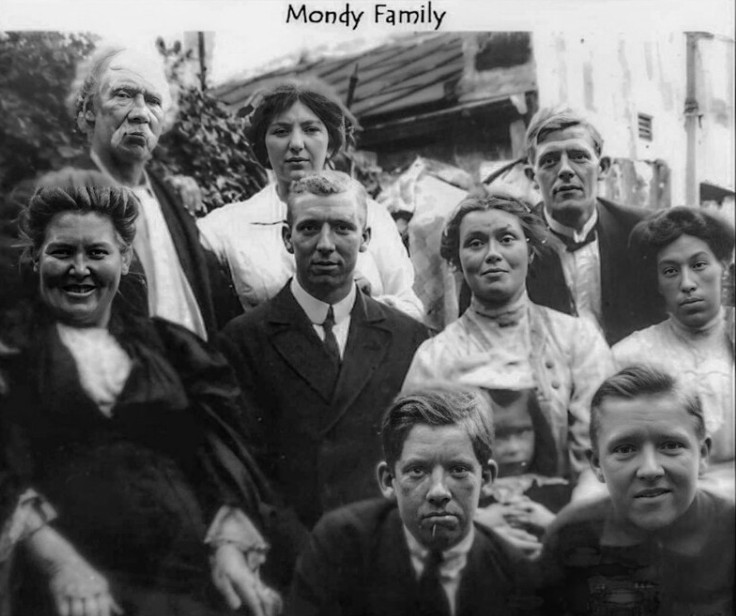
Bottom row - James and Alfred
The three young women - the wives of Ernest, James and Charles
The little girl in the picture being held is Charles’ daughter Lucille
While Charles had just brought his young wife back to Australia, the call to support the War was strong and he enlisted on 21 June 1915 at Liverpool, New South Wales. He was assigned to the 2nd Battalion during the Army’s frantic rebuild after months of heavy casualties at Gallipoli. He sailed from Sydney on HMAT Runic on 9 August 1915. His daughter, Lucille Jane Colton Mondy, was born in February 1916 — several months after Charles had already sailed for war, meaning he never met Lucille, but she had always known about her father. This was the world that shaped Charles - a blended and extended Sydney family, English roots, his father with two families on opposite sides of the world, and Charles with a young wife waiting and a newborn daughter he would never see, waiting at home as he marched toward the Western Front.
Off to War
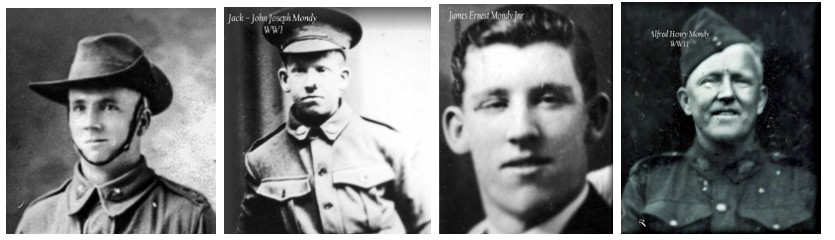
All four of James’ and Louisa’s sons served in the Army. Charles and Jack in WWI and James and Alfred in WW2. 18 year old Jack enlisted in August 1915 and was assigned to the 19th Battalion and later transferring to the 13th Battalion. Jack fought on the Western Front and was wounded in action on 1 August 1916, only days after Charles was killed at Fromelles. He recovered, returned to duty and survived the war. In WW2, James served in Australia, but did have several injuries. He was promoted to S/Sergeant. Alfred was with the Field Ambulance/Hospital and was a POW in Greece from May 1941 until November 1943. He was promoted to Corporal. Charles enlisted on 21 June 1915 at Liverpool, NSW and, after minimal military training,
left Australia on 9 August 1915 from Sydney, NSW aboard HMAT A54 Runic headed for the training camps in Egypt. After a month+ voyage, his time was spent completing his essential training — musketry, bayonet drill, fatigue duty, trench construction and the physical conditioning needed for Gallipoli. Charles also trained on and was allocated to the Lewis Gun Section.
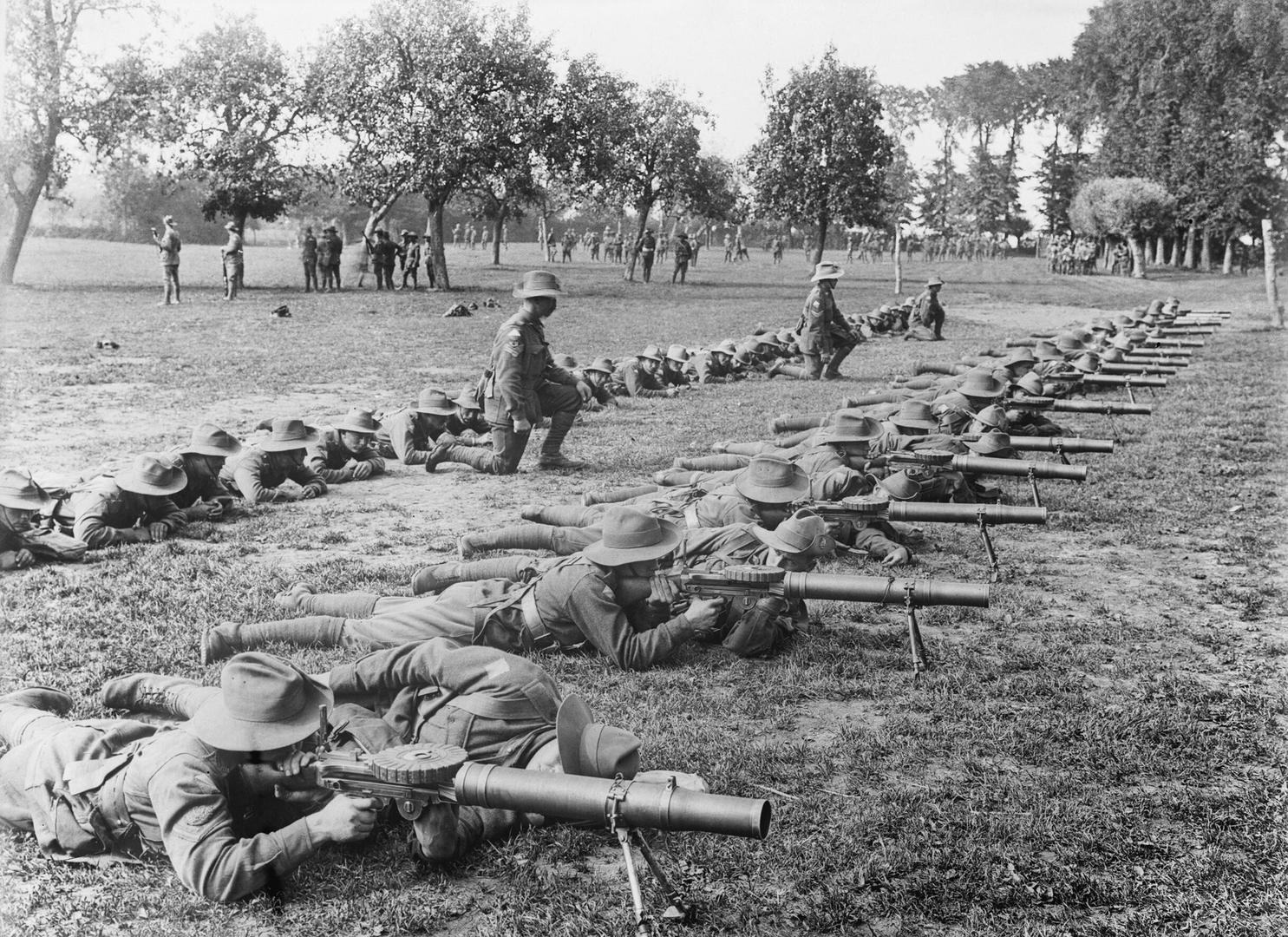
Gallipoli
Charles arrived at Gallipoli on 4 November 1915. Luckily as the campaign was already entering its final phase. By then the original ANZAC positions had been held for more than six months and the exhausted battalions were a mix of weary veterans and newly arrived reinforcements like Charles. In November the front was comparatively “quiet,” but only in the Gallipoli sense of the word - constant danger from Turkish snipers and bombardments that could erupt without warning. Reinforcements such as Charles were quickly absorbed into fatigues, carrying parties, ration details and the endless labour of improving trenches as the winter set in. As December began, rumours of an evacuation circulated among the men, though official confirmation did not come until much later.
The battalion began a carefully staged withdrawal - thinning the trenches over several nights, removing stores, and moving in small groups to the beach staging areas. Charles remained on the peninsula through this tense withdrawal period. The final evacuation of the ANZAC positions took place on 19–20 December 1915. To maintain the illusion of strength, men were ordered to move silently, leaving rifles rigged to fire automatically as a deception after they departed. Charles embarked the piers at Anzac Cove just before the final demolition charges were set.
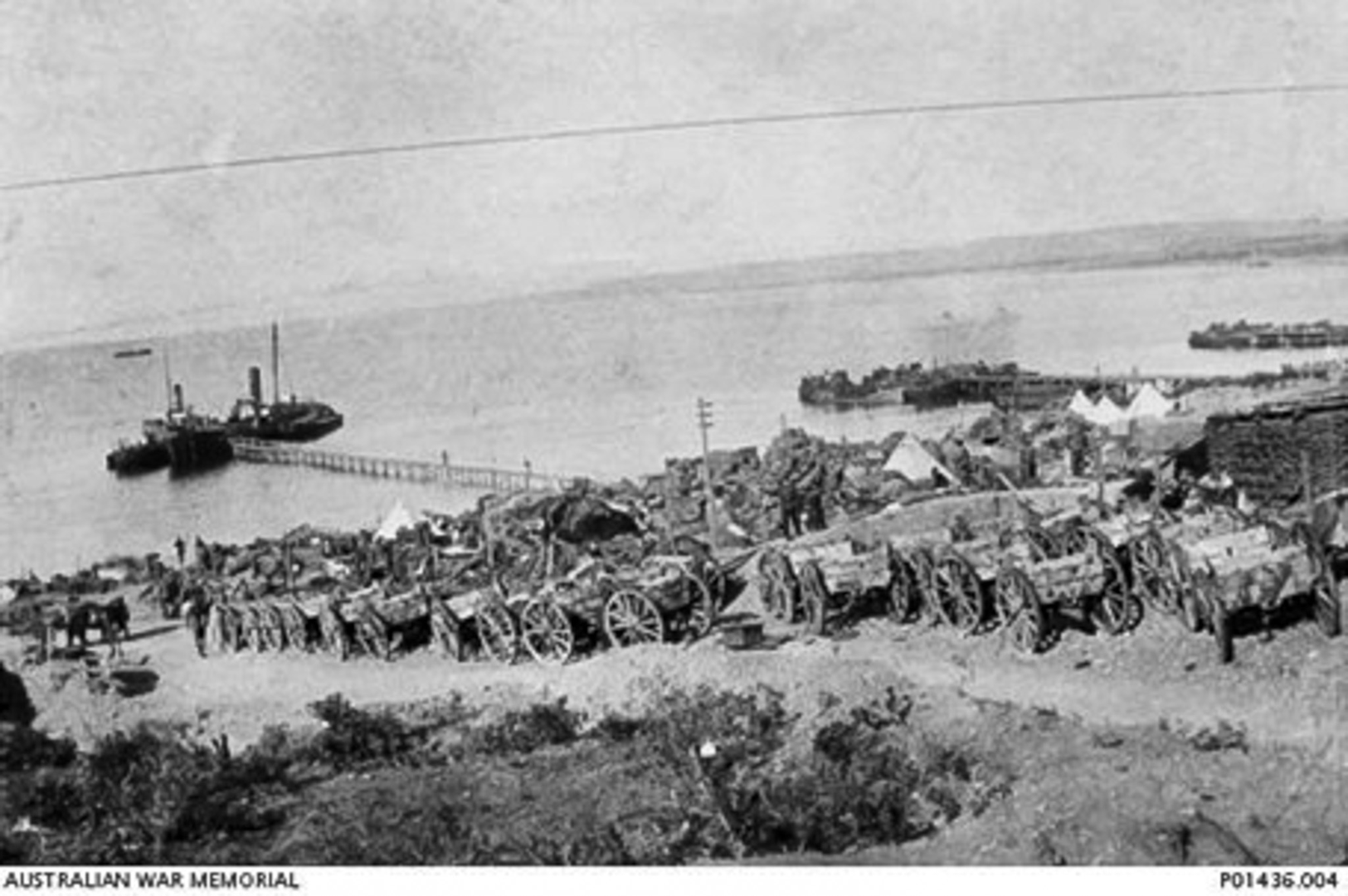
On 28 December 1915, Charles disembarked at Alexandria - one of the thousands of Australians who had survived Gallipoli’s final chapter.
Egypt and France
With the ‘doubling of the AIF’ as it expanded from two infantry divisions to five, major reorganisations were underway in the large camps in Egypt when Charles arrived. The 54th Battalion was formed in mid-February 1916 at the Tel-el-Kebir camp, about 110 km northeast of Cairo. The camp contained about 40,000 men – returning Gallipoli veterans and the thousands of reinforcements arriving regularly from Australia. The 54th was to be made up of Gallipoli veterans from the 2nd Battalion, most of whom were from New South Wales, and new arrivals from New South Wales.
Charles was reassigned to this new Battalion. By the end of March, much of the basic training in musketry and bayonet use had been completed for all of the new soldiers and they then marched to Ferry Post on the Nile, a trip of about 60 km that took three days. It was a significant challenge, walking over the soft sand in the 38°C heat with each man carrying their own possessions and 120 rounds of ammunition.
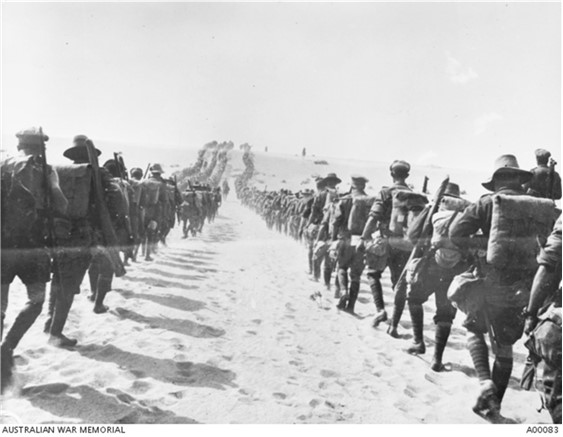
During their march, H. R. H. the Prince of Wales visited the troops and they greeted him with “enthusiastic cheers”
Source - AWM4 23/71/2, 54th Battalion War Diaries, March 1916, page 13
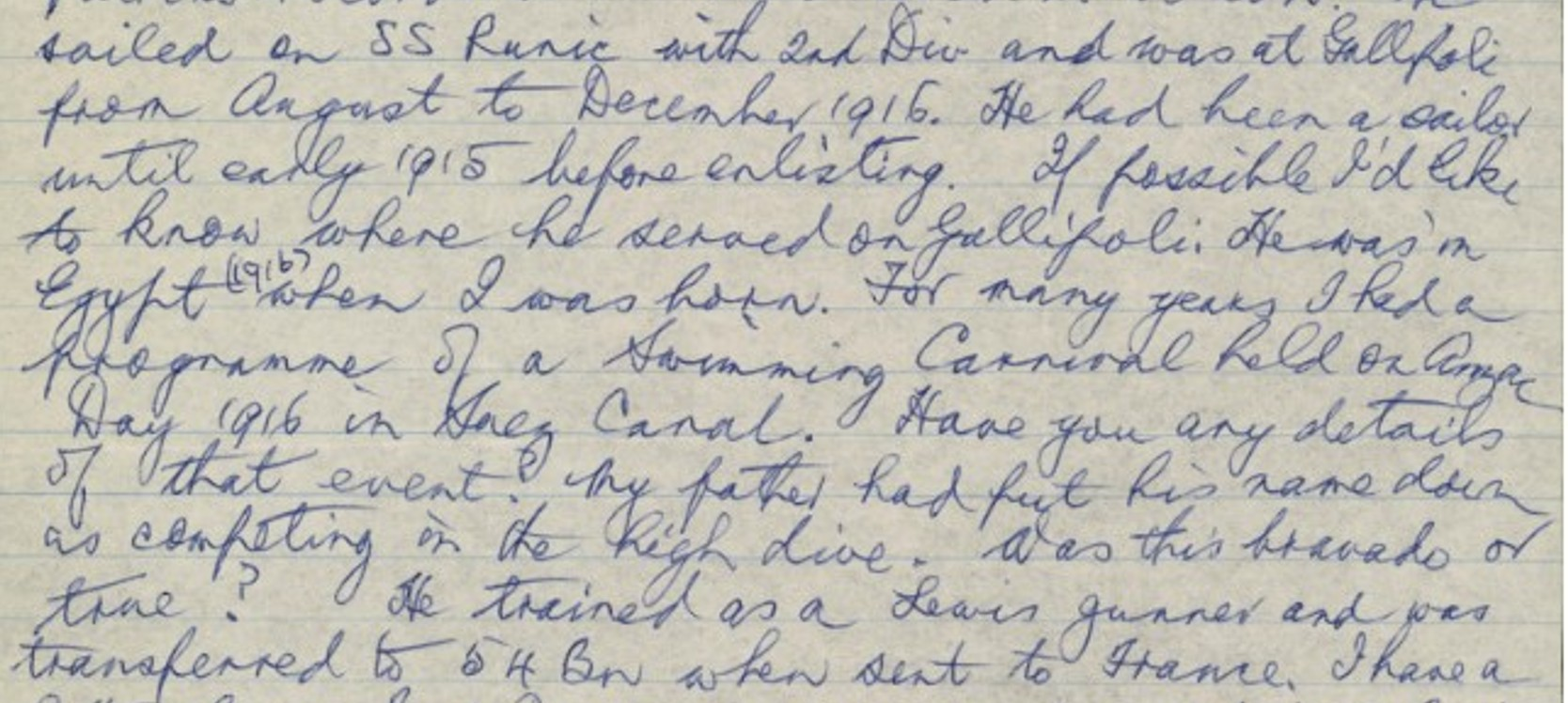
After arriving at the Ferry Post camp, they were rewarded with being able to have a swim in the Canal. In a 1996 letter to the Army, 90 years after his death, Charles’ daughter Lucille wrote that she had a program that noted her father having participated in the high dive in a swimming carnival in the Nile.
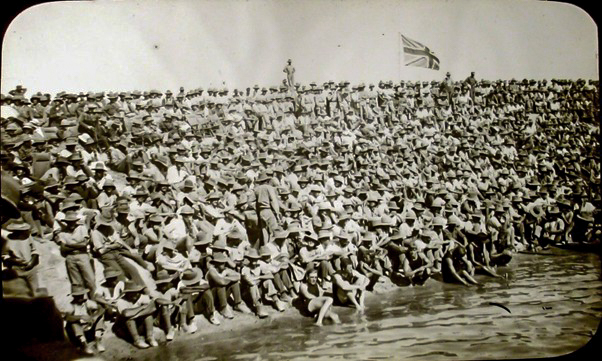
In May, the 54th moved to Katoomba Heights, near the Suez Canal, in the trench systems built to defend against possible Ottoman attacks. The call to join with the British Expeditionary Force on the Western Front came on 20 June and the 982 soldiers of the 54th Battalion left Egypt. They sailed on the Caledonian for the 10-day trip to Marseilles via Malta. After disembarking in France, they were immediately entrained for a three-day train trip to Hazebrouck, 30 km west of Fleurbaix in northern France. The long train journey north took them through the lush countryside of France - a stark contrast to the sands of Egypt.
By 2 July the Battalion was billeted in barns, stables and private houses in nearby Thiennes for a week. Training now included the use of gas masks and exposure to the effects of the artillery shelling. It was hoped that these tests would “inspire the men with great confidence”
Source - AWM4 23/71/6 54th Bn War Diaries July 1916 page 2
This area near Fleurbaix which was known as the “Nursery Sector” – a supposedly relatively quiet area where inexperienced Allied troops could learn the harsh realities of Western Front trench warfare against the Germans. But the quiet times and the training period did not last long. On 10 July they moved to Sailly sur la Lys and on 11 July they were into the trenches in Fleurbaix. The health and spirit of the troops was reported as good. After a few days getting exposed to the to the routines of life in the trenches, they moved back to billets in Bac-St-Maur.
The Battle of Fromelles
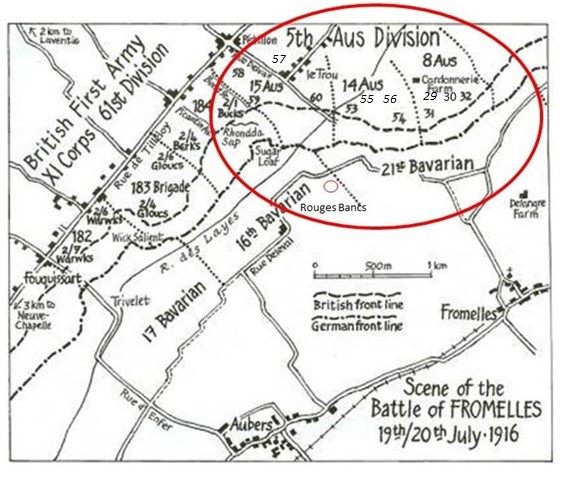
The overall plan was to use brigades from the Australian Fifth Division to conduct a diversionary assault on the German trenches at Fromelles.
The main objective for the 54th was to take the trenches to the left of a heavily armed, elevated German defensive position, the “Sugar Loaf”, which dominated the front lines. If the Sugar Loaf could not be taken, the 54th and the other battalions would be subjected to murderous enfilade fire from the machine guns and counterattacks from that direction. As they advanced, they were to link up with the 31st and 53rd Battalions. Major Roy Harrison wrote home on 15 July. With his Gallipoli experience, the tone in this letter was certainly circumspect for the upcoming battle:
“The men don’t know yet what is before them, but some suspect that there is something in the wind. It is a most pitiful thing to see them all, going about, happy and ignorant of the fact, that a matter of hours will see many of them dead; but as the French say ‘C’est la guerre’.”
The main attack was planned for the 17th, but heavy rain delayed the operation. The weather soon improved and by 2.00 PM on 19 July they were in back in the trenches, ready for their first major action on the Western Front. Zero Hour for advancing from their front-line trenches was to be 5.45 PM, but the Germans knew this attack was coming and were well-prepared. They opened a massive artillery bombardment on the Australians at 5.15 PM, causing chaos and many casualties. At 5.50 PM they began to leave their trenches. They moved forward in four waves, half of A & B Companies in each of the first two waves and half of C & D Companies, including the Lewis gun sections to which Charles was attached, in the third and fourth.
As a Lewis Gunner, Charles carried one of the battalion’s most important and most exposed weapons. Each Lewis gun team consisted of a gunner and one or two assistants who carried ammunition drums. Their job was to move forward with the assault waves, lay down suppressing fire, protect the flanks, and help hold any captured trench against counter-attacks. Lewis gunners were among the first to be targeted by enemy riflemen and machine guns as they frequently operated from exposed shell holes or parapets with little cover. The first waves did not immediately charge the German lines, they went out into No-Man’s-Land and lay down, waiting for the British bombardment to lift.
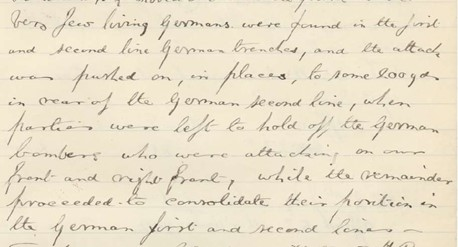
At 6.00 PM, the German lines were rushed. The 54th were under heavy artillery, machine-gun and rifle fire, but they were able to advance rapidly. The 14th Brigade War Diary notes that the artillery had been successful and “very few living Germans were found in the first and second line trenches”. Some of the advanced trenches were just water filled ditches which needed to be fortified to be able to hold their advanced position against future attacks.
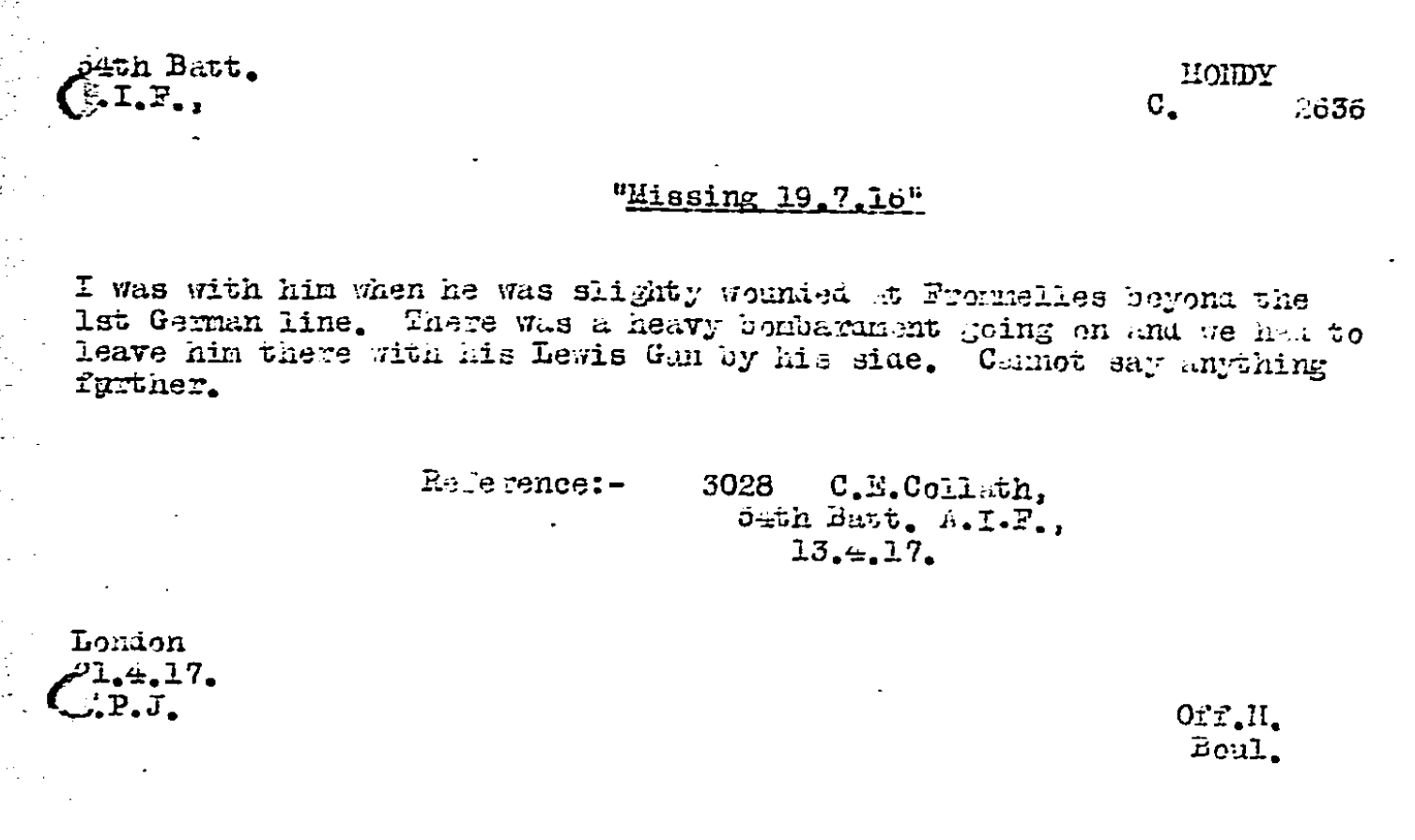
There are two witness statements that indicate that this is likely where Charles was killed. Private Carl Edgar Collath, (3028) who had advanced with Charles, recalled:
“I was with him when he was slightly wounded at Fromelles beyond the 1st German line. There was a heavy bombardment going on and we had to leave him there with his Lewis Gun by his side. Cannot say anything further.”
Archibald W. Barry (4733), relaying information from Sergeant John D Cookson (1854), also reported:
“He was killed at Fleurbaix on 19.7.16 and Sgt Cookson saw him hit in No Man’s Land… Mondy’s paybook was handed in about 3 days after. There was only one Mondy in the Coy.”
The 54th was able to press forward nearly 600 yards, linking with the 53rd Battalion on the right and the 31st and 32nd on the left, holding a line from Rouges Bancs to near Delangre Farm. But on the right flank, the situation had collapsed. The 60th Battalion had been unable to advance due to devastating machine-gun fire from the Sugar Loaf, leaving the 54th’s flank exposed. By 2.20 a.m., the enemy was attacking along the road past Rouge Bancs. Lt-Col J. Cass reported that, after a counter-attack, the 53rd were not aware that their flank was no longer protected, allowing the Germans to get behind them and that Australians were being captured. Cass sent a party of 54th men forward to support the line:
“They ran forward with the bayonet and drove the enemy back about 50 yards.”— Lt-Col J. Cass
Despite repeated appeals for artillery support, the position became untenable. At 6.30 a.m. on 20 July, the 54th received orders to withdraw. The retreat was chaotic and exposed to fire; many wounded men were left behind:
“I saw scores of men badly wounded and no help at hand to bind them up.”— Lt-Col J. Cass
With the heavy losses and the German counterattacks, the Australians were eventually forced to retreat, but now they also had to get through the Germans who had been able to get BEHIND them as a result of the exposed right flank. By 7.30 AM on the 20th the 54th were pulled all the way back to Bac-St-Maur, 5 km from the front. In this very short period of time, of the 982 soldiers of the 54th that left Egypt, initial roll call counts were 73 killed, 288 wounded and 173 missing, including Charles. To get some perspective of the battle, when Charles Bean, Australia’s official war historian, attended the battlefield two and half years later, he observed a large quantity of bones, torn uniforms and Australian kit still on the battlefield. Ultimately, 172 soldiers from the 54th were killed in action or died from their wounds and of this, 102 were missing.
After the Battle
Charles’ family was notified he was missing, but further news was painfully slow. On 23 August 1916, Charles’ mother wrote the Army, seeking news
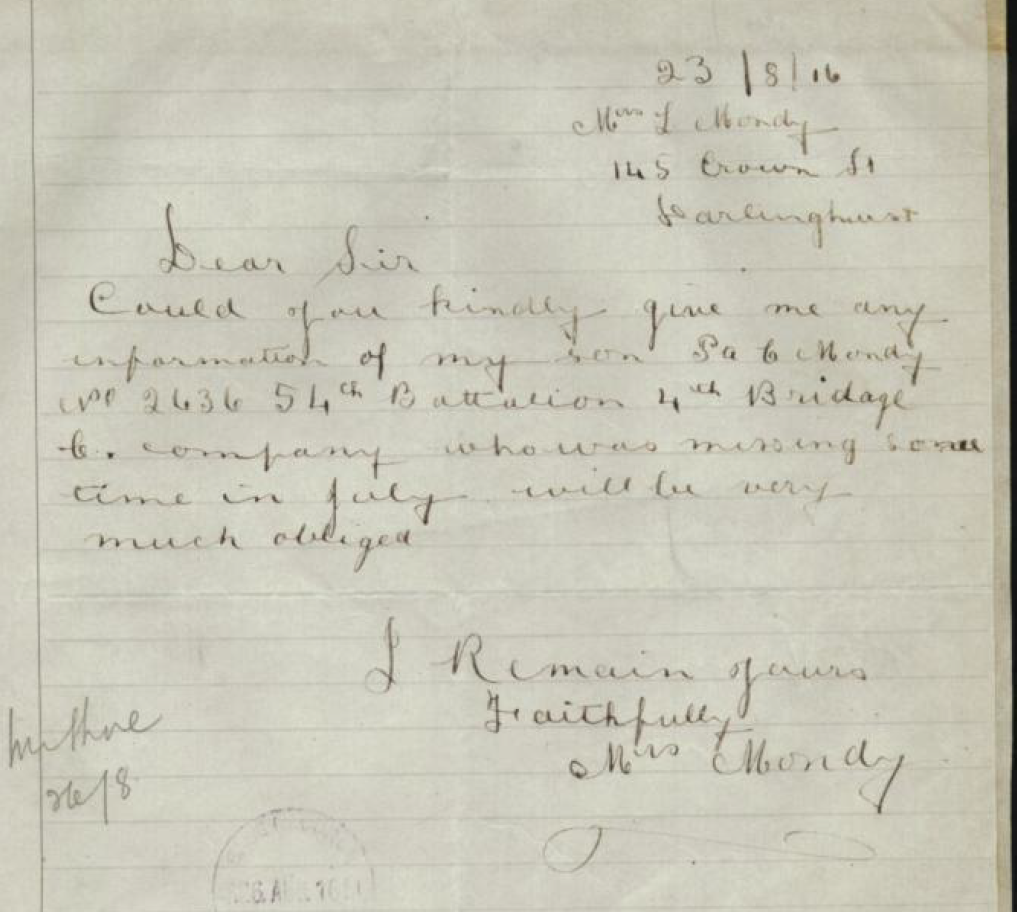
While major efforts were underway to find the missing soldiers, weeks and months passed with no answers, only uncertainty. Charles’ brother Jack was among those who were contacted, but he had nothing of substance to offer. “He was my brother. My people know he is dead. They wrote to me and sent an ‘In Memoriam’ cutting from a newspaper. I do not know if they know the details, but I think they must.”
Source – Australian Red Cross Wounded and Missing Files – Charles Mondy pg 4
The several witnesses who had given statements about Charles’ fate, all confirmed that he had been killed during the battle and was left where he fell. However, Sergeant Oliver J.R. Clark’s (3504, 54th Battalion) statement offered some of hope of Charles having been buried:
“He was in the same Lewis Gun Section as me. We were in the same support line trench at Fromelles near Armentieres on the 19th July. I saw him about 5.30 p.m. for the last time. He was killed outright with a shell. I do not know what became of him afterwards but I think he was buried at Sailly. He was a seaman, a big well built fellow, and a married man.”
The last news was received on 15 November 1917 from Sergeant Sgt John D. Cookson, (later Distingushed Cross Medal) CSM of Charles’ 54th Battalion’s Lewis Gunners, provided the most definitive account -
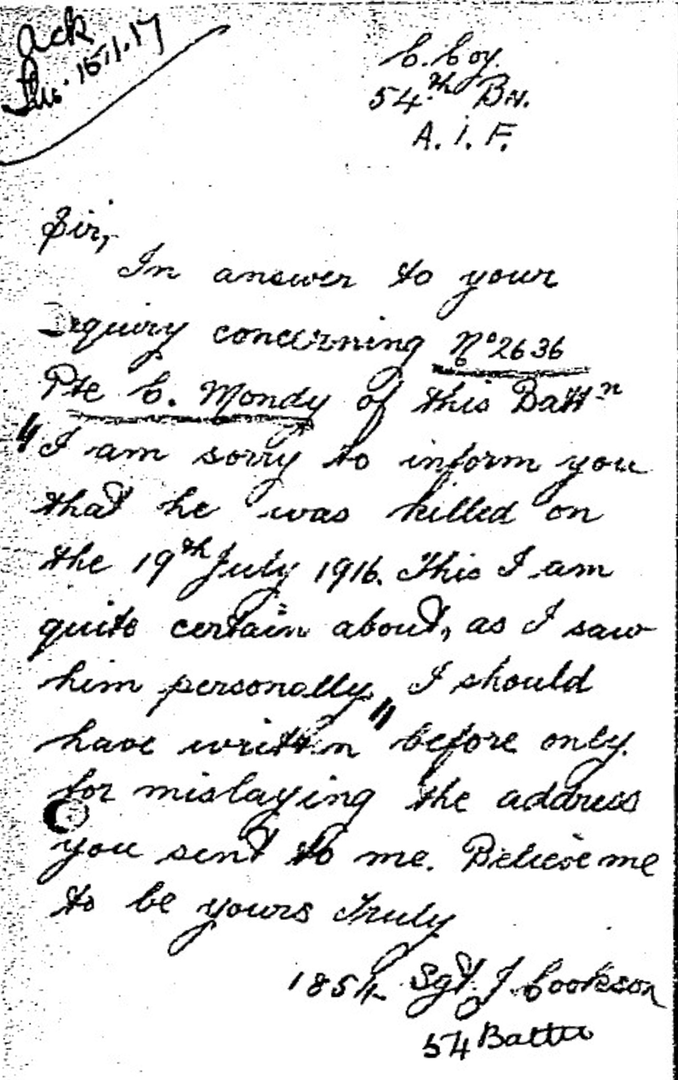
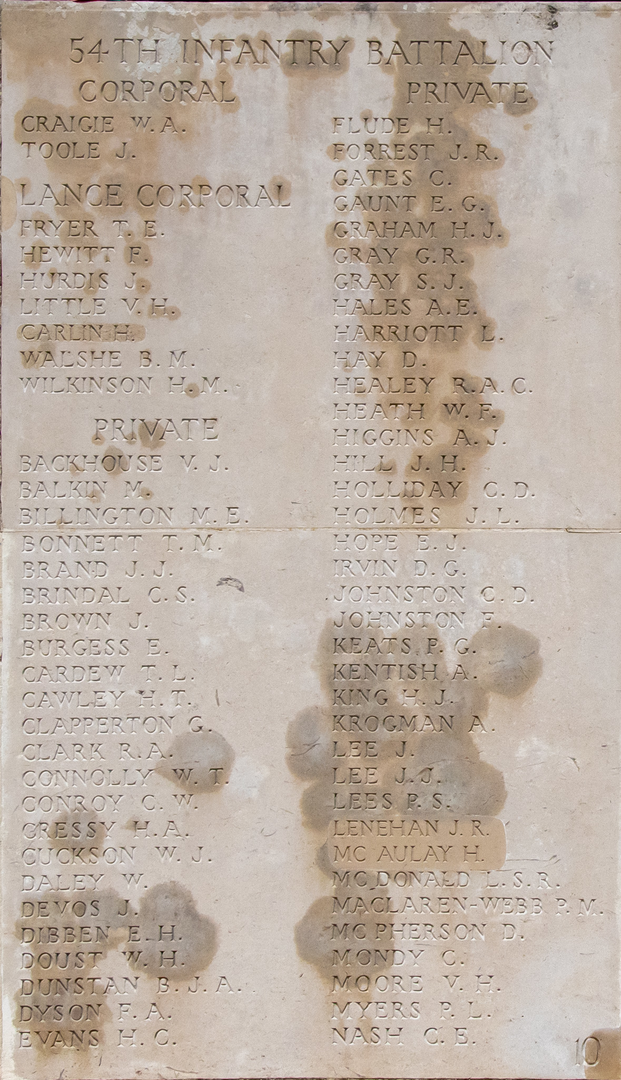
Charles was awarded the 1914-15 Star Medal, the British War Medal, the Victory Medal, a Memorial Plaque and a Memorial Scroll. Charles is commemorated at VC Corner Cemetery and Memorial , Fromelles, where all the names of those missing on the 19th and 20th july are listed on the memorial.
Harriet and Lucille
In June 1916, Harriet and Lucille had returned to England to be near her family. They remained in England until 1923, when she and Lucille, aged 7, sailed back to Australia and settled at Wentworthville, NSW. She later moved to Merrylands, where she lived for decades. Harriet carried Charles’ memory for the rest of her long life. She was active in community and veterans’ groups, working for the Legacy Widow’s Club for more than 20 years and she was a member of the New Settler’s League, who welcomed migrants in the 1920’s. Lucille married Richard Struck (2177) after WW1. He had served with the 19th Battalion and had been wounded in action on 28 May 1918.
Lucille also served her country from 1942 to 1945 – serving with the Fortress Engineers, the Fixed Defence Command at North Head, Second Engineers and Engineer Stores. She was a Corporal. She also worked as a teacher in the Women's Auxiliary Australian Air Force (WAAAF), contributing to the education and welfare of servicemen and women at home. In 1976, Harriet, then in her eighties, returned to the UK for the first time since 1923, travelling with Lucille on an journey that included England, France and the Western Front.
Newspaper reports described her as receiving VIP treatment upon arriving in Liverpool, where she was warmly welcomed and shown special courtesy, as several members of her family had died in the First World War. She found three Coltons (her family name) listed on the Roll of Honour. Harriet’s brother had been killed while serving with the Welsh Guards and when they were in London she and Lucille were guests of the Welsh Guards, receiving badges, books, and a guided visit through the regimental chapel and museum.
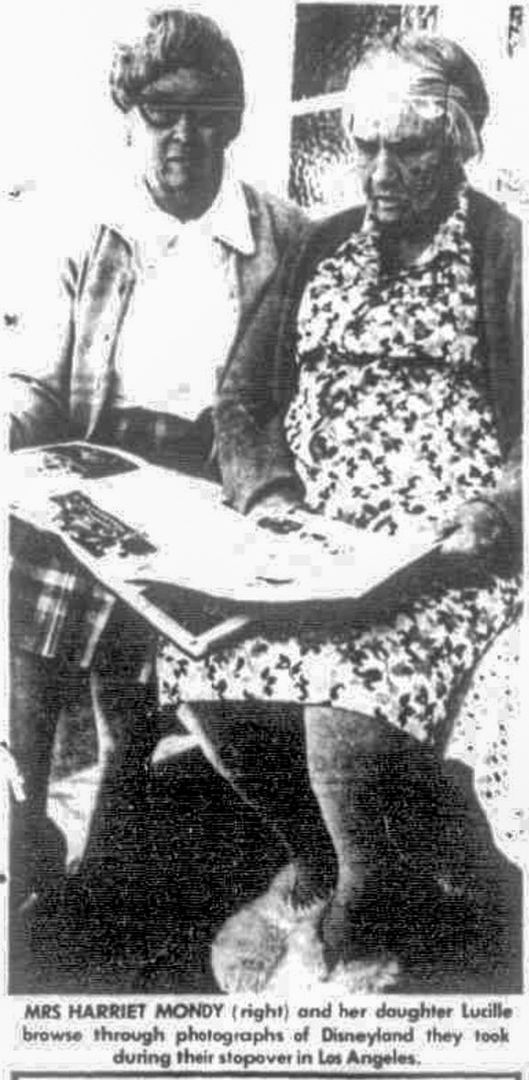
Lucille made three trips to Gallipoli and toured in France where she had three uncles buried. In a 1991 letter, she she said that her father had been buried in a mass grave, though the basis for this is unknown.
After her trips, she gave lectures and stated her beliefs in the higher ideals of the soldiers who had gone to war:
“I think it is most important that the younger generations realise that men like my husband and my father gave their youth and their lives so they can live in freedom.”
In 1996, 80 years after Charles fell, Lucille was still writing letters to the Army (as above) seeking information about her father. Harriet and Lucille’s searches show how the loss of Charles Mondy continued to echo across generations. The search for answers became part of the Mondy family’s long story of service, sacrifice, and remembrance.
Finding Charles
Charles’ remains were not recovered; he has no known grave. After the battle, the Germans recovered 250 Australian soldiers and placed them in a burial pit at Pheasant Wood. This grave was discovered in 2008 and since then efforts have been underway to identify these soldiers by DNA testing from family members. As of 2024, 180 of the soldiers have been identified, including 28 of the 102 unidentified soldiers from the 54th Battalion.
We welcome all branches of Charles’ family to come forward to donate DNA to help with his identification. If you believe you are connected to the Mondy, Cupitt, or Colton families — particularly those with roots in Sydney, Liverpool (UK), or the Isle of Man — please contact the Fromelles Association of Australia. We hope that one day Charles will be named and honoured with a known grave.
Please visit Fromelles.info to follow the ongoing identification project and Charles’ story.
DNA samples are being sought for family connections to
| Soldier | Charles Mondy (1891–1916) |
| Parents | |||
| Father | James Ernest Mondy (1851–1918), born Douglas, Isle of Man | ||
| Mother | Louisa Mary Cupitt (1860–1934), born Braidwood, NSW |
| Siblings | |||
| Half-siblings (paternal – James & Alice Dyson, remained in England) | |||
| Henry Monday (1875–1904), not married | |||
| James Arthur Mondy (1877–1915), had a son John | |||
| Lucy Monday (1879–1963), never married | |||
| Ernest Mondy (1881–1938), married Kate Metcalfe, three daughters | |||
| Half-siblings (maternal – Louisa prior to marriage) | |||
| Ernest Harold Cubitt (1887–1976), father named as James Gordon Legge | |||
| Full siblings (James & Louisa) | |||
| Lilian Cupitt (1890–1891), died in infancy | |||
| Nellie Cubitt (1892–1892), died in infancy | |||
| James Ernest Mondy (1894–1977) | |||
| John Joseph “Jack” Mondy (1897–1975) | |||
| Albert Henry Mondy (1899–1950) |
| Grandparents | |||
| Paternal | Joseph Monday (1821–1892), Isle of Man | ||
| Mary Anne Heaton (1823–1863), Lancashire | |||
| Maternal | John Cupitt (1834–1860), NSW | ||
| Charlotte Ann King (1842–1891), NSW |
Note: Spelling variations in BDM include Mondy/Monday/Mundy and Cubitt/Cupitt/Cubit/Coubitt.
Seeking DNA Donors

Contacts
(Contact: carla@fromelles.info or geoffrey@fromelles.info).
(Contact: army.uwc@defence.gov.au or phone 1800 019 090).
Donations
If you are able, please contribute to the upkeep of this resource.
(Contact: bill@fromelles.info ).