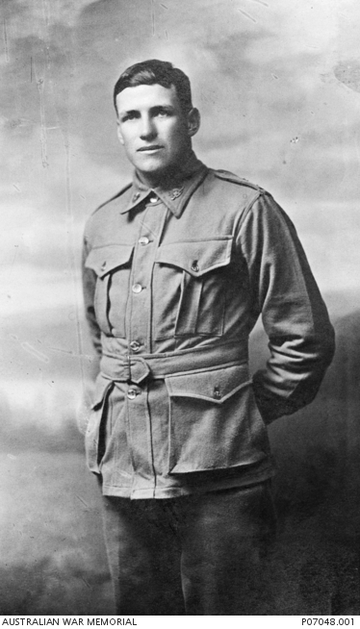
George PAGAN
Eyes blue, Hair brown, Complexion dark
Lance Corporal George Pagan – “A farmer from Gilgandra who gave his all, never forgotten by his family.”
Early Life
George Pagan was born in 1891 at Mooroopna, Victoria, the youngest of George Pagan and Jennett Groves’ seven children:
- Walter Pagan (1878–1964)
- Lottie Pagan (1879– ?)
- William Pagan (1880–1938)
- Elizabeth Pagan (1883–1936)
- Jennett Pagan (1884–1935)
- Anthony Pagan (1887–1980)
- George Pagan (1891–1916)
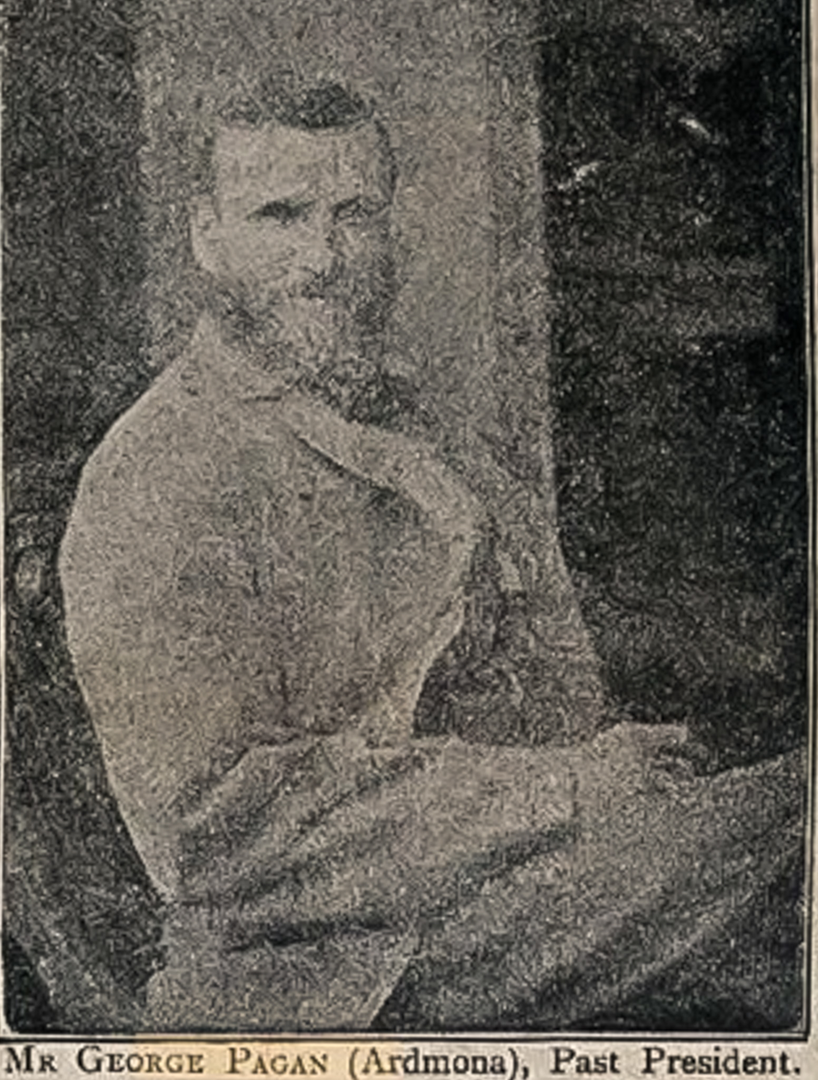
The Pagan family were among the early settlers of the Mooroopna district, where George’s grandparents Walter and Elisabeth Pagan are buried. His father was a respected orchardist and active member of the local agricultural community:
At the Tatura and Goulburn Valley Agricultural Society’s annual show, Mr G. Pagan, Snr., of Ardmona, was among the judges, his exhibits receiving high commendation for fruit and general farm produce.
George attended Ardmona State School in the Goulburn Valley and grew up on his parents’ property, the “Burnside” Estate at Ardmona. As a teenager, George had a serious accident while swimming in the Goulburn River — a reminder of his toughness long before the war:
“A painful accident happened to Mr George Pagan, junr., a son of Mr George Pagan, of Burnside, Ardmona, while bathing in the Goulburn River. In diving he came against a piece of wood, which entered his head just below his eye and broke off… The wood penetrated for about two inches, and required considerable strength to pull it out after the sufferer had been placed under chloroform.”
That same year, the Pagans sold “Burnside” and farewelled Mooroopna, relocating to East Malvern, Melbourne:
“They were farewelled by several of their old friends, and hearty good wishes were expressed for their future.”
Not long after, George left Victoria with two of his brothers, heading north to Gilgandra, New South Wales, where they took up farming. Gilgandra would send many of its sons to the Great War I, it was the start of a recruiting drive, the Coo-ee March - “Coo-ee! Come and join us!” , that left Gilgandra with 25 men on 10 October, 1915 and 515 km later arrived in Sydney on 12 November with 263 recruits.
Off to War
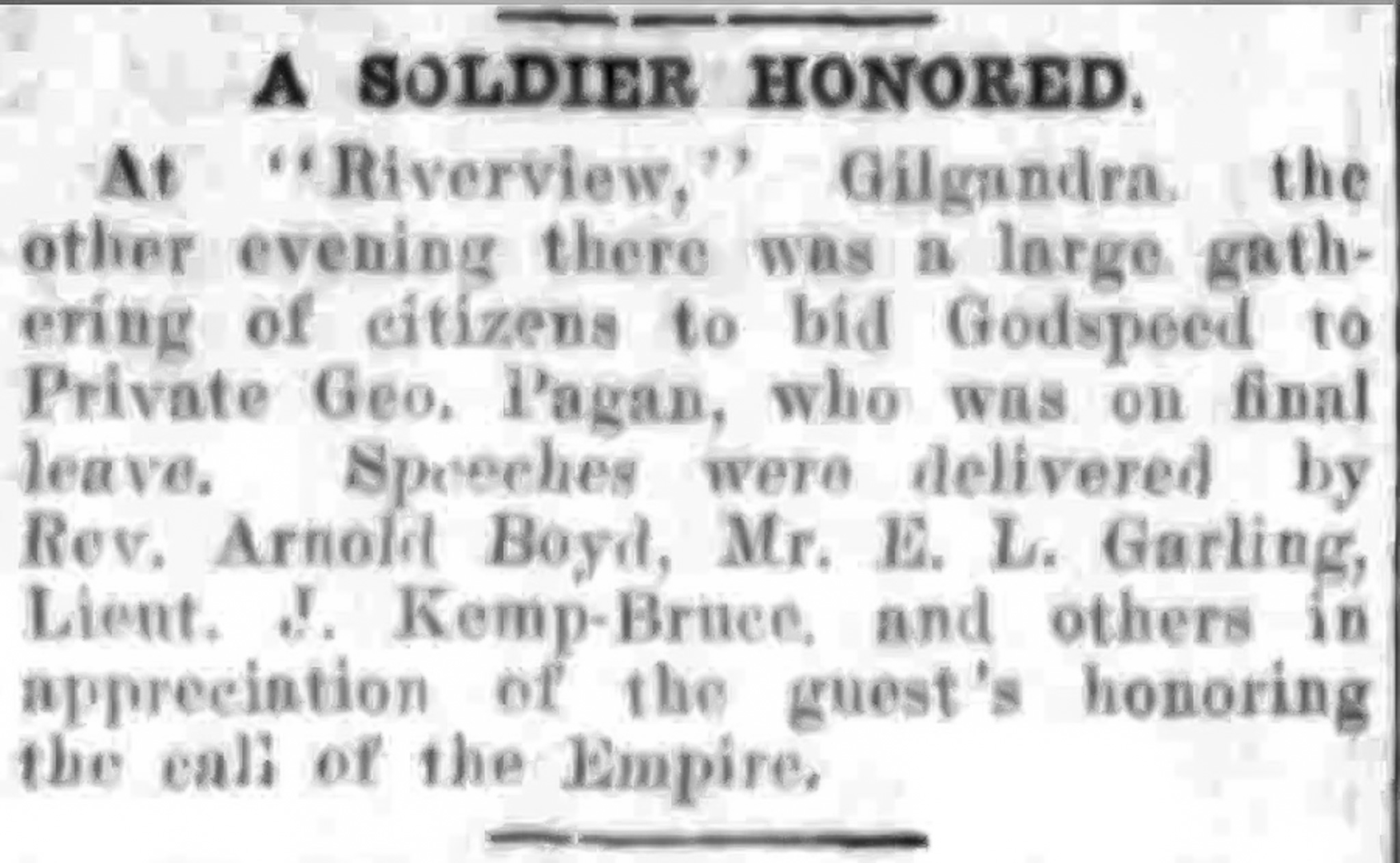
George enlisted at Liverpool, NSW, on 24 July 1915 (before the Cooee March). He was posted to the 9th Reinforcements of the 2nd Battalion and, after a very short period of military training, embarked from Sydney on 30 September 1915 aboard the HMAT A8 Argyllshire headed for the training camps in Egypt. Before leaving Gilgandra, the local community gathered to farewell him.
By the time George arrived in Egypt, the Gallipoli campaign was winding down and he remained in the camps in Egypt. However, after Gallipoli with the ‘doubling of the AIF’ as it expanded from two infantry divisions to five, major reorganisations were underway. The 54th Battalion was formed in mid-February 1916 at the Tel-el-Kebir camp, about 110 km northeast of Cairo and George was assigned here. The camp contained about 40,000 men, Gallipoli veterans and the thousands of reinforcements arriving regularly from Australia. The 54th was to be made up of Gallipoli veterans from George’s 2nd Battalion, most of whom were from New South Wales, and new arrivals from New South Wales.
By the end of March, much of the basic training in musketry and bayonet use had been completed for all the new soldiers and they were sent to Ferry Post, on foot, a trip of about 60 km that took three days. It was a significant challenge, walking over the soft sand in the 38°C heat with each man carrying their own possessions and 120 rounds of ammunition. After arriving at the Ferry Post camp they were rewarded with being able to have a swim in the Canal.
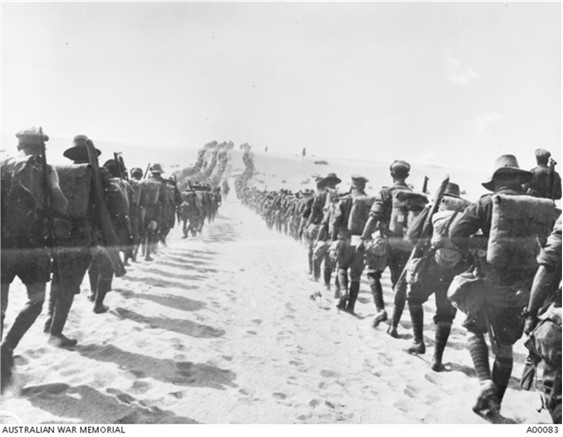
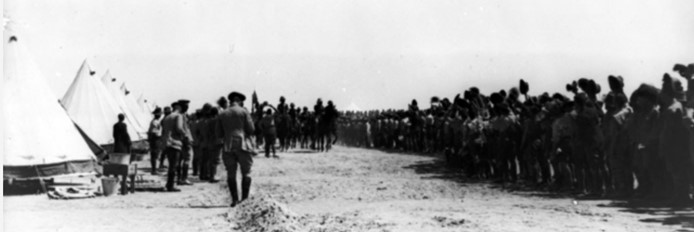
During their march, H. R. H. the Prince of Wales visited the troops and they greeted him with “enthusiastic cheers”
Source: AWM4 23/71/2, 54th Battalion War Diaries, March 1916, page 13
The 54th spent all of May at the front-line trenches in Katoomba Heights, eight miles from the Suez Canal guarding from any potential threats posed by the Ottoman Army. During this time, they took turns occupying front-line trenches, wiring defences, and carrying out patrols. The men became accustomed to trench life and continued their training in preparation for movement to the Western Front. While here, George was promoted to Lance Corporal in May 1916. The call to join with the British Expeditionary Force came on 20 June and the 982 soldiers of the 54th Battalion left Egypt.
They sailed on the Caledonian for the 10-day trip to Marseilles via Malta. After disembarking in France, they immediately entrained for a three-day train trip to Hazebrouck, 30 km west of Fleurbaix in northern France. The long train journey north took them through the lush countryside of France — a stark contrast to the sands of Egypt. By 2 July the Battalion was billeted in barns, stables and private houses in nearby Thiennes for a week. Training now included the use of gas masks and exposure to the effects of the artillery shelling. It was hoped that these tests would “inspire the men with great confidence”
Source: AWM4 23/71/6 54th Bn War Diaries July 1916 page 2
On 10 July they moved to Sailly sur la Lys and on 11 July George was into the trenches in Fleurbaix for the first time. The health and spirit of the troops was reported as good. After a few days getting exposed to the to the routines of life in the trenches, they moved back to billets in Bac-St-Maur. This area near Fleurbaix which was known as the “Nursery Sector” – a supposedly relatively quiet area where inexperienced Allied troops could learn the harsh realities of Western Front trench warfare against the Germans. But the quiet times and the training period did not last long.
The Battle of Fromelles
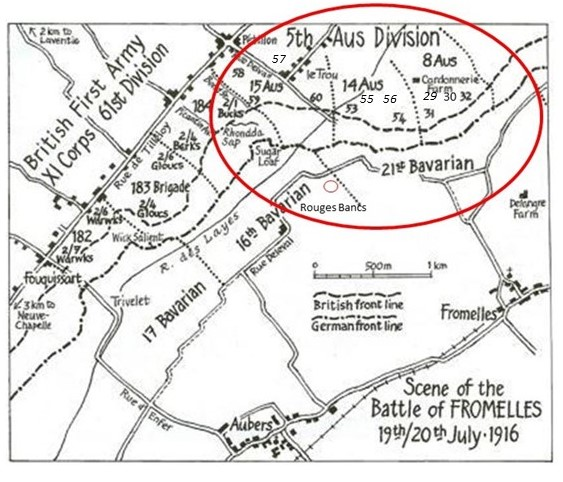
The overall plan was to use brigades from the Australian Fifth Division to conduct a diversionary assault on the German trenches at Fromelles. The main objective for the 54th was to take the trenches to the left of a heavily armed, elevated German defensive position, the “Sugar Loaf”, which dominated the front lines. If the Sugar Loaf could not be taken, the 54th and the other battalions would be subjected to murderous enfilade fire from the machine guns and counterattacks from that direction. As they advanced, they were to link up with the 31st and 53rd Battalions. Major Roy Harrison wrote home on 15 July. With his Gallipoli experience, the tone in this letter was certainly circumspect for the upcoming battle:
“The men don’t know yet what is before them, but some suspect that there is something in the wind. It is a most pitiful thing to see them all, going about, happy and ignorant of the fact, that a matter of hours will see many of them dead; but as the French say ‘C’est la guerre’.”
The main attack was planned for the 17th, but heavy rain delayed the operation.
The weather soon improved and by 2.00 PM on 19 July they were in back in the trenches, ready for their first major action on the Western Front. On 19 July, Zero Hour for advancing from their front-line trenches was to be 5.45 PM, but the Germans knew this attack was coming and were well-prepared. They opened a massive artillery bombardment on the Australians at 5.15 PM, causing chaos and many casualties. At 5.50 PM they began to leave their trenches. They moved forward in four waves– half of George’s A Company and B Company in each of the first two waves and half of C & D in the third and fourth.
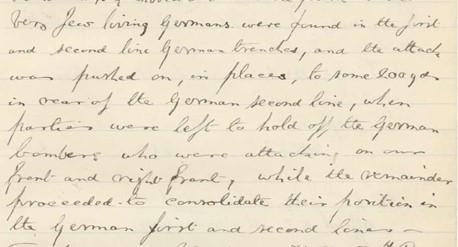
The first waves did not immediately charge the German lines, they went out into No-Man’s-Land and lay down, waiting for the British bombardment to lift. At 6.00 PM, the German lines were rushed. The 54th were under heavy artillery, machine-gun and rifle fire, but were able to advance rapidly. The 14th Brigade War Diary notes that the artillery had been successful and “very few living Germans were found in the first and second line trenches”.
Some of the advanced trenches were just water filled ditches which needed to be fortified to be able to hold their advanced position against future attacks. They pressed forward nearly 600 yards, linking with the 53rd Battalion on the right and 31st and 32nd on the left, holding a line from Rouges Bancs to near Delangre Farm. But on the right flank, the situation had collapsed. The 60th Battalion had been unable to advance due to devastating machine-gun fire from the Sugar Loaf, leaving the 54th’s flank exposed.
Lt-Col Cass, commanding the 54th, reported that by 2.20 AM, the enemy was attacking along the road past Rouge Bancs. Cass reported that after a counter attack the 53rd were not aware that their flank was no longer protected, allowing the Germans to get behind them and that Australians were being captured. Cass sent a party of 54th men forward to support the line:
They ran forward with the bayonet and drove the enemy back about 50 yards.
Despite repeated appeals for artillery support, the position became untenable. At 6.30 AM on 20 July, the 54th received orders to withdraw. The retreat was chaotic and exposed to fire; many wounded men were left behind:
“I saw scores of men badly wounded and no help at hand to bind them up.”
With the heavy losses and the German counterattacks, the Australians were eventually forced to retreat, but now having to get through the Germans who were also BEHIND them as a result of the exposed right flank. By 7.30 AM on the 20th those from the 54th who had been able to return were pulled all the way back to Bac-St-Maur, 5 km from the front.
In this very short period of time, of the 982 soldiers of the 54th that left Egypt, initial roll call counts were 73 killed, 288 wounded and 173 missing. To get some perspective of the battle, when Charles Bean, Australia’s official war historian, attended the battlefield two and half years later, he observed a large quantity of bones, torn uniforms and Australian kit still on the battlefield.
Ultimately, 172 soldiers from the 54th were killed in action or died from their wounds.
George’s Fate
George was serving as a Lewis Gunner, as was his mate from Gilgandra, Thullier “Tom” Cardew. Machine Gunners were an essential part of an attack, but in the circumstances at Fromelles, they were a target for the enemy, the gun was heavy and it had to be moved as needed while under fire, exposing the machine gun crews. As described above, with the advances the 54th had made but with the Germans having been able to get behind the Australians, they were able to attack from both ahead and behind, during their retreat in the morning of the 20th.
George and Tom fell in the German trench they had fought so hard to capture. George was shot through the back of the head at about 7:30 AM. Within five minutes of George being hit, Tom had been shot in the head as well, documented by a number of witnesses.
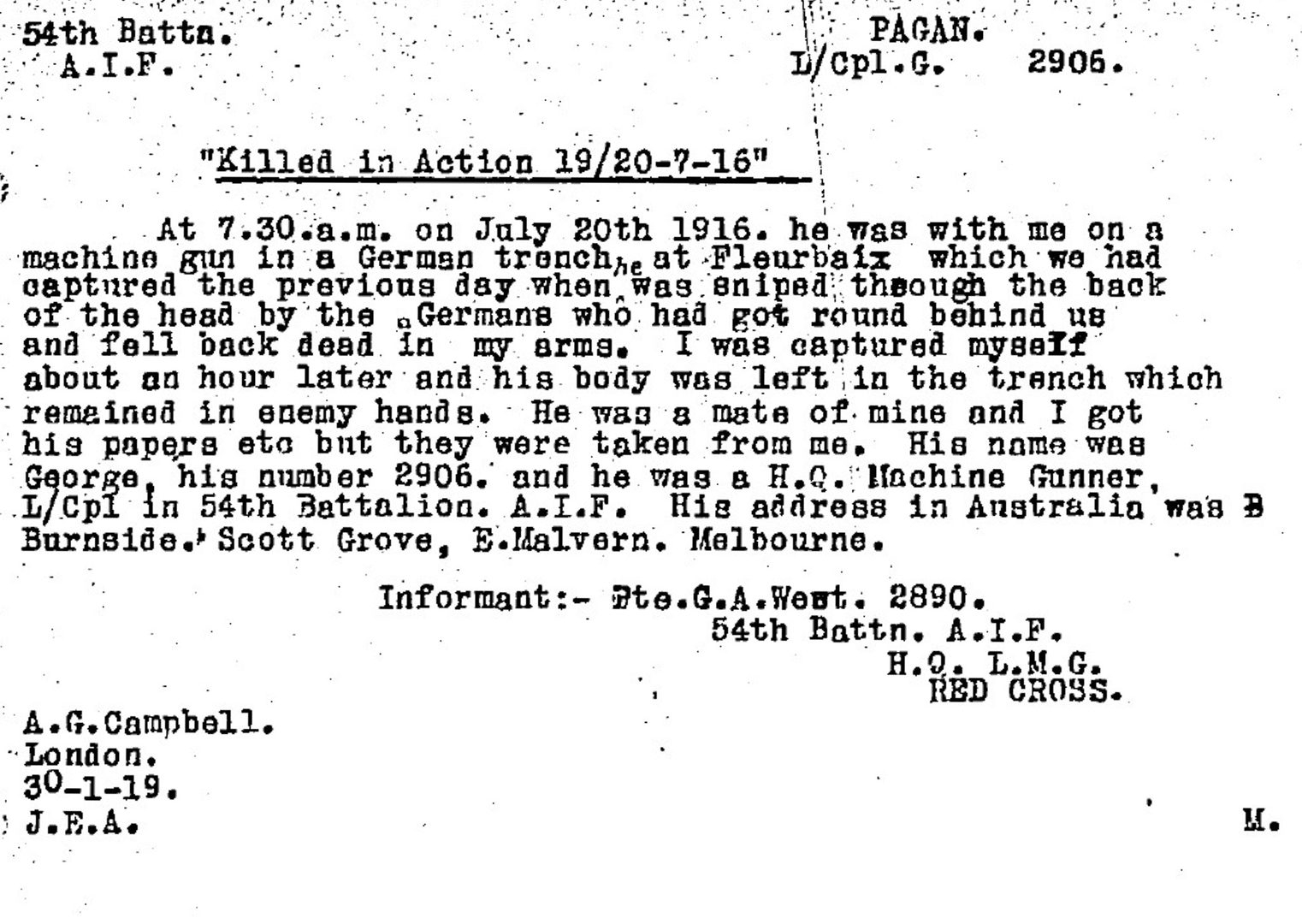
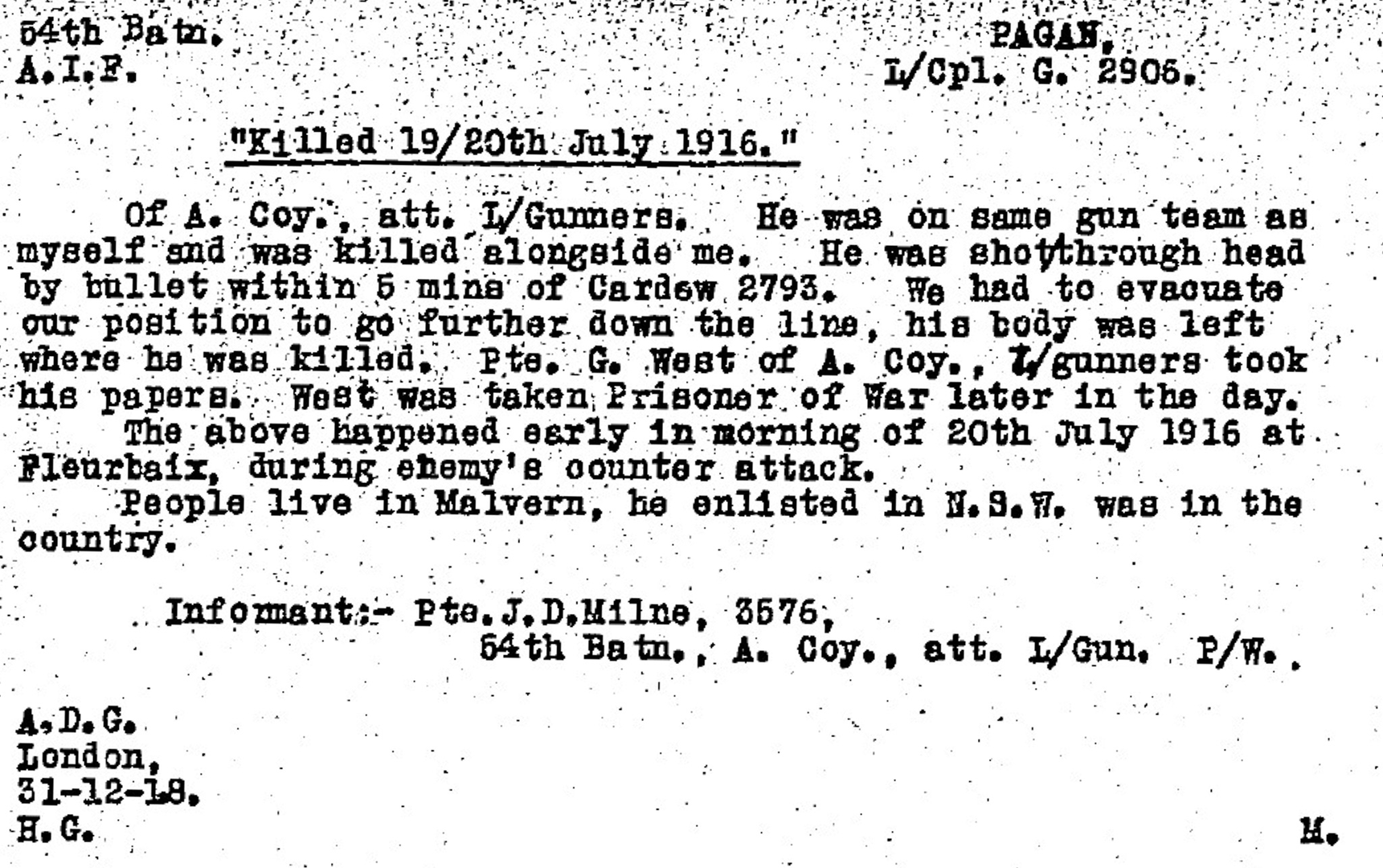
Private Thomas Barrett (4255) and Private David Lewis Collins’ (4459) reports were similar, also noting that they regrefully had to leave the bodies.
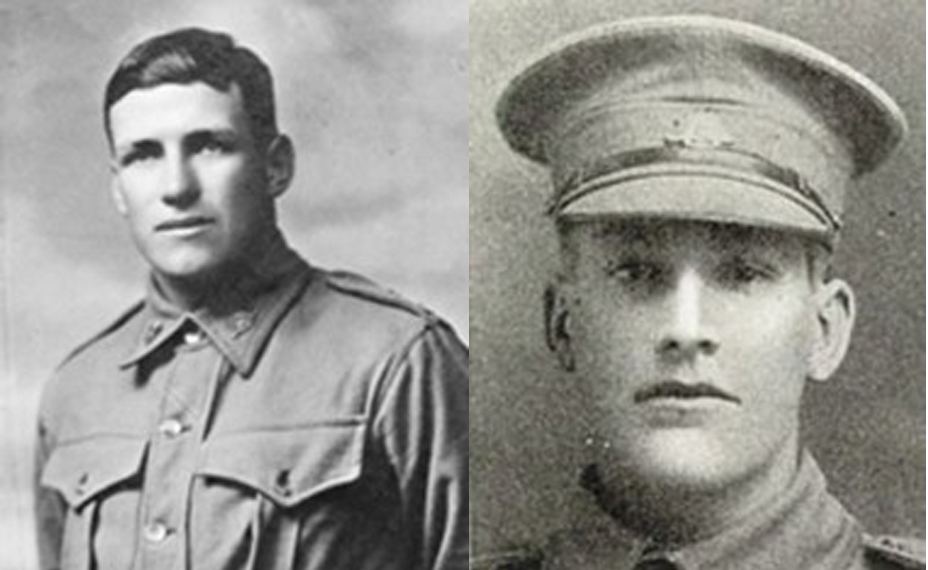
Right, George Pagan, Left, Pte Thuillier (Tom) Cardew
After the Battle
In the weeks following the Battle of Fromelles, families across New South Wales waited anxiously for news. At first, both George and his Tom were listed as wounded, but no word ever came of their whereabouts:
“Several weeks ago the relatives of T. L. Cardew and G. Pagan, of Gilgandra, were informed that those two soldiers had been wounded, but up to present their whereabouts have not been discovered.”
For months after the battle, George’s parents in Gilgandra wrote repeatedly to the Defence Department, desperate for news. Their letters show both anguish and persistence as they tried to learn what had become of their youngest son. His father, George Pagan Sr., wrote to Base Records on 13 September 1916.
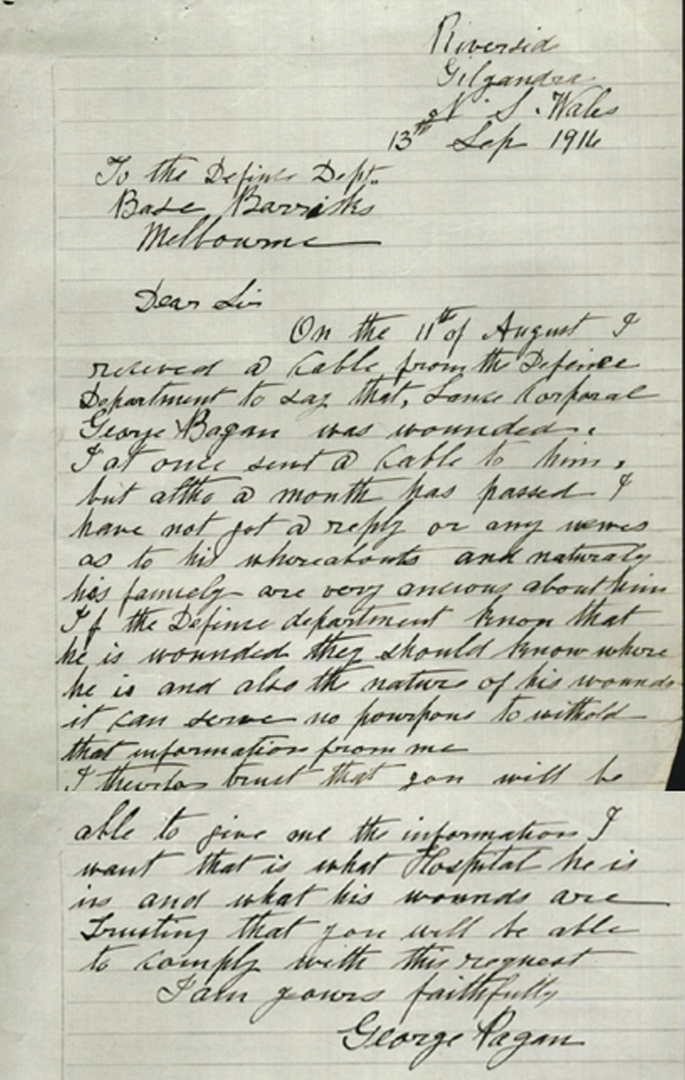
“On the 11th of August I received a cable from the Defence Department to say that Lance Corporal George Pagan was wounded. I at once sent a cable to him, but after a month has passed, I have not got a reply or any news as to his whereabouts and naturally his family are very anxious about him... We are getting very anxious about him, and I do think it is in the power of the Department to get the information required... I would impress on you the necessity of getting the information at once.”
His mother also reached out to the Australian Red Cross in London for help - “We have been trying to find out the whereabouts of No. 2906 Lance Corporal George Pagan, 54th Battalion, 14th Infantry Brigade, A Company A.I.F. We received word that he was wounded and have not been able to find out any more particulars of him… We have an idea he may be a prisoner of war, and if that is so, will you please forward the letter enclosed to him.”
Source: Australian Red Cross Wounded and Missing Files – Pagan George, p 14
In December 1916, Vera Deakin, secretary of the Red Cross Wounded and Missing Bureau in London, wrote to the family with heartbreaking news:
“We feel we must tell you that unhappily his name has come through on a German death list, dated November 4th. This does not necessarily mean that he died as a prisoner of war. On the contrary, we think that, in all probability, the Germans found his dead body and so have let us know that he died. We do not think it likely that we will hear anything further from the Germans, but we may have unofficial reports as to the way in which he met his death.”
The German Death List (Totenlisten) confirmed that Lance Corporal G. Pagan, 54th Battalion, 2906 had been killed. His identification disc was received from the Germans on 3 March 1917 and was later sent to his family.
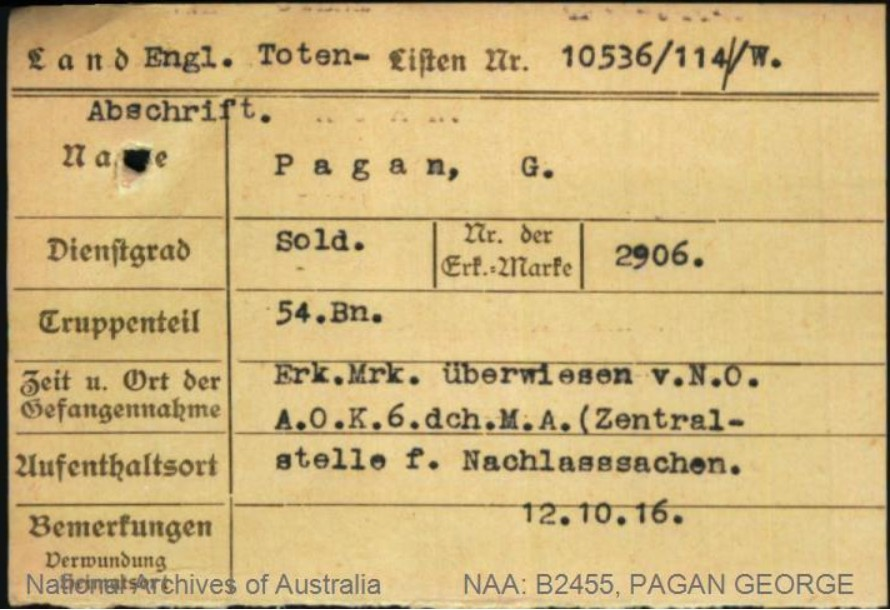
The news reached the Gilgandra Weekly in April 1917:
“Another of our Gilgandra boys, in the person of Private George Pagan, has made the supreme sacrifice and given his life for King, Country, and Honour... The deceased soldier was about 26 years of age, and the youngest son of Mr and Mrs G. Pagan, of ‘Burnside,’ East Malvern, Victoria. He was brother of Messrs. William and Anthony Pagan, of this district. He enlisted at Gilgandra about 18 months ago, and saw service in France, where he was killed.”
In Melbourne and Shepparton, memorial notices soon followed, including one inserted by his parents.
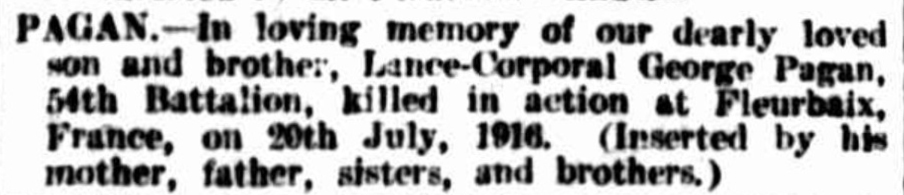
For the Pagan family — and for the community of Gilgandra, where George had been farewelled in 1915 as “a soldier honoured by all” — the long wait for answers finally ended with confirmation of what they had long feared - George had fallen during the charge at Fromelles and lay still in foreign soil. George was awarded the 1914-15 Star Medal, the British War Medal, the Victory Medal, a Memorial Plaque and a Memorial Scroll.
Finding George
After the battle, the Germans had recovered 250 Australian soldiers and placed them in a burial pit at Pheasant Wood. This grave was discovered in 2008 and since then efforts have been underway to identify these soldiers by DNA testing from family members. Thanks to George’s family members who came forward to donate DNA, he was positively identified with full honours at the Fromelles (Pheasant Wood) Military Cemetery, nearly ninety-four years after he fell.
Of the 102 soldiers from the 54th who were missing, as of Apr 2024, 28 of these soldiers have been identified and been formally buried in the Pheasant Wood Cemetery. On 19 July 2010, ninety-four years after the Battle of Fromelles, a solemn ceremony was held to dedicate the new Fromelles (Pheasant Wood) Military Cemetery in northern France. It was the first new Commonwealth War Graves cemetery built in over fifty years.
The service was attended by Prince Charles, the Governor-General of Australia Quentin Bryce, representatives of the British and Australian Governments, descendants of the fallen, and local French officials.
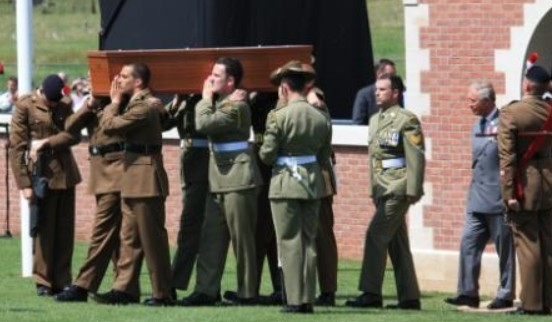
Prince Charles follows the coffin of the Unknown Soldier, buried on the day
As the last soldier was laid to rest, the cemetery was formally dedicated. Families placed sprigs of wattle and rosemary on the headstones, and the names of identified men were read aloud among the honoured dead. Tom Cardew was identified in 2017 and his dedication ceremony took place on 19 July 2017 at the 101st anniversary ceremony of the Battle of Fromelles. Both men’s names are commemorated on the Australian War Memorial Roll of Honour in Canberra and on the Gilgandra District War Memorial, ensuring their stories remain part of the community that sent them forth. Prior to this, he had been remembered on his grandparents’ headstone.
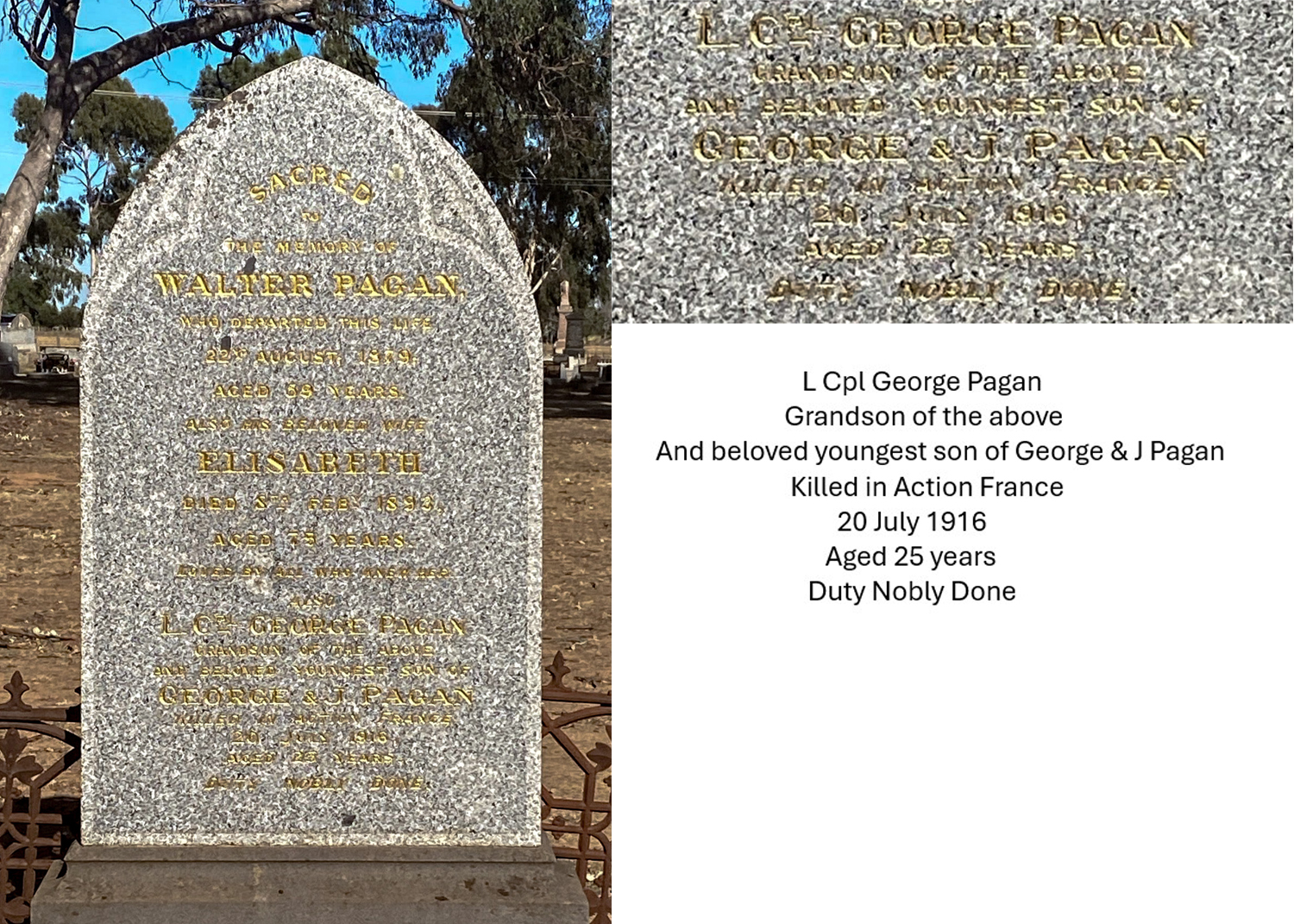
which includes a memorial to George
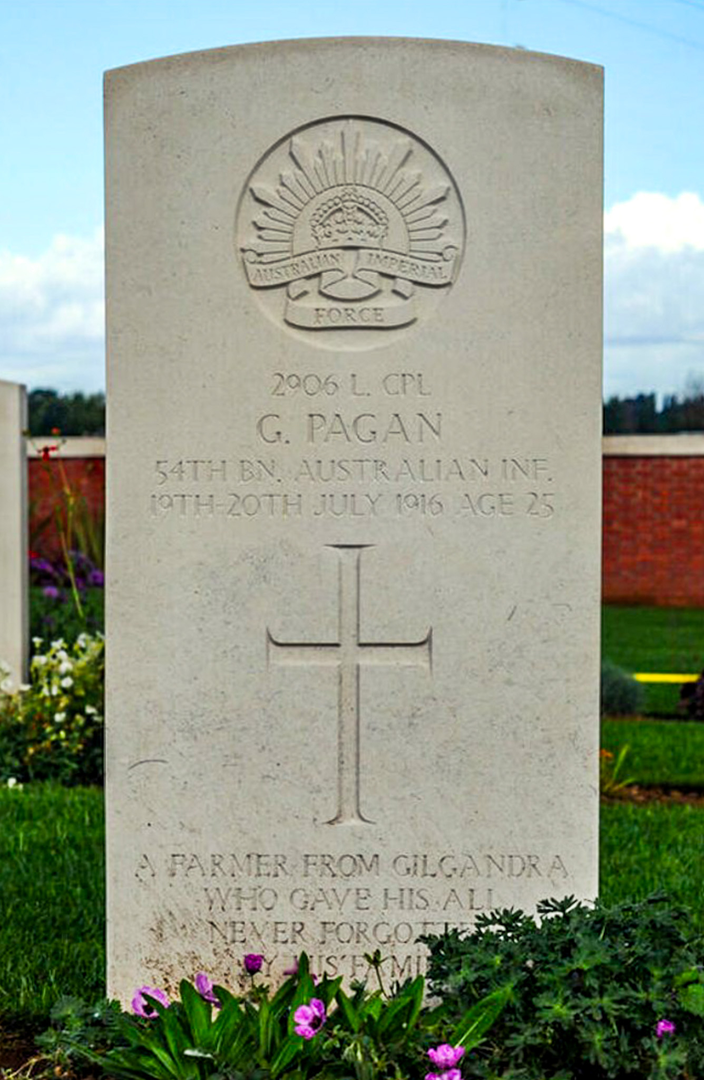
Who gave his all
Never forgotten
By his family
For the Pagan family, the identification of George in 2010 brought long-awaited peace after nearly a century of uncertainty.
The Fromelles Association would love to hear from you

Contacts
(Contact: carla@fromelles.info or geoffrey@fromelles.info).
(Contact: army.uwc@defence.gov.au or phone 1800 019 090).
Donations
If you are able, please contribute to the upkeep of this resource.
(Contact: bill@fromelles.info ).