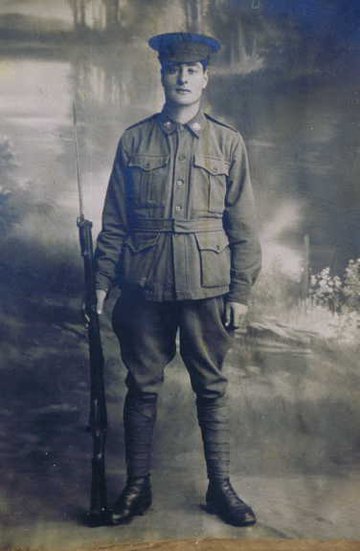
Francis James WILLIAMS
Eyes hazel, Hair dark brown, Complexion medium
Francis James Williams - From gold mining stock - a true digger.
Early Life
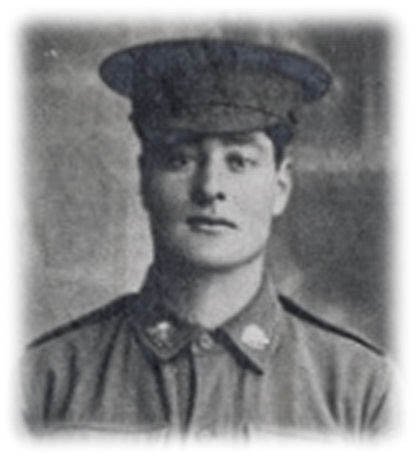
Francis James Williams, known to his family as Frank, was born on 8 December 1891 at the Long Creek, Meroo gold diggings near Windeyer, New South Wales. He was the youngest of nine children born to George Henry Chick Williams and Fanny Johnson.
Mining was deeply embedded in Frank's family. He was a third-generation miner, descended from families who had lived and worked around the goldfields of Long Creek, Meroo, Windeyer and Clarkes Creek, not far from the district where the New South Wales gold rush had begun in the 1850s.
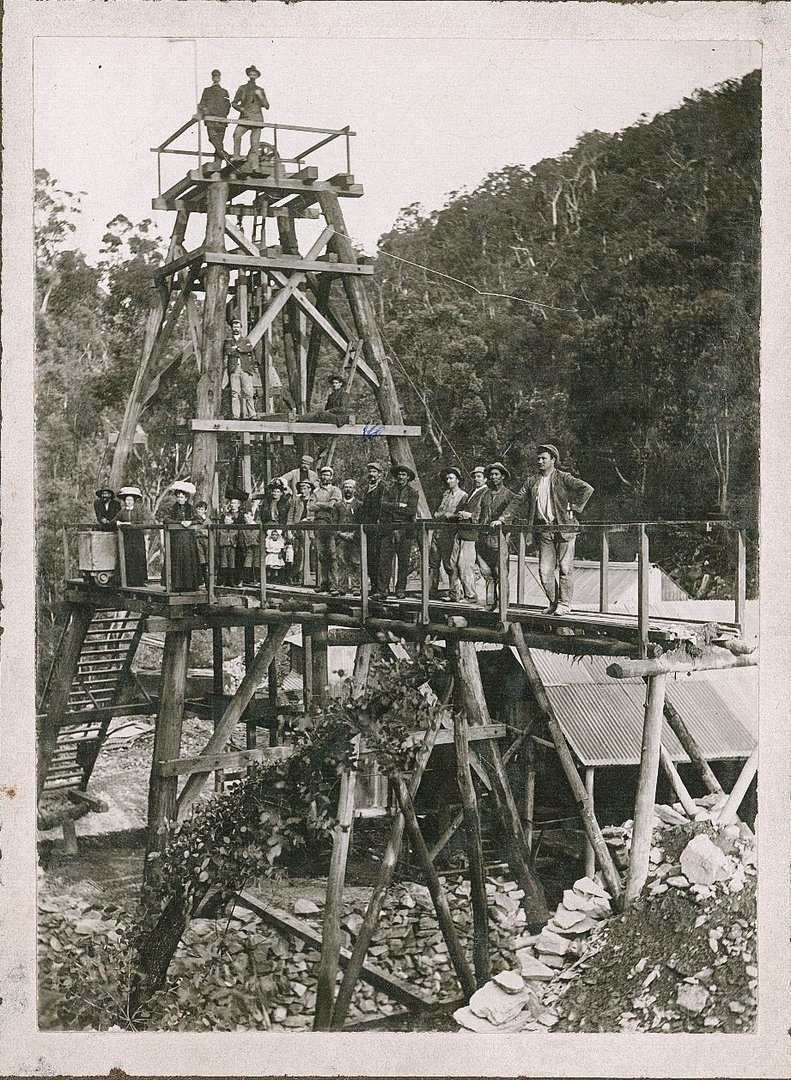
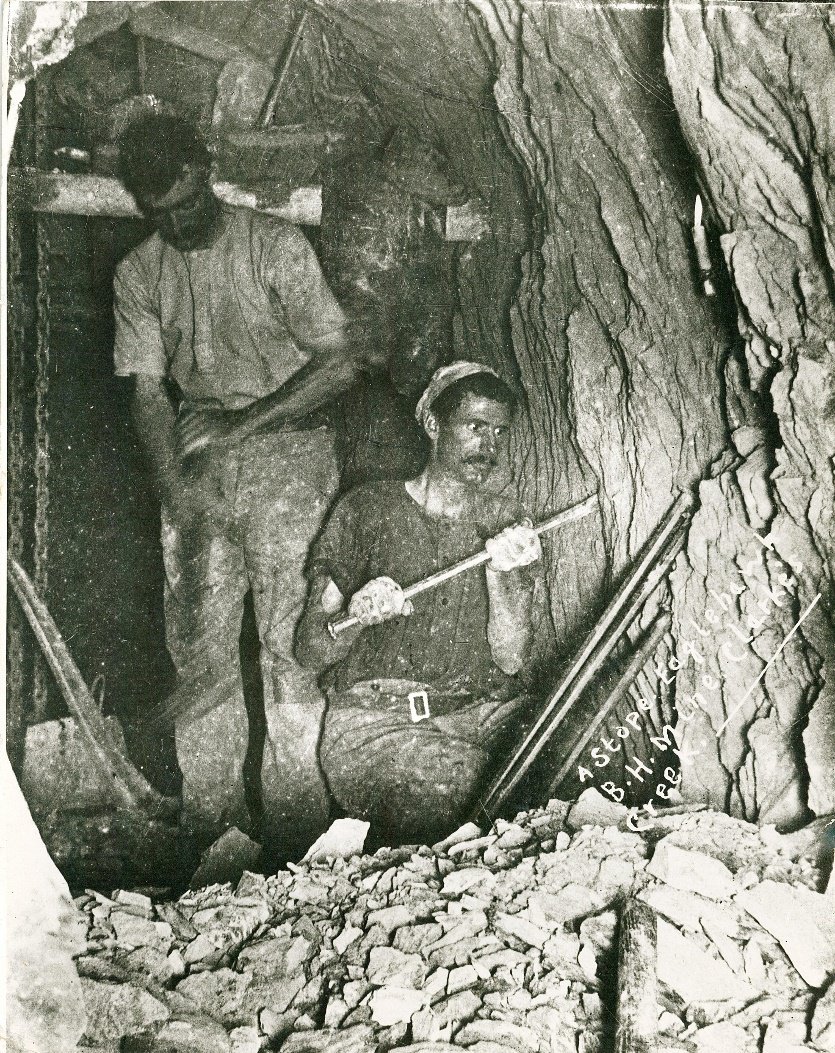
Frank Williams gave his occupation as miner when he enlisted in August 1915. In fact, he was a third-generation miner as the extended Williams family were gold prospectors from the diggings outside Mudgee, Long Creek, Meroo, Windeyer and Clarkes Creek - not that far from where the first gold rush occurred in 1851. These places are now ghost towns but were bustling centres back in the mid-1800s.
Frank’s grandmother, Emma, successfully raised a family of twelve at these diggings. When she died in 1928, she had 239 descendants and her passing was reported in local papers:
Death of a Pioneer
NONAGENARIAN PASSES. MRS E. (“GRANNY”) WILLIAMS
Mrs. Emma ("Granny") Williams, of Clarke's Creek, died at her home on Wednesday at the great age of 93 years. Deceased, who was one of the oldest residents of the Mudgee district possessed many lovable qualities and was held in the greatest respect by all who had the pleasure of her acquaintance. Her husband predeceased her by many years. She reared a large family of sons and daughters to whom the deepest sympathy will be extended. The sons are Messrs. George, John, Alfred, Arthur, Ernest (Long Creek), Frank (Sydney), and the daughters, Mesdames G. Reeves (Grattai), Croan, Goodver, and Cassidy (Sydney), Hextell (Bathurst), and Martin (Victoria).
The funeral took place to the Church of England portion of the Windeyer cemetery today (Thursday), Mr. J. C. Swords being in charge of the arrangements.
Frank grew up in the small gold-mining community around Windeyer, approximately 40 kilometres from Mudgee. The landscape of his childhood was one of mines and alluvial workings, where men either worked underground in the larger mines or searched for gold in the surrounding creeks.
More than a century later, Frank's relative Greig Williams recalled what remained of the community in which Frank had grown up:
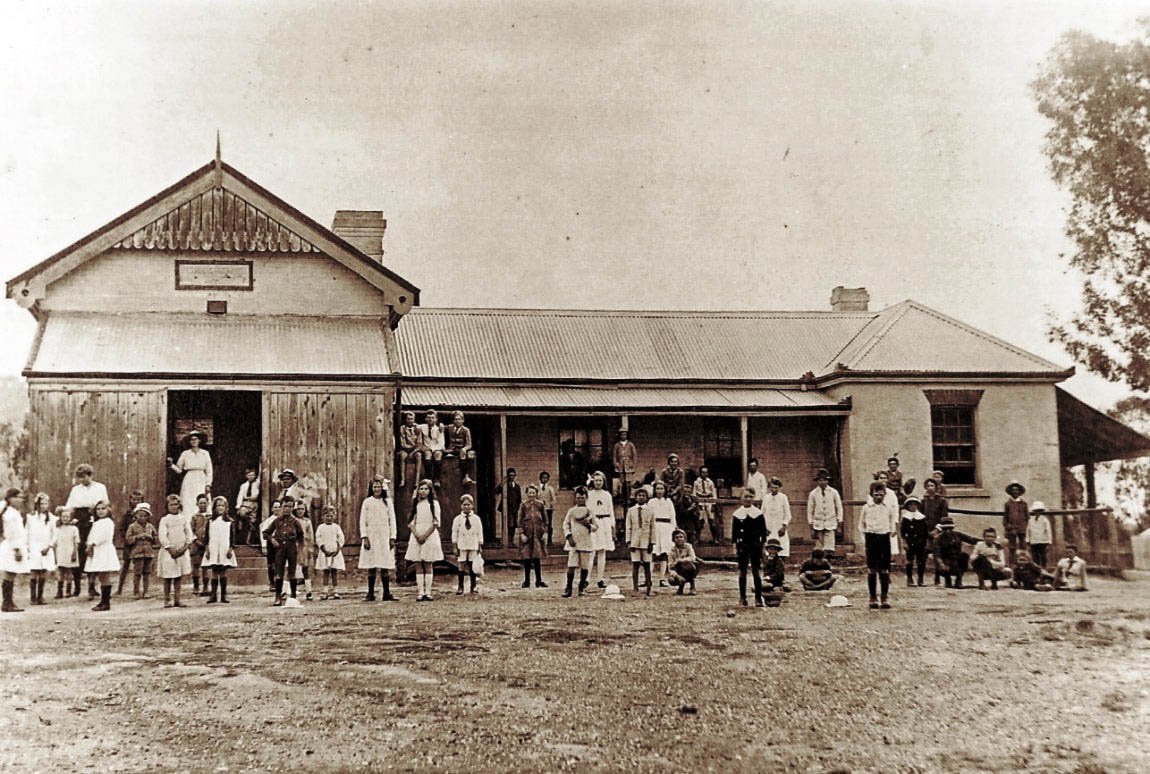
“The house is long gone as they were nearly all wattle and daub or mudbrick with an iron roof and nearly all the old river rock chimneys that were standing throughout Windeyer when I was a child have fallen down. There’s no town as such at Windeyer now and what buildings are still there are really spread out. About all thats left is the school built in 1857 - which Frank probably attended - the cemetery where many of the Williams family are buried, the church, the old police station and just the one pub (not built until 1911).”
Signing up
(cropped)
The majority of Windeyer recruits signed up in Bathurst but twenty-three-year-old Frank travelled to Lithgow instead when he enlisted in August 1915. Family researchers have assumed that he caught the train from Mudgee to Lithgow to visit his older brother George – seventeen years his senior – and signed up while there. Frank was unmarried but it is believed that he left a girlfriend behind, Marjorie McInnes.
Off to War
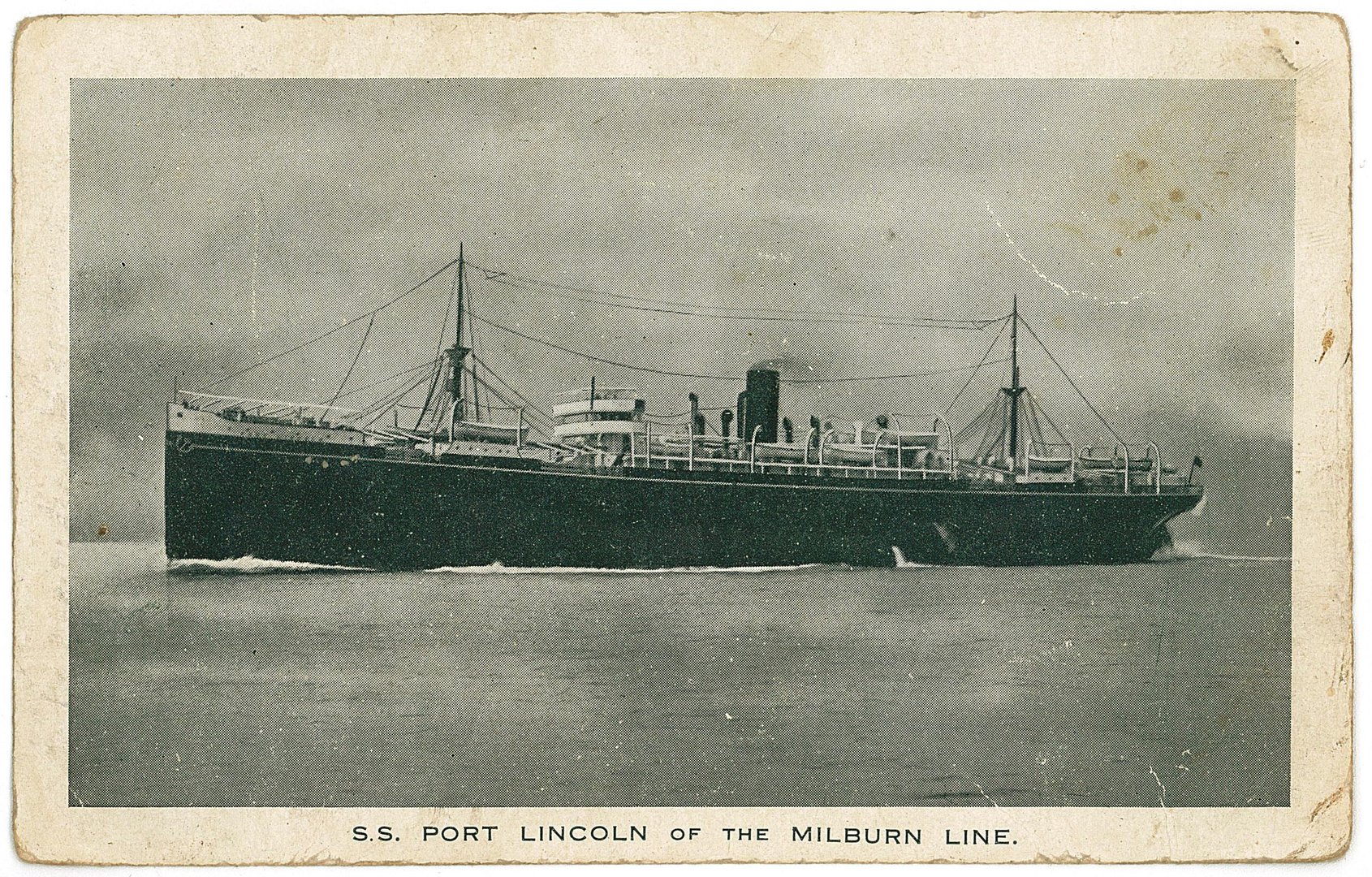
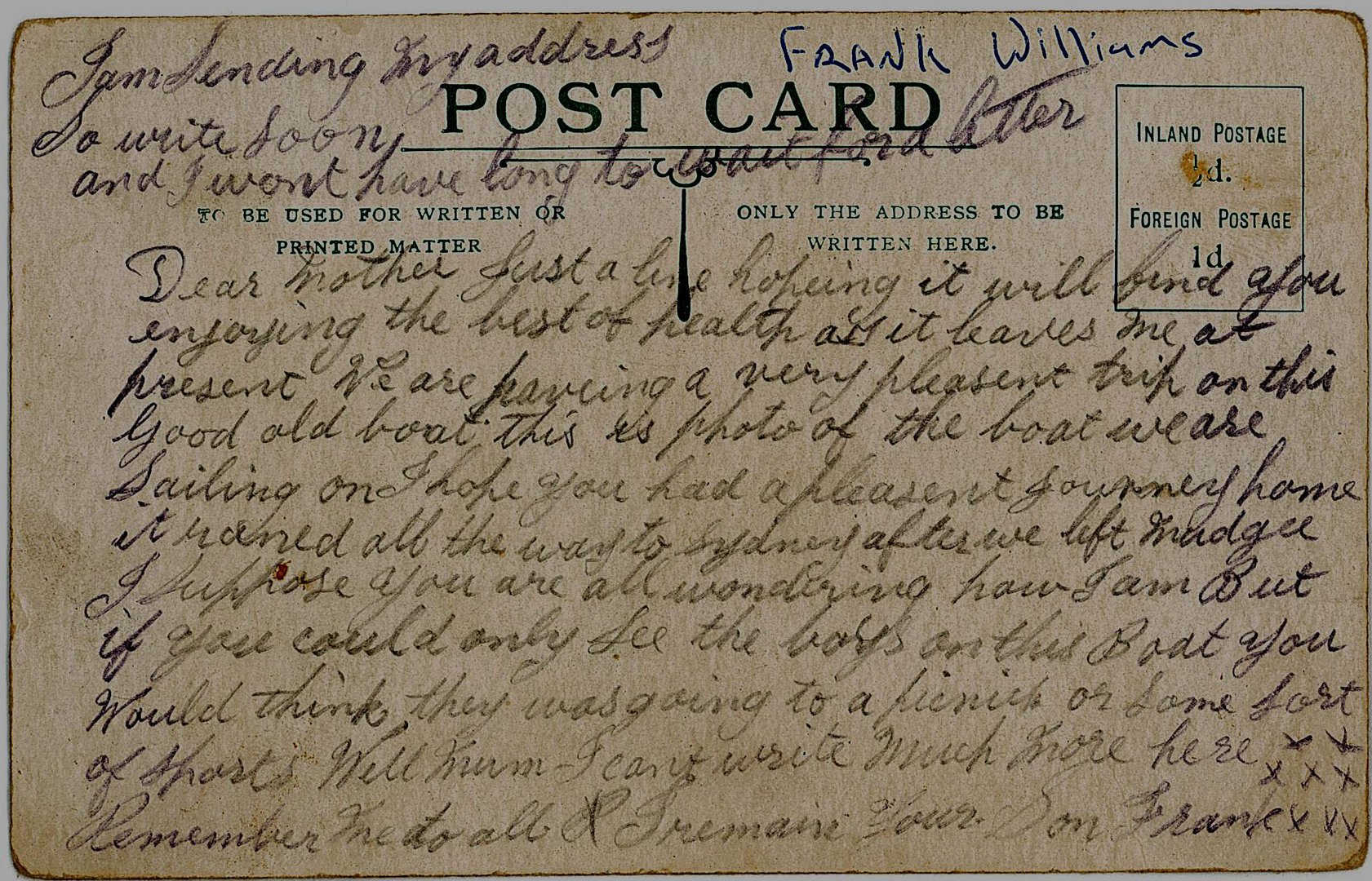
Frank embarked from Sydney on 13 October 1915 aboard HMAT A17 Port Lincoln with the 11th Reinforcements of the 4th Battalion. He was 23 years old and leaving behind the mining country around Windeyer where his family had lived for generations.
While aboard the troopship, Frank kept in touch with his family through postcards and letters. He observed that the mood among the recruits seemed more like they were setting off on a picnic or an adventure than going to war. Once he reached Egypt, however, his correspondence became more spasmodic and increasingly affected by wartime censorship. Frank had originally enlisted for service with the 4th Battalion, but the AIF underwent a major reorganisation in Egypt following the Gallipoli campaign. On 16 February 1916, he proceeded to join the newly formed 53rd Battalion at Zeitoun and was taken on strength with the battalion at Tel-el-Kebir that same day.
The 53rd Battalion was formed as part of the new 14th Brigade of the 5th Australian Division. Half of its men were experienced soldiers from the 1st Battalion, many of them Gallipoli veterans, while the other half were reinforcements such as Frank. Under Lieutenant Colonel N.R. Howse VC, the newly assembled battalion trained at Tel-el-Kebir in preparation for service on the Western Front. After four months in Egypt, Frank and the 53rd Battalion embarked from Alexandria on 19 June 1916 aboard the Royal George, bound for France. They disembarked at Marseilles on 28 June and travelled north by troop train towards the fighting.
By early July they were in the Fleurbaix sector, close to the front line opposite the German-held Aubers Ridge. On 10 July, the 53rd entered the trenches for the first time. Although regarded as a comparatively quiet part of the Western Front, the men quickly encountered artillery fire, flooded communication trenches, mud and the ever-present danger of German snipers and machine guns. During the following days the battalion moved between billets and the front line while preparations intensified for an impending attack. The men rehearsed their roles using replica German trench systems, equipment was checked, and artillery and ammunition were brought forward.
An attack planned for 17 July was postponed, leaving the battalion waiting under increasingly dangerous conditions. Private Jim Granger of the 53rd Battalion later described those days:
“We were held in suspense for three days… like a criminal waiting to hear the verdict. We had no dugouts where we were in the supports and shrapnel was bursting all round.” — Pte. Jim Granger, 53rd Battalion
Source: “Dorrigo Soldier’s Letters.” The Don Dorrigo Gazette and Guy Fawkes Advocate (NSW : 1910–1954), 14 October 1916, p.6. Viewed 31 Jul 2025, http://nla.gov.au/nla.news-article172005253
For Frank, the transition from the goldfields of Windeyer to the Western Front had taken less than a year. On 19 July 1916, he was with the 53rd Battalion near Fleurbaix as the men prepared for their first major battle.
It would be Frank's last day.
Battle of Fromelles
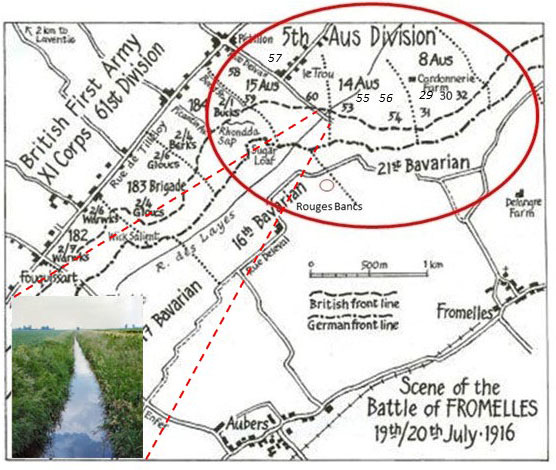
On 19 July 1916, Frank and the 53rd Battalion prepared for their first major action on the Western Front. They were part of the 14th Brigade attack near Fromelles, advancing towards the German positions opposite Aubers Ridge and close to the heavily fortified Sugar Loaf salient. At 5.15 PM, before the Australians could leave their trenches, a devastating German bombardment struck their lines. The Sugar Loaf was a particular danger. If it could not be neutralised, German machine guns positioned there could fire directly across the path of the advancing Australian battalions. At 5.43 PM, the signal was given and the 53rd Battalion went over the parapet in four waves. Private Arthur Norton Crewes, who survived the attack, later described those first moments:
“The signal for the charge sounded, and over the top we went into the face of death, shells bursting, machine guns rattling and rifles crackling.” — Pte. Arthur Norton Crewes, 53rd Battalion
Source: Private 4755 Arthur Norton Crewes, letter to family, 1 August 1916. Northenden Red Cross Hospital, Cheshire, England. Published in DIGGER (Fromelles Compilation), June 2006, via Yves Fohlen archives.
Despite the intense artillery, rifle and machine-gun fire, men of the 53rd crossed No-Man's-Land and entered the German positions. Corporal J.T. James later recalled:
“At Fleurbaix on the 19th July we were attacking at 6 p.m. We took three lines of German trenches.” — Cpl. J.T. James, 53rd Battalion
Source: Australian Red Cross Wounded and Missing Files – Major Victor Sampson, p.5
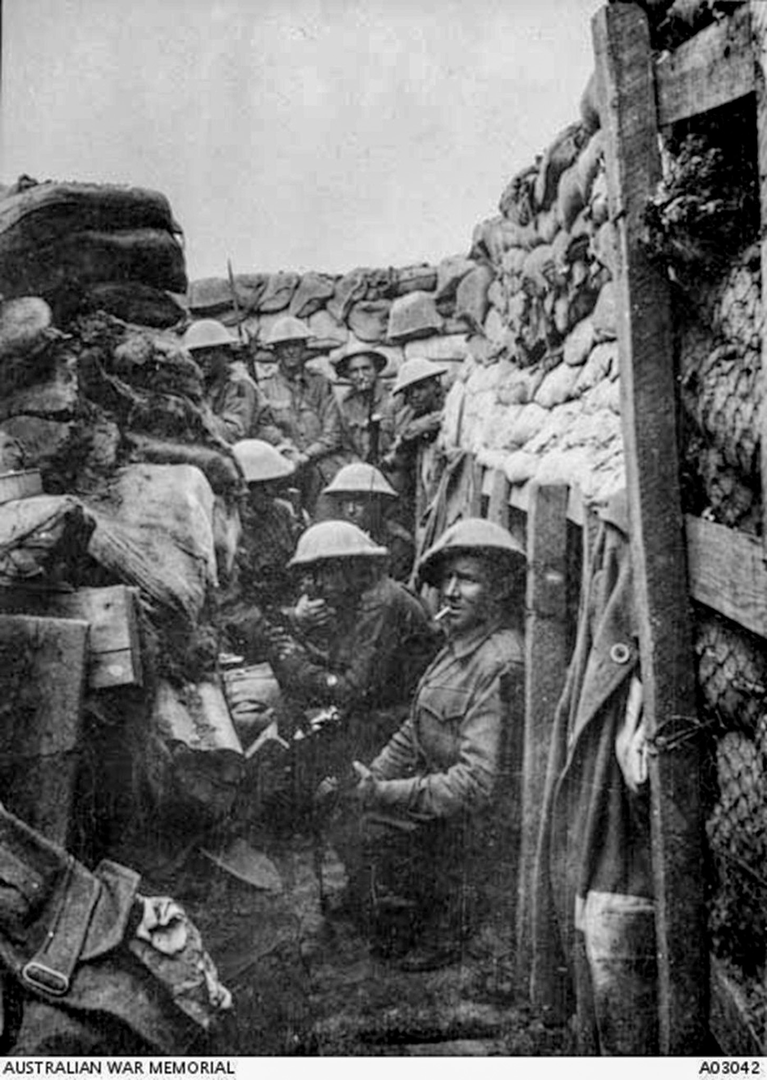
The success came at an appalling cost. Within the opening stages of the attack, the 53rd lost all of its company commanders, all seconds-in-command and six junior officers. The Australians who reached the German position found themselves attempting to hold shallow, damaged and water-filled trenches while the situation on their right deteriorated.
Frank's precise movements during the attack are unknown. Somewhere amid the fighting of 19 July he disappeared. When the survivors returned, he was not among them and no one could provide his family with an account of what had happened to him. Throughout the night, the surviving men of the 53rd fought to hold their position. With the Sugar Loaf still in German hands and the Australian right flank exposed, German troops were eventually able to work behind parts of the captured position. The battalion war diary recorded simply “Many heroic actions were performed.”
Source: AWM4 23/70/2 – 53rd Battalion War Diary, July 1916, p.8
The Australians were eventually forced to abandon their gains and make their way back across No-Man's-Land. The scale of the destruction within the 53rd Battalion was recorded a few days later by its Acting Commanding Officer, Major Croshaw-Danby “The Battalion went into action on 17th inst with: Officers 27, Other Ranks 823. On 21st July it has of these: Officers 5, Other Ranks 222.” — Major Croshaw-Danby, Acting CO, 53rd Battalion
Source: AWM4 23/70/2 – 53rd Battalion War Diary, 23 July 1916
In attempting to reconstruct the battle, Croshaw-Danby acknowledged the terrible reason why so much remained uncertain:
“A great many details are necessarily gathered second hand as those who were in the best position to know are no longer with the Battalion.”
— Major Croshaw-Danby, Acting CO, 53rd Battalion
Source: AWM4 23/70/2 – 53rd Battalion War Diary, July 1916
Frank was initially reported missing in action. His family later learned that another soldier, wounded at Fromelles, had told his mother that he and Frank had gone over the parapet together. That was the last time he had seen him. For weeks there was no definite news. Then Frank's name appeared on a German death list dated 13 September 1916. German records provided one crucial piece of evidence about what had happened to him: his identity disc, numbered 3605, had been recovered.
A later translation of the German report stated: “Australian Soldier Pte. Francis James Williams, Identity Disc 3605, fell in the neighbourhood of Fromelles on 19/7/16.”
Source: NAA: B2455, WILLIAMS, Francis James – First AIF Personnel Dossier 1914–1920, German report translated 29 October 1919.
The Germans had confirmed that Frank had fallen near Fromelles on 19 July. What they did not record was the precise place where his body had been found or where he had subsequently been buried. Private Francis James “Frank” Williams was 24 years old.
He has no known grave.
After the Battle
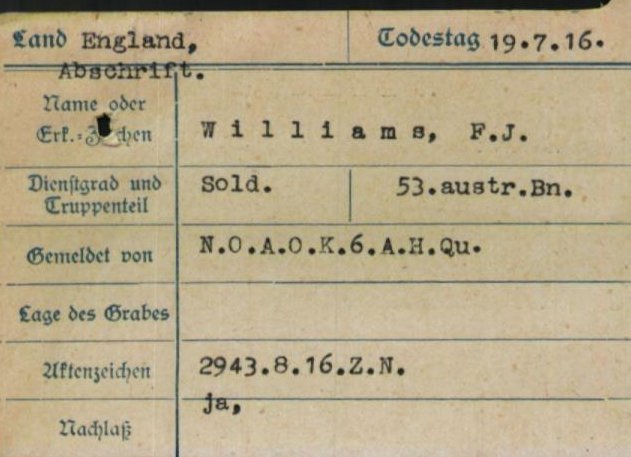
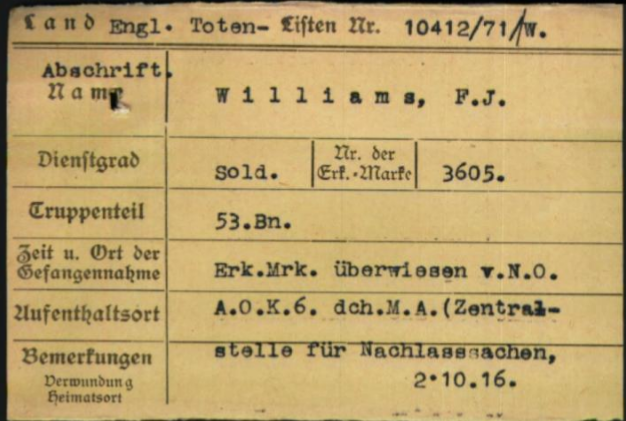
Frank was listed as missing but when his name appeared on a German death list in September 1916 he was officially listed as killed in action. His identity disc was returned by the Germans. Generally, authorities returned the disc to next of kin (his father, George, in Frank’s case) but there is no notation on file whether this occurred with Frank’s disk. Details about how and where Frank died were never known.
After his death, Frank’s mother received a letter from the mother of another soldier who had been wounded at Fromelles. His mother reported that he and Frank had gone over the parapet together but that that was the last time he saw him.
The family and his girlfriend, Marjorie, were left to grieve his loss and to live with the uncertainty of not knowing. Family members say that his parents would always set an extra place at the Sunday dinner table just in case Frank would turn up. His sister, Clara Yavion (nee Williams), kept up that tradition for many years after her parents had passed away as the family always held out hope that, since no body was ever found, that he might alive be out there somewhere.
Finding Frank
Frank's remains have never been formally identified and he has no known grave. His name is commemorated at V.C. Corner Australian Cemetery and Memorial at Fromelles. The German records provide an important clue to his fate.
The record confirms that Frank died near Fromelles, but it does not reveal where his body was subsequently buried. In 2008, a mass burial site containing 250 Australian and British soldiers was discovered at Pheasant Wood, near Fromelles. The soldiers had been buried by German troops following the battle. DNA testing, genealogy and historical research have since allowed many of these men to be identified.
Frank remains among the missing whose final resting place has not been established. Importantly, Frank has not been forgotten by his family. Family members have come forward and donated DNA to assist the Australian Army's identification program.
Greig Williams, one of many family members seeking to assist in identifying Frank said:
“As a direct male descendant of Frank’s father, I was happy to be able to provide the Australian Army with a sample of my DNA. I am hopeful that one day Frank’s remains will be identified. I go out to Windeyer often and, each time, I visit the War Memorial in Mudgee where Frank’s name is listed.”
DNA has been received for family connections to
| Soldier | Francis James Williams 1891-1916 |
| Parents | George Henry Chick Williams 1849-1934 Maitland New South Wales | ||
| and Fanny nee Johnson 1849-1932 Guilsborough England |
| Grandparents | |||
| Paternal | John Frederick Williams 1810-1892 London and Emma Esther Chick | ||
| Maternal | Eliza Matthews 1820-1891 and Jacob Johnson 1819-1897, both from Guilsborough, Northamptonshire, England |
The Fromelles Association would love to hear from you

Contacts
(Contact: carla@fromelles.info or geoffrey@fromelles.info).
(Contact: army.uwc@defence.gov.au or phone 1800 019 090).
Donations
If you are able, please contribute to the upkeep of this resource.
(Contact: bill@fromelles.info ).