Thomas Henry ALLANSON
Eyes brown, Hair brown, Complexion sallow
Thomas Henry “Tommy” Allanson – “Brave, honest and true”
Can you help find Tommy?
Tommy’s body was never found after the Battle of Fromelles and there are no records of his burial.
A mass grave was found in 2008 at Fromelles, a grave the Germans dug for 250 Australian soldiers they recovered after the battle. As of 2024, 180 of these soldiers have been able to be identified via DNA testing.
Tommy may be among these remaining unidentified men. There is still a chance to identify him — but we need help. We welcome all branches of his family to come forward to donate DNA to help with his identification, especially those with roots in Newcastle, NSW and Durham and Sowerby, Yorkshire, England
See the DNA box at the end of the story for what we do know about his family.
If you know anything of contacts for Tommy, please contact the Fromelles Association.
Early Life
Thomas Henry (Tommy) Allanson was born on 29 July 1887 in Lambton, New South Wales, the eldest son of Thomas (Jr.) and Hannah Elizabeth Smith’s seven children:
- Thomas Henry (1887–1916)
- Mary A. (1889–1890)
- Elizabeth (1891–1975)
- James (“Jack”) (1893–1958)
- William (1896–1968)
- Frank (1906–1964)
- Mildred (1909–1910)
Tommy’s parents arrived in Australia in 1886, along with his grandfather Thomas Sr.’s extended family. They came from Great Lumley, Durham, England and settled in the growing mining suburb of Merewether, Newcastle, NSW. His mother, Hannah, had grown up in the coal district of Hetton-le-Hole, Durham, England.
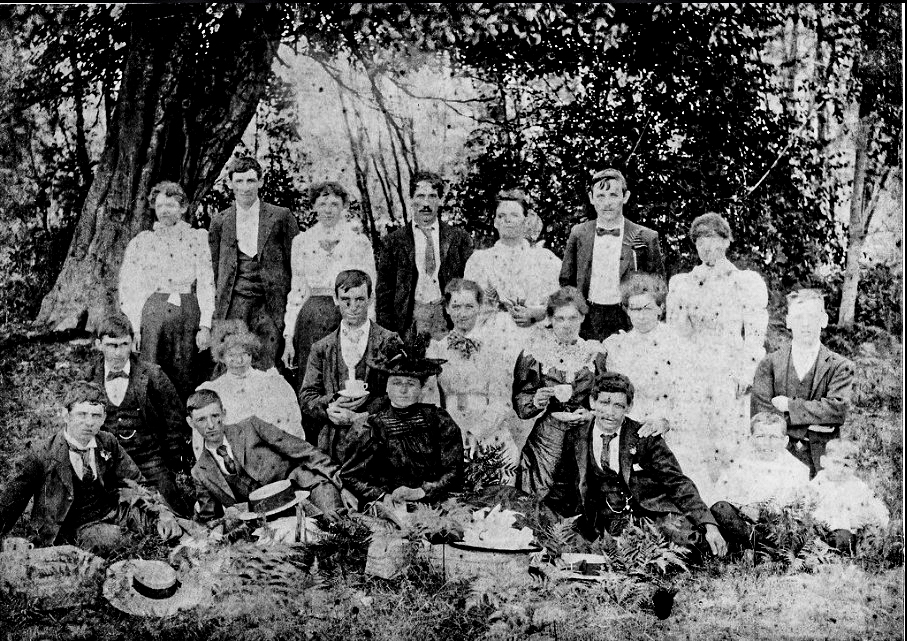
Thomas Snr, with some of his eight children who migrated in 1886
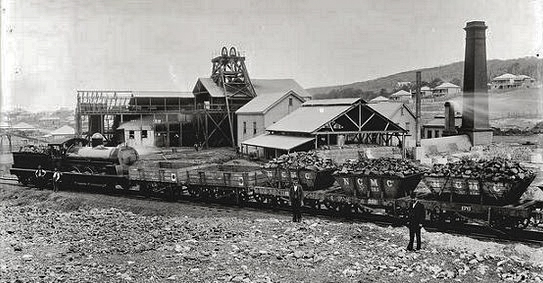
Tommy’s father worked as a coal miner and quickly became active in the community and workers’ movements. By the early 1900s he was delegate for the Sea Pit miners’ lodge and Vice-President of the Newcastle Eight Hour Committee. He also served as a Sir Knight in the Royal Black Preceptory No. 666, part of the Loyal Orange Lodge. Thomas Sr. had migated to Australia from Sowerby, Yorkshire. He became a respected elder of the Glebe Methodist Church. Tommy’s mother Hannah was remembered locally for her kindness and Methodist faith.
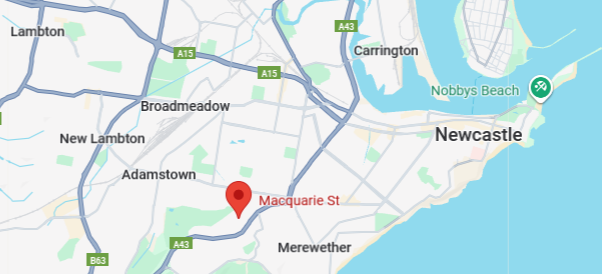
The family lived at 95 Macquarie Street, Merewether in a modest miner’s cottage close to the pit and the local Glebe Methodist Church, where they were regular worshippers.
Tommy attended the Merewether Public School in adjacent Hunter St. and then worked as a labourer around the Newcastle area. He was remembered as an outgoing young man, known locally by his nickname “Tommy” and as active in the area’s lively sporting scene. Both he and his younger brother James (“Jack”) played football for the Merewether Advance Football Club. Tommy’s name first appeared in Merewether playing lists in 1908 and he was a regular playing member for the club until he enlisted.
Off to War
Tommy and James were among the hundreds of Newcastle and Hunter Valley men who answered the call during the 1915 recruitment drives. James was first to enlist, 18 July 1915, and 28 year old Tommy followed on 31 August. Tommy was assigned to the 1st Battalion, 15th Reinforcements and James (2333) to the 19th Battalion, 5th Reinforcements. James left Australia on 8 October, but Tommy did not depart until 8 March 1916, aboard the HMAT A15 Star of England. After reaching Egypt, Tommy was transferred to the newly-formed 53rd Battalion on 20 April.
The battalion was built from Gallipoli veterans of the 1st Battalion and new reinforcements like Tommy — men who had yet to see battle. The Gallipoli soldiers in the 53rd were not slow in pointing out to whoever would listen that they were the “Dinkums” and the new recruits were the “War Babies”.
Source: - AWM4 23/70/1, 53rd Battalion War Diaries, Feb-July 1916, page 3
Training in Egypt was intense. The 53rd Battalion spent long weeks at Ferry Post near the Suez Canal, constructing and occupying replica trench systems built to mirror those in France. T
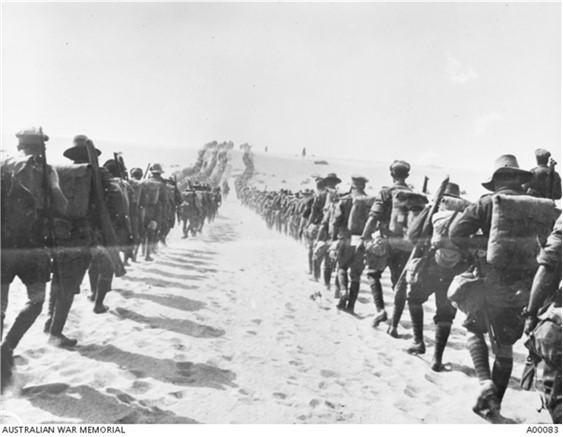
hey endured searing desert heat, dust storms and the relentless rhythm of musketry, bayonet practice, and bomb-throwing drills. During this time, the battalion formed strong bonds of mateship and discipline — qualities that would soon be tested in battle. On 16 June they began the move from their camp to the Western Front. 32 officers and 958 soldiers of the 53rd left Alexandria on 19 June on the troopship HMT Royal George, bound for Marseilles, France to become part of the British Expeditionary Force on the Western Front. They arrived in Marseilles on 28 June and were immediately entrained for a 62-hour journey north to Hazebrouck before finally marching into the camp at nearby Thiennes in northern France. During their trip it was noted that their ‘reputation had evidently preceded them’, as they were well received by the French at the towns all along the route.
Source - AWM4 23/70/2 53rd Battalion War Diaries February - June 1916, p. 4
This area near Fleurbaix was known as the “Nursery Sector” – a supposedly relatively quiet area where inexperienced Allied troops could learn the harsh realities of Western Front trench warfare against the Germans. But the quiet times and the training period did not last long. On 8 July they began a 30 km march to Fleurbaix and on 10 July, the 53rd entered trenches for the first time. The front near Fleurbaix was anything but calm. Rain flooded the communication trenches, artillery fire harassed supply lines, and the soldiers dug in amid the mud and barbed wire of No-Man’s-Land.
The Battle of Fromelles
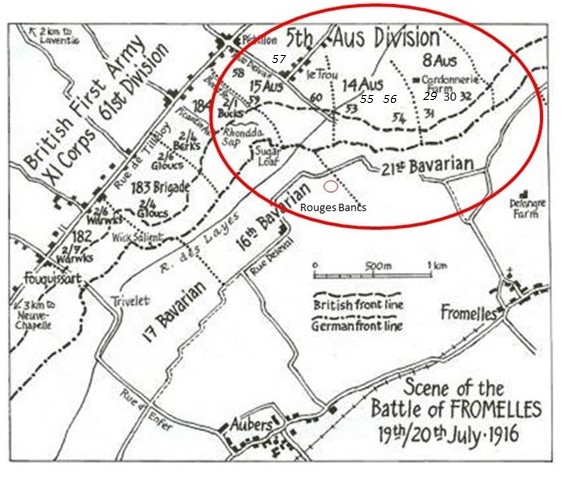
The men knew something was coming. They rehearsed attacks in replica trench systems, inspected bayonets and watched as huge guns rolled into place behind the lines. Then on 16 July, they moved up for an attack on the 17th —only to have it postponed due to weather. The delay proved torturous. Private Jim Granger (4784), a young Dorrigo soldier, described the tension in his dugout:
“We were held in suspense for three days… like a criminal waiting to hear the verdict. We had no dugouts where we were in the supports and shrapnel was bursting all round.”
On the 19th, heavy bombardment was underway from both armies by 11.00 AM. At 4.00 PM the 54th Battalion rejoined on their left. All were now in position for battle.
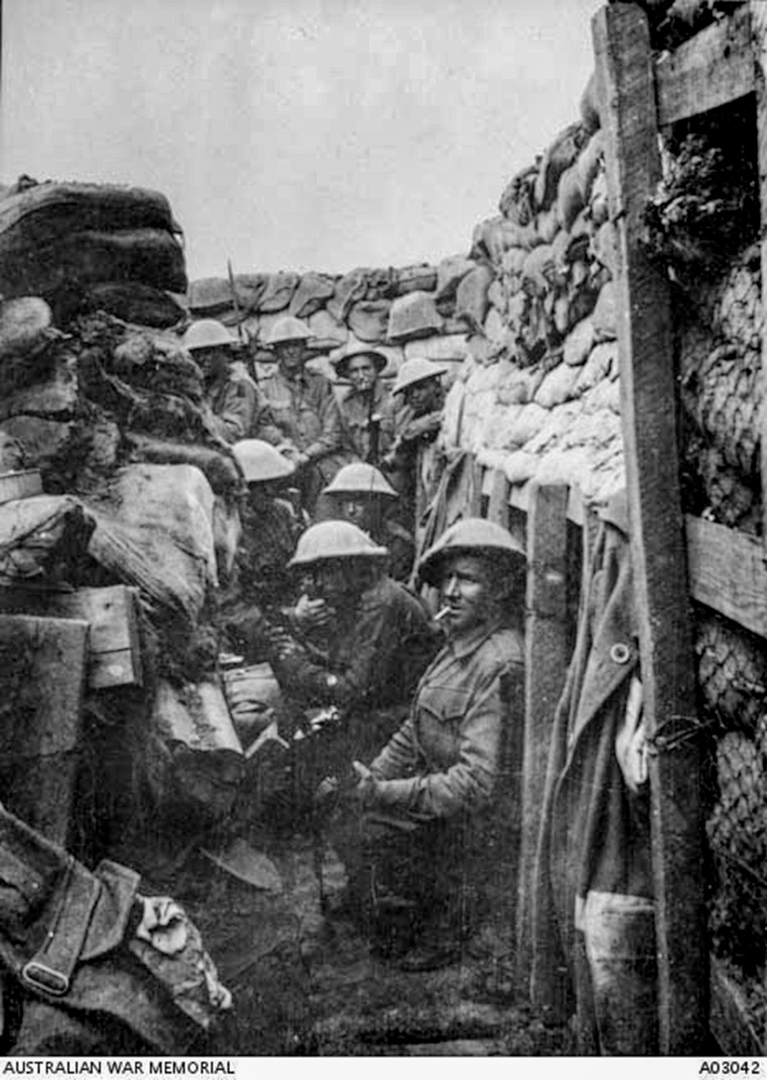
Zero Hour for advancing from their front-line trenches was to be 5.45 PM, but the Germans knew this attack was coming and were well-prepared. They opened a massive artillery bombardment on the Australians at 5.15 PM, causing chaos and many casualties. The main objective for the 53rd was to take the trenches to the left of a heavily armed, elevated German defensive position, the ‘Sugar Loaf’, which dominated the front lines. If the Sugar Loaf could not be taken, the 53rd and the other battalions would be subjected to murderous enfiladed fire from the machine guns and counterattacks from that direction. As they advanced, they were to link up with the 60th and 54th Battalions on their flanks.
The Australians went on the offensive at 5.43 PM. They moved forward in four waves – half of Tommy’s A Company and B Company in each of the first two waves and half of C and D in the third and fourth. They did not immediately charge the German lines, they went out into No-Man’s-Land and lay down, waiting for the British bombardment to lift. Private Arthur Crewes (4755) wrote of the time:
“At 5.43 pm the signal for the charge sounded, and over the top we went into the face of death, shells bursting, machine guns rattling and rifles crackling.”
At 6.00 PM the German lines were rushed. The 53rd were under heavy artillery, machine gun and rifle fire, but were able to advance rapidly. Corporal J.T. James of C Company (3550) reported:
“At Fleurbaix on the 19th July we were attacking at 6 p.m. We took three lines of German trenches”
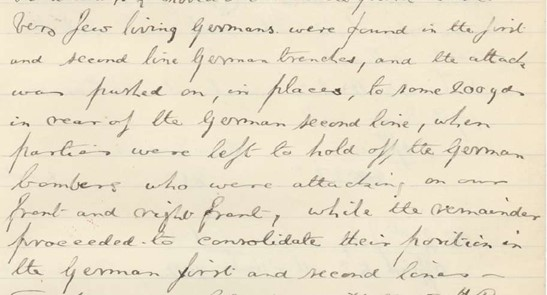
As below, the 14th Brigade War Diary notes that the artillery had been successful and “very few living Germans were found in the first and second line trenches”, but within the first 20 minutes the 53rd lost ALL the company commanders, ALL their seconds in command and six junior officers.
Source - AWM C E W Bean, The AIF in France, Vol 3, Chapter XII, pg 369
Some of the advanced trenches were just water filled ditches, which needed to be fortified by the 53rd to be able to hold their advanced position against future attacks.
They were able to link up with the 54th on their left and, with the 31st and 32nd, occupied a line from Rouges Bancs to near Delangre Farm, but the 60th on their right had been unable to advance due to the devastation from the machine gun emplacement at the Sugar Loaf. They held their lines through the night against “violent” attacks from the Germans from the front, but their exposed right flank had allowed the Germans access to the first line trench BEHIND the 53rd, requiring the Australians to later have to fight their way back to their own lines. By 9.00 AM on the 20th, the 53rd received orders to retreat from positions won and by 9.30 AM they had “retired with very heavy loss”.
Source - AWM4 23/70/2 53rd Battalion War Diaries July 1916 page 7
Of the 990 men who had left Alexandria just weeks before, the initial count at roll call was 36 killed, 353 wounded and 236 missing:
“Many heroic actions were performed.”
To get some perspective of the battle, when Charles Bean, Australia’s official war historian, attended the battlefield two and half years later, he observed a large quantity of bones, torn uniforms and Australian kit still on the battlefield. The final impact of the battle on the 53rd was 245 soldiers were killed or died from their wounds and, of this, 190 were not able to be identified.
Tommy’s Fate
Tommy was with A Company, one of the first to advance into No-Man’s-Land. He was reported missing after the attack, but with the ferocity and chaos of the battle hard information was scarce as the Army and the Red Cross sifted through files, witness statements, POW information from Germany and other sources. His brother James was also in action in at the same time, at Poziers. He received a gunshot wound and was sent to England for treatment. News for both men reached home in August.
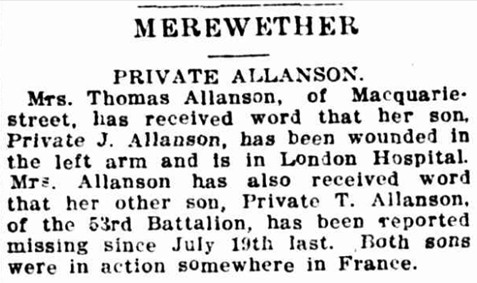
The only witness statement for Tommy was in December 1916 from Private Walter D. Wray (4895, 53rd Bn), who told investigators:
"Informant knows a man of this name in A Company, now with H.Q., he believes, whom he saw well a month ago at Mametz Wood. He describes him as short, broad, clean-shaven with very light hair, and he was known as ‘Snowy’."
This, however, did not prove to be true.
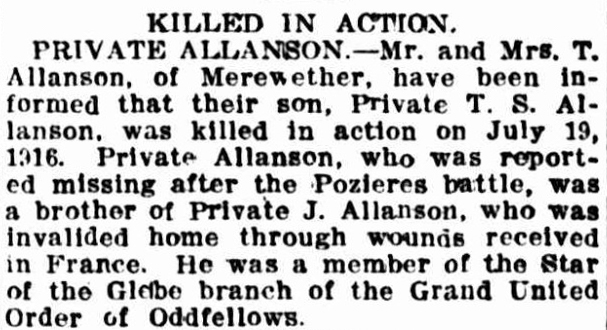
Despite further enquiries, no news emerged. In an Enquiry in the Field held on 2 September 1917, Tommy’s status was officially changed to Killed in Action on 19 July 1916.
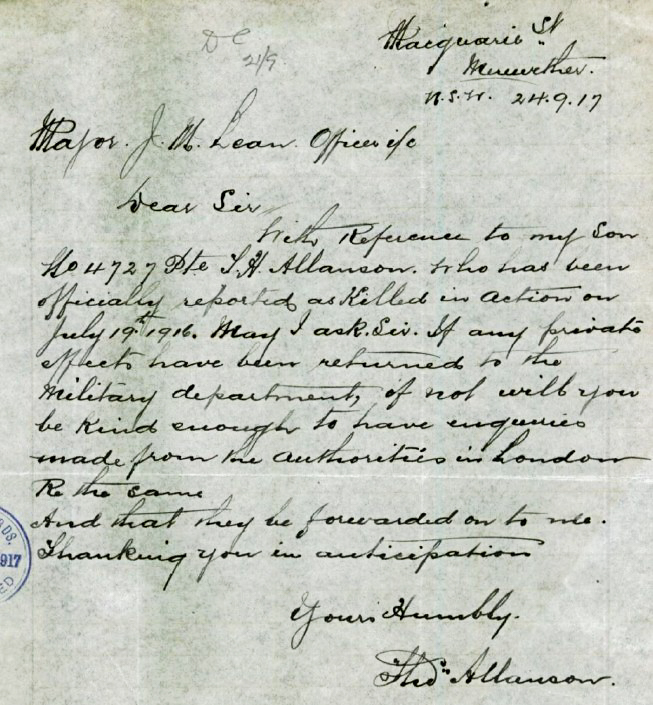
Seeking some degree of closure, Tommy’s father wrote to see if there were any of Tommy’s belongings to be returned…unfortunately, no.
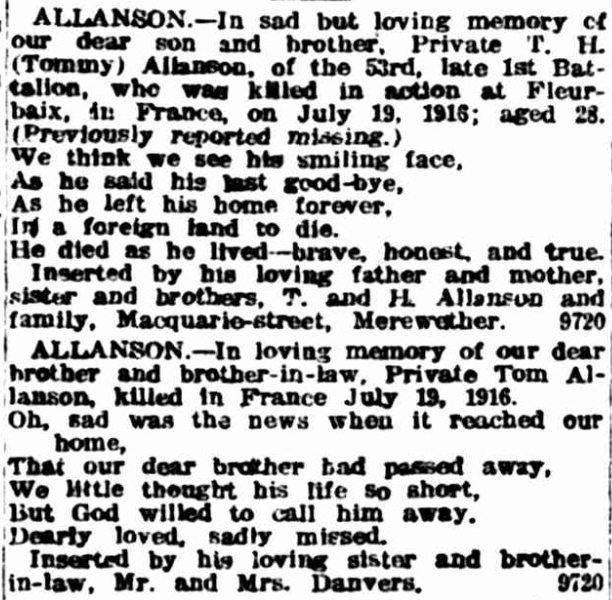
His family placed heartfelt memorial notices in the newspapers for a number of years.
His parents completed the Roll of Honour Circular, noting simply - “Posted missing, grave not known.”
Source - AWM Roll of Honour Circular – Thomas Henry Allanson, completed by T. and H. Allanson, Merewether, NSW
Tommy was awarded the British War Medal, the Victory Medal, a Memorial Plaque and a Memorial Scroll, for which the family expressed their gratitude.
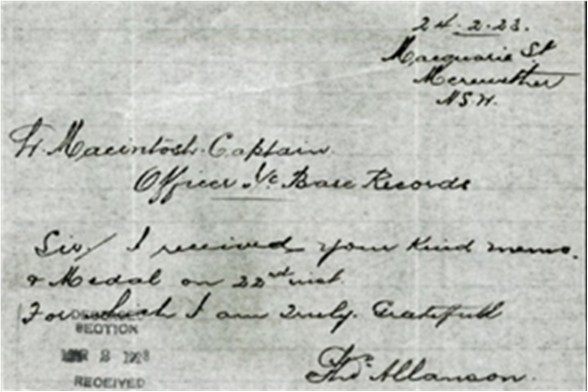
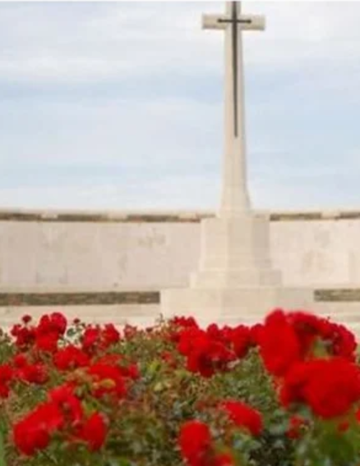
Tommy name is on the V.C. Corner Memorial (Panel 6) at Fromelles, France, the Australian War Memorial, Canberra and on multiple community memorials — including the Glebe Methodist Church Roll of Honour (unveiled March 1917), Merewether Oddfellows' (Star of The Glebe Lodge) Roll of Honour, the Merewether Advance Football Club Roll of Honour, the Merewether (Mitchell Park) Memorial Gates Merewether Public School Roll of Honour and the Merewether Welcome Home presentation of 1918, where his father accepted a framed certificate on behalf of both Tommy and his surviving brother James.
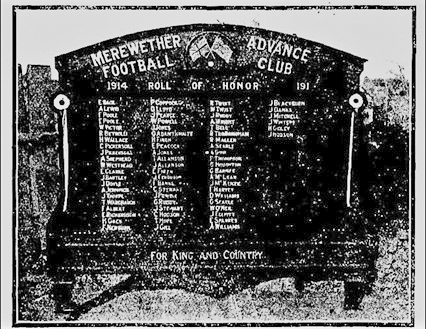
the Allansons in the second column
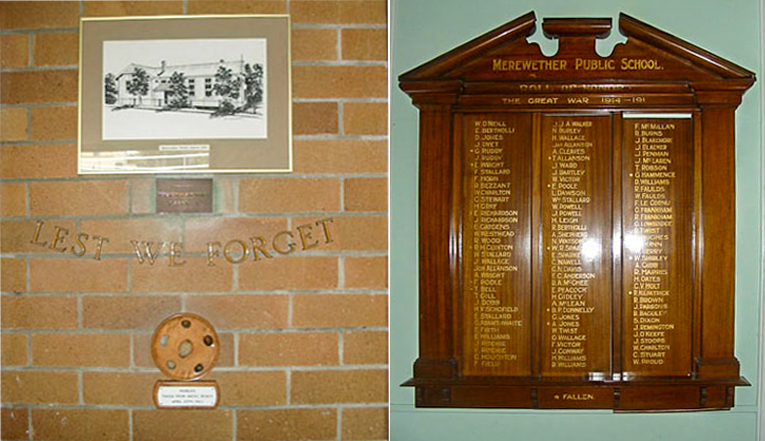
Six pebbles from Anzac Beach attached to a round wooden base
Finally, while there is no memorial inscription on the headstone plaque for the Allanson family to tell us of the loss of their son during The Great War, local resident Gary Mitchell has placed poppies in remembrance of Tommy’s service and supreme sacrifice.
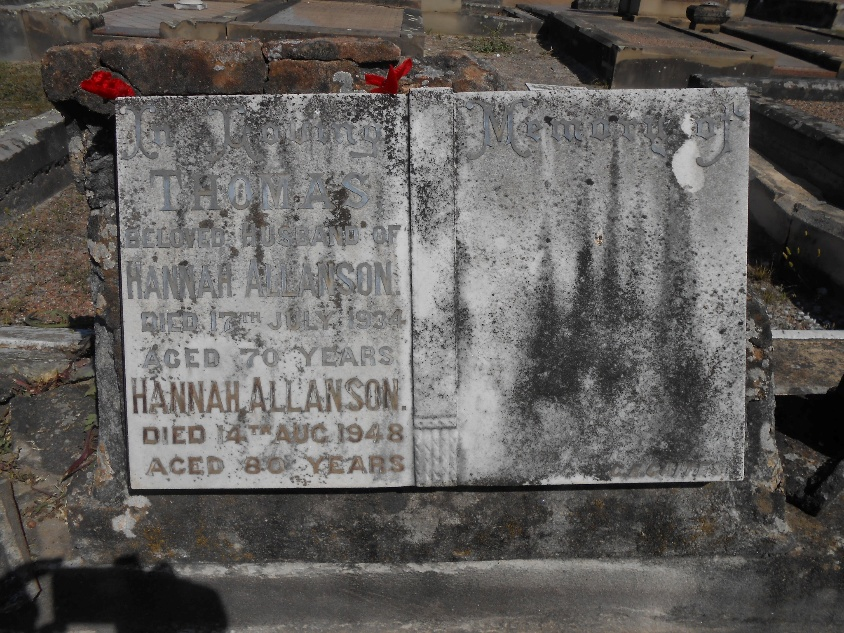
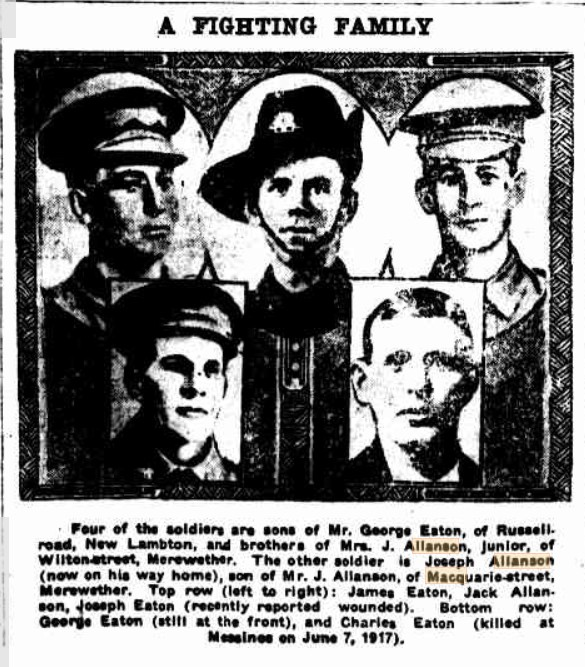
The war touched every branch of the Allanson family in Merewether. Parents Thomas and Hannah Allanson (née Smith) raised a close Methodist household, active in the Glebe Church and Merewether Public School community. Tommys brother Private James “Jack” Allanson (2333, 19th Battalion) – wounded in France was invalided home to Australia on 9 September 1916. Their cousin, Private Joseph Lewis Allanson (2028, 34th Battalion), also served. A tailor by trade, he enlisted in March 1916, sailed with the 3rd Reinforcements, and returned home safely in October 1918 after service on the Western Front.
Finding Tommy
Tommy’s remains were not recovered; he has no known grave. After the battle, the Germans recovered 250 Australian soldiers and placed them in a burial pit at Pheasant Wood. This grave was discovered in 2008 and since then efforts have been underway to identify these soldiers by DNA testing from family members. As of 2024, 180 of the soldiers have been identified, including 15 of the 190 unidentified soldiers from the 53rd Battalion.
We welcome all branches of Tommy’s family to come forward to donate DNA to help with his identification. If you know anything of family contacts, particularly those with roots in Merewether, NSW and Durham and Sowerby, Yorkshire, England, please contact the Fromelles Association. We hope that one day Tommy will be named and honoured with a known grave.
Please visit Fromelles.info to follow the ongoing identification project and Roy’s story.
DNA samples are being sought for family connections to
| Soldier | Thomas Henry “Tommy” Allanson (1887–1916) |
| Parents | Thomas Allanson (1864–1934) Harbour House, Great Lumley Durham, England and Hannah Elizabeth Smith (1867–1948) Hetton Durham, England |
| Siblings | James “Jack” AIF, (1893–1958) b NSW m Marion Elizabeth Taylor | ||
| Elizabeth “Lillie” (1891–1975) b NSW m Samuel Danvers | |||
| William (1896–1968) b NSW | |||
| Frank (1906–1964) b NSW m Doris Theresa Nesetie | |||
| Mary A. (1889–1890) NSW | |||
| Mildred (1909–1910) NSW |
| Grandparents | |||
| Paternal | Thomas Allanson Snr (1829–1912) and Elizabeth “Bessie” Wood (1835–1893) Northallerton, Yorkshire | ||
| Maternal | Henry Smith (1826–) Houghton Le Spring, Durham and Mary, Hetton Le Mole (1829– ) |
Links to Official Records
Seeking DNA Donors

Contacts
(Contact: carla@fromelles.info or geoffrey@fromelles.info).
(Contact: army.uwc@defence.gov.au or phone 1800 019 090).
Donations
If you are able, please contribute to the upkeep of this resource.
(Contact: bill@fromelles.info ).