William at Gallipoli and Lone Pine
After training in Egypt with Headquarter Signals, William embarked with the 2nd Battalion on 5th April 1915 for Gallipoli and just three days later was promoted to Sergeant while on Lemnos.
On 25th April 1915, the 2nd Battalion was part of the second and third waves to land at ANZAC Cove. In May, the Battalion was involved in repulsing a determined Turkish attack with strict fire discipline. The 1st Brigade led the charge at Lone Pine on 6th August, where they gained possession of the main Turkish trenches. They repulsed very determined Turkish counter-attacks over the next three days, but they were costly to the Battalion, having a lot of their strength killed or wounded.
Wounded and mentioned in despatches
William received a head wound on 8th August 1915 at Lone Pine and was eventually shipped out by way of Mudros and Malta before leaving for England on the hospital ship HS Oxfordshire on 18th September 1915. He was to remain there for some months convalescing.
For his part at Gallipoli and Lone Pine, William was recommended for military honours on 25th September 1915 and 8th December 1915. On 17th January 1916, a nominal roll of other ranks recommended for Honours for the 1st Australian Division included 239 Sergeant W Wass, 2nd Battalion, at number 21 in the order of merit. The recommendation, signed by Harry Chauvel, Major-General, Commanding 1st Australian Division, read:
“Date & place of action. Lone Pine, 6 to 10 August.
Took part in the assault and subsequent grenade throwing and repairing parapets under fire, continuing at his post for four days though the back of his skull was fractured by a bullet. He was on the Peninsula from 25-4-15 to 11-8-15.”
Another handwritten record stated:
“Sgt W Wass 25th April to 10th August 1915. For continuous good work while in charge of signal section. This work culminated with the assault on LONE PINE on 6th August when in the assault he was wounded in the head. He did not report the injury but kept to his work, and on one occasion during the evening returned across the open to the old trenches from the captured position to repair a broken telephone wire. His wound was not attended to until four days later, when it was seen that he was suffering badly, and he was ordered to parade before the R.M.O. On examination it was found that the bullet wound received on 6th August had fractured his skull, and he is still in hospital.”
As a result of these recommendations, William was mentioned in despatches:
“for distinguished and gallant services rendered during the period of General Sir Charles Munro’s Command of the Mediterranean Expeditionary Force”.
This military honour was published in the Fourth Supplement No. 29644 to the London Gazette of 11th July, 1916 and related to the Gallipoli campaign, including the withdrawal of troops from the peninsula.
Missing – KIA at Fromelles
On 20th February 1916, William rejoined his battalion at Alexandria in Egypt and was almost immediately transferred to the 54th Battalion. This was part of extensive troop re-organisations after the ANZAC campaign to meld newly arrived reinforcements with more battle-seasoned personnel.
After some months of training, the 54th Battalion arrived in Marseilles on 29th June 1916. William would then have travelled with his unit by train across France to the western front near the border with Belgium. He was killed in action sometime on the 19th-20th July 1916 in France.
The Red Cross Society have a Wounded and Missing Enquiry Bureau file for him. In it they have a copy of a German death card, the original of which is in his service record.
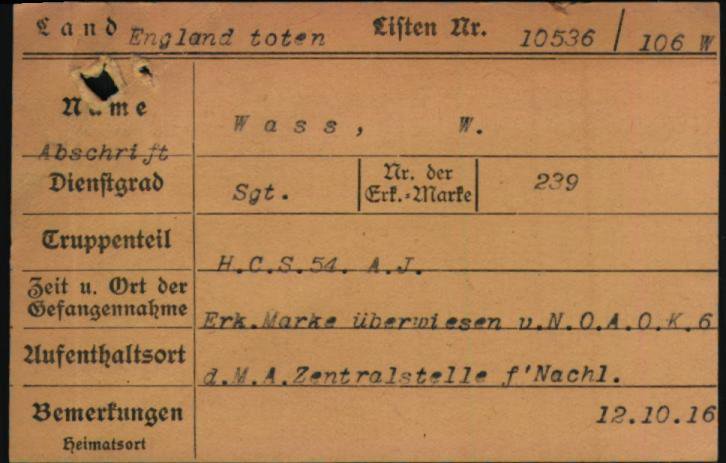
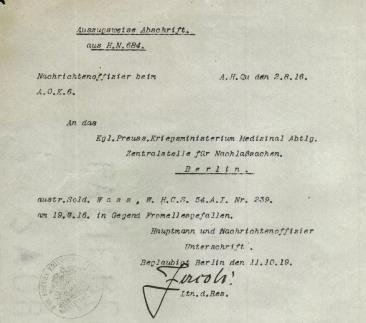
The Red Cross file states that there was no enquiry and that 239 Sergeant William Wass 54th Battalion AIF was killed in action on 19-20 July 1916. His name appeared on the German Death List dated 4 November 1916 and his identity disc was received from Germany and despatched to William’s next of kin on 11 May 1917.
A form from the Post Office Saving Bank in London on 13th September 1916 about “William Wass deceased” asked if details could be filled in and forwarded to the War Office as a claim by his father for money in his bank account could not be processed until they received information on his will.. It was signed German Wass, Moor End Farm Chellaston Derby on 16th September 1916 so it is clear that family had been kept informed about William’s fate.
Probate for William reads:
“WASS William of Moor End Farm Chellaston Derbyshire sergeant of the Australian Imperial Force who was killed in action on 19 July 1916 in France Administration Derby 7 September to German Wass farmer. Effects £50 4s. 2d.”
Military Medal
On 24th May 1917, Army Base Records in Melbourne sent a letter to William’s father in Chellaston Derbyshire officially advising him that William had been mentioned in despatches in relation to his services at Gallipoli (details were noted earlier about this gazettal on 11 July 1916 – coincidentally just more than a week prior to his death). The letter also advised that:
“HIS MAJESTY THE KING has been graciously pleased to award the Military Medal for bravery in the Field to the undermentioned non-commissioned officer: – No. 239, Sergeant WILLIAM WASS.”
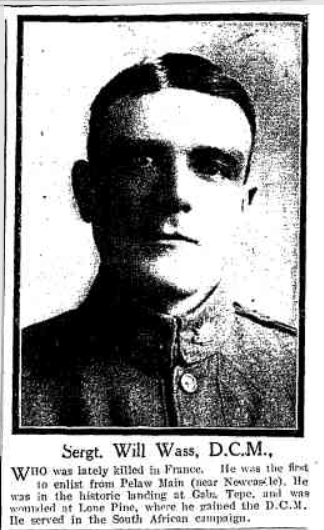
The letter also included copies of the extracts from the relevant London Gazettes (namely, Fourth Supplement No. 29644 published 11th July 1916 and Second Supplement No. 29794 published 20th October 1916).
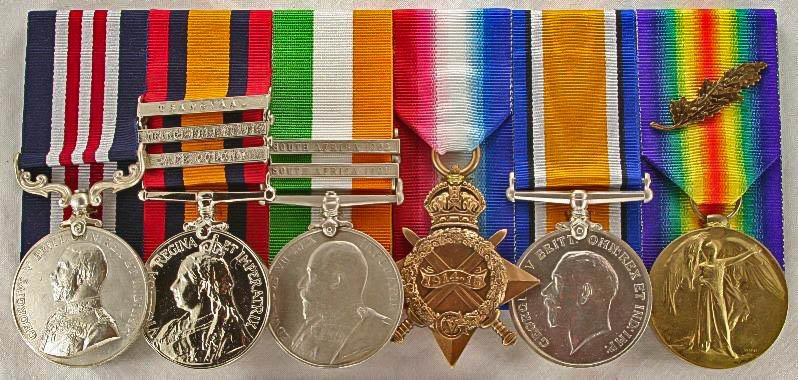
In addition to V.C. Corner of the Australian Cemetery Memorial at Fromelles, William’s name is also located at panel 160 in the Commemorative Area at the Australian War Memorial and on the Pelaw Main Public School First World War Memorial Gates (left pillar, Citizen’s Roll of Honour).
William’s family looking for DNA
Researchers have traced William’s family in England. While some of his siblings had no offspring, they have found a mitochondrial DNA donor amongst his sisters’ descendants. The search for more donors to help positively identify William continues.