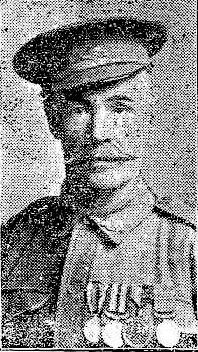
James Parsons MURPHY
Eyes blue, Hair grey, Complexion fair
James and Jim Murphy – A father and son lost at Fromelles
With thanks to Josh Byerlee, a Senior Firefighter in the South Australian Metropolitan Fire Service, for his contributions to this story.
Can you help find James and Jim?
Both James Parsons Murphy and his son James Thomas Murphy Sydney were killed in Action at Fromelles. As part of the 32nd Battalion they were positioned near where the Germans collected soldiers who were later buried at Pheasant Wood. There is a chance he might be identified, but we need help. We are still searching for suitable family DNA donors.
In 2008 a mass grave was found at Fromelles, a grave the Germans dug for 250 (Australian) bodies they recovered after the battle.
If you know anything of their contacts here in Australia or relatives from England/Ireland, please contact the Fromelles Association.
See the DNA box at the end of the story for what we do know about his family.
Early Life
James Parsons Murphy — known later to his comrades simply as “Dad” — was born in 1867 to Jeremiah Murphy and Charlotte Sarah Bradley. His father, Jeremiah, was Irish-born and originally from Shandon, County Cork. He served as a soldier in the British Army and, like many career servicemen of the period, moved according to his postings. His mother, Charlotte, was English. The family’s movements during James’s early years reflected Jeremiah’s military service, and by adulthood the family had strong ties to England and the Channel Islands. James grew up within a blended family.
Through his mother Charlotte, he had two older half-siblings born before her marriage to Jeremiah — Sarah Ann Bradley Murphy (born c.1847, Stone, Kent) and Charles Frederick Bradley Murphy (born 13 March 1849, Union House, Tenterden, Kent). His full siblings, born after the marriage were:
- Elizabeth A. Murphy (born July 1864),
- James Parsons Murphy (born c.1867),
- and Charlotte M. Murphy (born 13 July 1869)
Both of James’s parents died while he was still a young man, his father in 1883 and his mother in 1889, leaving him effectively orphaned in his early twenties. James followed in his father’s footsteps with a military career of his own. He served six years and three months in the Imperial Navy before emigrating to Australia around 1890. There, he continued his service in uniform, joining the South Australian Naval Force aboard HMAS Protector and serving for a further three years.
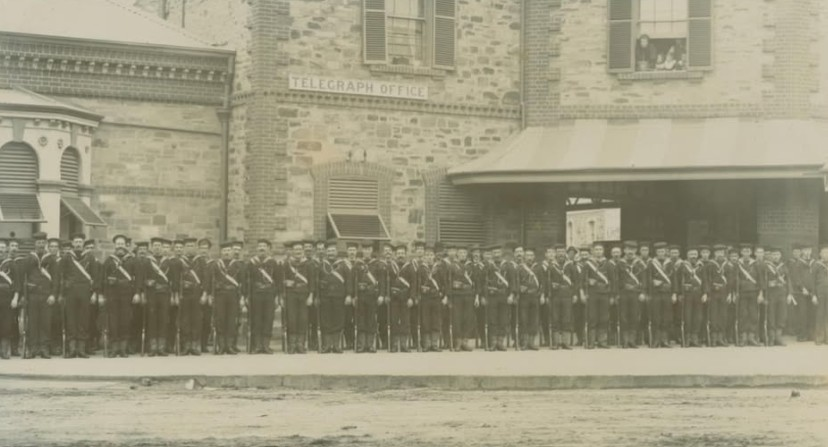
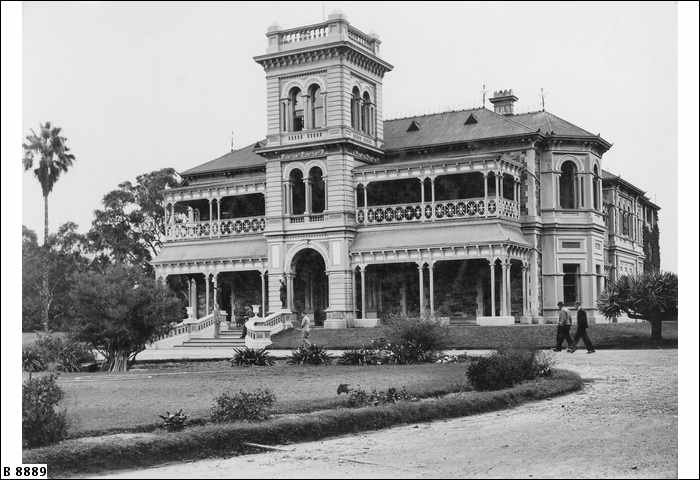
After leaving naval life, James embarked on a career in the fire brigade. He joined the Port Adelaide Fire Brigade on 21 November 1898 and rose steadily through the ranks to become a respected Foreman, a position that reflected both his leadership and the trust placed in him by his fellow firemen. Seeking opportunity and a future of his own, James settled permanently in Port Adelaide. On 29 July 1895, he married Mary McDonough, and the couple later welcomed a son, James Thomas Murphy — known as “Jim” , born in 1896 at Port Adelaide. Jim grew up in the close-knit working community of the port, attended the Marist Brothers School, and later found work as a railway shunter.
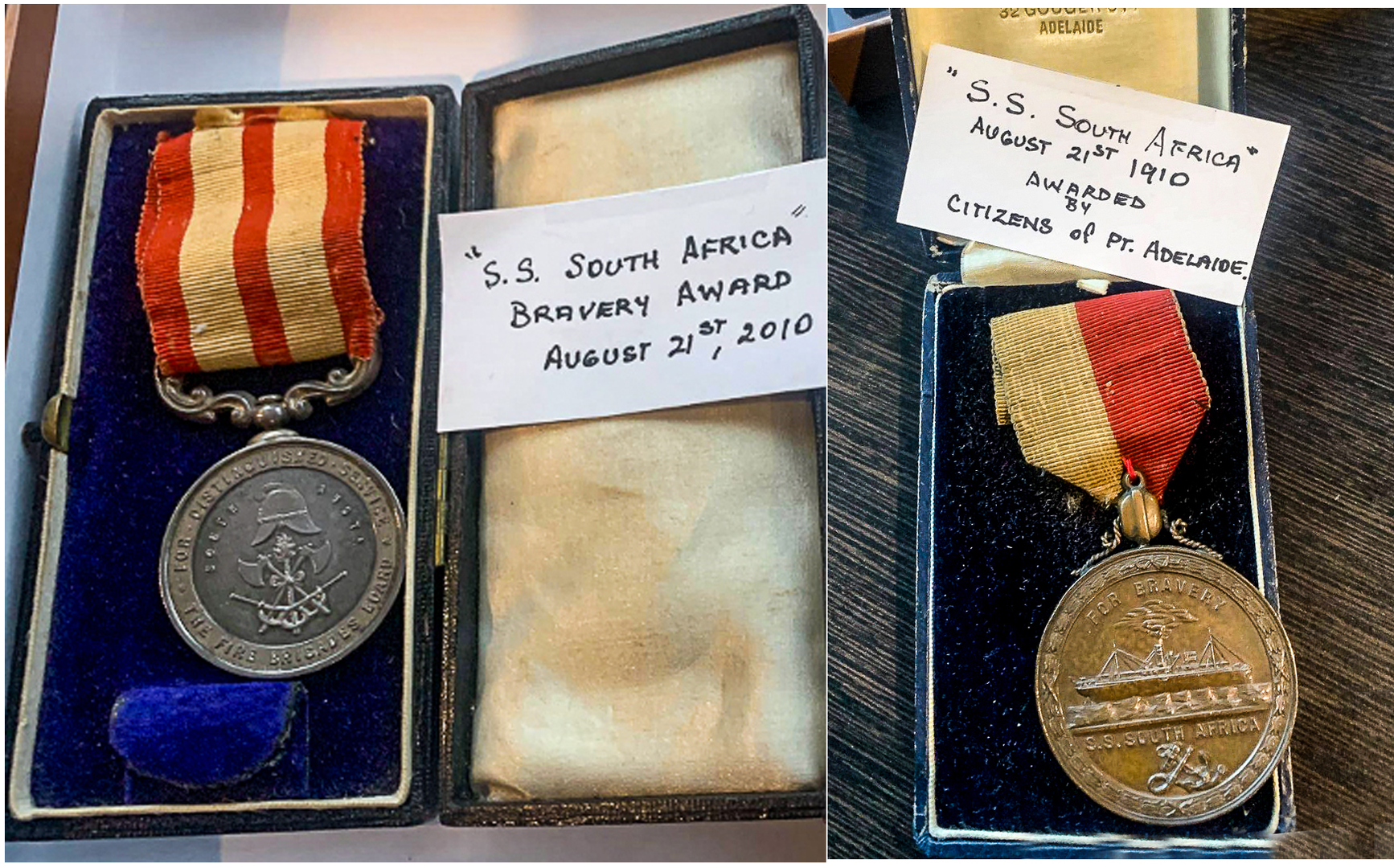
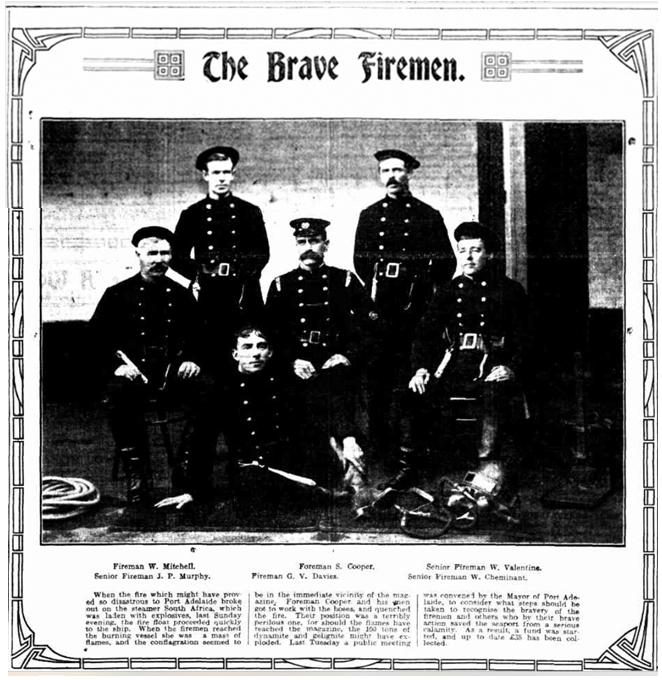
James’s most famous act of civilian bravery came on 21 August 1910, when a serious fire broke out aboard the steamer South Africa while it was moored at the North Arm. The vessel was carrying around 100 tons of explosives, and the danger of a catastrophic blast was extreme. James was among the crew of the fire float who boarded the burning ship and worked to contain the blaze under terrifying conditions. The successful effort prevented what could have been a devastating explosion affecting the port and surrounding area. Newspapers at the time praised the men for their courage, and James and his colleagues were later formally honoured by the Mayor of Port Adelaide at a civic ceremony in the Town Hall.
Source SOUTH AFRICA FIRE HEROES. (16 November 1910). The Register (Adelaide, SA : 1901–1929), p. 6. Retrieved 7 Dec 2025, from http://nla.gov.au/nla.news-article58162047
Tragedy struck the family in April 1914 when Mary Murphy died suddenly, leaving James a widower and Jim without his mother at just eighteen. The depth of their loss was captured the following year in memorial notices published in the Chronicle, including one placed by Jim himself:
Of earthly friends she was the best,My erring youthful steps to guide…I'm still lonely since my mother died.”
- Inserted by her loving son, J.T. Murphy.
At rest.
- Inserted by her loving husband, J.P. Murphy.
Despite the loss, both father and son remained close, living in Port Adelaide where James continued his demanding and dangerous work with the fire brigade. In November 1915, shortly before departing for overseas service, James married for a second time, to Dorothy Maslin, in Adelaide. Within months, both James and his only son Jim would be on their way to the Western Front — their lives, and their family story, about to be forever bound by the Battle of Fromelles.
Off to War
Jim was the first to volunteer. Just eighteen years old, and already serving with F Company, 76th Infantry, Citizen Military Forces, Jim enlisted in the AIF on 12 May 1915 at Keswick, South Australia. He was taken on strength of the 27th Battalion, 2nd Reinforcement, and embarked from Adelaide on 23 June 1915 aboard HMAT A61 Kanowna.
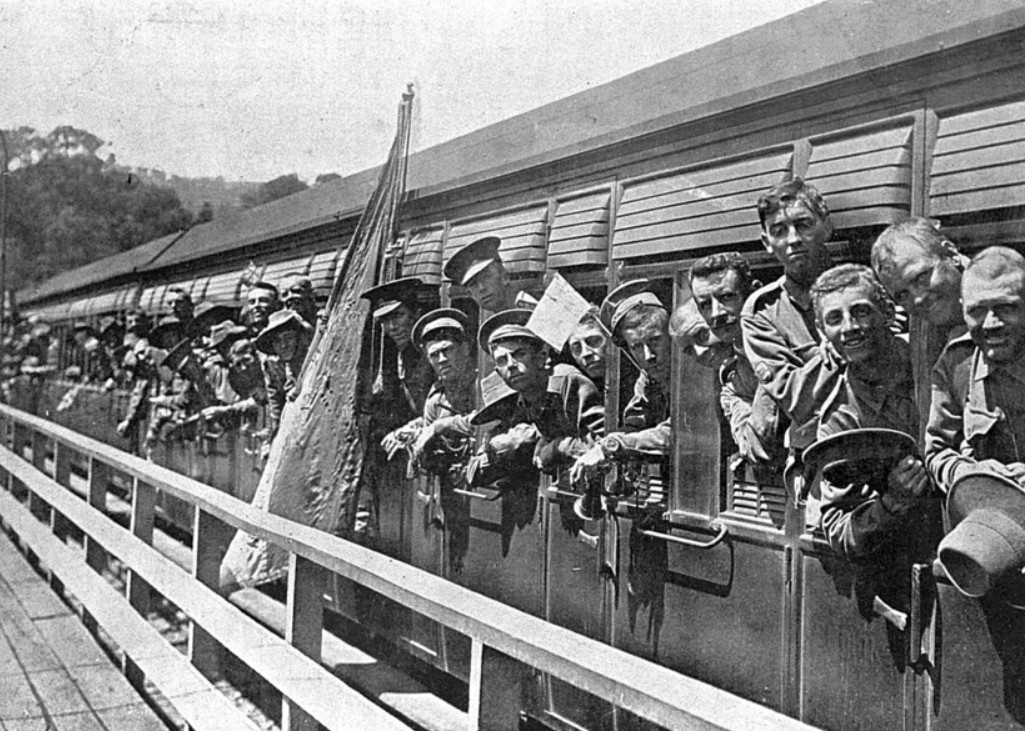
While Jim was already preparing for war, his father soon made the same decision. James Parsons Murphy, “Dad”, enlisted in the AIF on 9 August 1915 at Adelaide, aged forty-nine. Despite his age, his long background in the Royal Navy, the Royal Australian Navy, and the South Australian Fire Brigade made him a fit and disciplined recruit. He joined the 27th Battalion, 7th Reinforcement, and embarked from Adelaide on 12 January 1916 aboard HMAT A7 Medic.
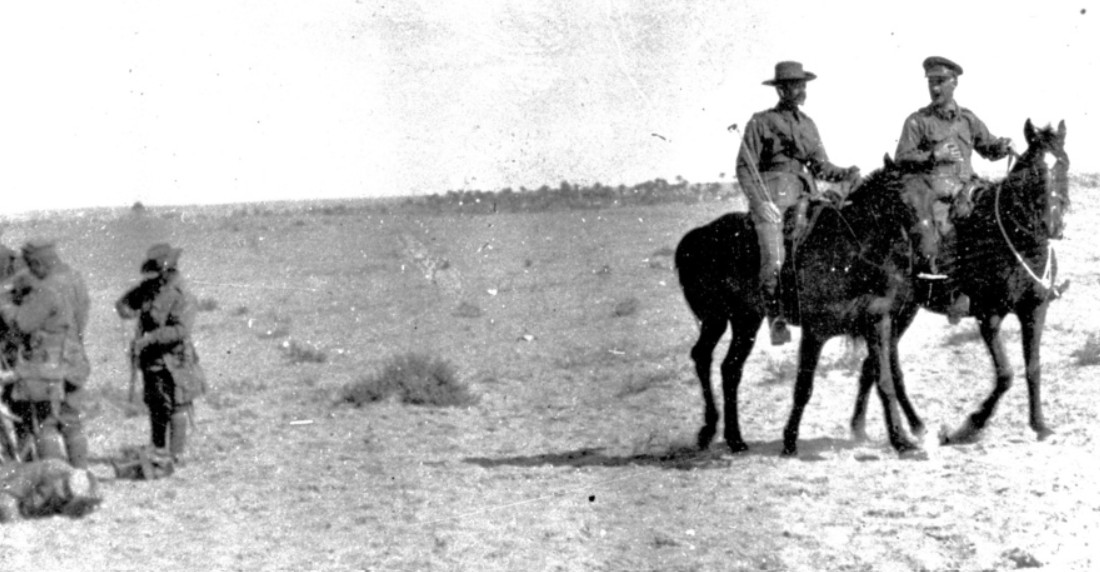
After arrival in Egypt, both father and son were brought together again when James was taken on strength of the 32nd Battalion on 6 April 1916, the same unit Jim had already joined. The two men were now serving in the same battalion, bound not just by blood, but by shared duty. In June 1916, the 32nd Battalion was ordered to France. Both men embarked from Alexandria on 17 June 1916 to join the British Expeditionary Force, disembarking at Marseilles on 23 June 1916. Within weeks, father and son would be committed to the front lines of the Western Front — unaware that their first major battle would also be their last.
Gallipoli – Jim
After arriving in Egypt, Jim embarked from Alexandria on 4 September 1915 to join the Mediterranean Expeditionary Force at Gallipoli. By the time he reached the peninsula, the campaign had settled into a brutal stalemate of trench warfare, constant shelling, sniper fire, disease, and relentless exhaustion. Serving with the 27th Battalion, Jim endured the harsh conditions of the Gallipoli front line through the final months of the campaign. Water was scarce, heat was punishing, and the dead lay unburied between the opposing trenches.
In December 1915, Jim took part in the carefully planned evacuation of Gallipoli, one of the most successful withdrawals in military history. Returning to Egypt, he disembarked at Alexandria on 10 January 1916. Two months later, on 15 March 1916, he was transferred to Base Details at Ismailia, before being posted to the newly formed 32nd Battalion at the Duntroon Plateau on 6 April 1916. Jim arrived in the 32nd Battalion already a combat-tested soldier, a young man who had seen war before his father ever set foot on the battlefield.
The Battle of Fromelles
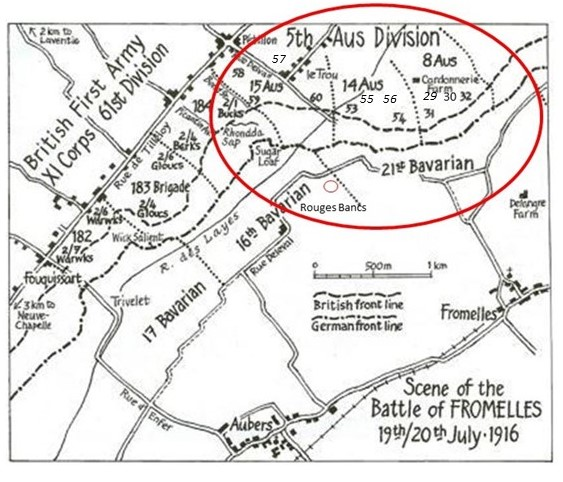
Only weeks after arriving in France, the 32nd Battalion was committed to its first major action on the Western Front — the disastrous attack at Fromelles on the evening of 19 July 1916. The battalion formed part of the 8th Brigade, which was ordered to assault strongly fortified German positions opposite the village of Fromelles, across open ground swept by machine-gun fire. By late afternoon, the men moved into their jumping-off trenches under heavy shelling. Both James Parsons Murphy (“Dad”) and his son James Thomas Murphy (“Jim”) were serving in D Company, under Lieutenant Sam Mills.
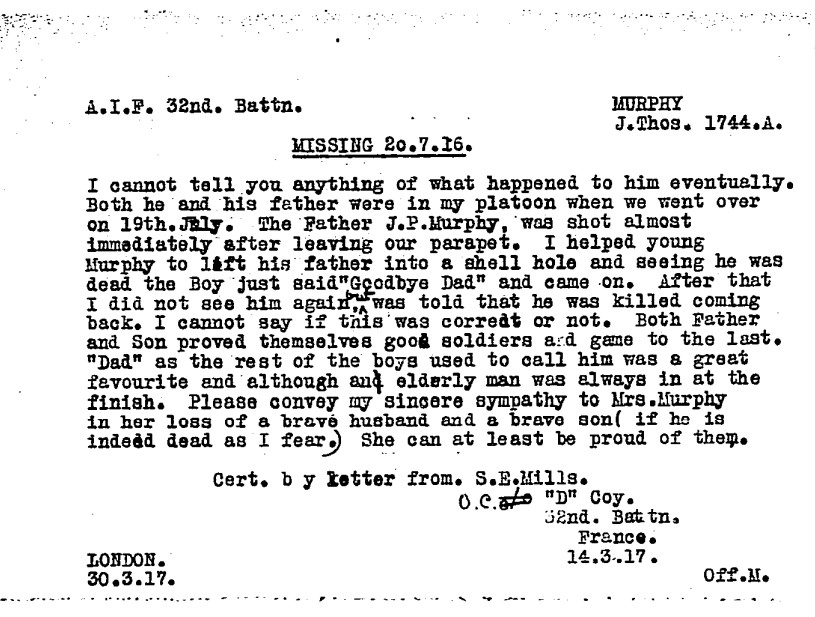
As the attack was launched at 5.53 pm, the leading waves climbed from the parapet and advanced into No Man’s Land under a storm of fire. Almost immediately after leaving the Australian trenches, James Parsons Murphy was shot and fell mortally wounded. Lieutenant Samuel Mills later described what happened next:
I cannot tell you anything of what happened to [Jim] eventually. Both he and his father were in my platoon when we went over on the 19th of July. The father, J.P. Murphy, was shot almost immediately after leaving our parapet. I helped young Murphy lift his father into a shell hole and seeing he was dead, the boy just said
Goodbye, Dad’ and came on. After that I did not see him again but was told that he was killed coming back. I cannot say if this was correct or not… Both father and son proved themselves good soldiers and game to the last. ‘Dad’, as the rest of the boys used to call him, was a great favourite.”
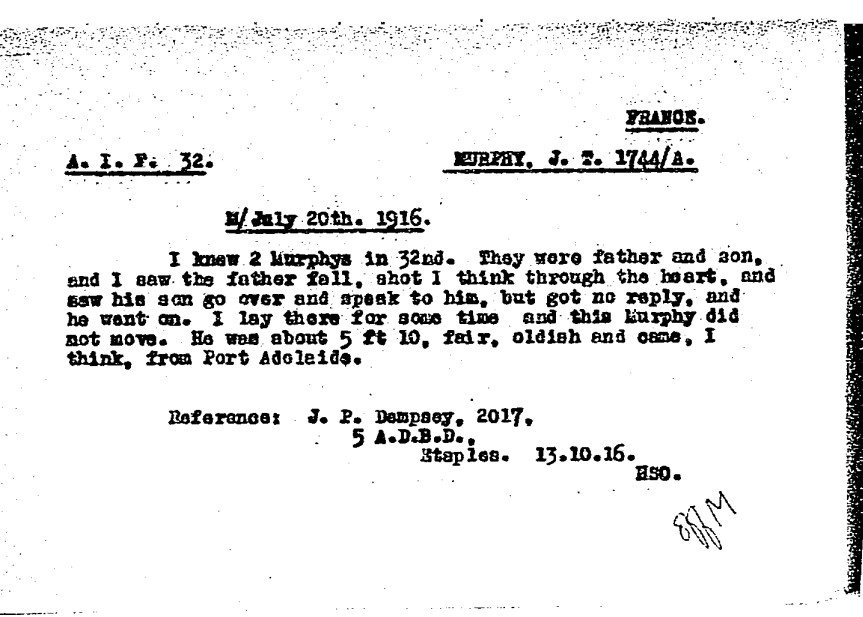
Private John Dempsey confirmed the same heartbreaking scene:
I knew 2 Murphys in the 32nd. They were father and son, and I saw the father fall, shot I think through the heart, and I saw the son go over and speak to him, but got no reply and he went on. I lay there for some time, and this Murphy did not move.
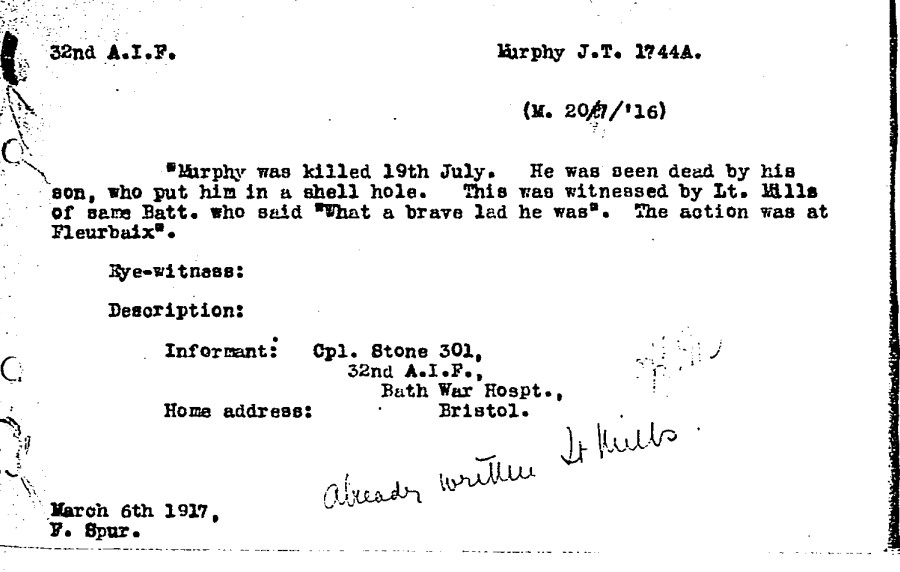
Another witness, Corporal Henry John Stone, confirmed that the father had been placed in a shell hole by his son:
Murphy was killed 19th July. He was seen dead by his son, who put him in a shell hole. This was witnessed by Lt. Mills of the same battalion who said "What a brave lad he was.’”
Jim continued forward into the chaos of the attack after farewelling his father. As darkness fell, the Australians briefly captured parts of the German front-line trench, but they were isolated, short of ammunition, and subjected to intense shelling throughout the night. By dawn on 20 July 1916, German counter-attacks overwhelmed many of the exposed positions. Jim was last reported alive during the withdrawal from the captured trenches. He was later officially declared Killed in Action on 20 July 1916, aged just nineteen.
One later Red Cross statement, given by Pte G.J. Kidd (32nd Battalion) from hospital in England, reported:
At Pozieres he was blown to bits by a shell…
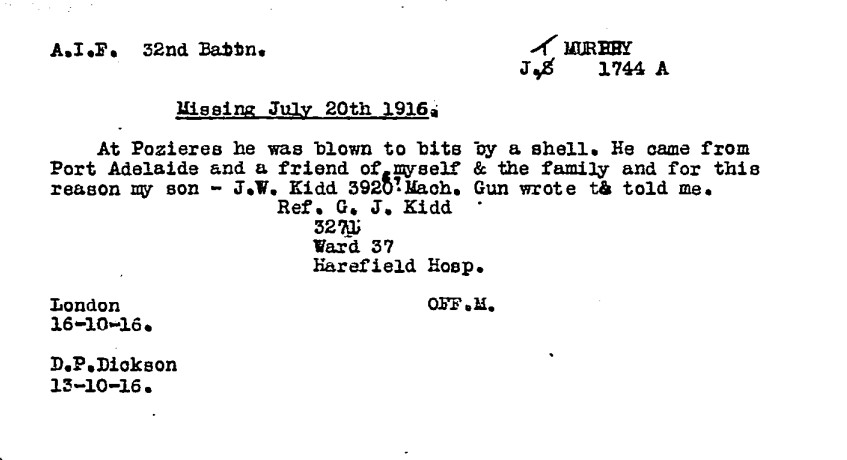
George Kidd would go onto serve in the 32nd Battalion with his son John Wark Kidd, both survived the war and returned to South Australia. By the end of the battle, the 32nd Battalion had suffered catastrophic losses, with the majority of its attacking strength killed, wounded, or missing. James Parsons Murphy was killed on 19 July 1916, and James Thomas Murphy on 20 July 1916 — a father and son lost within hours of each other in their battalion’s first major engagement. Neither man’s body was ever recovered.
After the Battle
When the shattered remnants of the 32nd Battalion were withdrawn from the line on the morning of 20 July 1916, neither James Parsons Murphy nor his son James Thomas Murphy returned. Both were initially reported as missing amid the confusion and devastation that followed the failed assault. For James Parsons Murphy, the evidence of his death was tragically clear. Multiple eyewitnesses from D Company confirmed that he was shot shortly after leaving the parapet on the evening of 19 July 1916. His death was accepted on battalion reports soon after the battle and later formally confirmed as Killed in Action, 19 July 1916.
No grave was ever recorded. His body was not recovered from the battlefield. James Thomas Murphy’s fate remained uncertain for much longer. He continued forward after placing his father in a shell hole, and was last seen during the fighting and withdrawal that continued into the early hours of 20 July. He was officially listed as Missing in Action. It was not until a Court of Enquiry held in the field on 12 August 1917 that he was formally declared Killed in Action, 20 July 1916. Like his father, no burial place was identified. Back in Port Adelaide, the situation for the family was especially complex.
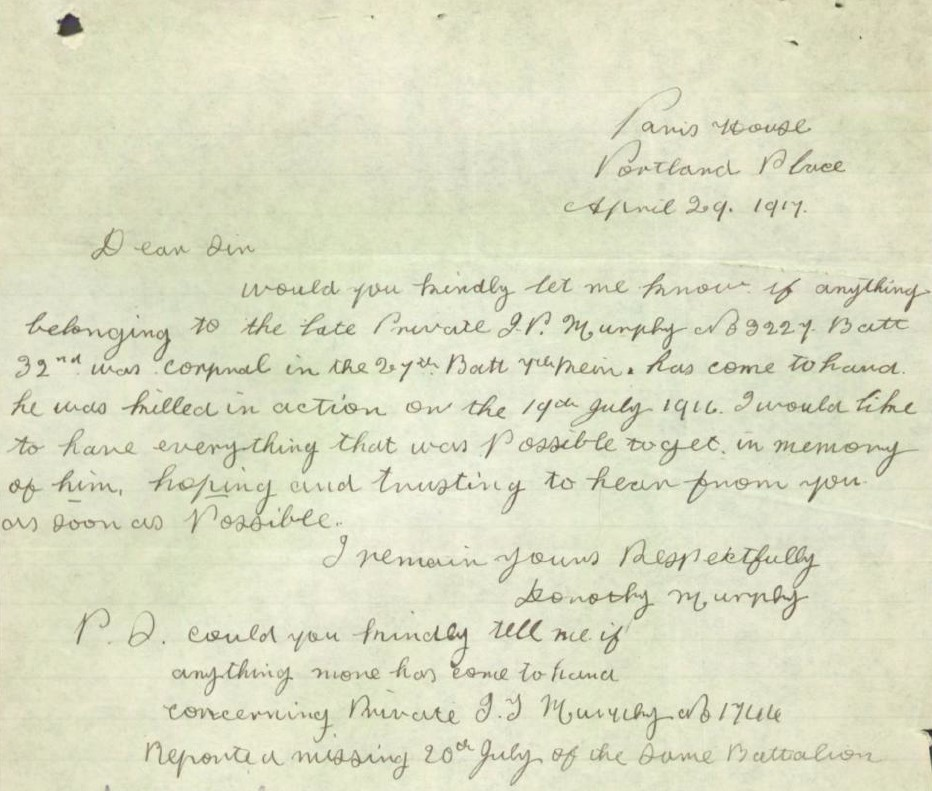
With both men serving in the same battalion and lost within hours of each other, their military records and correspondence became closely intertwined. James’s second wife, Dorothy Murphy, was left a widow before her twentieth birthday. She became the official next of kin for James Parsons Murphy and was responsible for pursuing information about his fate and personal effects. In a letter to Base Records dated 29 April 1917, she wrote:
I would like to have everything that was possible to get in memory of him.
Lieutenant Sam Mills reported:
“Please convey my sincere sympathy to Mrs. Murphy in her loss of a brave husband and a brave son (if he is indeed dead as I fear). She can at least be proud of them.”
For Jim, correspondence continued for years after the war. In December 1920, his aunt, Ellen Mary Jarrett, wrote to the authorities seeking information and any personal effects:
“I am the only relation alive… there is no grandparents alive and no relations on his father’s side. If there is anything belonging to him I would be only too pleased to receive it.”
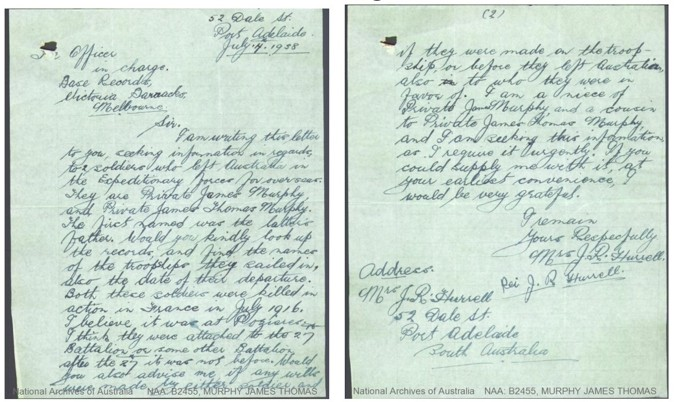
Even in 1938, more than two decades after the battle, relatives were still writing to military authorities seeking confirmation of details of their service and deaths, a reminder that for many families, the administrative end of war did not bring emotional closure.
In due course, medals were issued to the family, but no personal effects were ever returned, reinforcing the reality that neither man’s body had been recovered from the battlefield. Today, father and son are commemorated among the missing of Fromelles, their names inscribed in stone where their graves should have been.
James and Jim are commemorated at:
- Australian War Memorial Roll of Honour, Canberra, ACT
- V.C. Corner Australian Cemetery Memorial, Fromelles, France
- Adelaide National War Memorial, North Terrace, Adelaide, SA
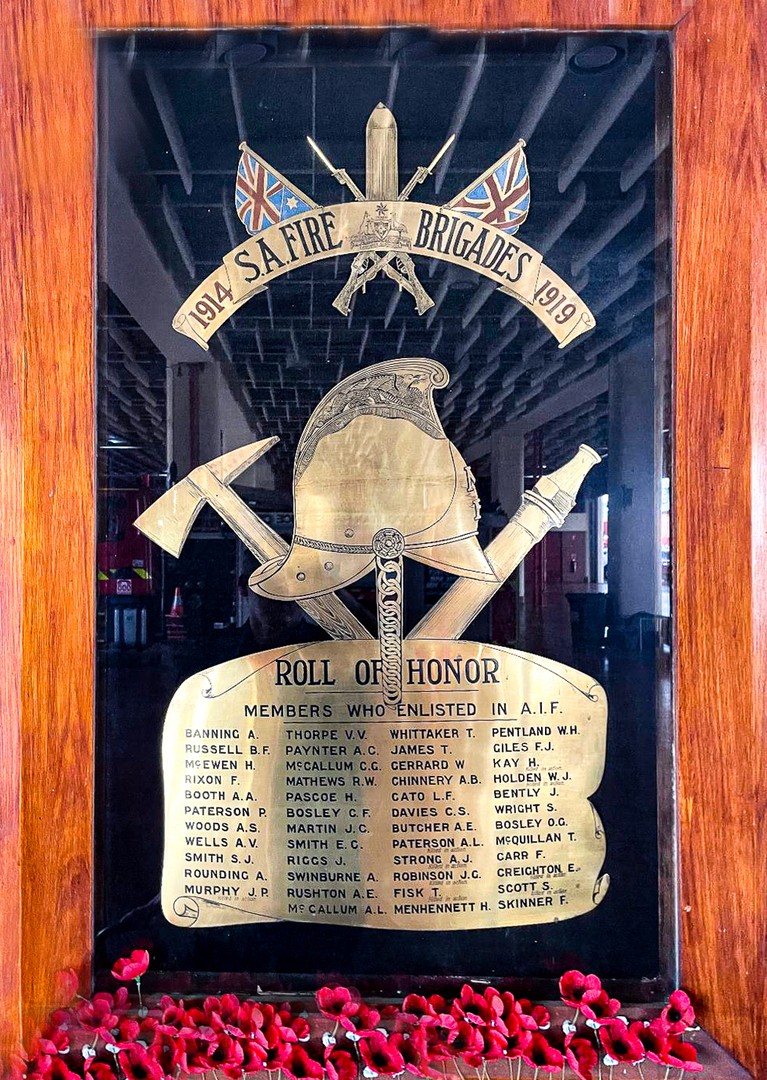
- South Australian Fire Brigades Honour Board (James Parsons Murphy)
- Rosewater Marist Brothers’ Honour Roll (James Thomas Murphy)
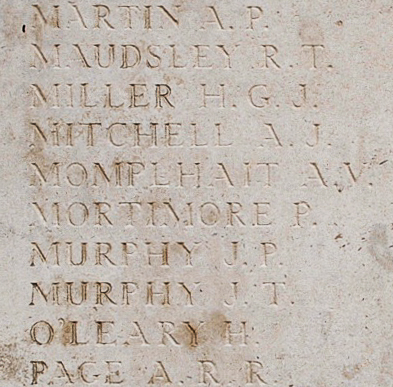
Finding James and Jim
Jim and James Murphy’s bodies were never found after the Battle of Fromelles. Both were killed in the same disastrous attack, and there are no records of their burial. Their names are commemorated at VC Corner Cemetery, where 410 Australians lie in unnamed graves. In 2008, a mass grave was discovered at Pheasant Wood, near Fromelles — dug by the Germans to bury 250 Australian and British soldiers they recovered from the battlefield.
As at 2026, 181 of these soldiers have been positively identified using DNA provided by descendants. Jim and James may be among the remaining unidentified men. There is still a chance to identify them — but we need help. Please contact the Fromelles Association of Australia to find out more.
DNA samples are being sought for family connections to
| Soldier | James Thomas Murphy (1896–1916) Port Adelaide, South Australia |
| Parents | James Parsons Murphy (1867–1916) and Mary McDonough (c.1875–1914) |
| Grandparents | |||
| Paternal | Jeremiah Murphy (c.1828–1883) and Charlotte Sarah Bradley (c.1829–1889), both of Guernsey, Channel Islands | ||
| Maternal | Thomas McDonough (1837–1915) and Mary Connrighton (1840–1892), both from Ireland and later South Australia |
DNA samples are being sought for family connections to
| Soldier | James Parsons Murphy (1867–1916) Port Adelaide, SA Married Mary McDonough (c.1875–1914) and Dorothy Maslin (1887–1955) |
| Child | James Thomas Murphy (1896–1916) |
| Parents | Jeremiah Murphy (1828–1883) and Charlotte Sarah Bradley (1829–1889) |
| Full Siblings | Elizabeth A Murphy (1864– ) | ||
| Charlotte Minnie Murphy (1869–1903) married William Patrick Grimley |
| Half-Siblings | Sarah Ann Bradley (Murphy) (1847– ) married John Murphy | ||
| Charles Frederick Bradley (Murphy) (1849–1930) married Sophia Louisa Murphy |
| Paternal Grandparents | John Murphy and Elizabeth Fitzpatrick |
| Maternal Grandparents | James Bradley and Sarah Andrews |
Seeking DNA Donors

Contacts
(Contact: carla@fromelles.info or geoffrey@fromelles.info).
(Contact: army.uwc@defence.gov.au or phone 1800 019 090).
Donations
If you are able, please contribute to the upkeep of this resource.
(Contact: bill@fromelles.info ).