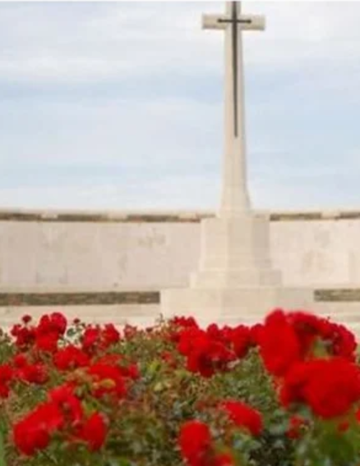
Robert Edward REEVES
Eyes blue, Hair fair, Complexion fair
Bert Reeves - "A Jack of all trades"
Can you help find Bert?
Robert Edward Reeves’s body was never found after the Battle of Fromelles, and there are no records of his burial.
A mass grave was found in 2008 at Fromelles, a grave the Germans dug for 250 Australian soldiers they recovered after the battle. As of 2024, 180 of these soldiers have been able to be identified via DNA testing.
Bert may be among these remaining unidentified men. There is still a chance to identify him — but we need help. We welcome all branches of his family to come forward to donate DNA to help with his identification, especially those with roots in Corio, VIC
See the DNA box at the end of the story for what we do know about his family.
If you know anything of contacts for Bert, please contact the Fromelles Association.
Please contact the Fromelles Association of Australia to find out more.
Early Life
Robert Edward “Bert” Reeves was born on 6 March 1894 at Geelong, Victoria, the son of Robert Joseph Reeves (1859–1937) and Margaret Pringle Storrer (1862–1945). Bert came from a well-known Geelong family with deep local connections through the Reeves and Storrer families. His father, Robert, was born in Geelong in 1859, while his mother Margaret was also Geelong-born, the daughter of Fife, Scottish migrants Henry Meldrum Storrer and Janet “Jessie” Pringle.
Children of Robert and Margaret:
- Elsie Muriel Reeves (1886–1969)
- Doris Isabel (1888–1979)
- Henry Storrer (1890–1967)
- Vera Margaret (1892–1978)
- Robert Edward “Bert” (1894–1916)
- Eileen Jessie (1896–1995)
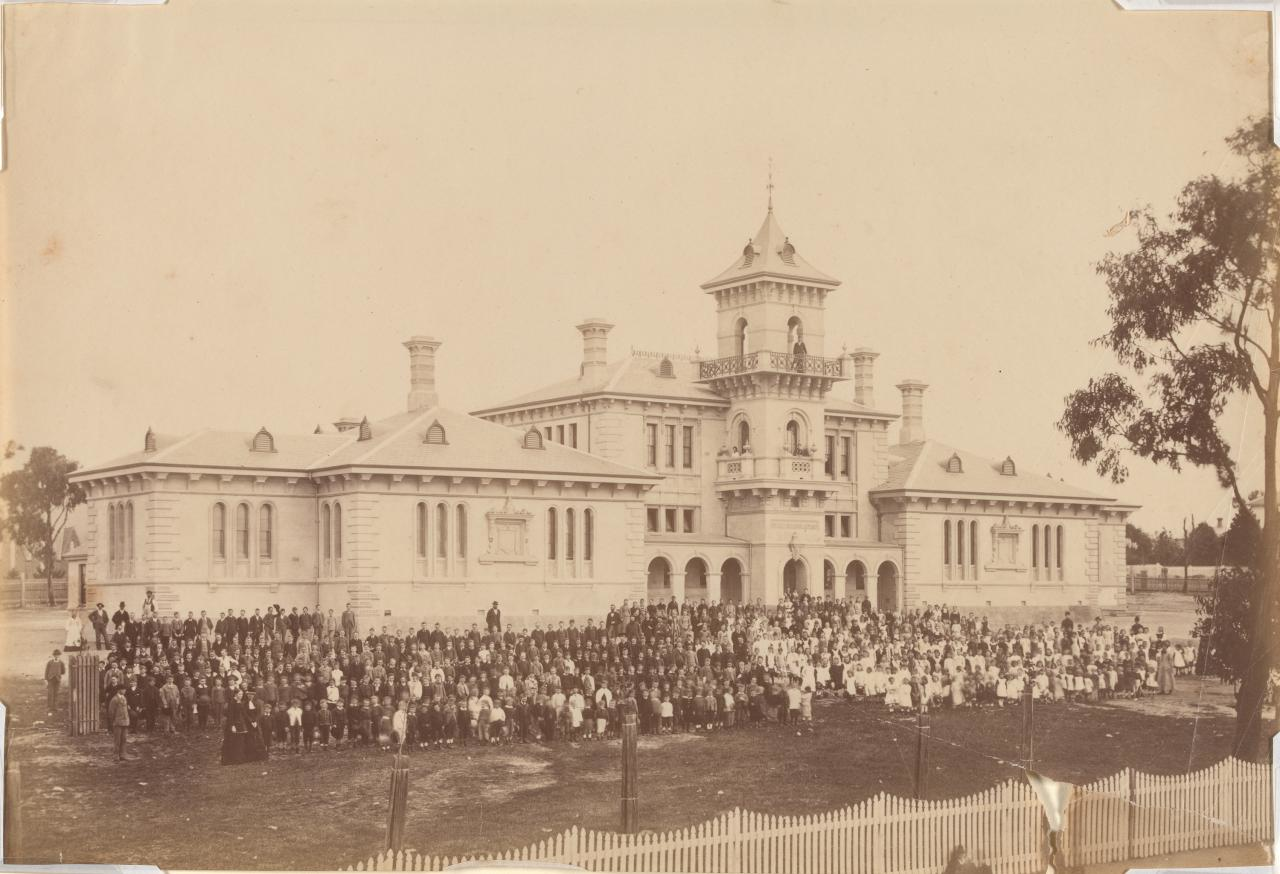
Bert attended Matthew Flinders School in Geelong and later worked as a machinist living in Myers Street. Before joining the AIF, he was already serving with the 70th Infantry, Citizen Military Forces, showing a strong early interest in military life.
Off to War
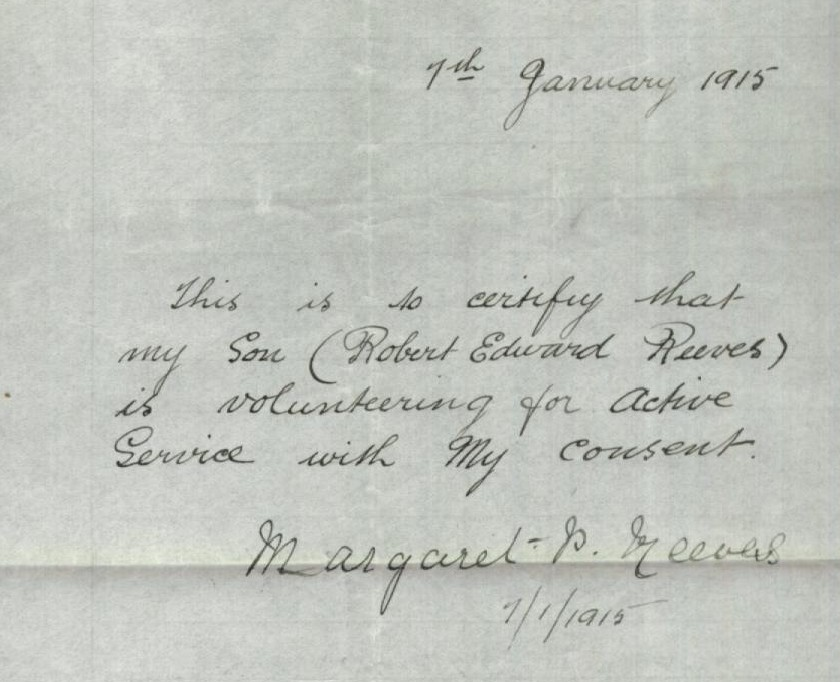
Bert enlisted in the AIF at Geelong on 7 January 1915, only months after the outbreak of the First World War. Before enlisting, his mother Margaret provided written consent for her 20-year-old son to serve overseas. The family were living at 119 Myers st Geelong, a few blocks from the beach and a similar distance to the school.
His previous military experience and leadership qualities would later see him rise steadily through the ranks. He embarked from Melbourne aboard HMAT A18 Wiltshire on 14 April 1915 as part of the 7th Battalion, 4th Reinforcements, bound for Egypt and eventually the Gallipoli campaign.
Gallipoli
After further training in Egypt, Bert joined the 7th Battalion at Gallipoli on 26 May 1915, arriving during one of the most difficult periods of the campaign. The battalion had already suffered devastating casualties during the landing at Anzac Cove and in the fighting that followed, and reinforcements were urgently needed to maintain the front line.
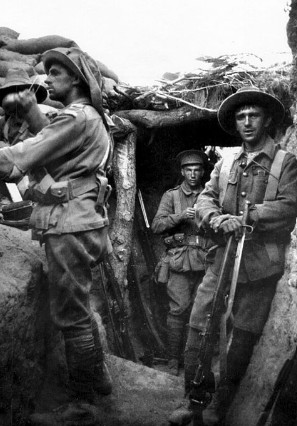
Like many of the new arrivals, Bert was quickly absorbed into trench warfare. Daily life involved carrying supplies, digging trenches and saps, repairing roads, unloading stores on the beaches, and enduring constant shellfire and sniper fire under harsh conditions. His service at Gallipoli saw him become what he later described as a “Jack of all Trades”. Writing home from Lemnos Island during a period of rest in October 1915, Bert reflected on the exhausting nature of the campaign:
“Our Brigade was relieved for a spell, which we are enjoying to full extent now, and have been doing so for the last three weeks, after 5½ months in and out of the trenches ; I spent over 4½ months there myself. Our rest was well earned, as we have done most of the dirty work; as you undoubtedly understand, as the roads, saps, beach work, etc., took some doing, and it was necessary for us to work day and night for some considerable time.”
“I am a fairly well seasoned soldier now, I can assure you; have had several very narrow squeaks, I am a "Jack of all Trades" now, Tailor, Sapper, Quarter-Master, Sniper, Bomb-Thrower."
Bert’s letter also reflected the pride many Gallipoli veterans felt in the endurance of the Australian troops and the growing support from home:
“It took the landing at Anzac to wake Australia up, and now she has volunteered splendidly.”
During his time with the 7th Battalion, Bert was promoted Lance Corporal on 4 December 1915, recognition of the experience and leadership he had gained during the Gallipoli campaign.
Egypt and France
Following the evacuation from Gallipoli, Bert disembarked at Alexandria on 7 January 1916. Like many Gallipoli veterans, he was transferred into one of the newly formed battalions created during the expansion of the AIF from two infantry divisions to five. On 24 February 1916, Bert transferred to the newly raised 59th Battalion at Tel-el-Kebir. The battalion was formed from a core of experienced Gallipoli veterans from the 7th Battalion together with reinforcements recently arrived from Australia. It became part of the 15th Infantry Brigade under Brigadier General Harold “Pompey” Elliott in the newly formed 5th Australian Division. Training took place at Tel-el-Kebir before the battalion undertook a long march through the desert to Ferry Post on the Suez Canal. There the men continued training, route marches, musketry, and canal defence duties while preparing for service on the Western Front.
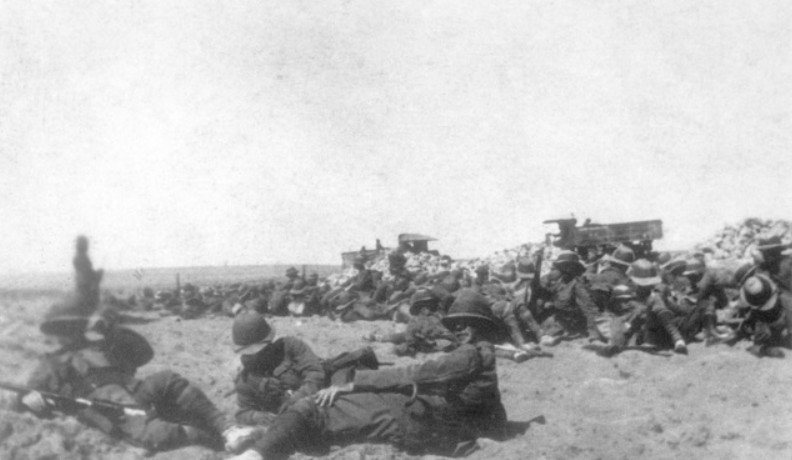
Bert’s experience from Gallipoli quickly saw him rise through the ranks. After joining the 59th Battalion, he was promoted Corporal on 4 March 1916, appointed Lance Sergeant on 30 May 1916, and promoted Sergeant on 3 July 1916 shortly after arriving in France. On 18 June 1916, the 59th Battalion embarked aboard the transport Kinfauns Castle for France, arriving at Marseilles on 29 June. From there, the battalion travelled north by train and route march towards the front line in French Flanders. By early July, the battalion had reached the Fleurbaix sector. The men were introduced to trench warfare on the Western Front, issued with steel helmets and gas masks, and trained in gas precautions and trench routine. On 9 July, the battalion moved to Sailly-sur-la-Lys, near the heavily defended German position known as the Sugar Loaf salient. Within days, Bert and the men of the 59th Battalion would face their first major action in France, the Battle of Fromelles.
The Battle of Fromelles
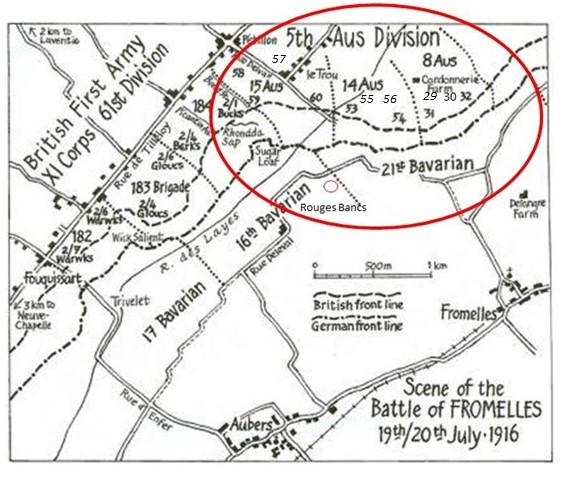
At 4.00pm on 18 July 1916, the 59th Battalion entered the front-line trenches, relieving the 57th Battalion opposite the heavily defended Sugar Loaf salient. Bert Reeves, now a Sergeant and Gallipoli veteran, was among the men preparing for what would become the battalion’s first major battle on the Western Front. At 5.45pm on 19 July, the battalion launched its assault in four waves at five-minute intervals, with A and B Companies leading, followed by C and D Companies. The attack took place in broad daylight across flat ground under full enemy observation. The German defences responded immediately. Heavy rifle and machine-gun fire swept the battlefield, particularly from the Sugar Loaf strongpoint on the right flank. Messages sent back during the attack revealed the scale of the disaster unfolding:
“Every man who rises is shot down.”
“Cannot get on — the trenches are full of the enemy.”
“They were enfiladed by machine guns in the Sugar Loaf and melted away.”
The battalion’s commanding officer, Lieutenant Colonel Ernest A Harris, was incapacitated by shell shock early in the attack. His second-in-command, Major Herbert T.C. Layh, assumed command but was later wounded after being blown into a water-filled shell hole. The British 184th Brigade, positioned on the right of the 59th Battalion, faced the same devastating fire and halted their advance by 8.00pm. However, poor communication along the line meant the Australians continued attacking without support from the exposed flank. Some parties of the 59th reached the German parapet and captured prisoners, but without reinforcement or reliable contact with neighbouring units, they were forced to withdraw or dig in under constant fire.
At 11.15pm, a message acknowledged that the battalion was attempting to consolidate a position 100 yards forward of the German line, but the position could not be held. Early on 20 July, orders were given for a general withdrawal. By 8.00am, only four officers and ninety other ranks had reported in from the entire battalion. One young soldier from the neighbouring 58th Battalion, Bill Boyce, later summed up the horror of those first experiences of battle “What have I let myself in for?”
Source - Australian War Memorial Collection C386815
Private George Martindale, one of the few surviving members of the 59th Battalion, later recalled:
“We went into action… a regiment at full strength – ninety seven answered their names – not one in ten.”
Brigadier General Harold (Pompey) Elliott’s operational report described the outcome bluntly:
“The attack was made in broad daylight… The effect of the fire was devastating and order was lost.”
Sergeant Bert Reeves was reported missing during the fighting on 19 July 1916. Initial figures recorded 26 men killed or died of wounds, 394 wounded, and 274 missing, a total of 694 casualties. Later analysis confirmed that 338 men of the 59th Battalion were killed in action or died of wounds. More than 200 wounded men were recovered from No Man’s Land the following day, while over 240 of the dead were never identified. When Charles Bean, Australia’s official war historian, visited the battlefield more than two years later, he observed torn uniforms, Australian equipment, and human bones still lying across the ground — stark evidence of the scale of the disaster. The 59th Battalion was eventually rebuilt, but for the survivors of Fromelles, the memory of the battle never faded.
After the Battle
In the days and weeks following the Battle of Fromelles, Bert was listed as missing.
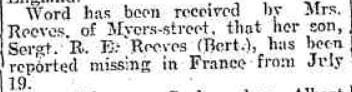
Like hundreds of Australian families after the battle, the Reeves family endured a long and painful period of uncertainty while enquiries were made into his fate. More than a year later, the Geelong Advertiser published a family notice confirming his death:
“REEVES.—Killed in action in France on 19th July, 1916 (previously reported missing), R. E. (Bert.) Reeves, Sergt., 59th Battalion.”
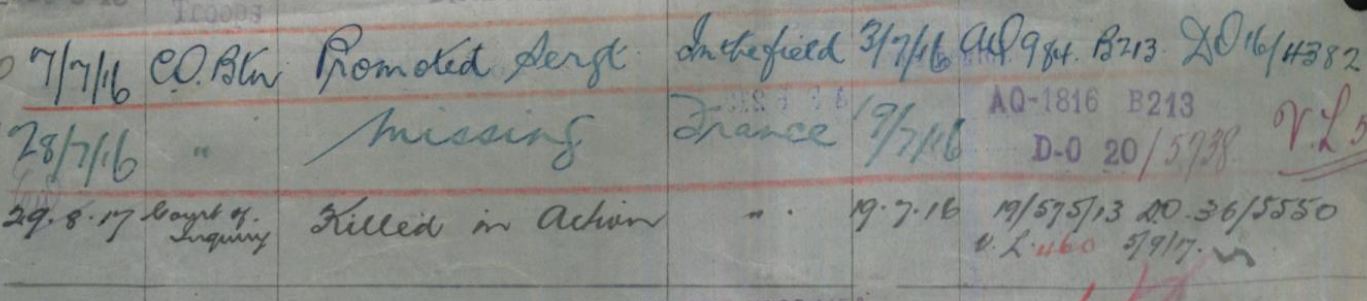
A Court of Enquiry held in the field on 29 August 1917 officially determined that Bert had been killed in action on 19 July 1916.
His body was never recovered or identified. A handwritten note later added to his service file recorded:
“Presumed Buried In No Man's Land approx 5J90 43 to 5K02.5.1 Sheet Hazebrouck 5A.”
Probate records later filed in Victoria confirmed that Bert had died unmarried and that administration of his estate was granted to his mother, Margaret Pringle Reeves of Myers Street, Geelong. The papers recorded his occupation as machinist and detailed the settlement of his military pay, deferred pay, war gratuity, and personal effects following his death.
He is commemorated at:
- Australian War Memorial Roll of Honour,
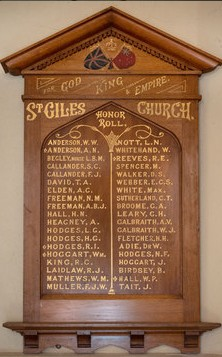
- Geelong St Giles Church Honor Roll
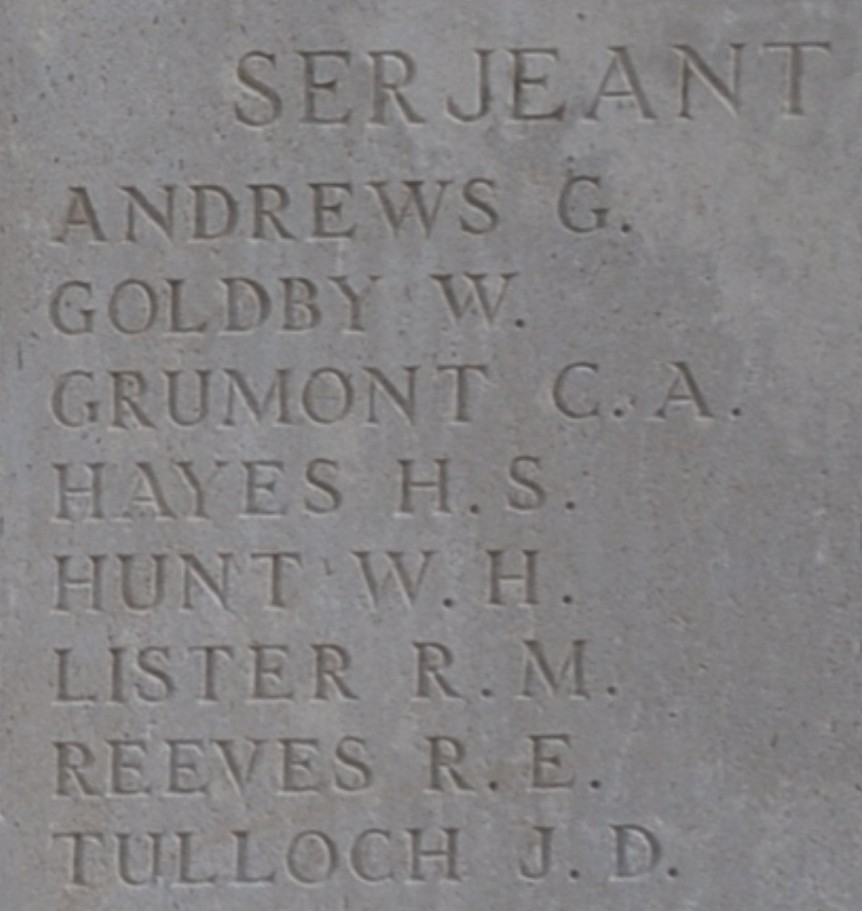
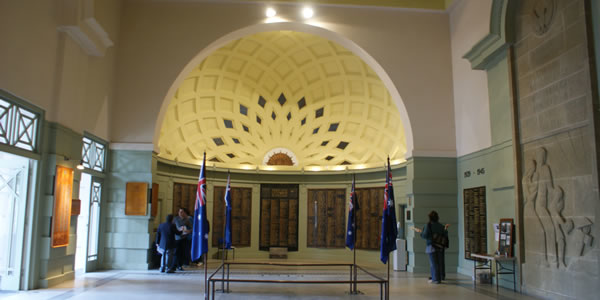
- V.C. Corner Australian Cemetery Memorial
The effects of Bert’s loss continued to be felt by his family long after the war. His mother, Margaret Reeves, later signed for the memorial plaque and scroll issued by the Australian government in honour of those who died during the war.
Family at War
Bert’s Storrer cousins.
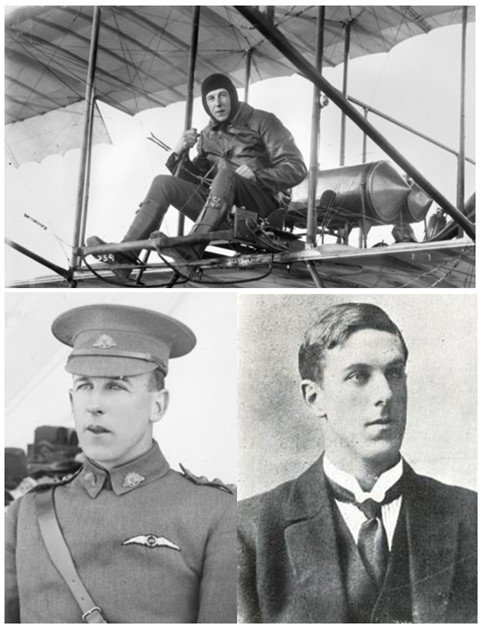
The First World War brought repeated tragedy to Bert Reeves’ extended family. Through his mother, Margaret Pringle Storrer, Bert was connected to the well-known Storrer family of Geelong. Two of his cousins, brothers Sergeant Charles Murray Storrer and Captain Henry Haigh Storrer, also lost their lives during the war.
Sergeant Charles Murray Storrer served with the 4th Light Horse Regiment. Educated at The Geelong College and employed as a wool clerk with Dalgety & Company before the war, he enlisted shortly after the outbreak of fighting and served at Gallipoli. He died of wounds on 5 June 1915, aged just 20.
The Geelong College magazine later recorded:
“We hear that he was killed while sitting at breakfast in a dugout. A fragment of shrapnel struck him, and though he lived for some hours afterwards, he never regained consciousness.”
Source: The Geelong College – STORRER, Charles Murray (1894–1915)
His brother, Captain Henry Haigh Storrer, served with No. 3 Squadron, Australian Flying Corps. Before the war he had worked as an accountant and attended Melbourne University. Henry was killed in action in France on 2 December 1917, aged 29, when his aircraft crashed during poor weather conditions near Bailleul.
The Reeves and Storrer families were among many Geelong families whose losses stretched across Gallipoli, Fromelles, and the skies over the Western Front.
Finding Bert
Bert’s body was never recovered after the Battle of Fromelles, and he has no known grave. Today, he is commemorated on the V.C. Corner Australian Cemetery Memorial, where the names of more than 1,200 Australian soldiers missing from the battle are recorded. It is possible that Bert was among the Australians buried by German forces in the mass grave at Pheasant Wood, discovered near Fromelles in 2008.
Since then, more than 181 soldiers from the grave have been positively identified using DNA provided by living relatives.
As of 2026, Bert has not been identified. DNA donations from descendants of the Reeves, Storrer, Bassett, Pringle, or related family lines may assist future identification efforts.
If you are connected to Bert’s family or believe you may be related, please contact the Fromelles Association of Australia to learn more about the DNA identification program.
DNA samples are being sought for family connections to
| Soldier | Robert Edward “Bert” Reeves (1894–1916) |
| Parents | Robert Joseph Reeves (1859–1937), Geelong, Victoria & Margaret Pringle Storrer (1862–1945), Geelong, Victoria |
| Siblings | Elsie Muriel Reeves (1886–1969) | ||
| Doris Isabel Reeves (1888–1979) | |||
| Henry Storrer Reeves (1890–1967) | |||
| Vera Margaret Reeves (1892–1978) | |||
| Eileen Jessie Reeves (1896–1995) |
| Grandparents | |||
| Paternal | Robert Reeves (1820–1909) & Barbara Ellen Bassett (1824–1876) | ||
| Maternal | Henry Meldrum Storrer (1819–1910) & Janet “Jessie” Pringle (1819–1884) |
The Fromelles Association would love to hear from you

Contacts
(Contact: carla@fromelles.info or geoffrey@fromelles.info).
(Contact: army.uwc@defence.gov.au or phone 1800 019 090).
Donations
If you are able, please contribute to the upkeep of this resource.
(Contact: bill@fromelles.info ).