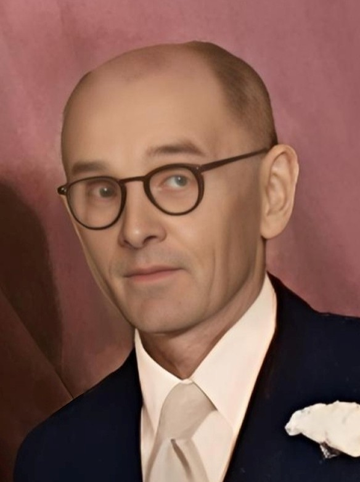
Arthur James BOYD
Eyes blue, Hair brown, Complexion fresh
Arthur James “Jim” Boyd – Captured at Fromelles
Early Life
With thanks to Phillip Boyd in writing this story
Arthur James Boyd, known as Jim, was born on 7 September 1886 at Howard, Queensland, the second son of David Boyd and Annie Henry. Both of Jim's parents were born in Ireland. David and Annie married about 1884 and emigrated to Queensland with their infant son, David George. They sailed aboard the Duke of Sutherland, arriving at Maryborough on 3 April 1885. Jim was born the following year, followed by his younger brother, Andrew Alexander, in 1888. Tragedy struck the young family when Jim's mother, Annie, died at Howard, Queensland, on 20 November 1888, aged about 25 from a snake bite she had received while hanging out the washing. She was buried at Howard Cemetery four days later. Jim was only two years old. His younger brother Andrew died the following year.
Jim's father married Catherine Jane Roderick in 1891. They had four children, Agnes, born in 1892; Selina Mabel, born in 1893; Joseph, born in 1896; and Norman Hugh, born in 1902. Sadly, Joseph and Norman both died in infancy. David became a Methodist minister and served for several years at Charters Towers, including taking charge of the Primitive Methodist Church, later known as the Methodist Second Church, in Gill Street. He was remembered as a successful minister who was “highly esteemed by all who knew him.”
Source - The North Queensland Register, 14 November 1904, p. 8 (Supplement), “The Rev. David Boyd” http://nla.gov.au/nla.news-article84413208
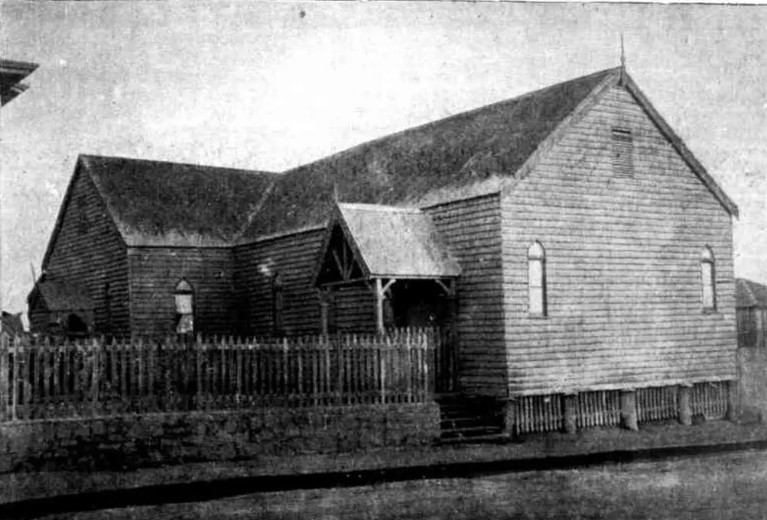
David was eventually forced to give up his ministry after developing consumption (tuberculosis). Various treatments were attempted, including a journey to England, but his health continued to deteriorate. He died at his home in Millett Street, Wellington Flat, Charters Towers, on 8 November 1904, aged about 41. His standing in the community was reflected in the large funeral procession of 42 vehicles that accompanied him to his burial. Following David's death, Jim's stepmother Catherine remained at Charters Towers with her family. They initially continued living at Wellington Flat, where Catherine took a keen interest in the Sandy Creek Methodist Sunday School, before later moving to Hodgkinson Street.
She subsequently became Matron of Blackheath College, serving in that position for fifteen years and becoming affectionately remembered by the hundreds of girls who passed through the school during her time there. Of Catherine and David's four children, only their daughters Agnes and Selina Mabel survived infancy. Mabel later predeceased her mother, while Agnes married A. W. L. Russell. Catherine spent her later years with Agnes, first at Bowen and then at Redcliffe. By the age of 18, Jim had lost his mother Annie, his younger brother Andrew and his father David, and the two little half brothers.
Jim remained at Charters Towers and worked as a clerk for Allan Bright & Co. He later moved to Leichhardt, Sydney, where he again lived close to people with connections to his earlier life in Charters Towers. Among them were Agnes Hayston, née Perkins, and her family. Agnes and her husband William Hayston had previously lived at Moore Street, Charters Towers, before moving to Leichhardt. William died at their home, Ravenscraig, Wetherell Street, Leichhardt, in January 1912.
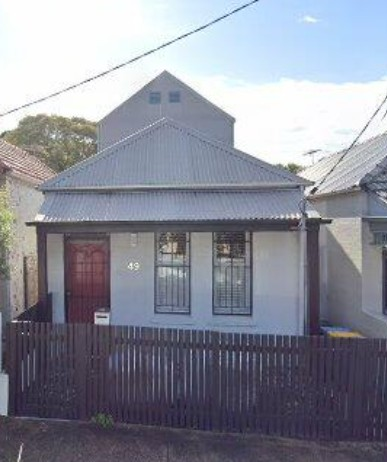
The connection between Jim and the Hayston family would remain important during the war, when Agnes was entrusted with looking after Jim's financial affairs while he was overseas. Jim's older brother, David, remained in Queensland and became a State school teacher. In 1915 he was transferred from his position as assistant teacher at Charters Towers to become head teacher at Pentland. By the time Jim enlisted in the AIF in July 1915, he was working as a labourer and living at 49 Annesley Street, Leichhardt. His older brother David, then head teacher at the State School, Pentland, Queensland, was named as his next of kin.
Off to War
Jim enlisted in the AIF at Liverpool, New South Wales, on 5 July 1915. He was 28 years and 10 months old, single and working as a labourer. Jim was initially assigned to the 10th Reinforcements of the 2nd Battalion and embarked from Sydney aboard HMAT A69 Warilda on 8 October 1915, bound for Egypt. With the ‘doubling of the AIF’ as it expanded from two infantry divisions to five, major reorganisations were underway.
The 54th Battalion was formed in mid-February 1916 at the Tel-el-Kebir camp, about 110 km northeast of Cairo. The camp contained about 40,000 men, including Gallipoli veterans and the thousands of reinforcements arriving regularly from Australia. The 54th was made up of Gallipoli veterans from the 2nd Battalion, most of whom were from New South Wales, along with newly arrived reinforcements from New South Wales.
Jim was among the newly arrived reinforcements incorporated into the 54th Battalion during the reorganisation in Egypt. By the end of March, much of the basic training in musketry and bayonet use had been completed for the new soldiers and they were sent to Ferry Post on foot, a journey of about 60 km that took three days. It was a significant challenge, walking over soft sand in 38°C heat with each man carrying his own possessions and 120 rounds of ammunition. After arriving at Ferry Post they were rewarded with the opportunity to swim in the Canal.
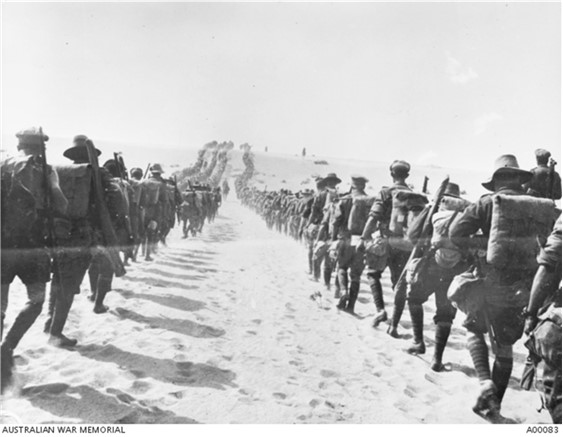
During the march, H.R.H. the Prince of Wales visited the troops and they greeted him with “enthusiastic cheers”. Source - AWM4 23/71/2 – 54th Battalion War Diary, March 1916, p. 13 The troops spent all of May occupying front-line trenches at Katoomba Heights, eight miles from the Suez Canal, guarding against any potential threat posed by the Ottoman Army. During this time they took turns occupying trenches, wiring defences, carrying out patrols and continuing their training in preparation for service on the Western Front.
On 19 June 1916, the 982 soldiers of the 54th Battalion embarked at Alexandria aboard the Caledonian for the ten-day voyage to Marseilles via Malta. Their destination was the Western Front, where they would join the British Expeditionary Force in France. After disembarking they immediately entrained for a three-day journey to Hazebrouck, about 30 km west of Fleurbaix in northern France. The long trip north took them through the lush French countryside, a stark contrast to the sands of Egypt. By 2 July the battalion was billeted in barns, stables and private houses in nearby Thiennes.
Training now included gas mask drills and exposure to artillery shelling. It was hoped these exercises would “inspire the men with great confidence”.
Source - AWM4 23/71/6 – 54th Battalion War Diary, July 1916, p. 2
On 10 July they moved to Sailly-sur-la-Lys and on 11 July entered the trenches at Fleurbaix for the first time. The health and spirits of the troops were reported as good. After several days becoming accustomed to the routines of trench life, the battalion rotated back to billets at Bac-St-Maur. The area around Fleurbaix was known as the “Nursery Sector”, a supposedly relatively quiet area where inexperienced Allied troops could learn the realities of trench warfare against the Germans. But the training period did not last long. On 15 July, Major Roy Harrison wrote home:
“The men don’t know yet what is before them, but some suspect that there is something in the wind. It is a most pitiful thing to see them all, going about, happy and ignorant of the fact, that a matter of hours will see many of them dead; but as the French say ‘C’est la guerre’.”
The Battle of Fromelles
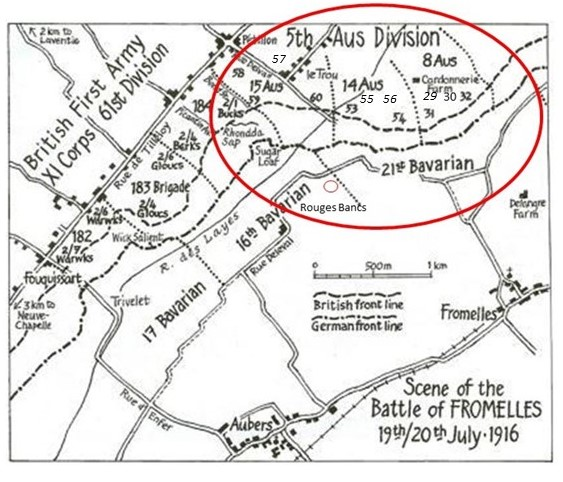
The overall plan was for brigades of the Australian 5th Division to conduct a diversionary assault on the German trenches at Fromelles. The main objective for the 54th Battalion was to capture the trenches to the left of the heavily defended and elevated German strongpoint known as the “Sugar Loaf”, which dominated the battlefield. If the Sugar Loaf could not be taken, the 54th and neighbouring battalions would be subjected to devastating enfilade fire from German machine guns and vulnerable to counterattack. As they advanced, the 54th was to link up with the 31st and 53rd Battalions. The attack was originally planned for 17 July, but heavy rain delayed the operation.
The weather improved and by 2.00 PM on 19 July the battalion was back in the trenches, preparing for its first major action on the Western Front. Zero Hour was set for 5.45 PM, but the Germans were well aware that an attack was imminent. At 5.15 PM they unleashed a massive artillery bombardment on the Australian lines, causing chaos and heavy casualties before the assault had even begun. At 5.50 PM the men of the 54th began leaving their trenches. The battalion advanced in four waves, half of A and B Companies forming the first two waves, with half of C and D Companies in the third and fourth.
The leading waves moved into No-Man’s-Land and lay down, waiting for the British barrage to lift. At 6.00 PM the German trenches were rushed. The advance across No-Man’s-Land came at a heavy cost. Men were killed and wounded as they crossed the open ground, while others took shelter in shell holes before moving forward again. Some fell before reaching the German wire, while others made it through and entered the enemy positions. The survivors pushed beyond the German front line, occupying and attempting to consolidate trenches and ditches further into the German defences.
The success was uneven across the battalion front. Heavy machine-gun fire had inflicted severe losses during the crossing, leaving some companies badly depleted, while other groups penetrated deeper into the German positions. Men became scattered across a complex battlefield stretching from No-Man’s-Land and the German wire to positions beyond the enemy's first and second lines. According to the story passed down through Jim's family, he and another soldier went out into No-Man's-Land to cut the wire for the advance. The other soldier was shot and killed, while Jim was wounded and taken prisoner by the Germans.
Another wounded 54th Battalion prisoner of war, Private H. P. Fletcher, recalled the intensity of the fire as the men approached the German defences:
“the shrapnel was particularly severe when we reached the wire entanglements in front of the first lines of enemy trench.”
Despite intense artillery, machine-gun and rifle fire, the 54th advanced rapidly. The 14th Brigade War Diary later recorded that the bombardment had been highly effective and that:
“very few living Germans were found in the first and second line trenches”.
The battalion pressed forward nearly 600 yards, linking with the 53rd Battalion on the right and the 31st and 32nd Battalions on the left, holding a line stretching from Rouges Bancs to near Delangre Farm. Some of the forward positions were little more than water-filled ditches that had to be fortified quickly to withstand the inevitable German counterattacks. But on the right flank the situation had collapsed. The 60th Battalion had been unable to advance due to devastating machine-gun fire from the Sugar Loaf, leaving the 54th dangerously exposed.
Lt-Col H. Cass later reported that by 2.20 AM the Germans were attacking along the road past Rouge Bancs. After a counterattack, the 53rd Battalion was apparently unaware that their flank was no longer protected, allowing German troops to move behind the Australian positions and capture men in the trenches.
Cass sent a party of 54th Battalion soldiers forward to stabilise the line:
“They ran forward with the bayonet and drove the enemy back about 50 yards.”
Despite repeated appeals for artillery support, the position became impossible to hold. At 6.30 AM on 20 July, orders were received to withdraw. The retreat was chaotic and exposed to fire, with many wounded left behind in No-Man’s-Land. Cass recalled:
“I saw scores of men badly wounded and no help at hand to bind them up.”
With heavy losses and German troops now behind them due to the exposed right flank, the Australians were eventually forced back towards their own lines. By 7.30 AM on 20 July the 54th Battalion had withdrawn all the way to Bac-St-Maur, about five kilometres from the front. Jim did not return with the battalion. Wounded during the fighting, he had fallen into German hands and was now a prisoner of war. In an extraordinarily short period of time, of the 982 soldiers who had left Egypt with the battalion, the initial roll call recorded 73 killed, 288 wounded and 173 missing.
When Charles Bean, Australia’s official war historian, visited the battlefield two and a half years later, he observed large quantities of bones, torn uniforms and Australian equipment still scattered across the ground. Ultimately, 172 soldiers of the 54th Battalion were killed in action or died of wounds. Of these, 102 were originally listed as missing. As of April 2024, 28 of those men had since been identified and formally buried at Pheasant Wood Cemetery.
Prisoner of War
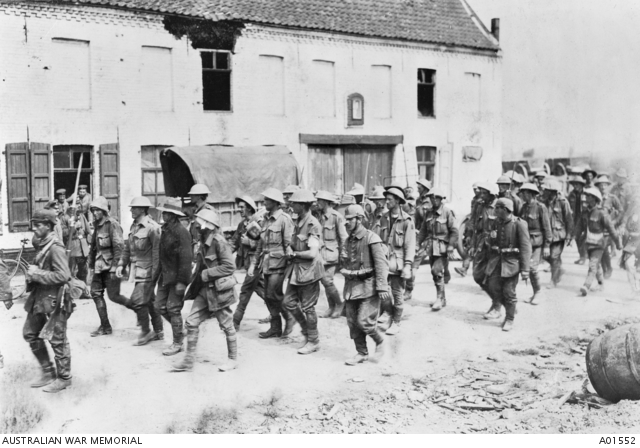
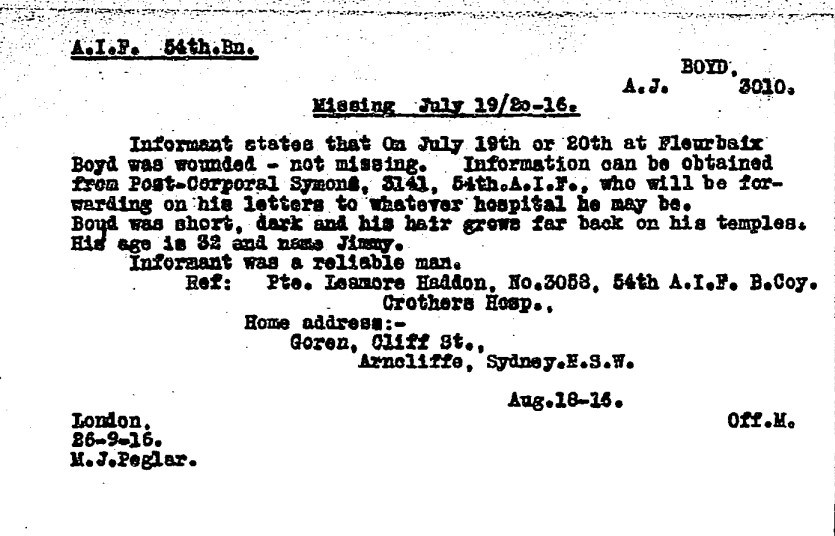
Jim survived the fighting at Fromelles, but he did not escape unscathed. He had been wounded and captured by the Germans on 19 July 1916. Back in the Australian lines, however, no one knew with certainty what had happened to him. In the weeks and months following the battle, dramatically conflicting accounts of Jim's fate reached the Australian Red Cross. Private Leonard Haddon of B Company, 54th Battalion, reported that Jim had been wounded rather than killed. Haddon knew him as “Jimmy” and described him as short and dark, with his hair growing far back on his temples.
The Red Cross interviewer considered Haddon “a reliable man”.
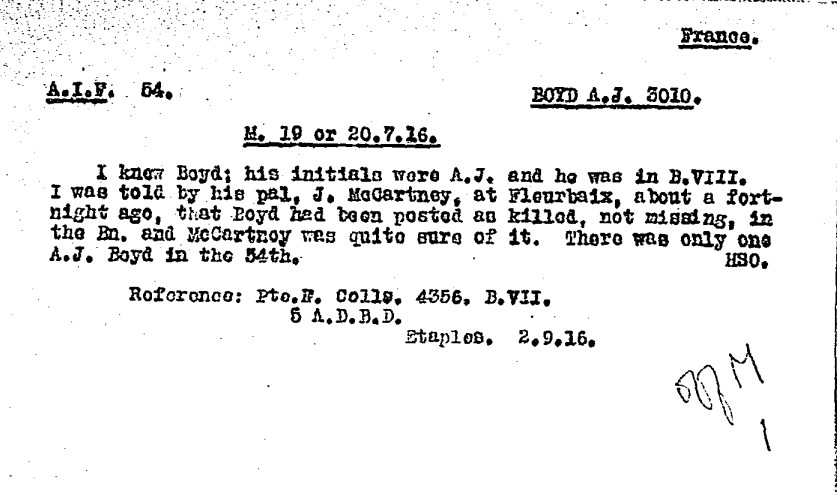
Another account was far less hopeful. On 2 September 1916, 4356 Private Francis Colls reported that Jim's pal, J. McCartney, had told him at Fleurbaix that Jim had been posted as killed in action rather than missing:
“I was told by his pal, J. McCartney, at Fleurbaix, about a fortnight ago, that Boyd had been posted as killed, not missing.”
Collis added that McCartney “was quite sure of it”. Then came an apparently definitive eyewitness account. Private Arnold C. Kater of the Australian Field Artillery stated that Jim had been “killed by a shell” on 19 July and claimed that he had witnessed the incident himself. It was wrong. While reports of Jim's death circulated among his comrades, he was alive in German hands. Confirmation eventually reached the Red Cross that Jim was a prisoner of war and been transferred to Stendal from Cologne Hospital. The supposed eyewitness report of his death was subsequently marked “not correct” on his Red Cross file.
Other contemporary accounts provide an insight into what wounded Australians experienced after capture. Lance Corporal Arnold Branston Mason, who was wounded and captured during the same battle, recalled being taken prisoner with about 20 other wounded men and marched approximately ten miles to a hospital at Haubourdin, on the outskirts of Lille. There they were given soup and bread and their wounds were treated. The following day they were taken by closed cart to a railway station and entrained deeper into German-held territory.
Source: Australian War Memorial PR01877 – Diary of Lance Corporal Arnold Branston Mason

German records show that Jim also passed through the medical system at Field Hospital No. 8 at Haubourdin, near Lille, before being transferred deeper into Germany. His subsequent records trace him through Cologne Hospital and the prisoner of war camps at Quedlinburg, Stendal and Wittenberg. Back in Australia, one of those anxiously awaiting news was Agnes Hayston (1851–1919). The Haystons had longstanding connections with Charters Towers, where Jim had grown up. Agnes and her husband William had lived at Moore Street, Charters Towers, before later moving to Sydney.
William died at their home, Ravenscraig, Wetherell Street, Leichhardt, in January 1912. Their son Wilson, who had been born at Charters Towers, was also serving overseas during the war with the Australian Remount Unit. Agnes was evidently a trusted figure in Jim's life. While he was overseas, she had charge of his money and, following his disappearance at Fromelles, corresponded with the military authorities seeking information about him.
Most importantly, Agnes received a Field Service card from Jim dated 6 August 1916, sent from Germany. It provided welcome confirmation that Jim was alive and a prisoner of war. By October, his status had also been publicly reported in Australia. German prisoner records provide further evidence of Jim's movements during captivity. He was recorded in connection with Cologne Hospital on 30 August 1916 and at Quedlinburg on 7 September. By 3 October he was recorded at Stendal POW Camp.
Another soldier whose experience closely paralleled Jim's was Private Harold Percival “Harry” Fletcher, 3044, of the 54th Battalion. Harry and Jim had originally served together in the 10th Reinforcements of the 2nd Battalion, embarked together from Sydney aboard HMAT Warilda on 8 October 1915, and were later transferred to the 54th Battalion. Both were wounded and captured at Fromelles. Harry suffered a bullet wound to his right hand and was also held at Stendal. Writing on 14 September 1916, he reported:
“I have had the misfortune to receive a bullet wound in the right hand, putting it ‘out of action,’ and am a prisoner in Germany.”
Despite his circumstances, Harry spoke favourably of the treatment he had received and noted that one of the principal restrictions was on writing letters. At the same time, Jim's journey through the German prisoner of war system continued.
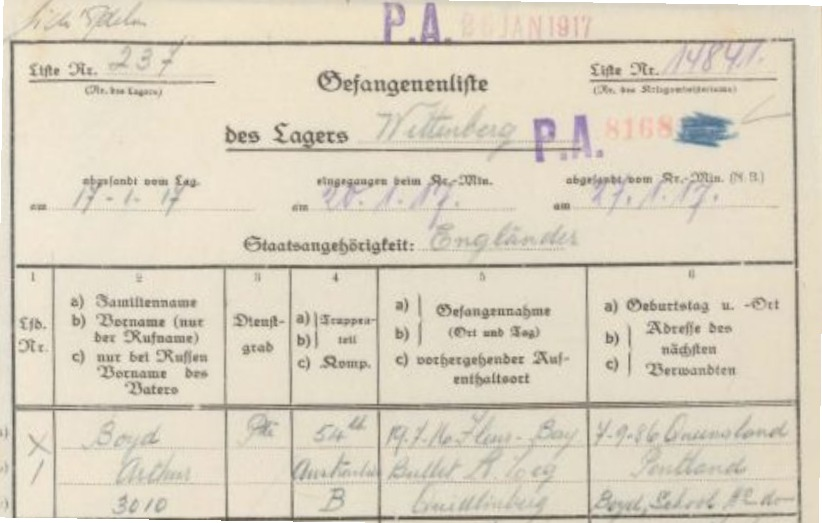
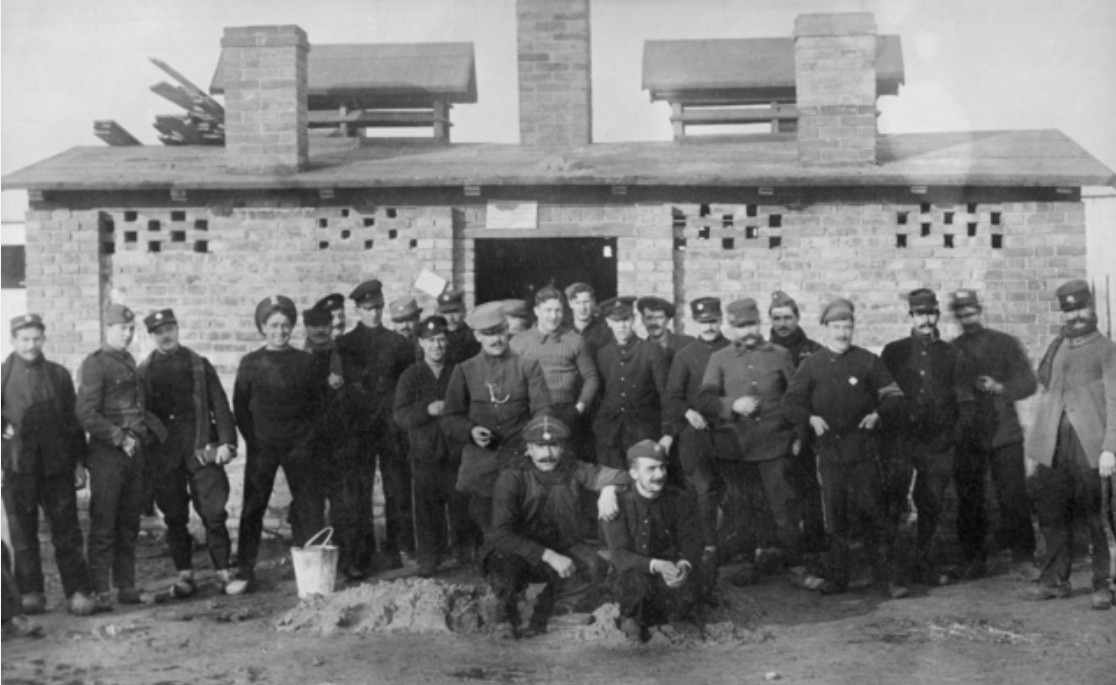
By 17 January 1917 he appeared on a prisoner list for Wittenberg POW Camp. The surviving records therefore allow at least part of his journey after Fromelles to be reconstructed through Haubourdin, Cologne, Quedlinburg, Stendal and Wittenberg, although the dates on some German records indicate when information was recorded and do not necessarily represent the precise date of his arrival or departure from each location. Jim remained a prisoner of war for more than two years. Following the Armistice in November 1918, he was released from German captivity and repatriated to England, arriving there on 26 December 1918.
For Jim, the war was finally drawing to an end. After surviving the Battle of Fromelles, being wounded and captured, and enduring more than two years as a prisoner of war in Germany, he was at last free. He remained in England until arrangements were made for his return home, departing for Australia on 2 March 1919.
After the War
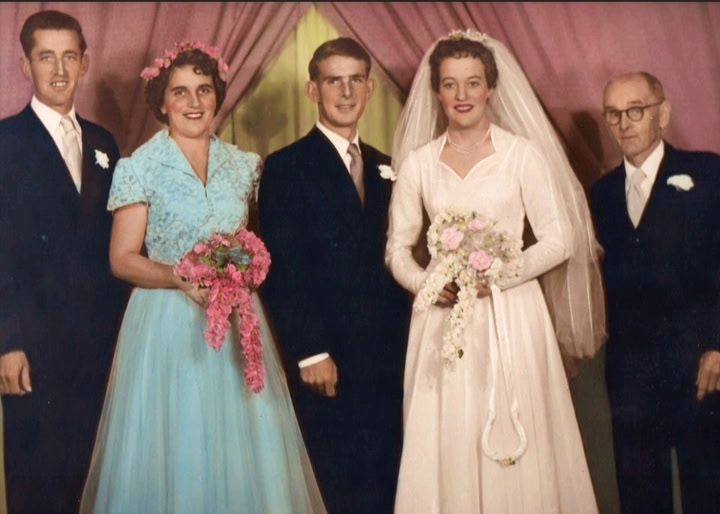
Jim resumed civilian life in Sydney and on 9 October 1920, Jim married Ivy Edith Beresford at Auburn, New South Wales. Ivy was born at Albury in 1900, the daughter of David Beresford and Minna. Jim and Ivy went on to raise four children, Enid, Arthur, Dorothy and Margaret.
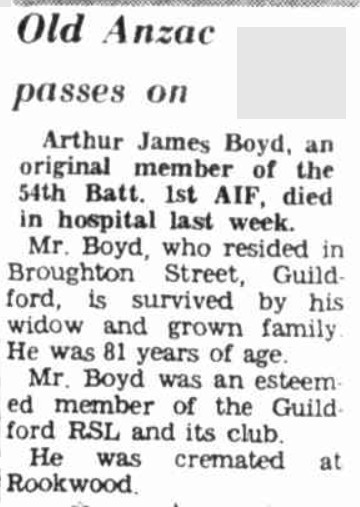
Jim remained involved with the returned servicemen's community and became an esteemed member of the Guildford RSL and its club. In later life, Jim and Ivy lived at 45 Broughton Street, Guildford. Arthur James “Jim” Boyd died at Lidcombe Hospital on 19 May 1968, aged 81. His death notice remembered him as the dearly loved husband of Ivy, loving father of Eric, Arthur, Dorothy and Margaret, and a loved father-in-law and grandfather.
He was cremated at Rookwood and his ashes were interred there at NU 459.
Ivy survived Jim by almost nine years, passing away on 23 February 1977, aged 77.
Family Recollections
Few photographs of Jim have survived within the family, but his grandson Phillip has preserved personal memories that reveal another side of the Fromelles veteran and former prisoner of war.Phillip only four years old when his grandfather died, but remembers a wooden cubby house in his parents' backyard with a chalkboard inside. Jim's small stature was something remembered within the family, and he fitted easily inside the cubby house, where he would give Phillip and his sister lessons at the chalkboard.
Phillip's last memory of his grandfather was during a visit to Lidcombe Hospital. As Jim lay in bed, Phillip played with Matchbox cars on the pillow beside his grandfather's head, using the pillow as a hill for the little cars to climb. Jim looked at him, smiled and asked:
“What do you have there?”
Phillip replied “Cars, Poppy.”
Jim's wartime service also had a profound influence on later generations. His son Arthur served in the Royal Australian Navy during the Second World War aboard HMAS Hobart, including during the Battle of the Coral Sea. Jim's original First World War medals did not survive within the family. According to the story passed down by his daughter, Arthur had taken his father's medals outside while still a child and they disappeared, possibly having been stolen.
Phillip recalled that the loss of his father's medals became an important influence on Arthur during his own naval service. The tradition of service continued into another generation. Phillip remembers Jim's example as an important influence on his own decision to serve in both the Australian and New Zealand Armies.
Phillip's memories preserve something the official military records cannot: Jim as “Poppy”, sitting with his grandchildren in their backyard cubby house and, in Phillip's final memory of him, smiling as a four-year-old played with Matchbox cars beside his hospital bed.
Links to Official Records
The Fromelles Association would love to hear from you

Contacts
(Contact: carla@fromelles.info or geoffrey@fromelles.info).
(Contact: army.uwc@defence.gov.au or phone 1800 019 090).
Donations
If you are able, please contribute to the upkeep of this resource.
(Contact: bill@fromelles.info ).