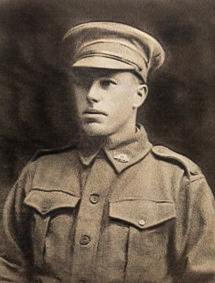
Albert Duncan TAYLOR
Eyes hazel, Hair brown, Complexion dark
Albert Duncan Taylor – Prisoner of War
With thanks to John Reading and www.tunnellers.org for their contribution towards this story
Early Life
Albert Duncan Taylor was born on 28 January 1880 in Adelong, New South Wales, one of the ten children of Alexander Taylor and Johanna Henrietta née Bosse:
- Angus (1866–1867) died infancy
- Charles Frederick (1868–1921)
- Alexander Albert (1870–1921)
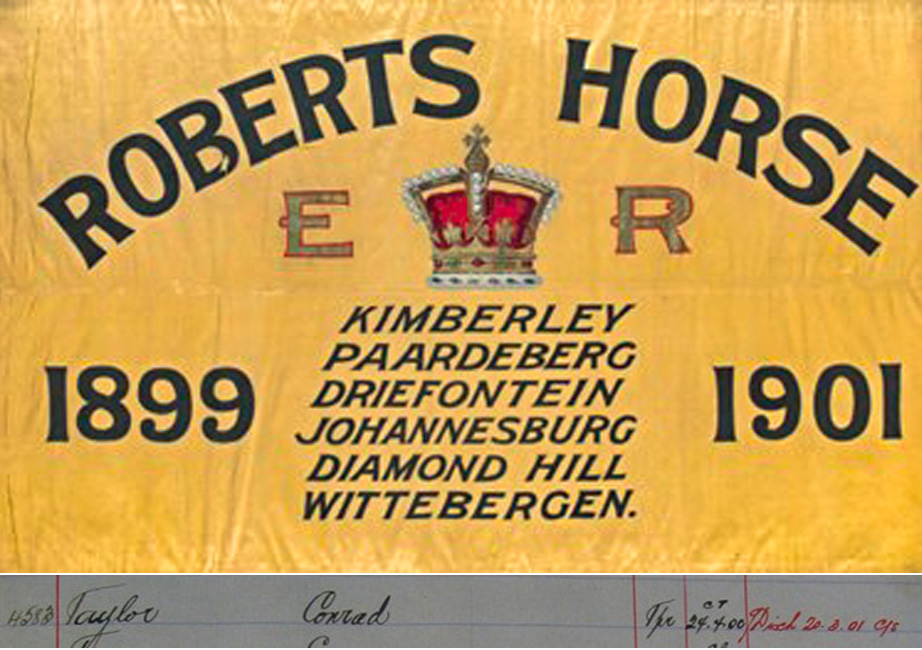
- Conrad Cameron (1872–1950) - served in the Boer War with Roberts’ Horse
- Frederick Lewis (1875–1918) - a miner who later enlisted with the 2nd Tunnelling Company (5632) and died in France from gas-related pneumonia
- Janet Kate (1876–1968)
- Flora (1878–1963)
- Albert (1880-1961) - POW Fromelles
- Agnes (1883–1963)
- Mary Waverley (b. 1888)
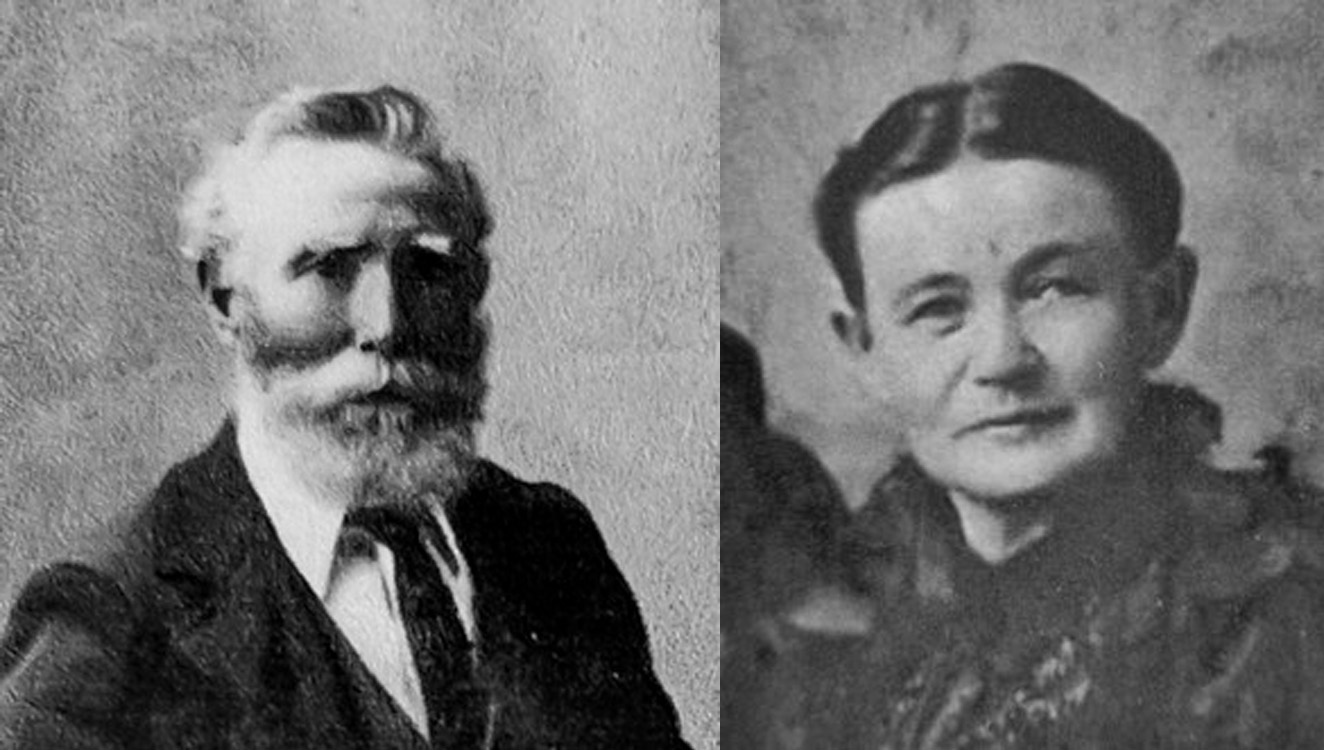
Alexander was a Scottish-born gold miner who came to Australia in 1854, arriving in Victoria. Johanna was originally from Salzgitter-Bad, Salzgitter, Lower Saxony, Germany. They married in 1865 in Matlock, Victoria, which is near the Morning Star Reef gold mine. They moved to other gold mining towns in the area before moving to Adelong, NSW, also a gold mining area, between 1872 and 1875.
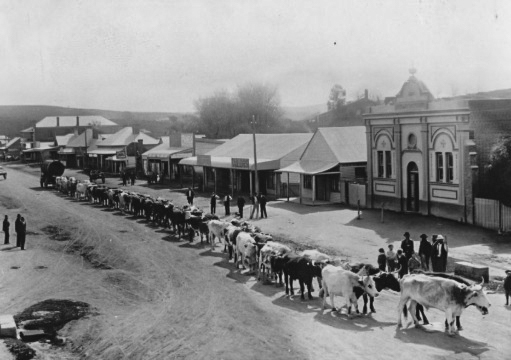
At some stage, a number of the family moved to Sydney and when Albert enlisted in 1915, he was working as a clerk in Sydney. His brother Frederick, who enlisted in the AIF as a tunneller in 1916, had headed west to the goldfields of Western Australia. His older brother, Conrad, was involved in the Boer War in South Africa. At the time of Albert’s enlistment, he was unmarried and living in Paddington. He named his mother Johanna, then residing in Bargo via Picton, as his next of kin.
Off to War
Albert enlisted on 22 August 1915 at Warwick Farm, New South Wales. As he was 33, he brought a mature presence to the ranks. He began his military training with the 13th Reinforcements to the 1st Battalion. He departed Sydney on 8 March 1916 aboard HMAT Star of England, bound for the camps in Egypt, arriving on 11 April.
With the ‘doubling of the AIF’ as it expanded from two infantry divisions to five, major reorganisations were underway and on 20 April, Albert was transferred to B Company of the newly created 53rd Battalion. It was made up of Gallipoli veterans from the 1st Battalion and new recruits from Australia. The Gallipoli soldiers in the 53rd were not slow in pointing out to whoever would listen that they were the “Dinkums” and the new recruits were the “War Babies”.
Source: - AWM4 23/70/1, 53rd Battalion War Diaries, Feb-July 1916, page 3
When Albert was assigned here, the 53rd was at Ferry Post, guarding the Suez Canal from any potential threats posed by the Ottoman Army and continuing their training, necessary to build the bonds needed for battle. On 16 June they began the move to the Western Front. 32 officers and 958 soldiers of the 53rd left Alexandria on 19 June aboard the troopship HMT Royal George, bound for Marseilles, France, to become part of the British Expeditionary Force on the Western Front. They arrived in Marseilles on 28 June and were immediately entrained for a 62-hour journey north to Hazebrouck before finally marching into the camp at nearby Thiennes in northern France. During their trip it was noted that their ‘reputation had evidently preceded them’, as they were well received by the French at the towns all along the route.
Source - AWM4 23/70/2 53rd Battalion War Diaries February - June 1916, p. 4
This area near Fleurbaix was known as the “Nursery Sector” – a supposedly relatively quiet area where inexperienced Allied troops could learn the harsh realities of Western Front trench warfare against the Germans. But the quiet times and the training period did not last long. On 8 July they began a 30 km march to Fleurbaix and on 10 July, the 53rd entered trenches for the first time. The front near Fleurbaix was anything but calm. Rain flooded the communication trenches, artillery fire harassed supply lines and the soldiers dug in amid the mud and barbed wire of No-Man’s-Land.
The Battle of Fromelles
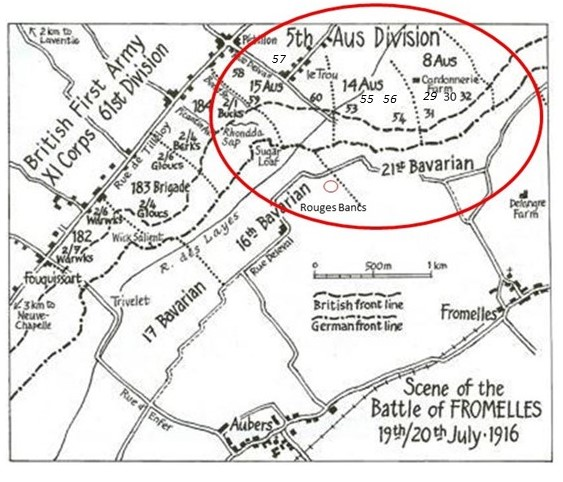
The main objective for the 53rd was to take the trenches to the left of a heavily armed, elevated German defensive position, the ‘Sugar Loaf’, which dominated the front lines. If the Sugar Loaf could not be taken, the 53rd and the other battalions would be subjected to murderous enfiladed fire from the machine guns and counterattacks from that direction. As they advanced, they were to link up with the 60th and 54th Battalions on their flanks. The men knew something was coming. They rehearsed attacks in replica trench systems, inspected bayonets and watched as huge guns rolled into place behind the lines. Then on 16 July, they moved up for an attack—only to have it postponed due to weather.
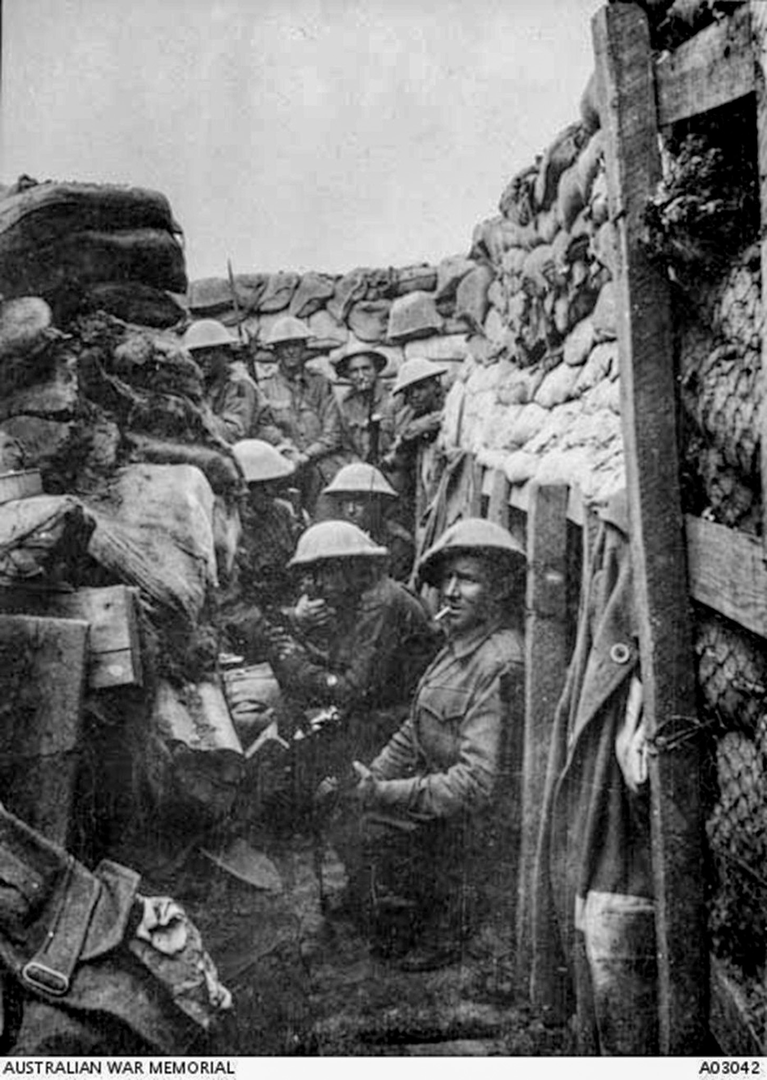
The delay proved torturous. Private Jim Granger (4784), a young Dorrigo soldier, described the tension in his dugout:
“We were held in suspense for three days… like a criminal waiting to hear the verdict. We had no dugouts where we were in the supports and shrapnel was bursting all round.”
On the 19th, heavy bombardment was underway from both armies by 11.00 AM. At 4.00 PM the 54th Battalion rejoined on their left. All were now in position for battle. Zero Hour for advancing from their front-line trenches was to be 5.45 PM, but the Germans knew this attack was coming and were well-prepared. They opened a massive artillery bombardment on the Australians at 5.15 PM, causing chaos and many casualties.
The Australians of the 53rd went on the offensive at 5.43 PM. They moved forward in four waves – half of A Company and Albert’s B Company went in each of the first two waves and half of C and D in the third and fourth. They did not immediately charge the German lines, they went out into No-Man’s-Land and lay down, waiting for the British bombardment to lift. Private Arthur Crewes (4755) wrote of the time:
“At 5.43 pm the signal for the charge sounded, and over the top we went into the face of death, shells bursting, machine guns rattling and rifles crackling.”
At 6.00 PM the German lines were rushed. The 53rd were under heavy artillery, machine gun and rifle fire, but were able to advance rapidly. Corporal J.T. James of C Company (3550) reported:
“At Fleurbaix on the 19th July we were attacking at 6 p.m. We took three lines of German trenches”
As below, the 14th Brigade War Diary notes that the artillery had been successful and “very few living Germans were found in the first and second line trenches”, BUT within the first 20 minutes the 53rd lost ALL the company commanders, ALL their seconds in command and six junior officers.
Source - AWM C E W Bean, The AIF in France, Vol 3, Chapter XII, pg 369
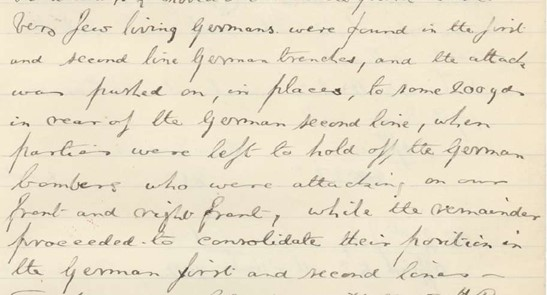
Some of the advanced trenches were just water filled ditches, which needed to be fortified by the 53rd to be able to hold their advanced position against future attacks.
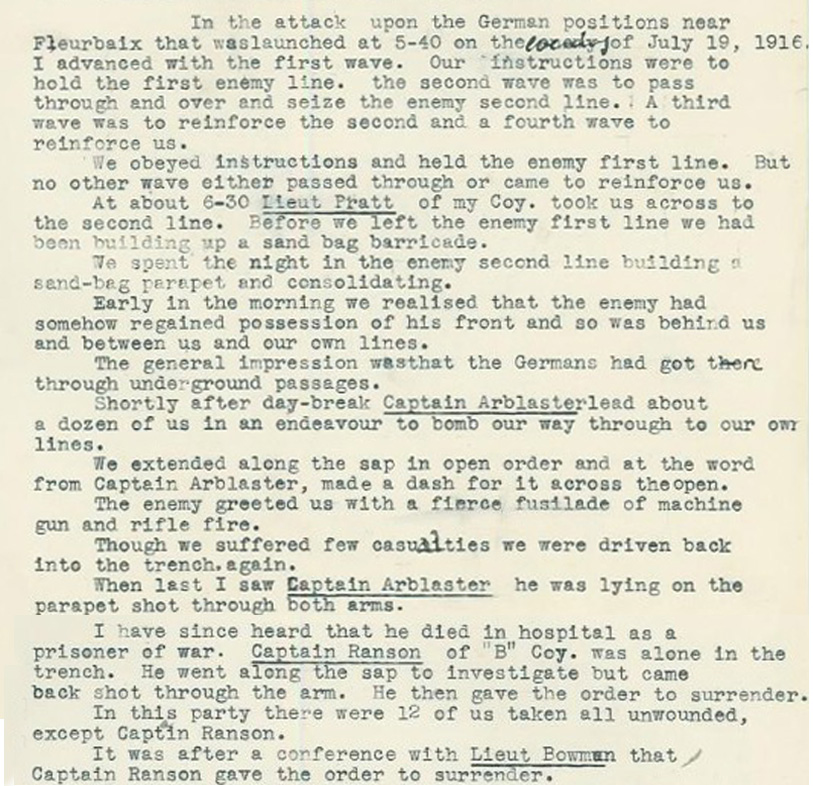
They were able to link up with the 54th on their left and, with the 31st and 32nd, occupy a line from Rouges Bancs to near Delangre Farm. But the 60th on their right had been unable to advance due to the devastation from the machine gun emplacement at the Sugar Loaf. They held their lines through the night against “violent” attacks from the Germans. However, their exposed right flank had allowed the Germans access to the first line trench BEHIND the 53rd, requiring the Australians to later have to fight their way back to their own lines. Albert was among the large number of men captured during the German counterattack on the morning of 20 July, as described by fellow B Company Private Andrew B. Rankine (3412a) -
For those of the 53rd who were still fighting, at 9.00 AM on the 20th, orders to retreat from positions won were issued and by 9.30 AM they had “retired with very heavy loss”.
Source - AWM4 23/70/2 53rd Battalion War Diaries July 1916 page 7
It was simply reported:
“Many heroic actions were performed.”
Of the 990 men who had left Alexandria just weeks before, the initial count at roll call was 36 killed, 353 wounded and 236 missing. Albert was among those initially reported as missing. To get some perspective of the battle, when Charles Bean, Australia’s official war historian, attended the battlefield two and half years later, he observed a large quantity of bones, torn uniforms and Australian kit still on the battlefield.
The final impact of the battle on the 53rd was 246 soldiers were killed or died from their wounds and, of this, 190 were not able to be identified.
Prisoner of War
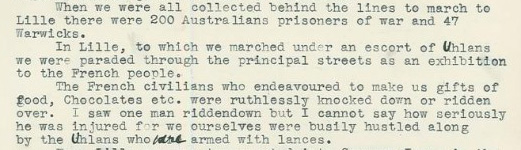
Albert’s life now had begun a very different chapter—one that would last for more than two years behind enemy lines. The POWs were marched under armed escort through the occupied town of Lille.
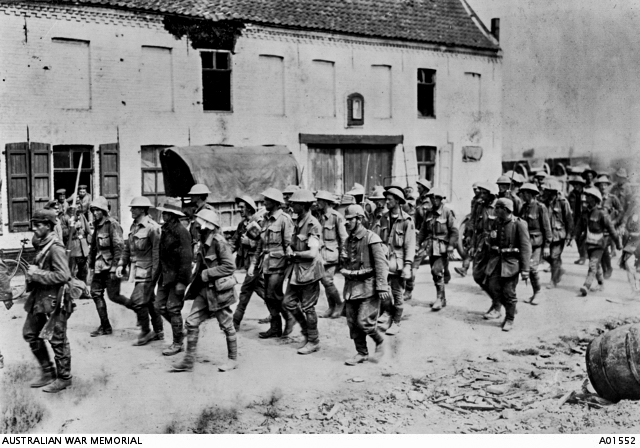
Andrew Rankine went on to describe the poor treatment of both the captured soldiers and the French civilians who tried to offer comfort or food to the prisoners.
Albert was first registered as a prisoner of war at Gefangenenlager Dülmen, a large POW camp in Westphalia. His name appeared on a German list sent to the Red Cross in late August 1916, confirming he was not wounded at the time of capture. He was later transferred to Schneidemühl, in eastern Germany (now Piła, Poland), which held thousands of Allied prisoners including many Australians.
Sources - AWM Red Cross Missing and Wounded File – R1475044, p 5 and ICRC PoW Record – https://grandeguerre.icrc.org/en/File/Details/4086780/3/2/
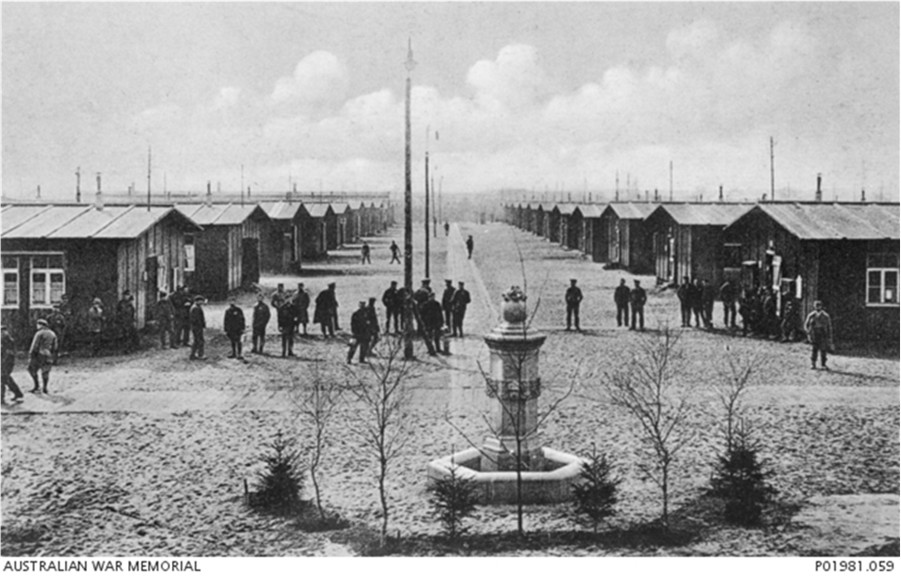
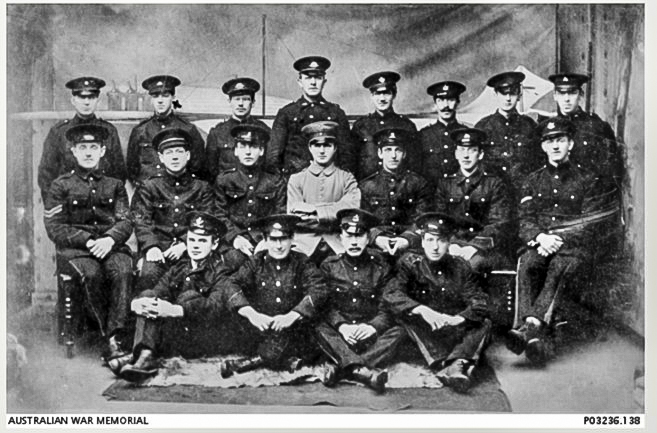
At Schneidemühl, Albert was placed on a labour detachment, or Arbeitskommando, working on agricultural sites. Although treatment varied, POWs generally fared better the further they were from the front, but POWs later described Schneidemühl as one of the harsher camps, with poor winter conditions and overwork. Despite the demanding conditions, Albert’s spirit remained steady. His Red Cross messages record his resilience:
“I am in the best of health at present and I am also as patient as Job.” — 3 February 1918
“I am quite well, am still working on the land and everything is looking beautifully green.” — 21 April 1918
“Am in good health. Packets are arriving regularly. Am working on a farm, have been here for twelve months.” — 18 August 1918
After more than two years in captivity, Albert was repatriated via Danzig in December 1918. He arrived at the reception centre at Ripon, Yorkshire, on 18 December 1918 and was formally processed as a returning prisoner of war. He remained in England until March 1919 and finally returned to Australia on 17 May 1919 aboard the Plassy.
Brothers at War
While Albert survived, the war cast a long shadow over the Taylor family, whose three sons served across two major conflicts.
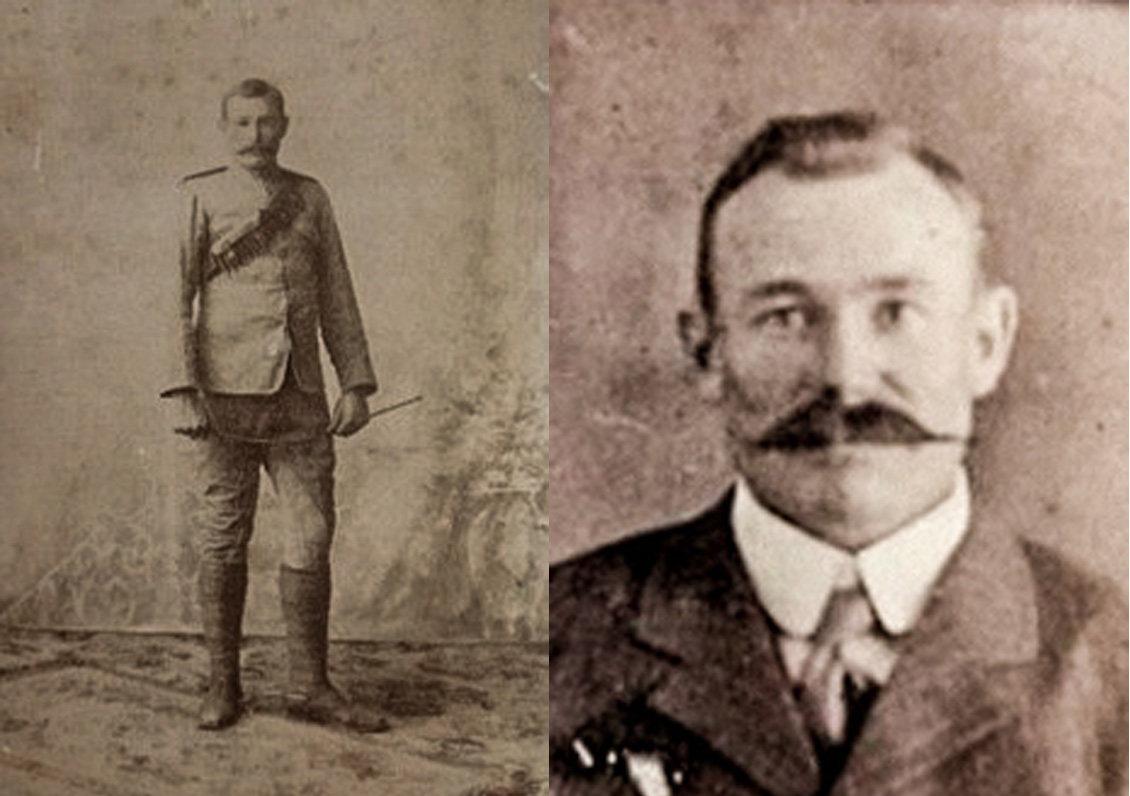
Conrad – the Boer War
Albert’s older brother Conrad served in the Boer War, enlisting with Roberts’ Horse in Cape Town in 1900. He fought in key actions during the British advance from Bloemfontein to Pretoria and was present for the proclamation of the British annexation in October 1900.
Frederick – the Tunneller
Albert’s younger brother, Frederick was a miner living in Western Australia at the time. At 40 years old, he joined the AIF in 1916 as a Sapper with the 2nd Australian Tunnelling Company. While he was not part of the Fromelles campaign, his unit played a vital role in tunnelling operations along the Western Front—constructing deep dugouts, galleries, and underground infrastructure in support of infantry units.
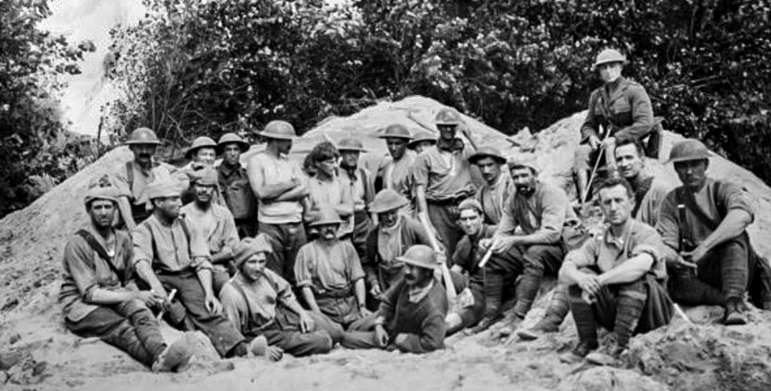
On 12 March 1918, Frederick was exposed to gas and evacuated to Rouen. Nine days later he died of broncho-pneumonia. He was buried in St. Sever Cemetery, Rouen. Frederick had been out of touch with his family when he was in WA and the search for his next of kin took the the Army until 1924 to be able to confirm to his mother Johanna that he had been killed and was and buried overseas.
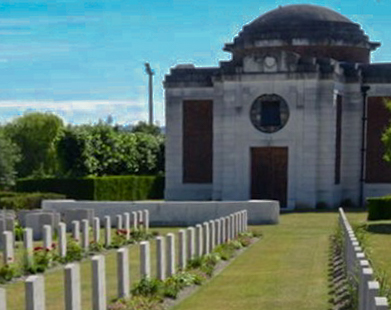
Grave inscription - HE DID HIS DUTY, HE GAVE HIS LIFE
Frederick’s story has been researched and commemorated in full at www.tunnellers.org, where his service is honoured among Australia’s forgotten miners of war:
The Australian tunnelling companies — particularly the 3rd Australian Tunnelling Companies — were active in the Fleurbaix sector in the lead-up to and during the Battle of Fromelles (19–20 July 1916). Their responsibilities were not part of the infantry assault, but were critical to the support, preparation, and survivability of the front lines.
Key duties of the Tunnellers included
-- Excavating and maintaining communication trenches and dugouts to move men and supplies toward the front in relative safety.
-- Constructing deep shelters and galleries for battalion HQs and forward dressing stations.
-- Placing demolition charges and preparing counter-mines, though no offensive mining was used during the attack at Fromelles itself.
-- Working around Cordonnerie Farm, where the 2nd Tunnelling Company was active just behind the 14th Brigade line (the brigade to which Albert’s 53rd Battalion belonged).
“Tunnellers had been employed chiefly on creating or improving dugouts and shelters in the support trenches. At Cordonnerie Farm and along the Rue Petillon, their work had assisted in the development of the second and third lines which were crowded with troops during the assault.”
Albert - After the War
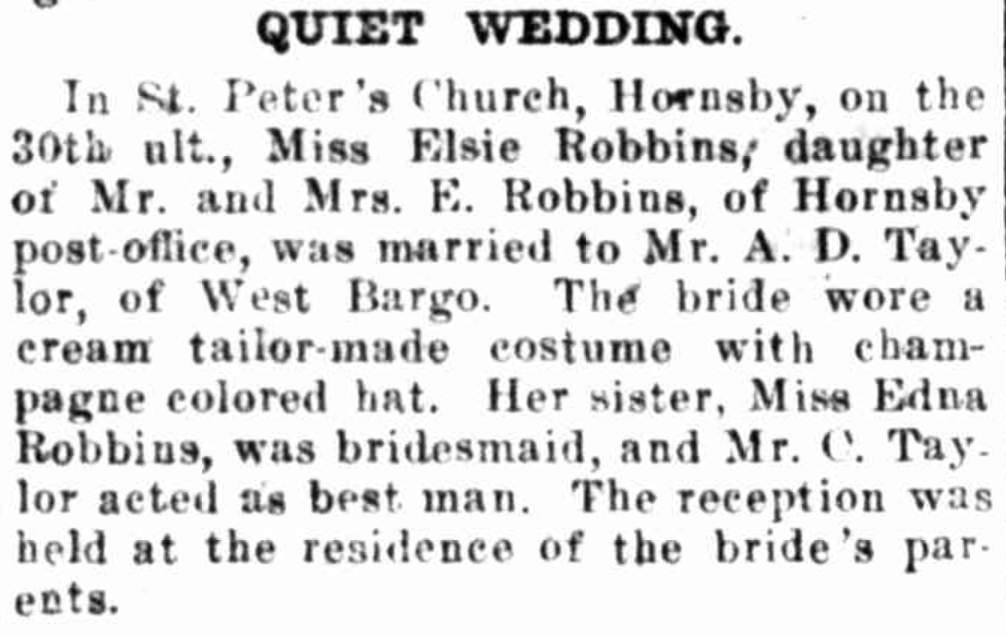
Albert returned to civilian life without fanfare. In 1919, he married Elsie Crisford Robbins, and together they lived in various parts of Sydney, including North Sydney, Marayong, Mosman, Blacktown and Warringah. Albert resumed work as a clerk, never drawing attention to his long internment or the trauma of battle.
Albert’s name does not appear on any major war memorial, but his story lives on through family records, prisoner of war archives, and the deep loss recorded by his mother when seeking word of her other son, Frederick. The Taylor brothers’ service reflects the quiet, enduring sacrifice of so many Australian families during the Great War. Albert Duncan Taylor died on 5 May 1961, aged 81. He was survived by Elsie, who lived until 1968.
Links to Official Records
The Fromelles Association would love to hear from you

Contacts
(Contact: carla@fromelles.info or geoffrey@fromelles.info).
(Contact: army.uwc@defence.gov.au or phone 1800 019 090).
Donations
If you are able, please contribute to the upkeep of this resource.
(Contact: bill@fromelles.info ).