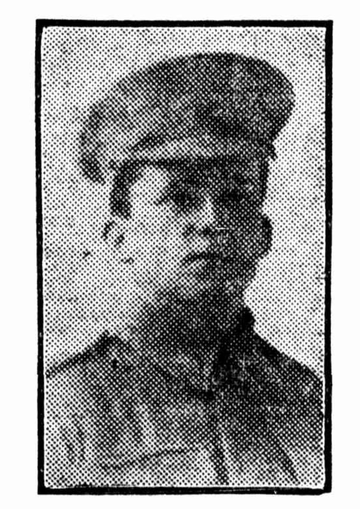
Langford Wellman COLLEY-PRIEST
Eyes blue, Hair light, Complexion fair
Langford Colley-Priest – "Good God, It Was Terrible": A Stretcher-Bearer at Fromelles
Early Life
Langford Wellman Colley-Priest was born in September 1890 at Glebe Point, Sydney, the son of George Wellman Colley-Priest and Julia McDonough. Julia died in 1891, when Langford was still an infant, and George later remarried, to Rose, who raised him from early childhood. Langford was an only son. George Colley-Priest worked as a tipstaff to the Chief Justice of New South Wales, Sir Philip Street, a position he held for close to forty years and which brought him into daily contact with the judges of the Supreme Court.
He was also known in Sydney's northern suburbs as a keen horticulturist, winning prizes for his roses, and played bowls in his spare time. The family lived at "Braemar," Sutherland Street, Neutral Bay, and by 1913 Langford himself was living nearby, at Mosman West. Before the war Langford worked as a warehouseman for Hooper and Harrison, woollen merchants, in the city.
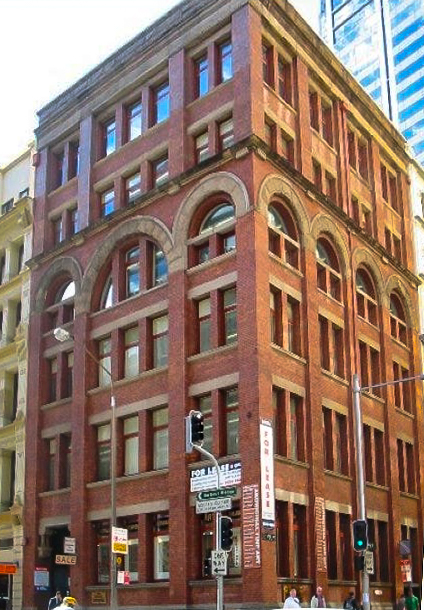
He had already spent two and a half years in the Scottish Rifles, a militia unit, while living in Dunedin, New Zealand, service he would later count towards his prior military experience on enlistment. Langford's letters describe an active social life among the young men and women of Sydney's north shore, with dances at Balmoral, "gypsy teas," and moonlit evenings with friends such as Jack Martin and Harry Croudace of Mosman. Chief among his friends was Eric Herford, also of Neutral Bay, with whom he would later enlist in the same unit, embark on the same ship, and serve for most of the war.
Off to War
Langford enlisted on 18 May 1915 at Liverpool, New South Wales, joining A Section, 8th Field Ambulance, at the age of 24 years and eight months. His father, George Colley-Priest of Neutral Bay, was recorded as his next of kin. Eric enlisted around the same time and joined the same unit.
The 8th Field Ambulance had been raised that year to support the 8th Brigade: not an infantry unit but a mobile medical one, responsible for collecting, treating and evacuating the wounded and sick, made up of medical officers, stretcher bearers, orderlies, drivers and transport staff. Its Sydney sections trained at Liverpool Camp and Queen's Park before the whole unit assembled at Albert Park, Melbourne, in October.
Langford was one of eighteen men who embarked ahead of the main body, under Captain North, sailing from Sydney on the HMAT A72 Beltana on 9 November 1915. He kept a diary from the day of departure:
“Both Eric & I broke down as the boat was leaving the wharf, but we soon got over that.”
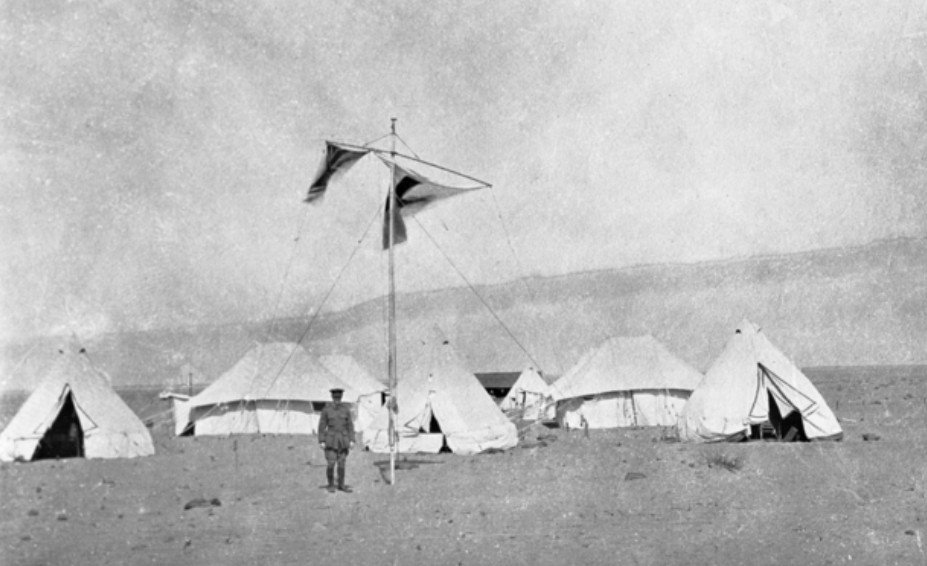
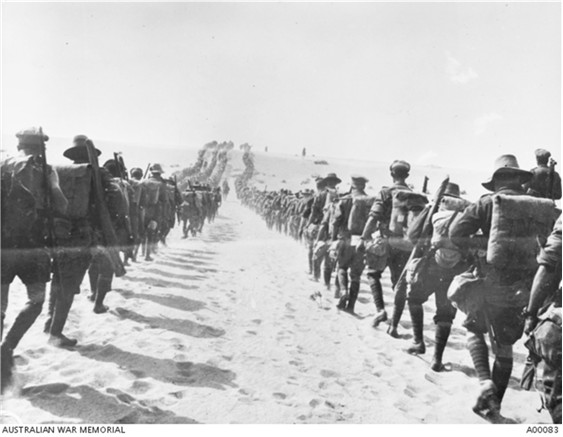
The unit reached Suez in December 1915 and, after a short stay at Heliopolis, moved to Serapeum on the Suez Canal, where the men trained in first aid, signalling, trench construction, route marching and stretcher drill. On 27 February 1916 the 8th Field Ambulance moved with the 8th Brigade to Tel el Kebir and became part of the newly formed 5th Australian Division. Between 27 and 29 March, the unit marched some 40 miles from Tel el Kebir to Ferry Post, treating men overcome by the heat and carrying the exhausted in its ambulance wagons. The second day was the worst, the column crossing deep sand in temperatures over 100 degrees Fahrenheit, and hundreds of infantrymen fell out from exhaustion and thirst. Langford recorded the scale of it in his diary:
“As far as the eye could reach, we could discern men lying about... Only about 160 men (infantry) arrived to time, out of about 4500 men.”
Eric, a stretcher bearer in the same unit, described the same march in a letter home:
“Tramping over the blazing, arid wastes of this desolate land is far from a pleasure jaunt, and we were mightily glad when we finally reached our destination, very weary, and minus a few pounds avoirdupois.”
Of the daily fare in camp, he was blunter still: “Our grub usually consists of sand, flies, and food.” At Ferry Post the unit prepared a hospital for the 180 men who had fallen out on the march, before its sections were dispersed to Duntroon Plateau, Hogs Back and Railhead. In May the 8th Field Ambulance reassembled at Ferry Post at full strength, some sixty reinforcements bringing it to ten officers, and continued training in heat that at times reached 125 degrees Fahrenheit. On 15 June the unit left Ferry Post for Alexandria, embarking for France aboard the Tunisian two days later. They reached Marseilles on 23 June and travelled north by train, through Lyons, Dijon, Paris, Amiens, Abbeville, Boulogne and Calais. Langford recorded his first impressions of the country:
“It is without a doubt the most beautiful country that I ever set foot on... There is a solemn quietness about the country we passed through, everyone noticed this fact.”
The unit detrained at Steenbecque on 26 June and marched to billets at Morbecque, where much of the 8th Brigade was assembling, before moving through Estaires and Erquinghem in early July as the brigade approached the front near Fleurbaix. For most of the men, the fighting soon to come at Fromelles would be their first experience of treating mass casualties under fire. In the days before the battle, patients had already begun passing through the 8th Field Ambulance dressing station at Fort Rompu. On 15 July, Langford recorded a marked increase in casualties and the terrible injuries suffered by the men:
“In the evening a great number of patients arrived. Poor fellows, some of them are crippled for life. We are only just beginning to realise how serious & dreadful this war is.”
On 16 July, B Section returned from the trenches but was immediately sent back for further duty that night. Langford noted that all the men of A Section were anxious for their own turn. The following two days were comparatively quiet, although large numbers of aircraft appeared overhead and were repeatedly shelled.
The Battle of Fromelles
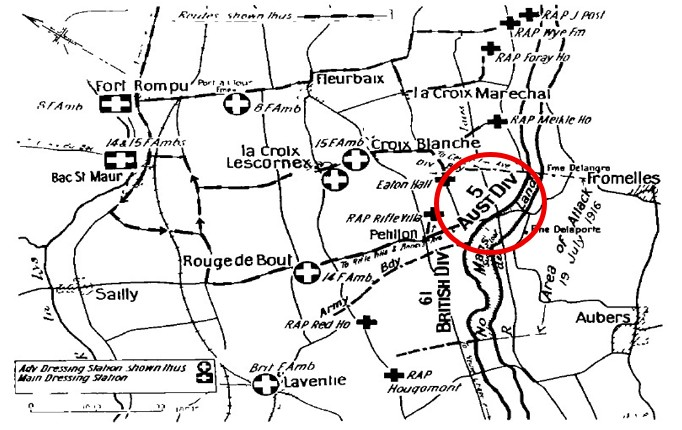
The 8th Field Ambulance went into the Battle of Fromelles with a chain of medical posts already in place behind the 8th Brigade. Its headquarters and Main Dressing Station were at Fort Rompu, with Advanced Dressing Stations and stretcher bearer posts at Bois Grenier, Port à Clous, Croix Marechal, Foray House, Convent Avenue, Elbow Farm and Rye Farm. The wounded would be carried first to Regimental Aid Posts run by the infantry, then to these advanced posts, and from there by motor ambulance to Fort Rompu for treatment before evacuation further back.
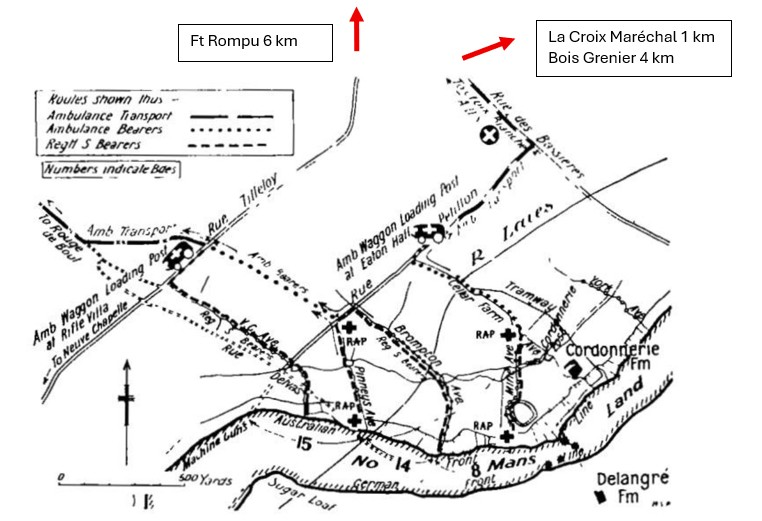
Port à Clous came under heavy German shellfire on 18 July, and by midnight on 19 July the 8th Brigade was reporting approximately 150 wounded awaiting removal, its dressing stations already full. At 10.00 AM on 19 July, four men were required to proceed immediately to an Advanced Dressing Station about two miles closer to the trenches. Langford volunteered and was accepted. He arrived at midday and, by 4.00 PM, German shells were bursting within two or three hundred yards of the post. The enemy appeared to be searching for the newly positioned Australian guns concealed nearby. Langford was now witnessing the effects of shellfire on the men brought into the post:
“A chap has just been brought in... his whole body is shaking, one would think he was shivering with the cold. His nerves must be shattered.”
At 1.00 AM on 20 July, three medical officers and 60 stretcher bearers were ordered forward to Rouge de Bout. An hour later, Major Williams led a further 30 men and 40 stretchers to Croix les Cornets. Langford recalled the order that brought the rest of the unit into the line:
“At 2 a.m. word came through that every available man in the Ambulance was to proceed to the line at once. It was rather a long march, about 5 miles. The sky was lit up with flares and lights of numerous colours, and the roar of the artillery and the rattle of the machine guns was terrific. The terrible battle of Fromelles (sometimes called Fleurbaix) was in progress.”
At the Regimental Aid Posts, the bearers found the approaches choked with wounded, and for many of them, still raw to this kind of work, the shock of it was immediate:
“As we gradually got nearer the scene of action, the noise was deafening (but, of course, after a few more stunts we soon got used to this). On arriving at the Regimental Aid Post we found a terrible congestion of wounded. The sight was a ghastly one, and, of course, as we were all raw recruits in regards this work, some of us took it rather badly. Most of the bearers worked for 36 hours, and many daring deeds were done by a great number of them.”
Hundreds of men lay in the yard of a farmhouse being used as an aid post and along the road beside it. Stretcher parties began carrying them to a loading post three quarters of a mile back, where motor ambulances waited, while other bearers pushed into the communication trenches to bring out men who could not reach the posts unaided. The trenches were narrow, damaged and crowded with wounded and dead, and stretchers sometimes had to be lifted above the bearers' heads to get them round the tight corners. Langford described what he found when he reached the old front line:
“On reaching the old front line trenches I looked upon a terrible sight. Good God, it was terrible! Dead Australians lying about; in fact they were piled up four and five deep. Had to pick our way over them to reach the wounded.”
The carry back was its own ordeal. It took Langford and his party two hours to bring a single wounded man to safety through the shattered trenches, and partway through the journey he stumbled and fell:
“My whole body was trembling, was forced to sit down and rest for about 15 minutes. I could not possibly go on.”
He went down again twice more that day, and continued carrying wounded from the dressing station to the waiting motors until his legs, in his own words, were "all trembling" with exhaustion. One battalion, he noted, held a roll call afterwards in a paddock near the dressing station; only 29 men answered their names. Among the missing was Private Eric Leask of the 30th Battalion, a friend Langford had spoken with only days before. He learned of Leask's death in the days that followed, and recorded it simply in his diary:
“I was speaking to Eric Leask a few days ago... now he is in his grave. Roy Woller... buried him.”
The work continued into a second and third day, as men who had lain out since the first assault were finally brought in. Langford remembered their condition and their endurance:
“Some of the poor fellows were in a bad way, as they had been lying out in 'No Man's Land' for thirty-six hours, without food or water; yet there was hardly a murmur out of them.”
The scale of the casualties drew in far more of the 8th Field Ambulance than its stretcher bearers alone; transport drivers, tent division staff, dental staff and orderly room personnel were all put to work, many labouring for some 36 hours without rest. The unit's war diary recorded:
“Every available man including transport, dental, bathers, dental details and office staff were in the field and struggled on although completely exhausted, till the area was clear of wounded.”
Between noon on 19 July and noon on 22 July, the 8th Field Ambulance treated 587 casualties, of whom 583 were evacuated and five died at the dressing station. Despite working under shellfire and making repeated journeys into the forward area, the unit itself suffered only one casualty, Private C. Beeston, wounded on 21 July. Langford later reflected on what the battle had meant for the unit as a whole:
“A sigh of relief seemed to go round the Unit when the rush ceased, and the place was clear at last. It was our first taste of line work, and was certainly a warm one, and those that worked in the forward area did splendidly, as it was their christening under shellfire.”
The sight of so many dead and wounded men profoundly affected him. Langford wrote that the casualties were so terrible that he dared not record the total. His account became more than a description of the battlefield. It was also an anguished condemnation of what he had witnessed:
“All these men lost in one night... this war is not human”
Langford recorded that the Australians had taken three lines of trenches before German machine-gun and shrapnel fire inflicted devastating losses. Langford survived the battle unwounded. It was, by his own account, an experience he hoped never to repeat:
"Good God I hope I do not strike any more days like the 19th & 20th of July. It is embedded in my mind."
After the Battle
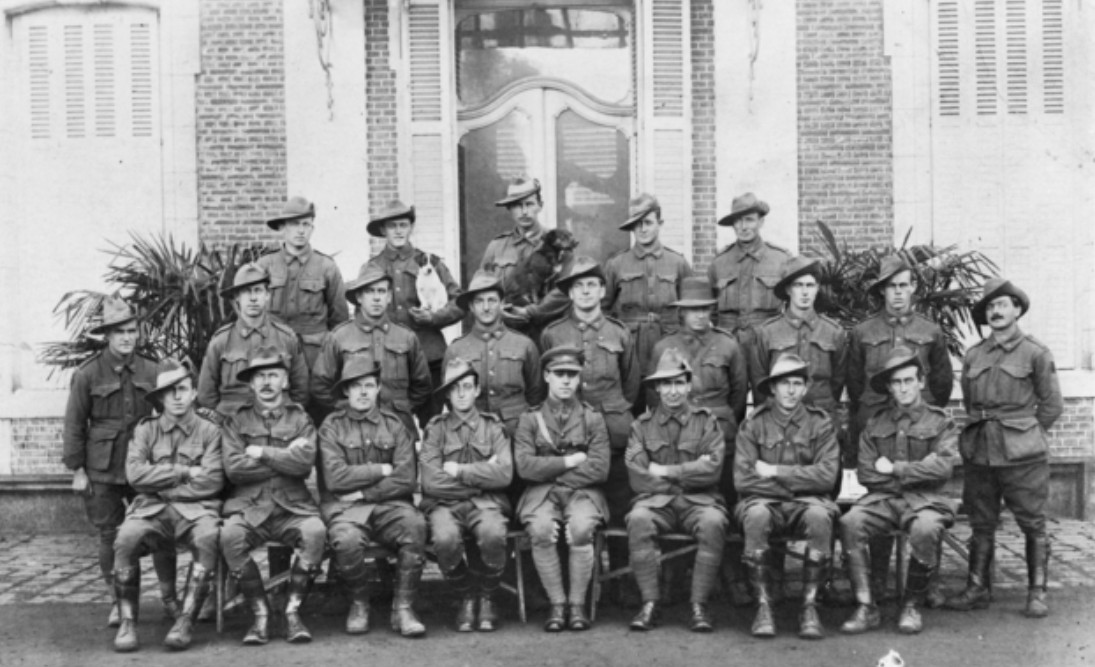
Fromelles was only the beginning of Langford's war. Over the following two years the 8th Field Ambulance moved with the 5th Division through the major actions on the Western Front, including the Somme, Polygon Wood, Messines, Villers-Bretonneux and Mont Saint-Quentin, Langford serving throughout as a stretcher bearer. His service was punctuated by periods of illness "in the field" in October 1916 and again that winter, and a further spell sick in February–March 1917, before he rejoined his unit in France.
One of the first honours to come to the unit after Fromelles belonged to a friend. Thomas William Howard, known to the men as "Bricky," had guided Langford into the front line on the worst day of the battle, 20 July, and had gone on to bring wounded men in from No Man's Land under fire. In August 1916 Langford recorded, with evident pride, that Howard had been awarded the Military Medal:
“Bricky Howard, the chap who took me down to the front Line on that terrible day the 20th July has been awarded the Military Medal for distinguished conduct & bravery. He brought some wounded in from 'No Mans Land'. He deserved this honour & it is also an honour to our Unit.”
Even amid such action, ordinary camp routine went on around the men of the 8th Field Ambulance — mess parades, mail, and the small rhythms that punctuated life between the fighting.
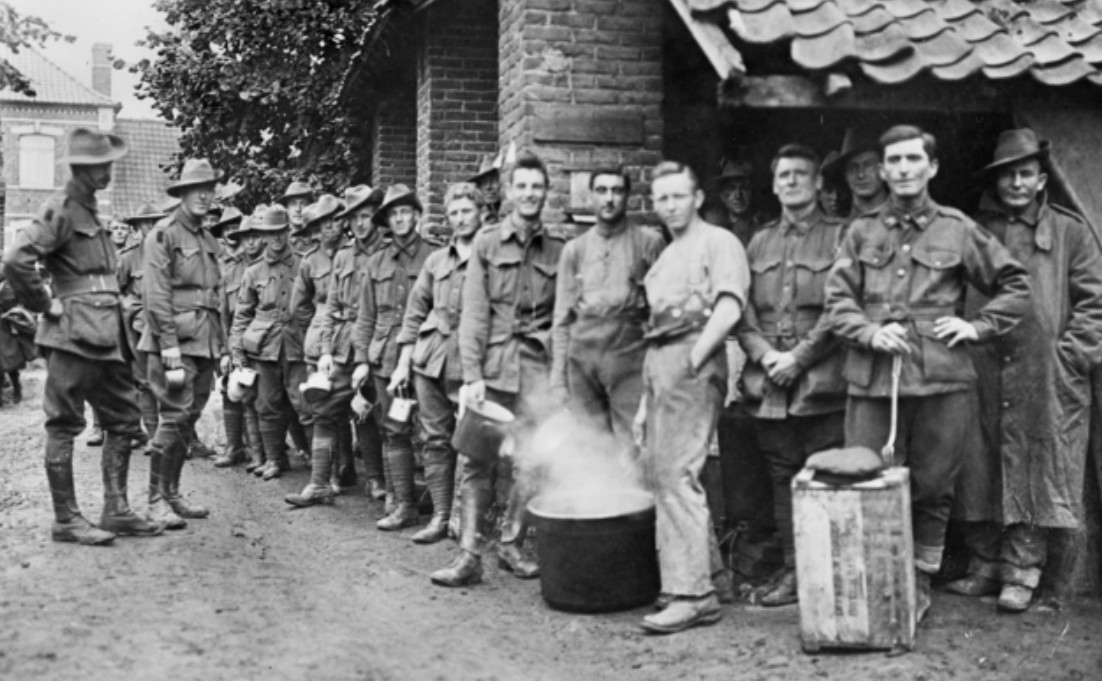
In September 1917, the 8th Field Ambulance again moved towards a major operation. On 17 September, Langford completed an exhausting eighteen-mile march with the brigade. The following day the unit crossed from France into Belgium and reached a large rest station already filled with patients. The guns could be heard plainly during the night. On 19 September, Langford visited a Belgian town whose streets were crowded with military traffic.
The bearers were subsequently ordered to stand ready to move at a moment’s notice. At 3.00 PM on 20 September, they travelled by motor lorry towards the front and reached the dressing station two hours later. Strict censorship prevented Langford from identifying the places through which they passed or giving a complete account:
“No one is more anxious than myself to write a full account but I dare not.”
Langford’s own conduct was recognised in the fighting around Westhoek. On 21 September 1917, his squad carried wounded men from the 19th Battalion Regimental Aid Post near Westhoek to Bellewaarde Ridge. The recommendation, dated 1 and 3 October 1917, described the actions of his squad on 21 September:
“While stationed at 19th Battalion R.A.P. near Westhoek the members of this squad displayed conspicuous gallantry and devotion to duty whilst continuously carrying wounded from that post to Bellewaarde Ridge under very heavy shell fire of all kinds, H.E., shrapnel and gas shells... they showed great courage and devotion to duty, working continuously, and were responsible for saving many lives.”
The award was eventually gazetted in the London Gazette Fourth Supplement of 11 January 1918, and news reached his father in Neutral Bay soon after, reported in the Sydney Morning Herald:
“Mr. G. W. Colley-Priest, of Neutral Bay, has received news that his son, Private Langford W. Colley-Priest (stretcher-bearer), has been awarded the Military Medal in France.”
On 21 January 1918, Langford joined approximately twenty-five medal recipients at a brigade parade. He admitted that he did not enjoy being placed conspicuously in the centre of the assembled troops. Langford received the ribbon of his Military Medal at a brigade parade on 21 January 1918. The recipients were placed in the centre of a hollow square formed by the brigade, a position Langford found rather conspicuous and uncomfortable. His medal was formally presented to him by the Prince of Wales on 28 December 1918.
Source: Langford Wellman Colley-Priest diary, 21 January and 28 December 1918, MLMSS 2439/Item 1, State Library of New South Wales, pages 242–243 and page 350.
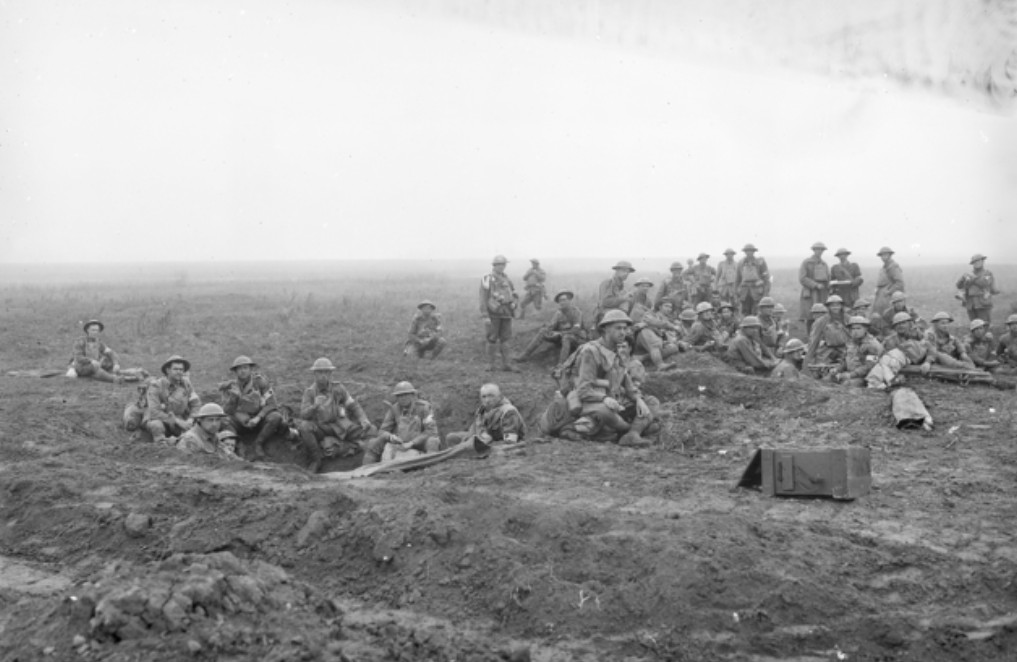
Despite the further battles, dangers and losses Langford experienced, the memories of Fromelles did not fade as did some of the friends who had shared those terrible days with him. Survival on 20 July 1916, however, did not guarantee that they would return home. As the war continued, Langford learned of the deaths of other friends, including James Powell and Charles Whitaker, both of whom had been at Fromelles but were killed in later operations. On 19 July 1918, exactly two years after the battle, he paused to remember the events that had confronted him during his first major experience as a frontline stretcher bearer:
“The 2nd Anniversary of the Battle of Fromelles. What awful memories does this day bring back to me, one of the never forgotten days in my military experience.”
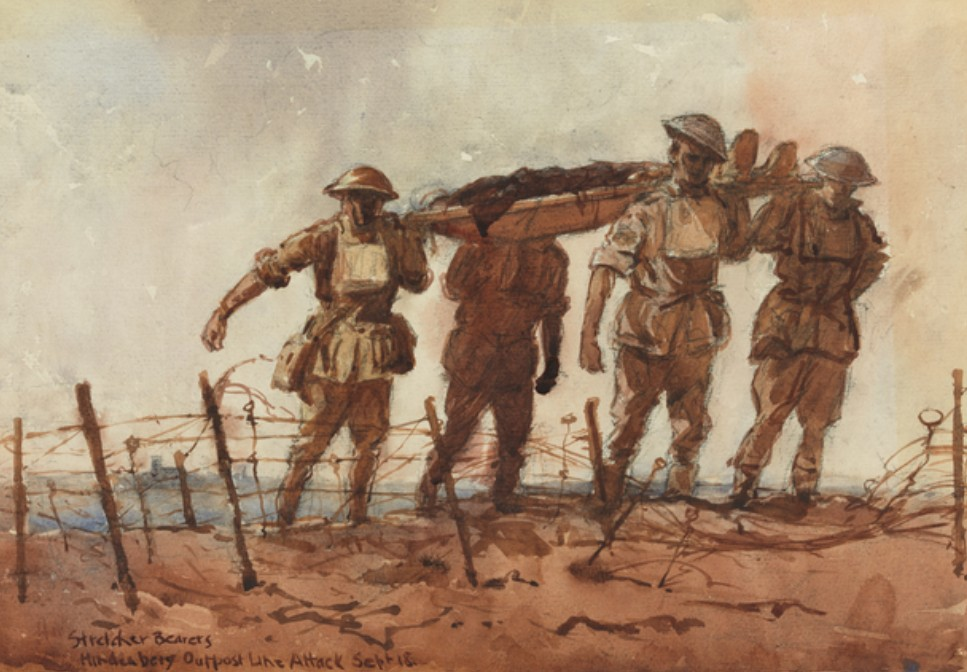
On 11 November 1918, the Armistice coincided with the third anniversary of Langford’s departure from Australia. The original members of the 8th Field Ambulance marked the occasion with a reunion banquet and musical evening. Amid the celebration, the men observed a silent toast to their fallen comrades. Langford understood that the end of the war would bring renewed grief to many families:
“There will be no ‘Son’, ‘Father’, ‘Brother’, ‘Cousin’ or ‘Sweetheart’ returning to them.”
Langford remained on active service until the Armistice, later transferring to nursing staff duties. While waiting to return home, Langford imagined seeing “Braemar”, its rose garden and his family again. He expected Eric to travel home with him:
“Eric & I will probably return on the same boat.”
Eric’s promotion to sergeant ultimately delayed his return, so Langford sailed without the friend with whom he had enlisted and embarked. That is a small but satisfying thread to complete.
In January 1919 he travelled on leave to Brussels and Antwerp with Eric, and had hoped the two would return to Australia on the same ship; Eric's promotion to sergeant delayed his passage. Langford sailed for home aboard HMAT China and was formally discharged on 3 August 1919, having been awarded the 1914–15 Star, the British War Medal and the Victory Medal in addition to his Military Medal. Langford reached Sydney on 11 June 1919, almost four years after leaving Australia. His long diary, begun aboard the Beltana in November 1915, concluded with his return home. After years of war, his final entry returned to the people and place he had been thinking about throughout his service:
“Only 577 miles to go & then ‘Home sweet Home’.”
After the War
Throughout his service, Langford recorded his experiences in a diary arranged in separate parts and sent home to his parents. He intended it to help his family understand what he had experienced and to preserve a record that could be read again after the war. He was careful to explain that he was not writing for personal glory:
“It is not only myself who has been through the experiences recorded here but the majority of the Bearers of our Unit.”
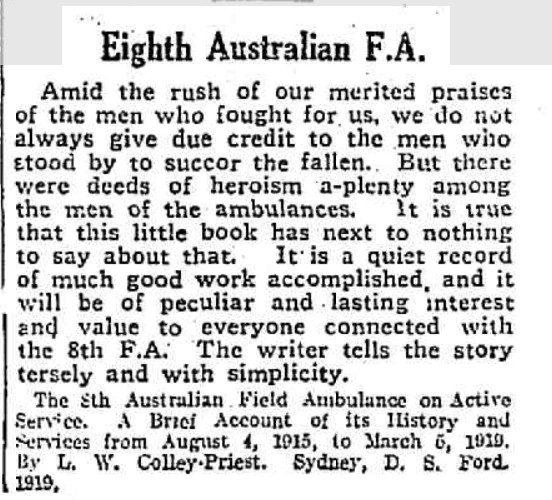
Langford believed that keeping this account would allow him to explain his experiences more fully when he returned home and that, in years to come, it would be interesting to look back and read what had happened. His diary was therefore more than a private journal. It was written with a future audience in mind. After returning to Sydney, Langford drew upon this record to produce The 8th Australian Field Ambulance on Active Service: A Brief Account of its History and Services from 4th August 1915 to the 5th March 1919.
Published in Sydney later that year, the book transformed his personal record into a history of the unit and a tribute to the medical officers, stretcher bearers, orderlies, drivers and other men with whom he had served.
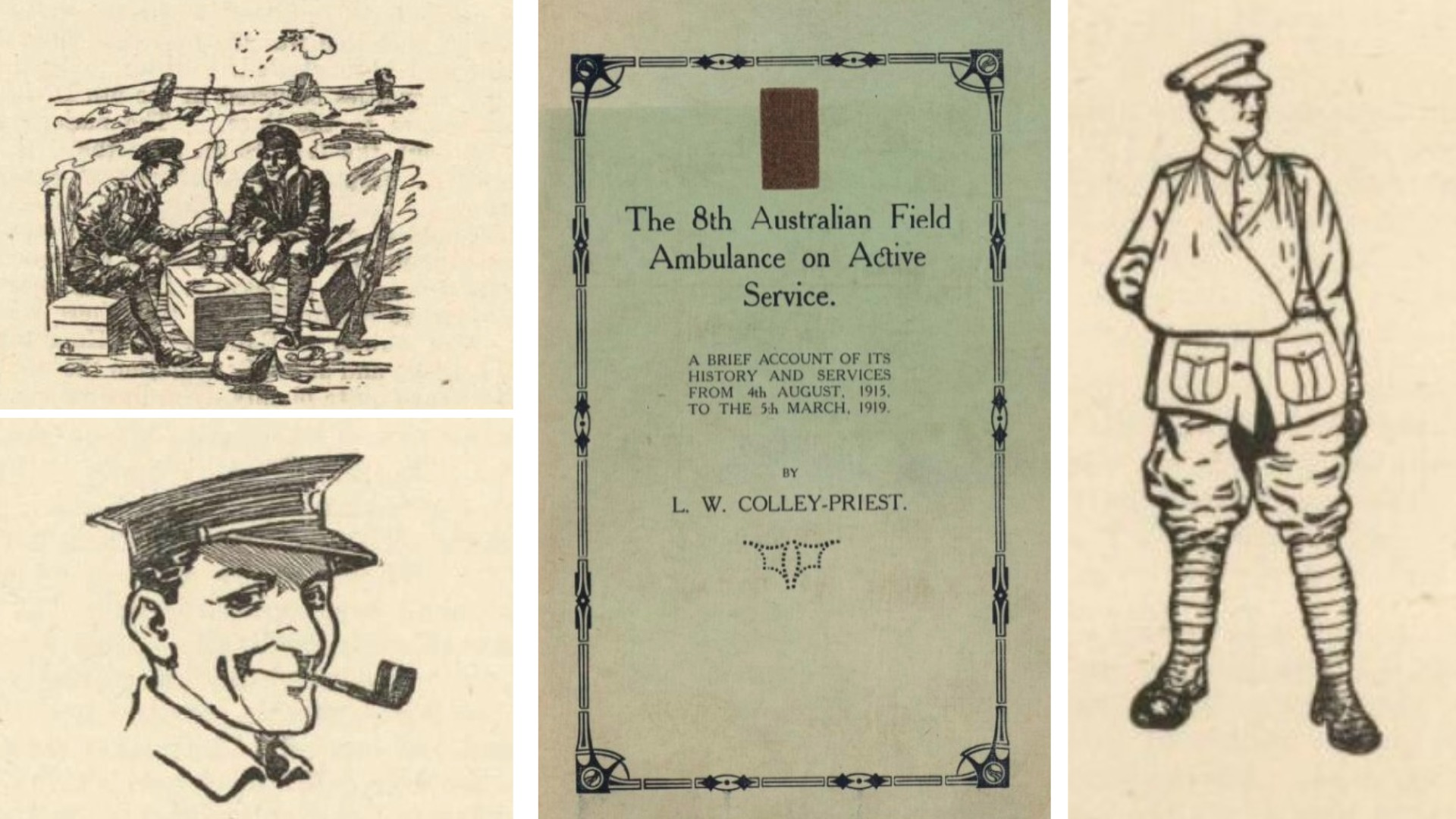
It was reviewed warmly in the Sydney press:
“Amid the rush of our merited praises of the men who fought for us, we do not always give due credit to the men who stood by to succor the fallen. But there were deeds of heroism a-plenty among the men of the ambulances... It is a quiet record of much good work accomplished, and it will be of peculiar and lasting interest and value to everyone connected with the 8th F.A. The writer tells the story tersely and with simplicity.”
At the close of that same memoir, Langford set down his own verdict on the meaning of the work he and his comrades had done:
“Their work has not been one of destruction, but something nobler. Many have paid the great price, but 'greater love hath no man than this, that a man lay down his life for a friend.'”
The bonds forged in the unit endured long after the war. Langford remained closely involved with his former comrades through the 1920s, serving as secretary of the 8th Field Ambulance's reunions.
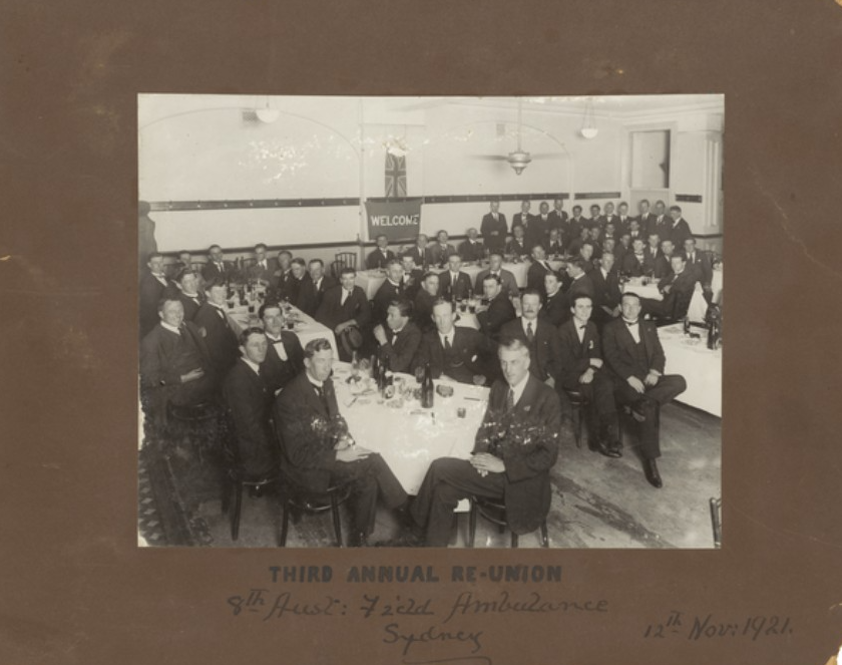
At the unit's seventh annual reunion in November 1925, he was presented with a roll-top desk in recognition of his work organising the gatherings.
Source "Eighth Field Ambulance", The Sydney Morning Herald, 14 November 1925, p. 9.
Tragedy Strikes
Langford returned to civilian life in Sydney and lived with his parents. In 1919 they adopted a child (details unknown) and Langford later worked as a manufacturers' agent, carrying on business from Pitt Street in the city. Just prior to his death, he was working in Melbourne as a Warehouseman staying at the local YMCA. On the morning of Monday 13 February 1928, Langford disappeared. Newspapers at the time reported that his body had been taken by a tiger shark:
“L. W. Colley-Priest, a city business man, disappeared about a fortnight ago. On Saturday afternoon the police recovered from Balmoral Bay a human arm, which, it is believed, is portion of the missing man's body.”
Langford was 37. No further trace of his body was ever found, and he has no known grave. His father, George Colley-Priest, did not long survive him. George died at Sydney Hospital in November 1928, of pneumonia following a fall, after forty years' service as tipstaff to a succession of Supreme Court judges. His obituary noted simply that he was survived by his wife, and that "his only son died about a year ago."
Langford devoted much of his life after the war to preserving the story of the 8th Field Ambulance, first through his published history and later by organising its reunions. The diary and unit history he left behind became his enduring memorial, preserving in his own words the courage of the stretcher bearers, the suffering of the wounded and the terrible memory of Fromelles.
Langford is commemorated at:
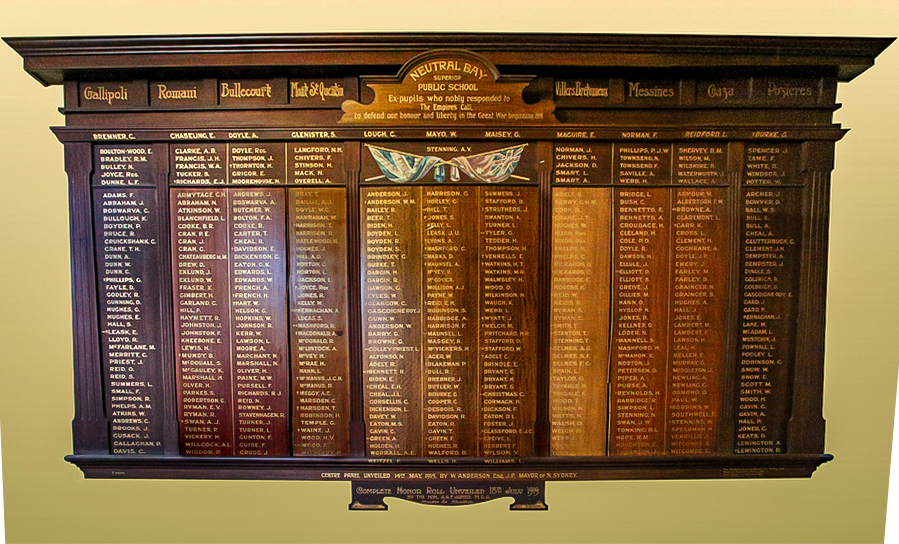
- Neutral Bay Superior Public School Honour Roll, Sydney, New South Wales
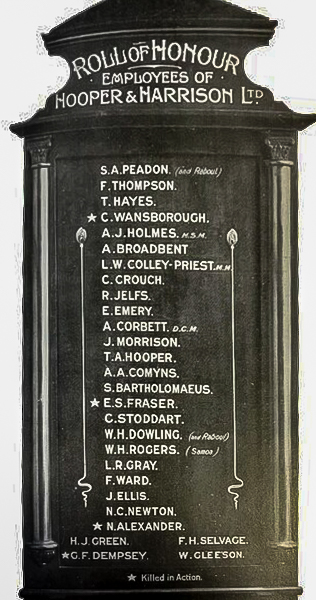
- Sydney Employees of Hooper & Harrison Ltd. Roll of Honour, 57 York Street, Sydney, New South Wales
- Australian War Memorial
If this story raises concerns for you or someone you know, support is available through Lifeline on 13 11 14 or at https://www.lifeline.org.au/, or Open Arms – Veterans & Families Counselling on 1800 011 046 or https://www.openarms.gov.au/
Links to Official Records
The Fromelles Association would love to hear from you

Contacts
(Contact: carla@fromelles.info or geoffrey@fromelles.info).
(Contact: army.uwc@defence.gov.au or phone 1800 019 090).
Donations
If you are able, please contribute to the upkeep of this resource.
(Contact: bill@fromelles.info ).