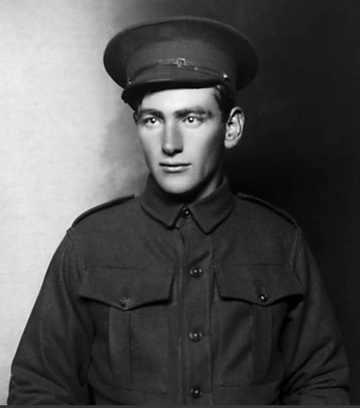
Roy Carlin PEART
Eyes blue, Hair dark brown, Complexion fresh
Roy Carlin Peart – A Family's Long Search for Answers
With thanks to Siobhan for her help in writing this story
Can you help find Roy?
Roy Carlin Peart’s body was never found after the Battle of Fromelles, and there are no records of his burial.
A mass grave was found in 2008 at Pheasant Wood, Fromelles, a grave the Germans dug for 250 Australian soldiers they recovered after the battle. As of 2026, 181 of these soldiers have been able to be identified via DNA testing.
Roy may be among these remaining unidentified men. There is still a chance to identify him — but we need help. We welcome all branches of his family to come forward to donate DNA to help with his identification, especially those with roots in Footscray, Maryborough and surrounding disctricts, VIC
See the DNA box at the end of the story for what we do know about his family.
If you know anything of contacts for Roy, please contact the Fromelles Association.
Please contact the Fromelles Association of Australia to find out more.
Early Life
Roy Carlin Peart was born on 10 July 1893 at Footscray, Victoria, the fifth of eight children born to Matthew Peart and Elizabeth "Bessie" Carlin. His father, a blacksmith and farrier by trade, had emigrated from County Durham, England, as an infant with his parents in 1863, while his mother was born at Guildford, Victoria, to Scottish immigrants Daniel Carlin and Martha Orr, who arrived during the Victorian gold rush. Roy's middle name, Carlin, honoured his mother's family and reflected the strong ties between the two families. Roy grew up in a large family of eight children. His siblings were:
- George Gibson (1884–1966)
- Matthew (1886–1971) AIF
- Elsie Mary (1888–1978)
- Charles Clifford (1890–1944) AIF
- Roy Carlin (1893–1916) KIA Fromelles
- Iris Elizabeth (1896–1983)
- Muriel Ina (1898–1961)
- Sydney Harold (1901–1974)
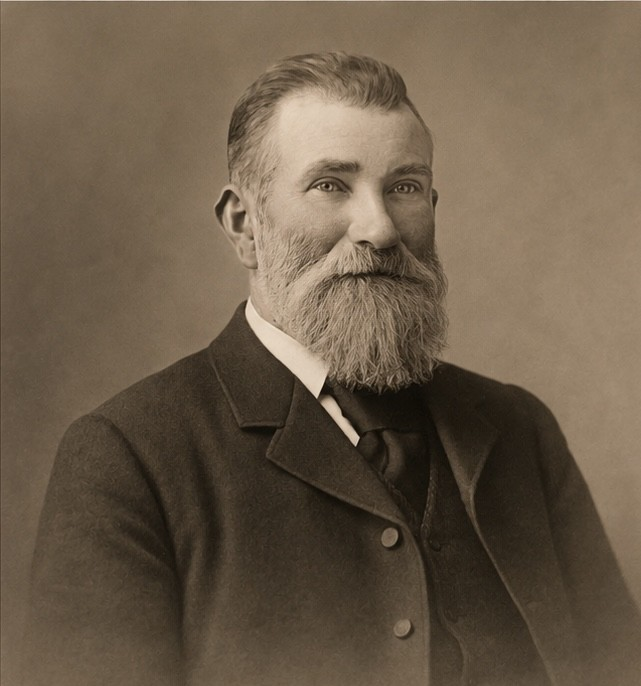
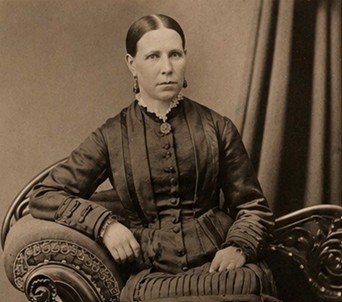
Tragedy struck the family when Roy was just thirteen years old. His mother Bessie, died in 1906, leaving Matthew to raise eight children ranging from young Sydney, aged five, to the eldest, George, already in his early twenties.
Like his father, he followed a trade associated with heavy industry, working as a blacksmith striker. The role involved assisting a blacksmith by wielding a sledgehammer to shape heated iron, demanding both strength and skill. It was an occupation common in an era when horses, railways and agricultural machinery all relied on the expertise of local blacksmiths. Roy was still employed in this trade when he enlisted in the Australian Imperial Force in July 1915.
Despite this loss, the Peart family remained close. Family photographs preserved by descendants show a large extended family whose roots stretched across Maryborough, Footscray and the surrounding districts, maintaining connections that would endure long after Roy's death. Matthew remarried in 1915 to Josephine Leggett. By the outbreak of the First World War, Roy was twenty-two years old and living in Osborne Avenue, Malvern. Like thousands of young Australian tradesmen, he answered the call to serve overseas, to serve King and Country, leaving behind a large family whose English and Scottish forebears helped build colonial Victoria.
Off to War
On 1 July 1915, Roy enlisted in the Australian Imperial Force at Melbourne, Victoria. After completing his initial training, he was allotted to the 9th Reinforcements of the 7th Battalion and embarked from Melbourne aboard HMAT Star of Victoria on 10 September 1915. After arriving in Egypt, Roy underwent further training before being admitted to the Anzac Advanced Base Hospital at Mudros on 4 December 1915. He was discharged two days later and, on 7 December, joined the 7th Battalion at Anzac during the closing weeks of the Gallipoli Campaign. Roy remained with the battalion until the successful withdrawal of the peninsula, disembarking at Alexandria on 7 January 1916..
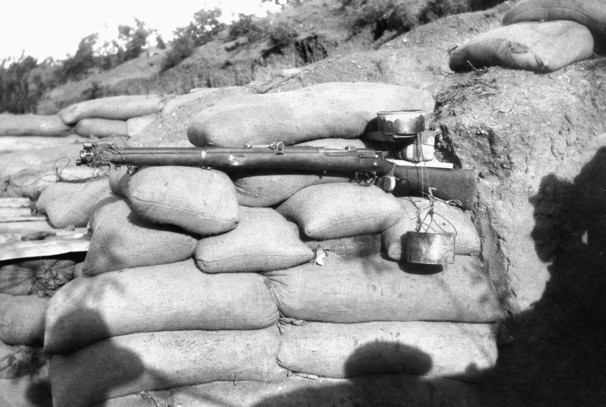
Roy, serving with the 7th Battalion, took part in this successful evacuation before leaving Gallipoli on 20 December 1915.
As the Australian Imperial Force expanded after Gallipoli, Roy was transferred to the newly formed 59th Battalion at Tel el Kebir on 24 February 1916. Less than a month later, on 15 March, he was transferred again to the newly formed 60th Battalion. The 60th Battalion was raised in Egypt in March 1916 as part of the expansion of the AIF following the Gallipoli Campaign. It was formed from experienced men of the 8th Battalion and new reinforcements from Australia, many of them Victorians. The battalion became part of the 15th Brigade, 5th Australian Division, under Brigadier General Harold "Pompey" Elliott. Training in Egypt was brief and focused on preparing the newly formed battalion for service on the Western Front. The men trained in route marching, musketry, bombing, bayonet work, trench warfare and general field exercises as the 5th Division prepared to move from Egypt to France.
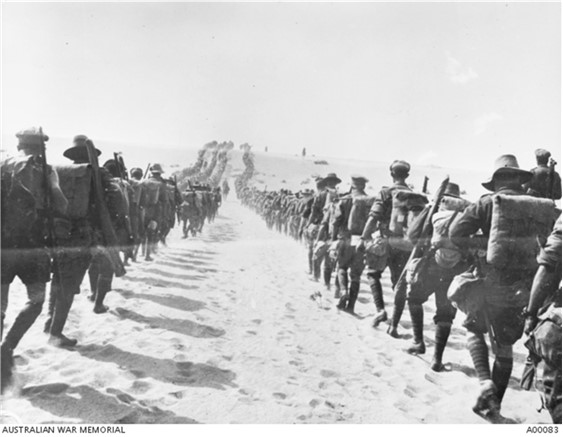
On 18 June 1916, Roy and the battalion embarked from Alexandria aboard Kinfauns Castle for France, arriving at Marseilles on 29 June. From there they travelled north by train into French Flanders. During early July, they were introduced to the Western Front near Sailly-sur-la-Lys and Fleurbaix, an area often regarded as a quieter "nursery" sector where newly arrived troops could gain experience of trench warfare. The period of adjustment was brief. By mid-July 1916, the 60th Battalion occupied the line opposite the German position known as the Sugar Loaf salient near Fromelles. Although many of its officers and men were Gallipoli veterans, the battalion had never fought together in a major battle. On 19 July 1916, only weeks after arriving in France, Roy and the men of the 60th Battalion were ordered to take part in the attack at Fromelles.
The Battle of Fromelles
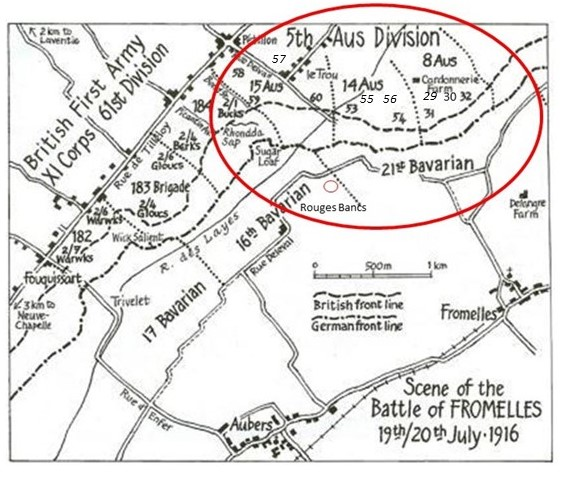
The 60th Battalion formed one of the leading assault battalions of Brigadier General Harold "Pompey" Elliott's 15th Brigade during the attack at Fromelles on 19 July 1916. Alongside the 59th Battalion, it was tasked with attacking the German trenches opposite the heavily fortified Sugar Loaf salient. The 57th and 58th Battalions followed in support as the third and fourth assaulting battalions. The Sugar Loaf was a pronounced German salient containing numerous machine-gun positions that dominated the battlefield. If it remained in German hands, its elevated position and interlocking fields of fire would sweep the battlefield with devastating enfilade fire, threatening both the Australian assault and the British attack on the neighbouring flank. The 60th Battalion faced perhaps the most difficult objective of the entire 15th Brigade, advancing almost directly towards this formidable strongpoint.
Originally planned for 17 July, the attack was postponed for two days because of poor weather. During that time, Australian artillery bombarded the German positions in an attempt to destroy the enemy's trenches, wire and machine-gun posts. The Germans, however, were well aware that an attack was imminent. At 5.15 PM on 19 July, thirty minutes before Zero Hour, they opened a heavy artillery bombardment on the Australian front-line trenches, inflicting casualties and disrupting the assault before it had even begun. Waiting in the trenches before Zero Hour, many men sensed what lay ahead. Private Bill Boyce of the supporting 58th Battalion later admitted "What have I let myself in for?"
Source - Australian War Memorial Collection C386815
At 5.45 PM, the assault commenced. The 60th Battalion advanced in successive waves across approximately 300 yards of open ground towards the German wire. Almost immediately, the battalion came under devastating rifle, artillery and machine-gun fire from the Sugar Loaf and neighbouring German positions. Corporal William Arthur Holtham later remembered the extraordinary courage shown by the men:
"Not a man flinched, not a single chap hung back when his turn came. They were just up and over."
The intensity of the German fire quickly shattered the attack. Urgent messages sent back to Brigade Headquarters revealed the desperate situation developing across the battlefield:
"Cannot get on. The trenches are full of the enemy."
"Every man who rises is shot down."
"They were enfiladed by machine guns from the Sugar Loaf and melted away."
The British 184th Brigade on the 15th Brigade's right encountered similar resistance and, at about 8.00 PM, received orders that no further attacks were to be made that night. Owing to the confusion of battle and the exposed salient between the two forces, this information was not effectively communicated to the Australians, leaving the 60th Battalion exposed on its right flank.

Despite the overwhelming fire, small parties of Australians reached positions close to the German trenches. The 60th Battalion War Diary recorded that some men came within 90 yards of the objective, while one soldier believed that "some few of the battalion entered enemy trenches and that during the night a few stragglers, wounded and unwounded, returned to our trenches."
Source AWM4 23/77/6, 60th Battalion War Diary, July 1916, p. 3.
Any gains proved impossible to hold. Throughout the night, wounded men struggled back across No Man's Land while stretcher-bearers searched for survivors under constant rifle and artillery fire. At 7.00 AM on 20 July, the shattered battalion was relieved by the 57th Battalion. Roll call held at 9.30 AM revealed the scale of the disaster.
Charles Bean later wrote:
"Of the 60th Battalion, which had gone into the fight with 887 men, only one officer and 106 answered the call."
The initial roll call reflected only those immediately available after the fighting. As casualties were accounted for over the following days and weeks, the true cost became apparent. The 60th Battalion ultimately suffered approximately 757 casualties, including 395 officers and men killed or dying of wounds. Of those who died, 315 have no known grave. More than two years later, Charles Bean revisited the battlefield and found bones, torn uniforms and Australian equipment still scattered across No Man's Land, stark evidence of the terrible fighting that had taken place.
For the men of the 60th Battalion, Fromelles was a catastrophic introduction to the Western Front. Although the battalion was rebuilt and continued to serve until the end of the war, the losses sustained on 19 and 20 July 1916 would forever define its first battle and remain one of the darkest chapters in Australian military history.
After the Battle
Roy Carlin Peart was reported missing following the Battle of Fromelles on 19 July 1916. Like hundreds of Australian families whose loved ones disappeared during the fighting, the Peart family endured months of uncertainty, hoping for news that Roy had survived and been taken prisoner or admitted to hospital. As the months passed, no definite information emerged. The Australian Red Cross Wounded and Missing Bureau gathered statements from returned soldiers, while military authorities continued to investigate the fate of those still listed as missing. Despite these efforts, Roy's whereabouts remained unknown.
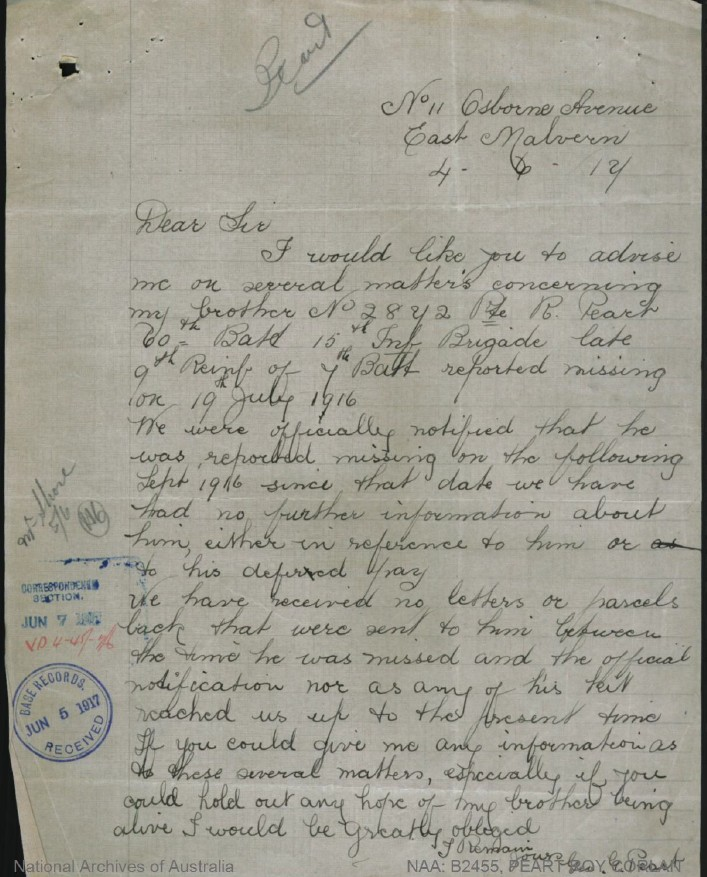
The uncertainty weighed heavily on his family. On 7 June 1917, Roy's eldest brother George wrote to Base Records seeking any information that might explain what had become of him. Having received no news since Roy had first been reported missing, he also asked whether letters and parcels sent to Roy had ever reached him. His letter ended with a heartfelt plea:
"If you could give me any information as to these several matters, especially if you could hold out any hope of my brother being alive I would be greatly obliged."
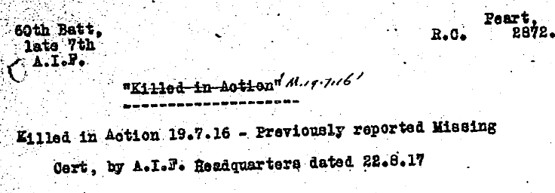
Base Records replied that no further information had been received and that the matter remained under investigation. Finally, on 4 August 1917, a Court of Enquiry held in the field concluded that Roy had been killed in action on 19 July 1916. The official notification ended more than a year of uncertainty but brought little comfort, as no details of his death or burial could be provided. Following the war, the search for Roy's final resting place continued. In July 1921, Base Records advised his father, that despite investigations by the Graves Services Unit, no grave had been located.
The family was asked whether they possessed any letters or information that might assist in identifying his burial place, explaining that bodies were still being recovered and examined before being buried as unknown soldiers. Sadly, no further information came to light. Roy's personal effects and commemorative items were gradually returned to his family.
His father later received the Memorial Plaque, Memorial Scroll, the Where the Australians Rest booklet, and Roy's campaign medals, the 1914–15 Star, British War Medal and Victory Medal. Today, members of the Peart family continue to preserve these treasured items alongside family photographs and documents that help tell Roy's story. The family's grief was reflected in newspaper notices published after official confirmation of Roy's death.
In September 1917, The Age carried the notice:
PEART.—Officially reported killed in action on 19th July, 1916 (previously reported missing), Roy, dearly beloved fourth son of Matthew Peart, Albert Park, and the late Elizabeth Peart, formerly Maryborough, aged 23 years
"Teach us to say, Thy will be done."
The following year, on the second anniversary of Roy's death, the family again remembered him in The Age:
PEART.—Killed in action on the 19th July, 1916, Private R. C. Peart, dearly loved son of Matthew Peart and the late Elizabeth; also brother of Elsie, Iris, Muriel, George, Sydney, Matthew and Charles (on active service), late of Maryborough.
We hoped for your returning, Roy,
And longed to clasp your hand
But God has postponed the meeting,
'Twill be in a better land.
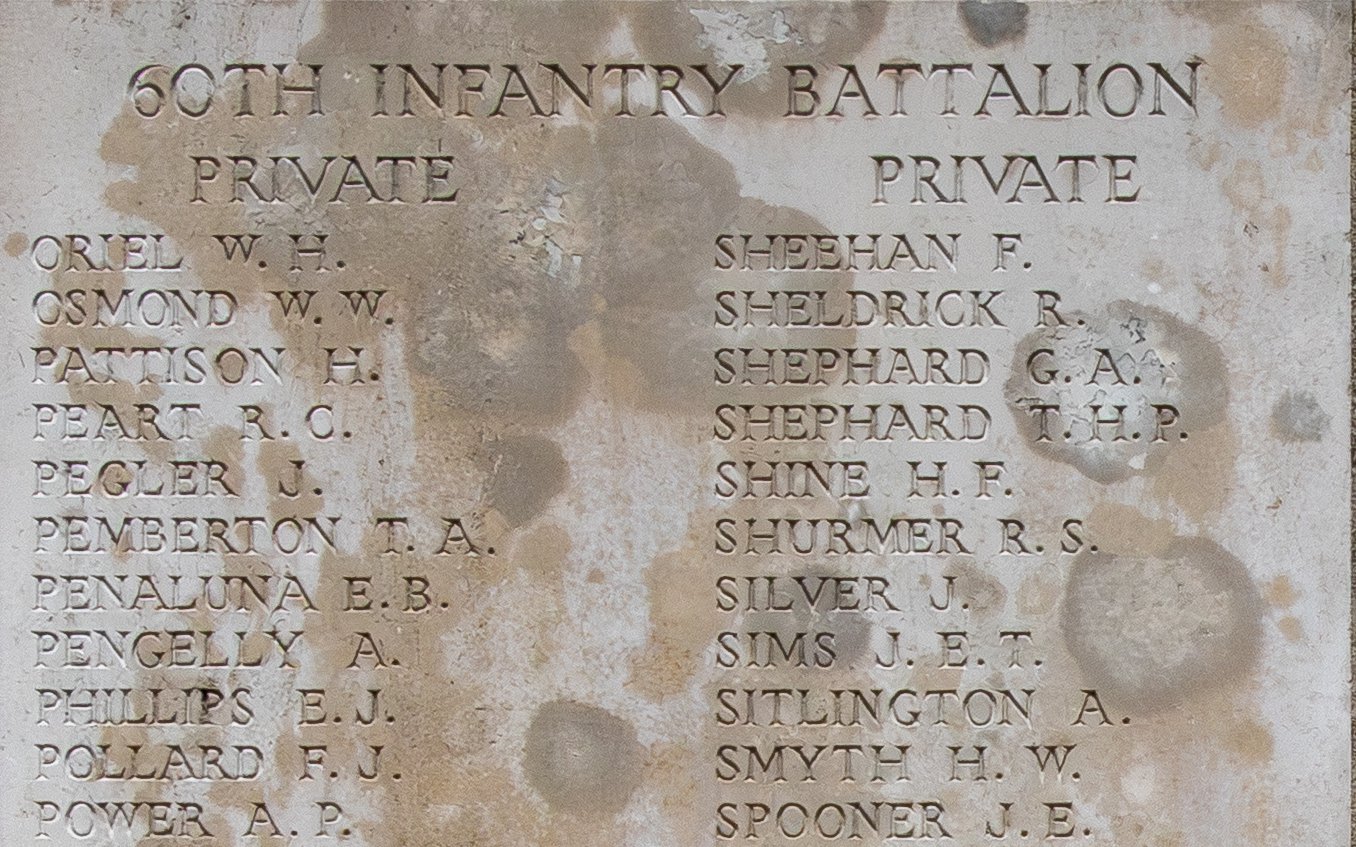
Roy has no known grave and is commemorated on the VC Corner Australian Cemetery Memorial at Fromelles, where the names of Australian soldiers whose graves are unknown are inscribed.
Family at War
Military service touched many branches of the Peart family during the First World War. Roy was one of three brothers who enlisted in the Australian Imperial Force. His older brother, Matthew Peart (4125), enlisted on 21 January 1916 and served with No. 4 Tunnelling Company, later the 2nd Tunnelling Company, on the Western Front. Promoted to 2nd Corporal, Matthew survived the war and returned to Australia in August 1919. Roy's younger brother, Charles Clifford Peart (2229), enlisted on 16 March 1916, just days after Roy transferred to the 60th Battalion.
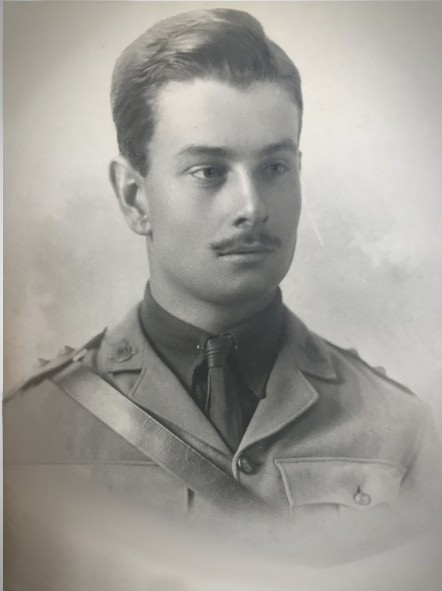
He embarked for overseas service in August 1916 with the 60th Battalion's 4th Reinforcements before later serving with the 59th Battalion. Charles survived the war and eventually returned home to his wife, Lily. The family's military service extended well beyond Roy and his brothers. His cousin, Major William Andrew Reginald Peart, a graduate of the Royal Military College, Duntroon, served with the Australian Field Artillery on the Western Front. Rising from Lieutenant to Major, he was severely gassed in Belgium and died of his wounds on 3 November 1917, aged twenty-one. He is buried in Lijssenthoek Military Cemetery, Belgium.
Roy's extended family also included his uncle, Chaplain William Charles Joshua Peart (3127), who served in France for more than four years. During his service he suffered the effects of gas poisoning, trench fever, malaria and appendicitis. Family letters preserved by his descendants provide a remarkable insight into his wartime experiences and correspondence with his mother.
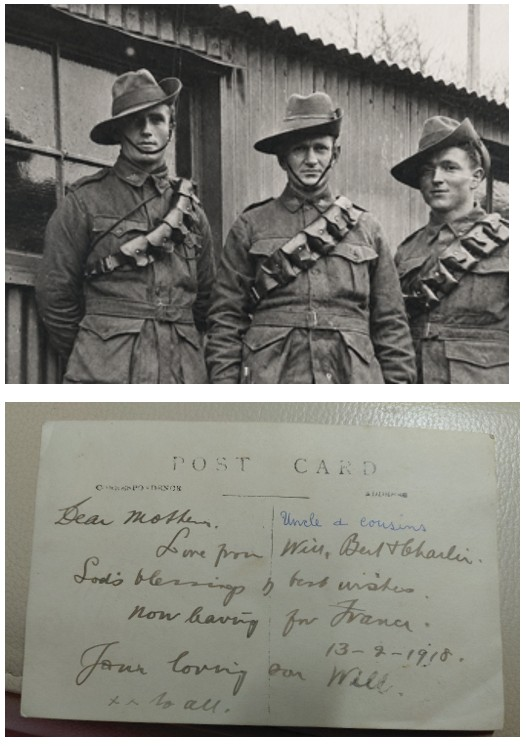
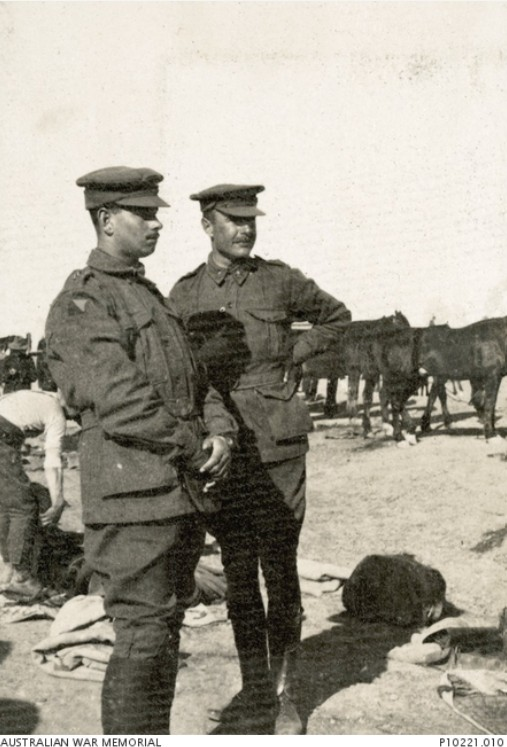
Two other cousins also served. Edward "Bert" Williamson (474), who was also known within the family as Albert, enlisted on 21 September 1914 and served with the 21st Battalion after first joining the 2nd Light Horse. He fought at Gallipoli, where he was seriously wounded by gunshot wounds to his right eye and both thighs before spending fifty-three days recovering in Malta. His brother, Charles Williamson (35005), later served as a gunner with the 1st Divisional Artillery and also returned safely after the war. For the Peart family, the First World War brought both pride and profound loss. Matthew, Charles, Chaplain William, Edward and Charles all survived their wartime service, but Roy gave his life at Fromelle, his resting place Known Only to God.
Little more than a year later, the family endured a second tragedy when Major William Andrew Reginald Peart died in Belgium from the effects of gas poisoning and is buried near Poperinghe (Poperinge), Belgium, at Lijssenthoek Military Cemetery. Together, their stories reflect the extraordinary contribution and sacrifice made by one Victorian family during the Great War.
Family Recollections
More than a century after his death, Roy remains an important part of his family's history. Although he was killed at just twenty-three years of age, his story has been preserved through the dedication of successive generations who have researched, documented and shared the history of the Peart family. Roy was the first cousin twice removed of family historian Siobhan Parker, whose research has brought together military records, family photographs, newspaper reports and genealogical records to build a more complete picture of his life. Much of this work builds upon the earlier research of her Aunt, the late Margaret Edwards (née Parker), Roy's first cousin once removed, who spent decades tracing the Peart family long before online records were available.
Through countless letters, archival searches and conversations with relatives, Margaret developed an extensive family history and became a passionate supporter of the Fromelles identification project, determined to help identify Roy among the missing soldiers of Fromelles.
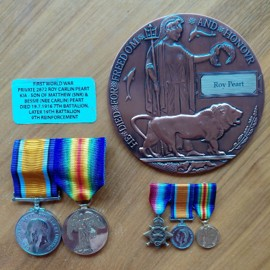
Although Margaret did not live to see that goal achieved, her research was carefully preserved by her family. Following her death in 2018, three large boxes of photographs, documents, notes and family records were inherited and painstakingly organised, ensuring that decades of work would not be lost. Among the items rediscovered were Roy's Memorial Plaque ("Dead Man's Penny"), campaign medals and family photographs, providing a tangible connection to a young man whose life was cut short in 1916. The search for Roy has continued into a new generation. Family members have contributed DNA samples to assist the identification of the soldiers recovered from Pheasant Wood, while ongoing contact with descendants of Roy's siblings has uncovered additional photographs, documents and family connections.
Each new discovery helps build a richer understanding of Roy's life and keeps alive the hope that one day he may be identified. For the Peart family, Roy is remembered not simply as one of the missing soldiers of Fromelles, but as a son, brother, uncle and cousin whose story continues to connect generations of his family. Their commitment to preserving his memory ensures that his service and sacrifice will never be forgotten.
Finding Roy
More than a century after Roy Carlin Peart was killed at the Battle of Fromelles, his final resting place remains unknown. If you are related to Roy, or to his parents Matthew Peart and Elizabeth "Bessie" Carlin, we would love to hear from you. Descendants, family photographs, letters, documents and family stories may all help us build a more complete picture of Roy's life. DNA testing by eligible relatives may also assist with the identification of Australia's remaining missing soldiers from Fromelles.
DNA samples are being sought for family connections to
| Soldier | Roy Carlin Peart (1893–1916) Born Footscray, Victoria Died Fromelles |
| Parents | |||
| Father | Matthew Peart (1863–1948) born County Durham, England died Albert Park, Victoria | ||
| Mother | Elizabeth "Bessie" Carlin (1859–1906) born Guildford, Victoria eied Victoria |
| Siblings | |||
| George Gibson Peart (1884–1966) | |||
| Matthew Peart (1886–1971) | |||
| Elsie Mary Peart (1888–1978) | |||
| Charles Clifford Peart (1890–1944) | |||
| Iris Elizabeth Peart (1896–1983) | |||
| Muriel Ina Peart (1898–1961) | |||
| Sydney Harold Peart (1901–1974) |
| Grandparents | |||
| Paternal | Matthew Peart (1838–1902) born Stanhope, County Durham, England died Maryborough, Victoria and Elizabeth Gibson (1837–1932) born County Durham, England died Maryborough, Victoria | ||
| Maternal | Daniel Carlin (1819–1867) born Scotland died Guildford, Victoria and Martha Orr (1826–1899) born Scotland died Guildford, Victoria |
Seeking DNA Donors

Contacts
(Contact: carla@fromelles.info or geoffrey@fromelles.info).
(Contact: army.uwc@defence.gov.au or phone 1800 019 090).
Donations
If you are able, please contribute to the upkeep of this resource.
(Contact: bill@fromelles.info ).