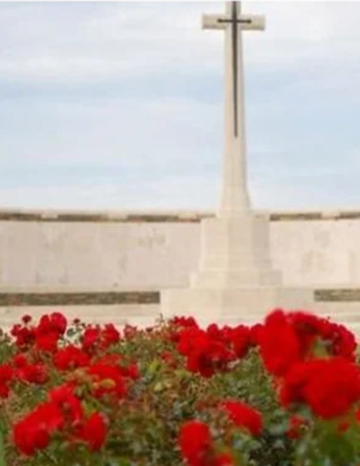
Charles BROWN
Eyes grey, Hair brown, Complexion dark
Charles Brown – A Gardener from Little Hadham
Can you help find Charles?
Charles Brown’s body was never found after the Battle of Fromelles and there are no records of his burial.
A mass grave was found in 2008 at Fromelles, a grave the Germans dug for 250 Australian soldiers they recovered after the battle. As of 2026, 181 of these soldiers have been able to be identified via DNA testing from family members.
Charles may be among these remaining unidentified men. There is still a chance to identify him — but we need help. We welcome all branches of his family to come forward to donate DNA to help with his identification, especially those with roots in Essex, England.
See the DNA box at the end of the story for what we do know about his family.
If you know anything of contacts for Charles, please contact the Fromelles Association.
Early Life
Charles Brown was born on 29 August 1885 in Sheering, Essex, the second child of Frederick Brown (1863–1928) and Rosa Miriam Clanford (1864–1950). Charles’ paternal grandparents were Joshua Brown and Sarah Peacock, both from Sheering, Essex and his maternal grandparents were Charles Clanford and Elizabeth Shipton. These long-established Essex and Hertfordshire roots placed Charles firmly within the rural agricultural communities of southern England. His parents married in 1883 and raised a large family, initially in Sheering and later moving to Little Hadham, to a small cottage on the hill near Home Farm.
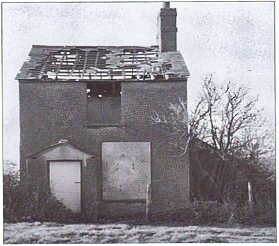
A local memoir remembered Charles’ father, Frederick, as a hardworking cowman, rising at 4.30 AM and returning home long after dusk, often carrying water and supplies up the hill in all weathers. Life was simple, hardworking and tightly bound to the rhythms of farming and village life. Charles grew up with his nine brothers and sisters:
- Lilian Rose (1884–1965)
- Charles (1885–1916)
- Ernest Frederick (1888–1952)
- Annie Elizabeth (1891–1891)
- Thomas John (1891– )
- May (1893–1953)
- Helena Drusilla (1896–1981)
- Leonard Joshua (1899–1968)
- Lawrence George (1902–1963)
- Doris Emily (1905–1985)
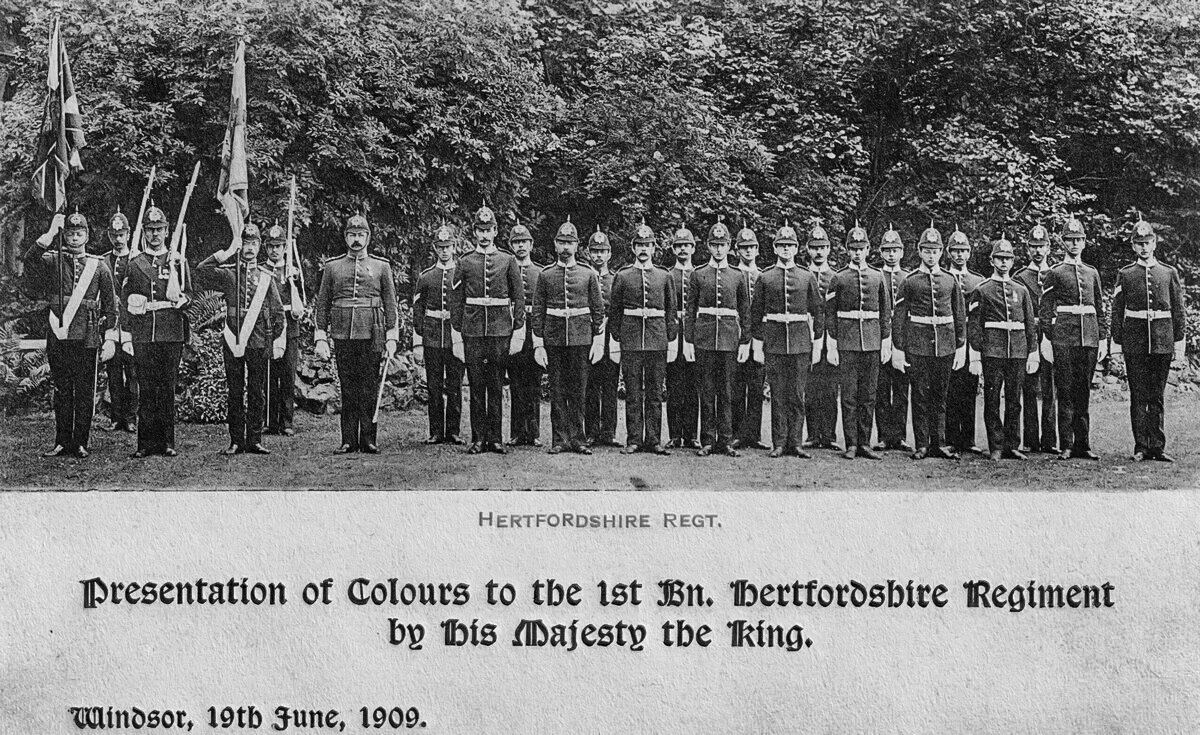
Elementary schooling was compulsory and free for all children aged 5 to 10 years old and Charles attended the National School, operated by the Church of England. Charles working life is documented in the UK 1901 Census, indicating that, aged fifteen, he was working in Lambeth, London in the role of servant. The UK 1911 Census shows Charles working locally as a groom and gardener, for the Lordship in Much Hadham, Hertfordshire. Charles also served in the Hertfordshire Rifle Volunteer Corps for six years. The Rifle Volunteer Corps was formed in Hertfordshire in 1859 amid fears of French invasion, initially organized into two administrative battalions. In 1880, these were restructured as the 1st and 2nd Hertfordshire Volunteer Corps, which provided Charles essential military training and experience.
Then, at the age of 27 years, Charles emigrated to Australia as an Unassisted Immigrant on the S. S. Mongolia Steamship. The ship arrived in Sydney, New South Wales on 15th November 1912. Charles settled in Woollahra and was employed as a gardener. In the three years of living in Woollahra, Charles made friends, including Phyllis Meyer of Wilga Park and Mr and Mrs G. A. Hall of Croydon, who later were actively following Charles’ military service in WW1. After the war, his two younger brothers, Thomas John and Leonard Joshua also emigrated to Sydney, Australia.
Off To War
On 5 July 1915, Charles enlisted as a Private, with service number 3007, in the Australian Imperial Force at Liverpool, situated 30 kms west of Sydney. Charles received basic training at the Liverpool Barracks, which had few facilities on site and accomodated new recruits in tents. The poor conditions in the camp were assessed by the 1915 Royal Commission, recommending considerable changes, which were implemented progressively.
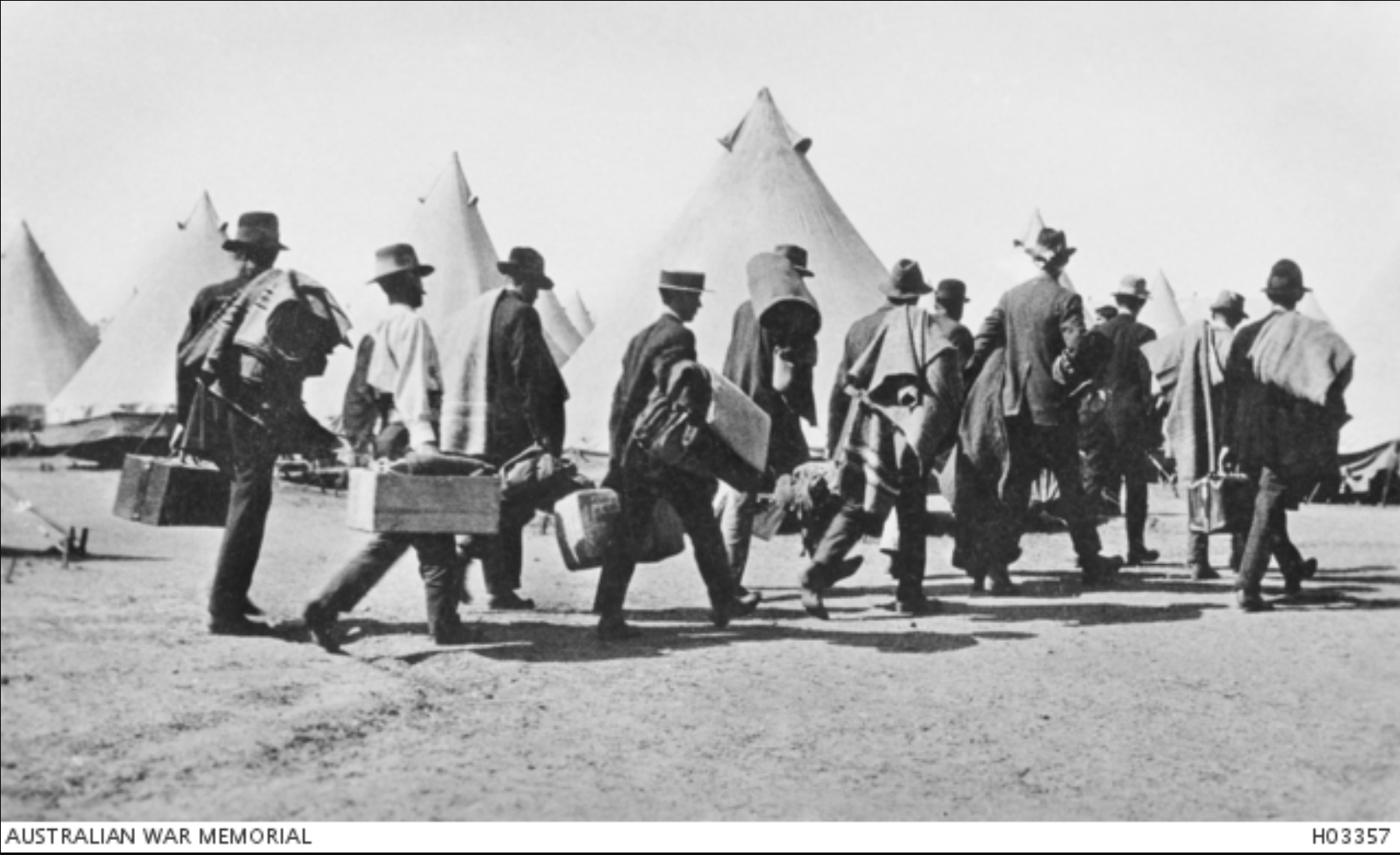
Charles was stationed at Liverpool for 10 weeks of basic training, covering drill, military command and operating equipment e.g. rifles and machine guns. A 1914 newspaper article captured the British Empire’s strong emphasis on rifle skills at the time. The War Minister, Lord Kitchener’s instructions were
“Never mind the drill. Teach them to shoot, and do it quickly”.
Source - EMPIRE STRENGTHENS FRONT (1914, September 4). The Herald (Melbourne, Vic. 1861 - 1954), p. 12. http//nla.gov.au/nla.news-article242303619
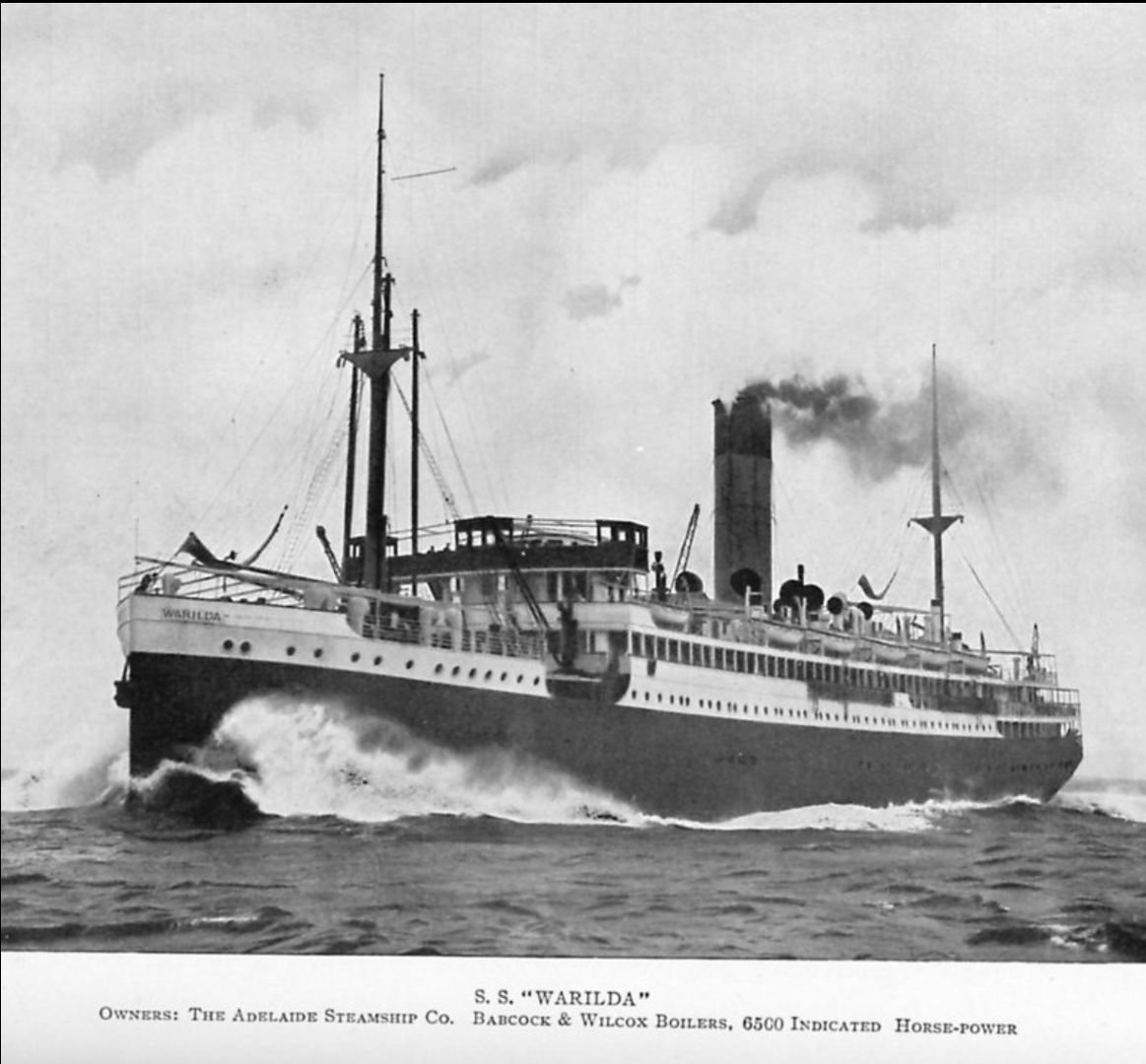
On 8 October 1915, Charles embarked from Sydney, aboard HMT Warilda with the 1st Battalion, 10th Reinforcement. He travelled with 3,000 Australian soldiers on route to the camps in Egypt. He arrived in Egypt in November 1915. It was the Warilda’s first trip after being requisitioned from a civilian cargo ship to a wartime troop ship.

After arriving in Egypt, the battalion trained in desert camps around Tel-el-Kebir. The 40,000 men in the Tel-el-Kebir camp were comprised of Gallipoli veterans and the thousands of reinforcements arriving regularly from Australia. The men underwent intensive preparation for active service, including route marches, bayonet fighting, bombing practice, trench digging, musketry and field exercises. Conditions were harsh, with heat, dust, flies and long marches becoming a part of daily life. With the “doubling of the AIF”, as it expanded from two infantry divisions to five, major reorganisations were underway.
The 53rd Battalion was formed at Tel-el-Kebir on 16 February 1916 and was made up of Gallipoli veterans from the 1st Battalion and newly arrived reinforcements from Australia. Charles was assigned here, in A Company. The Gallipoli veterans were not slow in pointing out that they were the “Dinkums”, while the new recruits were the “War Babies”.
Source AWM4 23/70/1, 53rd Battalion War Diary, February 1916, p.3
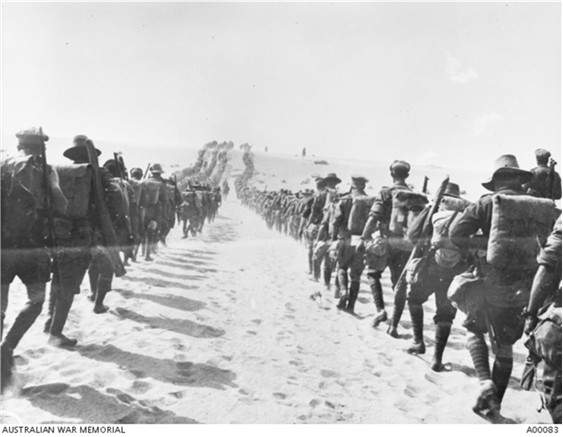
In March the battalion marched from Tel-el-Kebir to Ferry Post, a journey of about 60 kilometres completed over three days. The men struggled through soft desert sand in temperatures around 38°C, carrying their equipment and 120 rounds of ammunition. Many of the men suffered heatstroke.
Once at Ferry Post, the battalion took its turn guarding the Suez Canal against the possibility of an Ottoman attack. On 16 June preparations began for the move to the Western Front and on 19 June, 32 officers and 958 other ranks left Alexandria aboard HMT Royal George , bound for France. The battalion arrived at Marseilles on 28 June and was immediately entrained for the long journey north. After approximately 62 hours aboard crowded troop trains, they reached Hazebrouck and then marched to nearby Thiennes.
During the journey through France, the battalion's war diary noted that its “reputation had evidently preceded them”, and the Australians received an enthusiastic welcome from the French people in towns along the route.
Source AWM4 23/70/2, 53rd Battalion War Diary, June–July 1916, p.4
The 53rd was now in northern France, close to the front near Fleurbaix. This area was commonly regarded as a “Nursery Sector”, where inexperienced troops could become accustomed to the realities of trench warfare. But the quiet times and the training period did not last long. On 8 July they began a 30 km march to Fleurbaix and on 10 July, the 53rd entered trenches for the first time. The front near Fleurbaix was anything but calm. Rain flooded the communication trenches, artillery fire harassed supply lines, and the soldiers dug in amid the mud and barbed wire of No-Man’s-Land.
The Battle of Fromelles
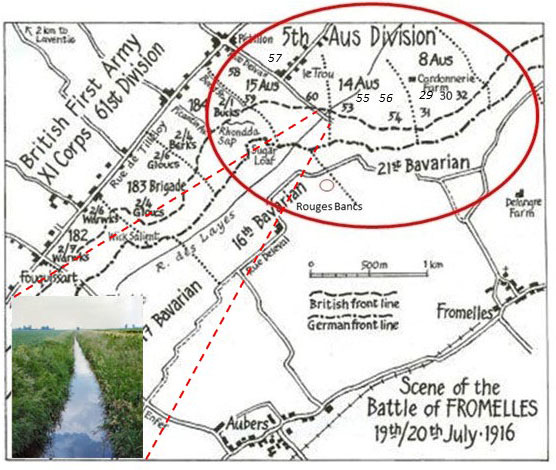
Inset - River Layes from the Australian Front Line looking towards the Sugar Loaf
The overall plan was to use brigades from the Australian Fifth Division and the British 61st Division to conduct a diversionary assault on the German trenches at Fromelles as part of the overall campaign in the Somme. The main objective for the 53rd was to take the trenches to the left of a heavily armed, elevated German defensive position, the ‘Sugar Loaf’, which dominated the front lines. If the Sugar Loaf could not be taken, the 53rd and the other battalions would be subjected to murderous enfiladed fire from the machine guns and counterattacks from that direction.
As they advanced, they were to link up with the 60th and 54th Battalions on their flanks. The men knew something was coming. They rehearsed attacks in replica trench systems, inspected bayonets and watched as huge guns rolled into place behind the lines. Then on 16 July, they moved up for an attack—only to have it postponed due to weather. The delay proved torturous. Private Jim Granger (4784), a young Dorrigo soldier, described the tension in his dugout:
“We were held in suspense for three days… like a criminal waiting to hear the verdict. We had no dugouts where we were in the supports and shrapnel was bursting all round.”
On 19 July, heavy bombardment was underway from both armies by 11.00 AM. By 3.00 PM the 53rd had already suffered about 50 casualties. At 4.00 PM the 54th Battalion joined them on their left. All were now in position for battle. Zero Hour for advancing from their front line trenches was to be 5.45 PM, but the Germans knew an attack was coming and were well prepared. At about 5.15 PM they opened a massive artillery bombardment on the Australian positions, causing chaos and further casualties.
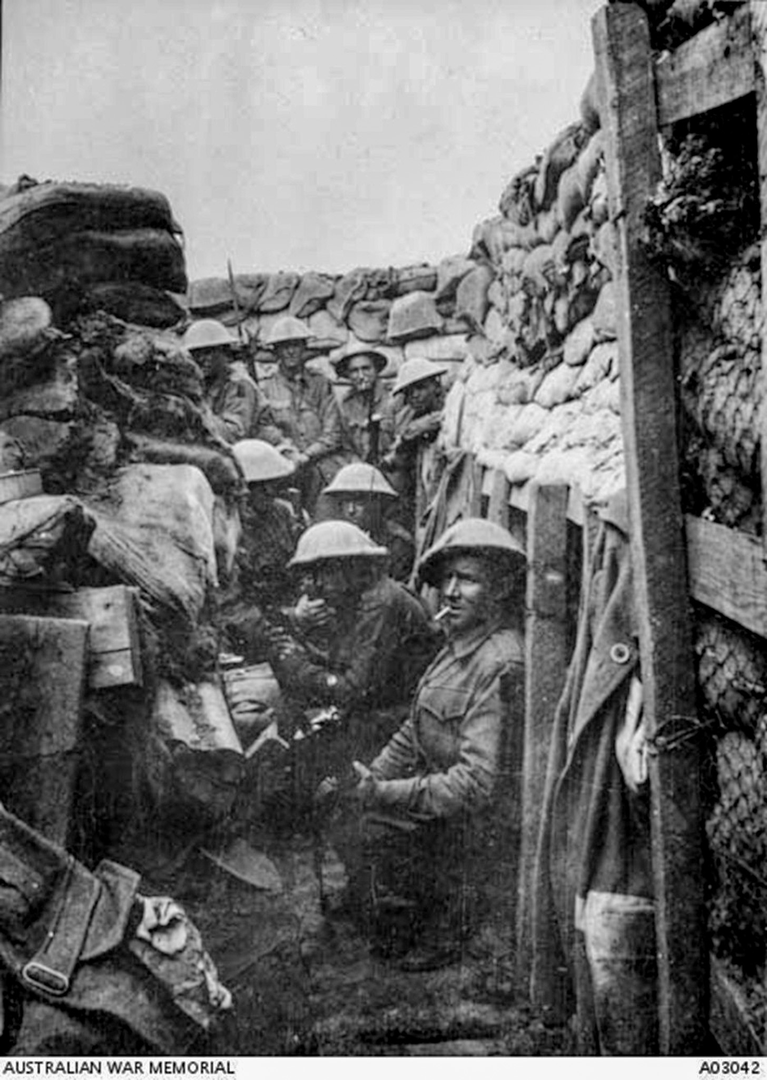
The Australians went on the offensive at 5.43 PM. The 53rd advanced in four waves - half of Charles’ A Company and B Company in the first two, C and D in the third and fourth. Rather than charging, they first moved into No-Man’s-Land and lay waiting for the bombardment to lift. Private Arthur Norton Crewes (4755) later described the moment:
“At 5.43 pm the signal for the charge sounded, and over the top we went into the face of death, shells bursting, machine guns rattling and rifles crackling.”
At 6.00 PM the German lines were rushed. The 53rd came under heavy artillery, machine gun and rifle fire, but was able to advance rapidly. The battalion captured the German first and second line trenches, while parties pushed about 200 yards farther forward to hold off German bombers as the remainder attempted to consolidate their positions. Corporal John Thomas James of C Company (3550) later reported:
“At Fleurbaix on the 19th July we were attacking at 6 p.m. We took three lines of German trenches.”
Very few living Germans were encountered in the first and second line trenches, but success came at a terrible cost. Within 20 minutes, the 53rd had lost all company commanders, all seconds-in-command, and six junior officers.
Source C.E.W. Bean, The AIF in France, Vol. III, Chapter XII, p.369.
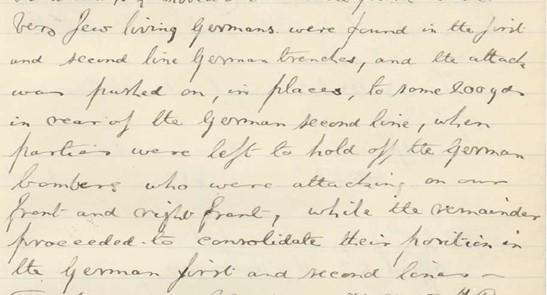
Some of the advanced positions were little more than water filled ditches and had to be fortified if the 53rd was to hold its gains against the expected German counterattack. The battalion linked with the 54th on its left, but there was no corresponding link on its right. The 60th Battalion had been unable to advance in the face of devastating machine gun fire from the Sugar Loaf, leaving the 53rd's right flank dangerously exposed. Throughout the night, the 53rd held its positions against violent German attacks from the front. The exposed right flank, however, allowed German troops to work their way into their former front line behind the Australians.
The 53rd was increasingly at risk of being surrounded and would eventually have to fight its way back towards its own lines. By about 9.00 AM on 20 July, orders were received to evacuate the positions that had been won. At 9.30 AM the battalion had “retired with very heavy loss.”
Source AWM4 23/70/2, 53rd Battalion War Diary, July 1916, p.7.
Of the 990 men who had left Alexandria just weeks before, the initial count at roll call was 36 killed, 353 wounded and 236 missing. Amid the devastation, the war diary recorded:
“Many heroic actions were performed.”
To get some perspective of the battle, when Charles Bean, Australia’s official war historian, attended the battlefield two and a half years later, he observed a large quantity of bones, torn uniforms and Australian kit still on the battlefield. The final impact of the battle on the 53rd was 246 soldiers were killed or died from their wounds and, of this, 190 were not able to be identified.
Private Charles Brown (3007) of A Company was among those killed in the assault on the evening of 19 July 1916.
After the Battle
In the aftermath of the battle, Charles was initially listed as Missing in Action. Like many families of the 53rd Battalion, his loved ones faced months of uncertainty as no immediate confirmation of his fate was available. Major Croshaw-Danby, Acting Commanding Officer of the 53rd Battalion, attempted only days after the battle to piece together what had happened. His report captured the difficulty of reconstructing events after so many of those who had led and witnessed the fighting had been lost:
A great many details are necessarily gathered second hand as those who were in the best position to know are no longer with the Battalion.
Major efforts were undertaken to find the missing soldiers, but often weeks and months passed with no answers, only uncertainty. On 16 September 1916, Charles’ friend in Australia, Phyllis Meyer of Wilga Park, Grong Grong, NSW, wrote to Base Records seeking information about Charles’ whereabouts after seeing his name in casualty lists and believing he may have been wounded and hospitalised.
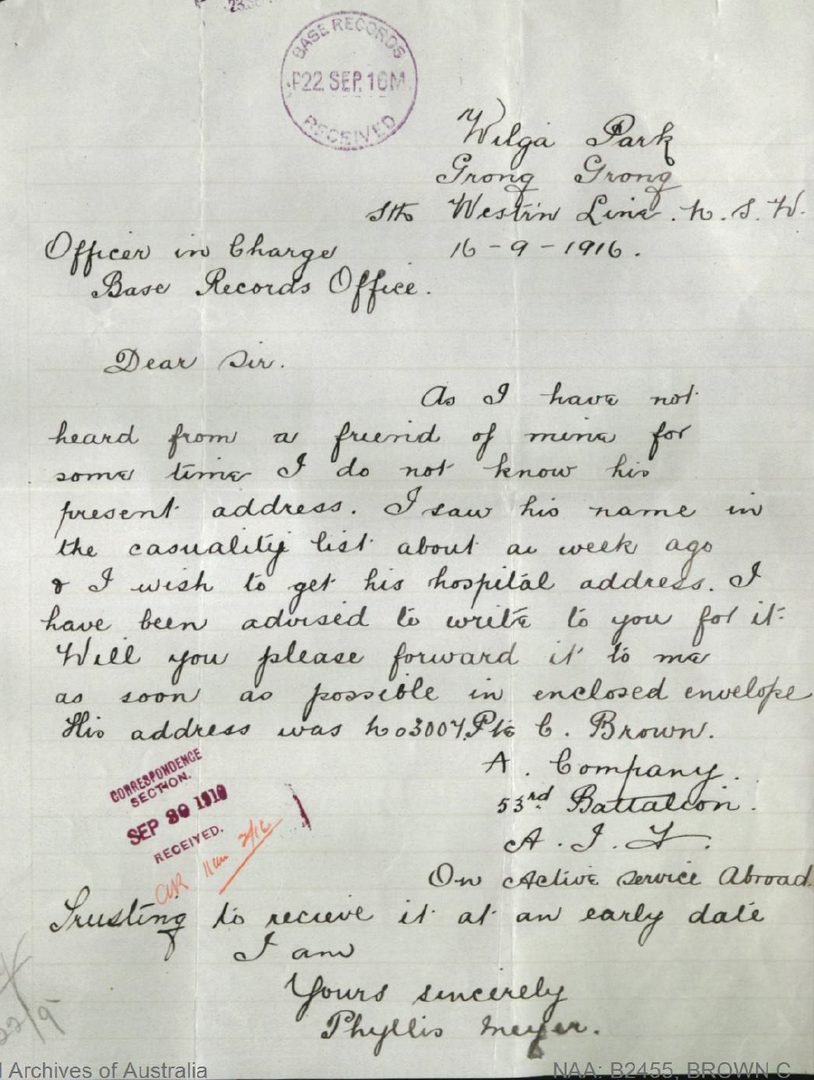
In reply, Base Records advised on 30 November 1916 that no further particulars were yet available and that overseas authorities were continuing efforts to trace soldiers reported missing. Over time, the extensive official inquiries by the Army and the Red Cross confirmed what families across the battalion slowly came to understand, that many of the missing from Fromelles would never be found. It wasn’t until a Court of Enquiry “in the field” on 2 September 1917 that formally declared Charles as having been killed in action on 19 July 1916. Charles’ death was later publicly confirmed in a family notice placed in The Sydney Morning Herald -

Charles was awarded the 1914-15 Star Medal, the British War Medal, the Victory Medal, a Memorial Plaque and a Memorial Scroll. Charles’ remains were never recovered, and he has no known grave.
He is commemorated at:
- Australian War Memorial Roll of Honour,
- Little Hadham War Memorial,
- V.C. Corner Australian Cemetery Memorial
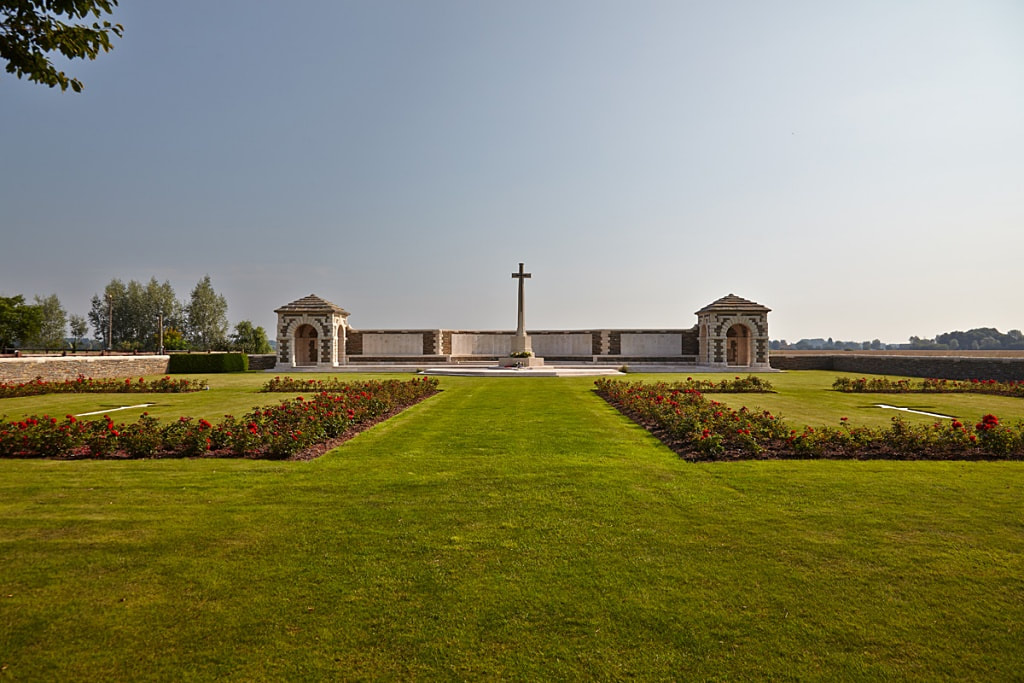
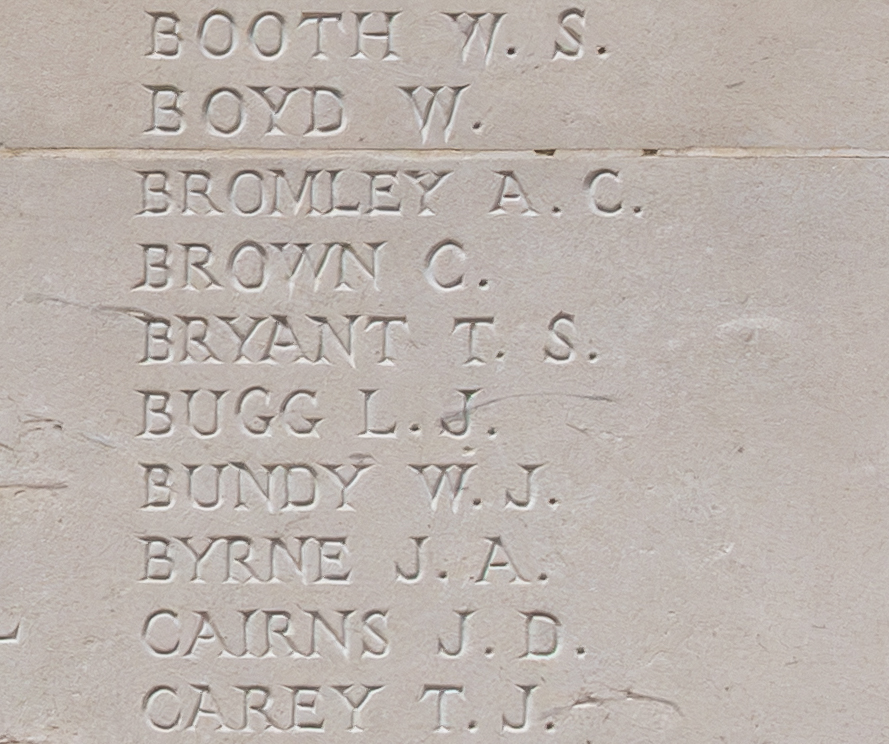
V.C. Corner (Panel No 7), Australian Cemetery Memorial, Fromelles
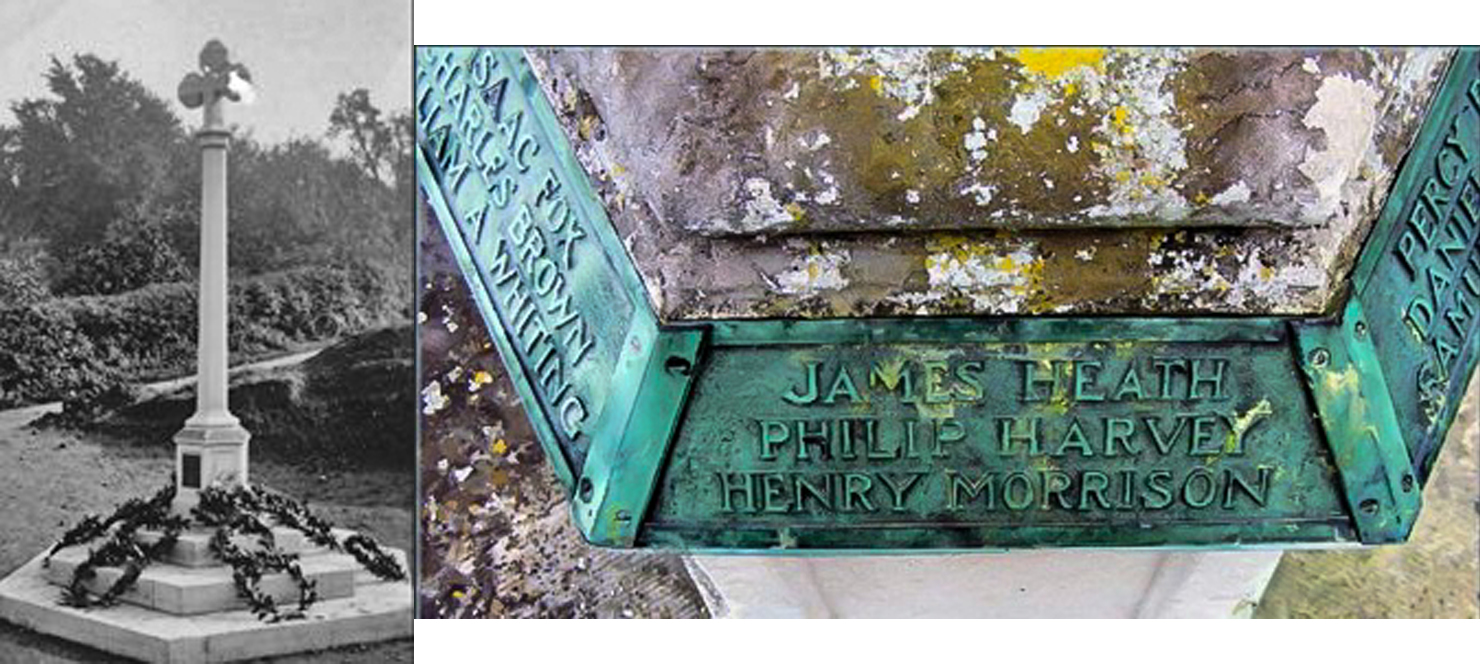
In his home village of Little Hadham, Hertfordshire, Charles’ name is inscribed on the Little Hadham War Memorial, erected after the war to honour the men of the village who never returned. A photograph taken during the memorial’s construction in 1919 shows what were likely the first wreaths laid at its base, marking the community’s earliest act of remembrance for its fallen. The dedication ceremony was held on 19 October 1919, described in the Herts and Essex Observer as a day of quiet dignity.
As each name was read aloud by the Chairman of the Parish Council, a child stepped forward to lay a victor’s crown beneath the inscription. Thirteen of those children were relatives of the fallen, including one just four years old. Charles’ name was among those spoken aloud before his family and village that day. For his family in England and in Australia, the long silence after Fromelles was followed not by closure, but by confirmation of loss without a burial place to mourn.
Finding Charles
Charles’ remains have never been recovered and he has no known grave. After the battle, the Germans recovered 250 Australian soldiers and placed them in a burial pit at Pheasant Wood. As of 2026, over 181 Australian and British soldiers from that grave have been positively identified using DNA provided by living relatives. including 15 of the 190 unidentified soldiers from the 53rd Battalion.
We welcome all branches of Charles’ family to come forward to donate DNA to help with his identification, particularly from the Brown and Clanford family lines of Essex, Hertfordshire, and Kent and from descendants of his siblings who later settled in both England and Australia. If you know anything of family contacts, please contact the Fromelles Association.
Your DNA could help provide the answer his family never received. We hope that one day Charles will be named and honoured with a known grave.
Please visit Fromelles.info to follow the ongoing identification project and Charles’ story.
DNA samples are being sought for family connections to
| Soldier | Charles Brown (1885–1916) |
| Parents | Frederick Brown (1863–1928), born Sheering, Essex, England; Rosa Miriam Clanford (1864–1950), born Deptford, Kent, England |
| Siblings | Lilian Rose Brown (1884–1965), married George Lamport | ||
| Ernest Frederick Brown (1888–1952), married Florence Lucy Gillett | |||
| Annie Elizabeth Brown (1891–1891) | |||
| Thomas John Brown (1891–), died Sydney, NSW, Australia | |||
| May Brown (1893–1953), married Cecil Frank Dubery | |||
| Helena Drusilla Brown (1896–1981), married William Bayford | |||
| Leonard Joshua Brown (1899–1968), died Sydney, NSW, Australia | |||
| Lawrence George Brown (1902–1963), married Ella Ada Hephzibah White | |||
| Doris Emily Brown (1905–1985), married Horace Joseph Barden |
| Grandparents | |||
| Paternal | Joshua Brown (c.1834–after 1911), born Sheering, Essex, England; Sarah Peacock (1837–1869), born Sheering, Essex, England | ||
| Maternal | Charles Clanford (1833–1916), born Sheering, Essex, England; Elizabeth Shipton (1835–1869), born Sheering, Essex, England |
Seeking DNA Donors

Contacts
(Contact: carla@fromelles.info or geoffrey@fromelles.info).
(Contact: army.uwc@defence.gov.au or phone 1800 019 090).
Donations
If you are able, please contribute to the upkeep of this resource.
(Contact: bill@fromelles.info ).