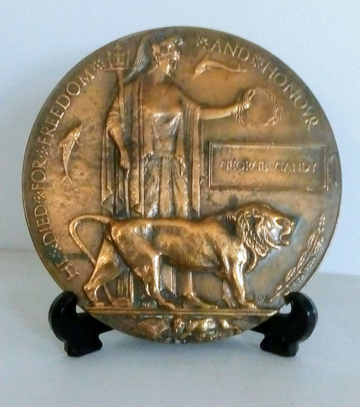
George’s Memorial Plaque – the “Dead Man’s Penny”
George Elliott CANDY
Eyes grey, Hair dark brown, Complexion fresh
George Candy – Only 16
With thanks to George’s Great Niece Deborah Freeman-Bryant for the family background and photos.
Can you help find George?
George Elliott Candy’s body was never found after the Battle of Fromelles and there are no records of his burial.
A mass grave was found in 2008 at Fromelles, a grave the Germans dug for 250 Australian soldiers they recovered after the battle. As of 2026, 181 of these soldiers have been able to be identified via DNA testing.
George may be among these remaining 69 unidentified men. There is still a chance to identify him — but we need help. We welcome all branches of his family to come forward to donate DNA to help with his identification, especially those with roots in Melbourne, VIC
See the DNA box at the end of the story for what we do know about his family.
If you know anything of contacts for George, please contact the Fromelles Association.
Early Life
George Elliott Candy was born on 23 June 1900 in Collingwood, Victoria, the youngest child of George Elliott Candy and Jane Ellen “Nellie” Lauder. Their children were:
- Harriett (Ettie) Jane Candy (1895–1964)
- Edith May Candy (1896–1988)
- Nellie Candy (1899–1956)
- George Elliott Candy (1900–1916)
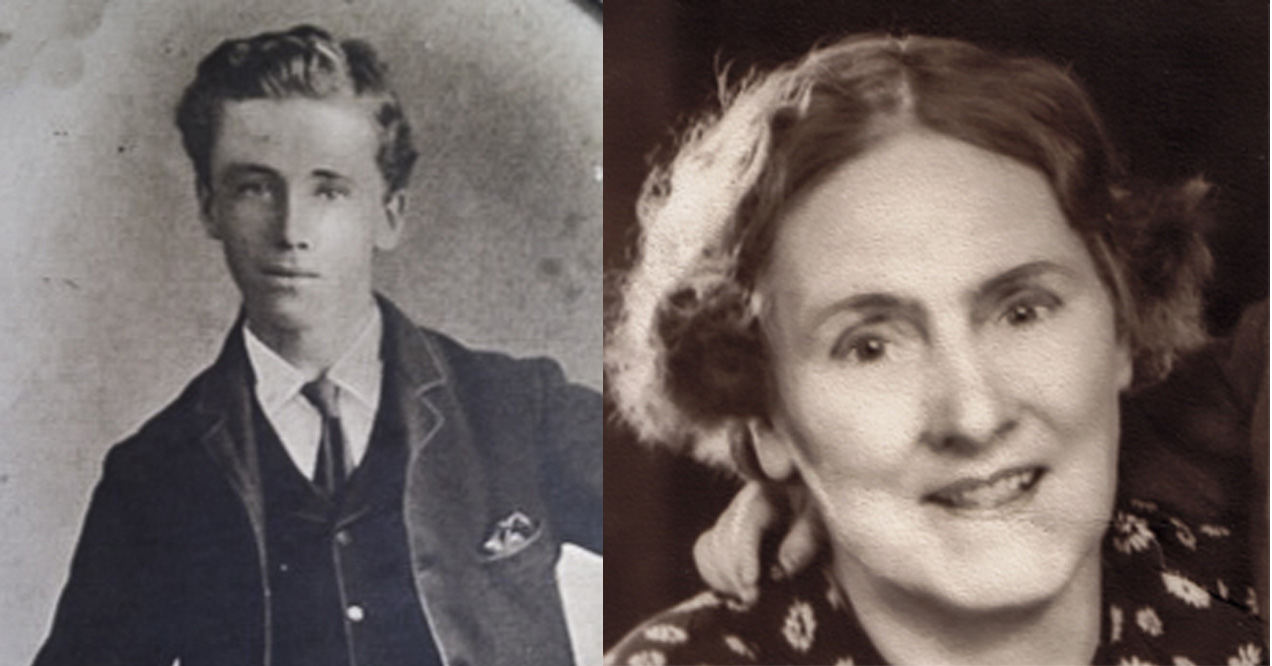
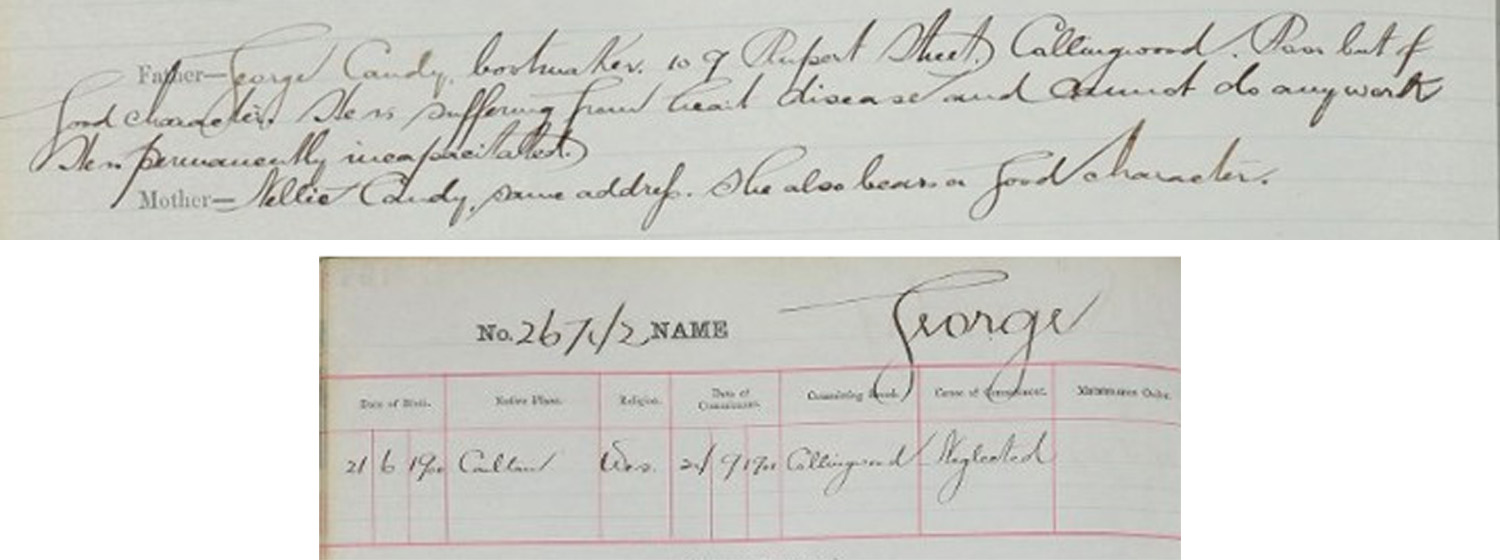
George’s father was a bootmaker and married Nellie in 1895. His mother was the daughter of Archibald Campbell Lauder and Agnes Annie McDonald. Agnes was born in Scotland and arrived in Victoria as an infant in 1849, part of the early wave of migrants who settled in Melbourne’s inner suburbs. By the time George was born, the family was firmly established in the Collingwood and Fitzroy districts. Unfortunately, when George was just a year old, his father died of a heart condition. Records described his father, a bootmaker of Rupert Street, Collingwood, as “of good character”, but “suffering from heart disease and unable to work.” His mother was also noted as being “of good character.”
However, the children were recorded as “neglected,” a term commonly used at the time for families facing severe financial hardship and George and his three sisters were placed into state care for two months.
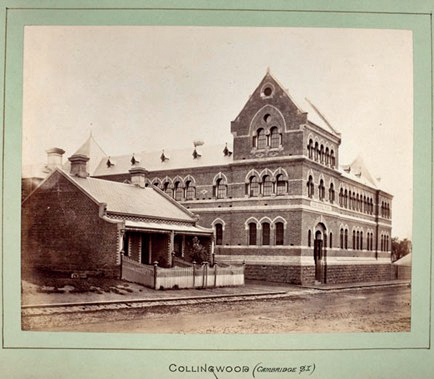
After the children were released, they grew up in Collingwood. They would have attended the Cambridge Street State School, just a few blocks from their Rupert Street home. In 1915, his mother had another daughter, Violet.
George entered the workforce at a young age, becoming a brass finisher.
Off to War
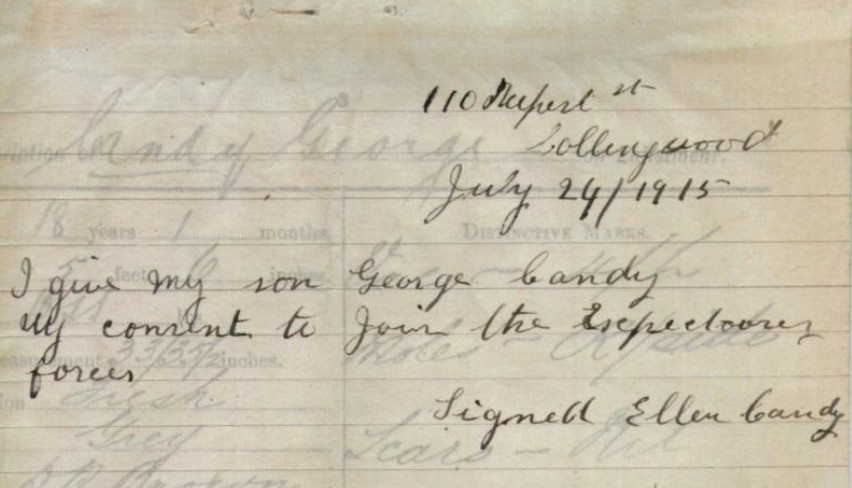
Like many boys of his generation, he was still in his mid-teens when the war began — not yet old enough to enlist. However, at just 15 years old, though he stated he was 18, to be old enough to enlist, George joined in Melbourne on 24 July 1915. As parental permission was required for an “18 year old”, Nellie did write, “I give my son George Candy my consent to join the Expeditionary Forces.”
He was posted to the 23rd Battalion, 7th Reinforcement. After 4 months of military training at Broadmeadows Camp, George embarked from Melbourne on 26 November 1915 aboard HMAT Commonwealth, bound for training camps in Egypt. With the ‘doubling of the AIF’ as it expanded from two infantry divisions to five, major reorganisations were underway in Egypt and George was transferred to the 58th Battalion at Tel el Kebir on 23 February 1916, before moving again on 15 March to the newly formed 60th Battalion, D Company, 15th Platoon, where he would remain.
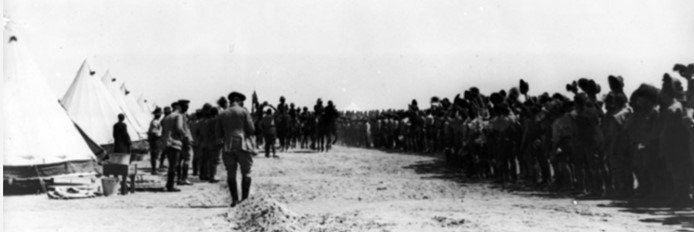
The 60th Battalion was raised in Egypt on 24 February 1916 at the 40,000-man training camp at Tel-el-Kebir, about 110 km northeast of Cairo. Roughly half of the soldiers were Gallipoli veterans from the 8th Battalion, a predominantly Victorian unit, and the other half were fresh reinforcements from Australia. Their training continued, necessary to build the bonds necessary for the fighting to come. In mid-March they were inspected by H.R.H the Prince of Wales.
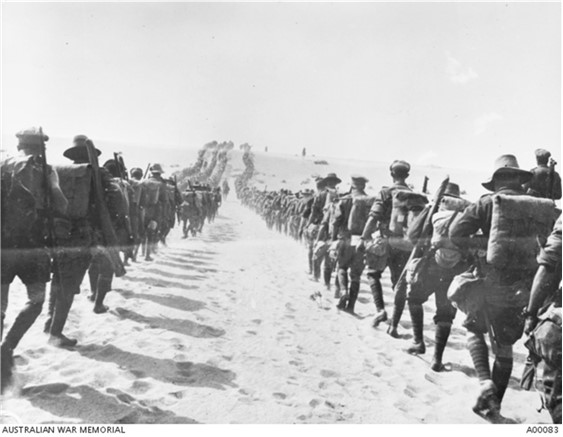
After a month of training at the large camp at Tel el Kebir, they had a two+ day, 50 km march in thermometer-bursting heat across the Egyptian sands from Tel el Kebir to Ferry Post, near the Suez Canal. Prior to marching, only ½ pint of water per bottle was available.
Source- AWM4 23/15/1 15th Brigade War Diaries Feb-Mar 1916 p 6.
They remained at Ferry Post until 1 June continuing their training and guarding the Suez Canal from any potential threats posed by the Ottoman Army. Their time in Egypt was not all work, however. A 5th Division Sports Championship was held on 14 June, which was won by the 60th’s 15th brigade. On 17 June they received orders to begin the move to the Western Front and were on trains to Alexandria. The majority of the battalion, 30 officers and 948 other ranks, embarked in Alexandria on the transport ship Kinfauns Castle on 18 June 1916.
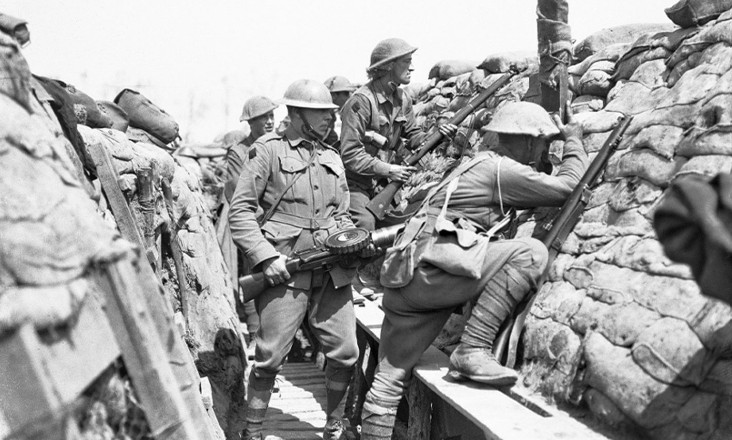
During the trip, George had his 16th birthday. After a stop in Malta, they disembarked in Marseilles on 29 June and were immediately put on trains, arriving in Steenbecque in northern France, 35 km from Fleurbaix on 2 July. This area near Fleurbaix was known as the “Nursery Sector” – a supposedly relatively quiet area where inexperienced Allied troops could learn the harsh realities of Western Front trench warfare against the Germans. But the quiet times and the training period did not last long. On the 7th they began their move to the front, arriving in Sailly on the 9th. Now just a few kilometres from the front, their training continued, although with a higher intensity, I’m sure. The move to Fleurbaix continued and 60th were into the trenches for the first time on 14 July.
The Battle of Fromelles
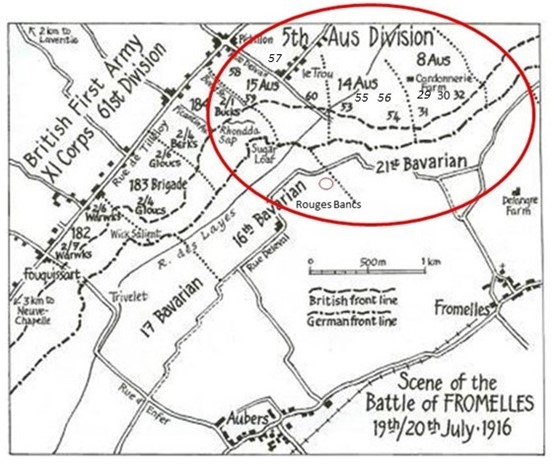
The battle plan had the 15th Brigade located just to the left of the British Army. The 59th and 60th Battalions were to be the lead units for this area of the attack, with the 58th and 57th as the ‘third and fourth’ battalions, in reserve. The main objective for the 15th Brigade was to take the trenches to the left of a heavily armed, elevated German defensive position, the ‘Sugar Loaf’, which dominated the front lines. If the Sugar Loaf could not be taken, the other battalions would be subjected to murderous enfilade fire from the machine-guns and counterattacks from that direction. As they advanced, they were to link up with the 59th and 53rd Battalions on their flanks. The 60th Battalion faced an especially difficult position in the assault, right across from the ‘Sugar Loaf’.
On 17 July, they were in position for the major attack against the Sugar Loaf position, but it was postponed due to unfavourable weather. There was a gas alarm, but luckily it was just that. Two days later, Zero Hour for advancing from their front-line trenches was to be 5.45 PM, but the Germans knew this attack was coming and were well-prepared. They opened a massive artillery bombardment on the Australians at 5.15 PM, causing chaos and many casualties. A fellow soldier, Private Bill Boyce (3022, 58th), summed the situation up well:
“What have I let myself in for?”
The Aussies went over the parapet at 5.45 PM in four waves at 5 minute intervals, but then lay down to wait for the support bombardment to end at 6.00 PM. A and B Companies were in the first two waves, C and D in the next two. Casualties were immediate and heavy, but Corporal William Holtham (4801), a machine gunner with the battalion, later wrote of the men’s courage as they stepped into the open:
“Not a man flinched, not a single chap hung back when his turn came. They were just up and over.”
The 15th Brigade War Diaries captures the intensity of the early part of the attack – “they were enfiladed by machine guns in the Sugar Loaf and melted away.”

The British 184th Brigade just to the right of the 59th met with the same resistance, but at 8.00 PM they got orders that no further attacks would take place that night. However, the salient between the troops limited communications, leaving the Australians to continue without British support from their now exposed right flank. It was reported that some got to within 90 yards of the enemy trenches. One soldier said he “believed some few of the battalion entered enemy trenches and that during the night a few stragglers, wounded and unwounded, returned to our trenches.”
Source - AWM4 23/77/6, 60th Battalion War Diaries, July 1916, page 3.
Fighting continued through the night. With known high casualties in the 60th, they were relieved by the 57th Battalion at 7.00 AM. Roll call was held at 9.30 AM. In the ‘Official History of the War’, C.W. Bean said “of the 60th Battalion, which had gone into the fight with 887 men, only one officer and 106 answered the call.”
Source - Chapter XIII page 442
To get some perspective of the battle, when Charles Bean, Australia’s official war historian, attended the battlefield two and half years later, he observed a large quantity of bones, torn uniforms and Australian kit still on the battlefield. The final impact of the battle on the 60th was that 394 soldiers were killed or died of wounds, of which 313 were not able to be identified.
George’s Fate
In a single night, the 60th Battalion lost nearly ninety percent of its strength. Among those reported missing after the attack was George.

With so many soldiers having been killed, wounded or taken prisoner during the battle, there was much confusion and great difficulty in working out what had happened to each man. Major efforts were undertaken to find the missing soldiers, but often weeks and months passed with no answers, only uncertainty. There was a Red Cross witness statement taken on 20 September from 2845 Private Rodney Collis (2845) who stated that he saw George killed in the early stages of the advance - “I saw Candy lying very badly wounded, hit in the head. Then when I came over here (England) I saw in the paper that he had died of wounds. Source: Australian Red Cross Wounded and Missing Files – George Candy p3
This was later confirmed by Private Frederick Mahoney (3409) - “struck and killed by a H.E. (High Explosive) shell, in the trenches, a few minutes before the Fromelles attack on this date.”
Source - Australian Red Cross Wounded and Missing Files – George Candy p5
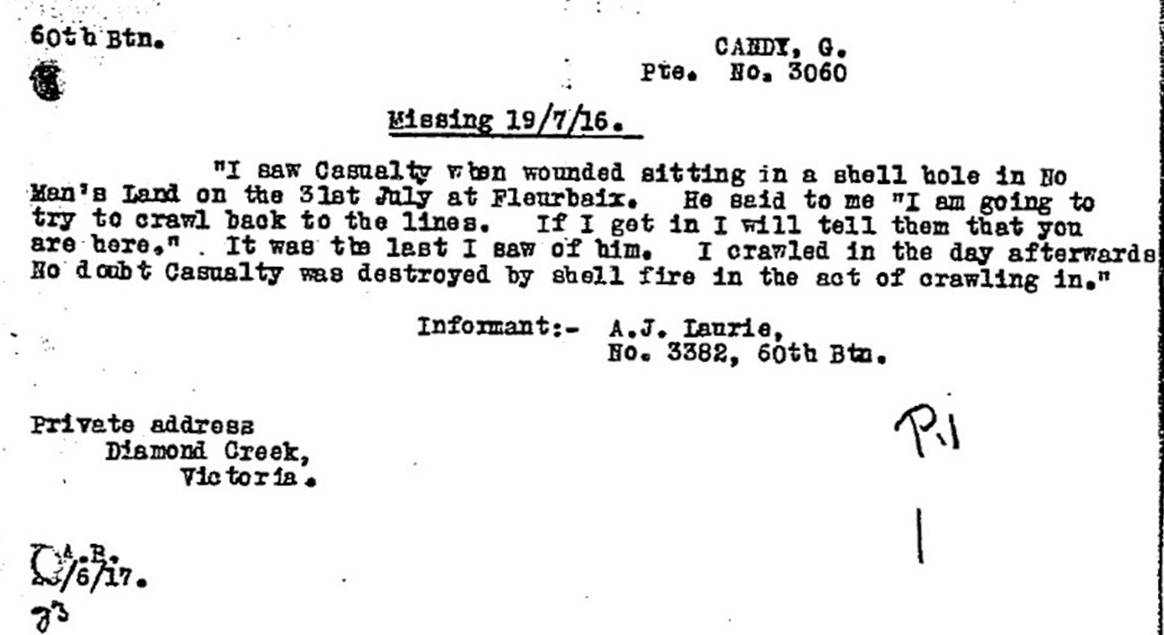
But the most personal account was from Private Andrew John Laurie (3382) who stated the 31st July, however was no doubt referring to the 19th or 20th July:
“I saw casualty when wounded sitting in a shell hole in No Man's Land on the 31st (sic) July at Fleurbaix. He said to me ‘I am going to try to crawl back to the lines. If I get in I will tell them that you are here.’ It was the last I saw of him. I crawled in the day afterwards. No doubt casualty was destroyed by shell fire in the act of crawling in.”
After the Battle
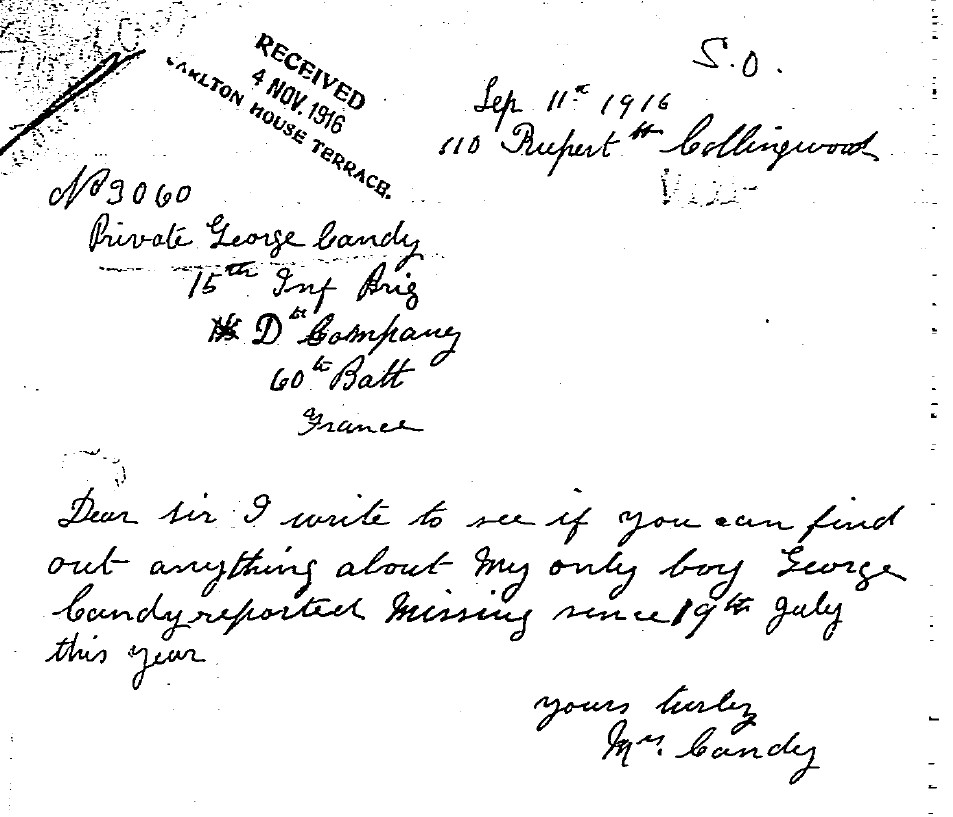
Not long after the battle, George’s mother wrote seeking news about George.
However, the Red Cross reports did not offer any hope, but it wasn’t until a Court of Enquiry held in the field on 4 August 1917 formally declared that George had been killed in action on 19 July 1916. Adding to the horrible losses from the battle was the consideration of the soldiers’ ages:
“At least fifteen of the dead on that battlefield were too young to be there. At least three were only sixteen, two were fifteen and one may have been as young as fourteen…”
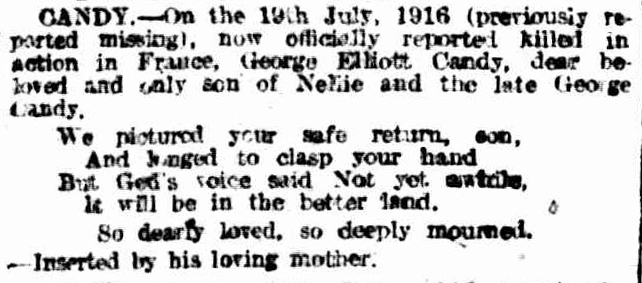
The confirmation from the Court of Enquiry brought an end to months of uncertainty for his family and in September 1917, memorial notices were placed by his family and friends in The Age. Clearly, young George was deeply missed.
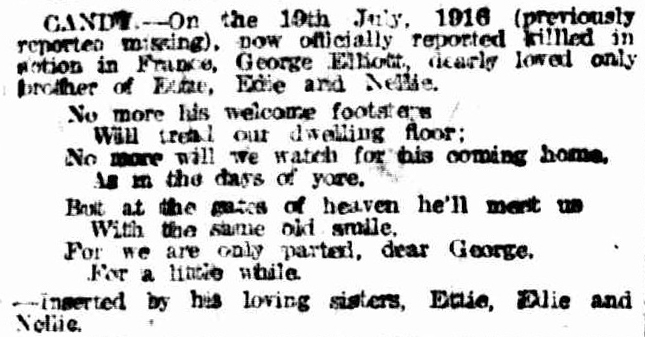
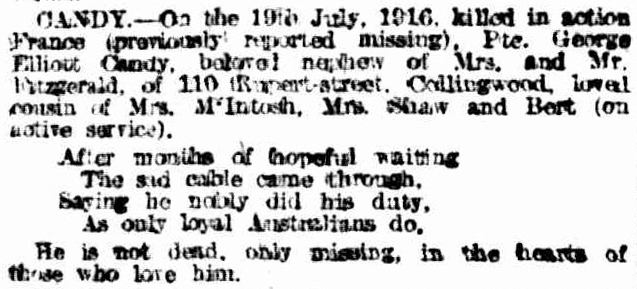
George was awarded the British War Medal, the Victory Medal, a Memorial Plaque and a Memorial Scroll. These were sent to his mother, Nellie.
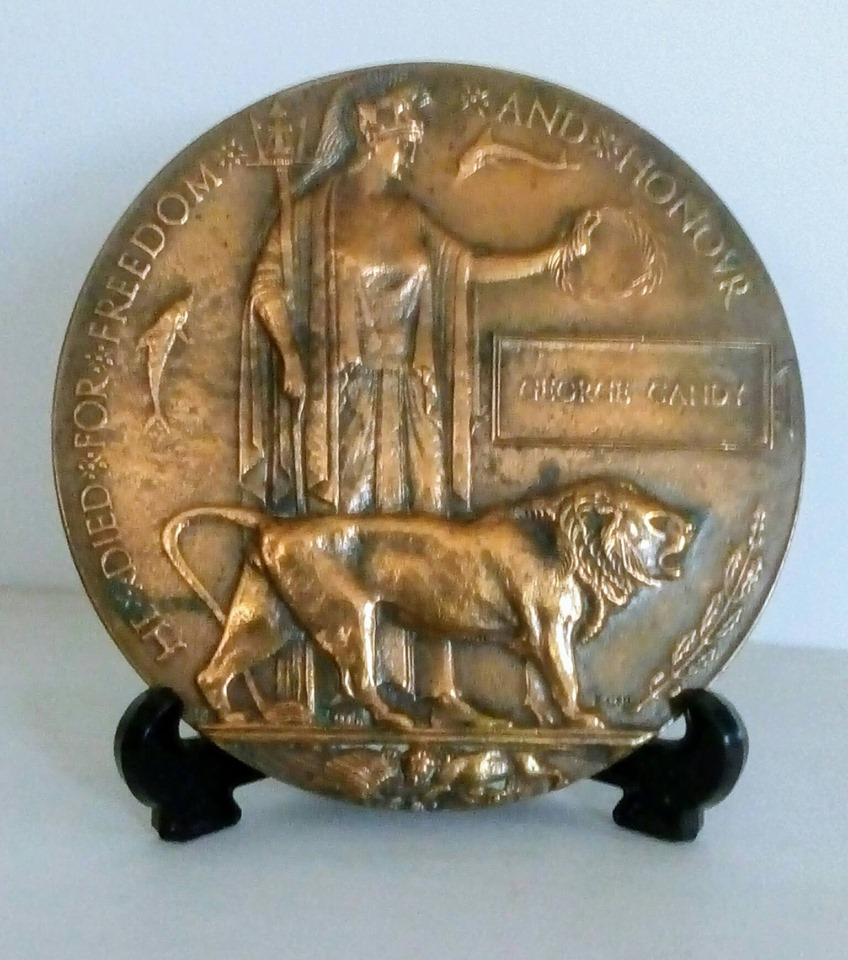
George’s Memorial Plaque – the “Dead Man’s Penny”
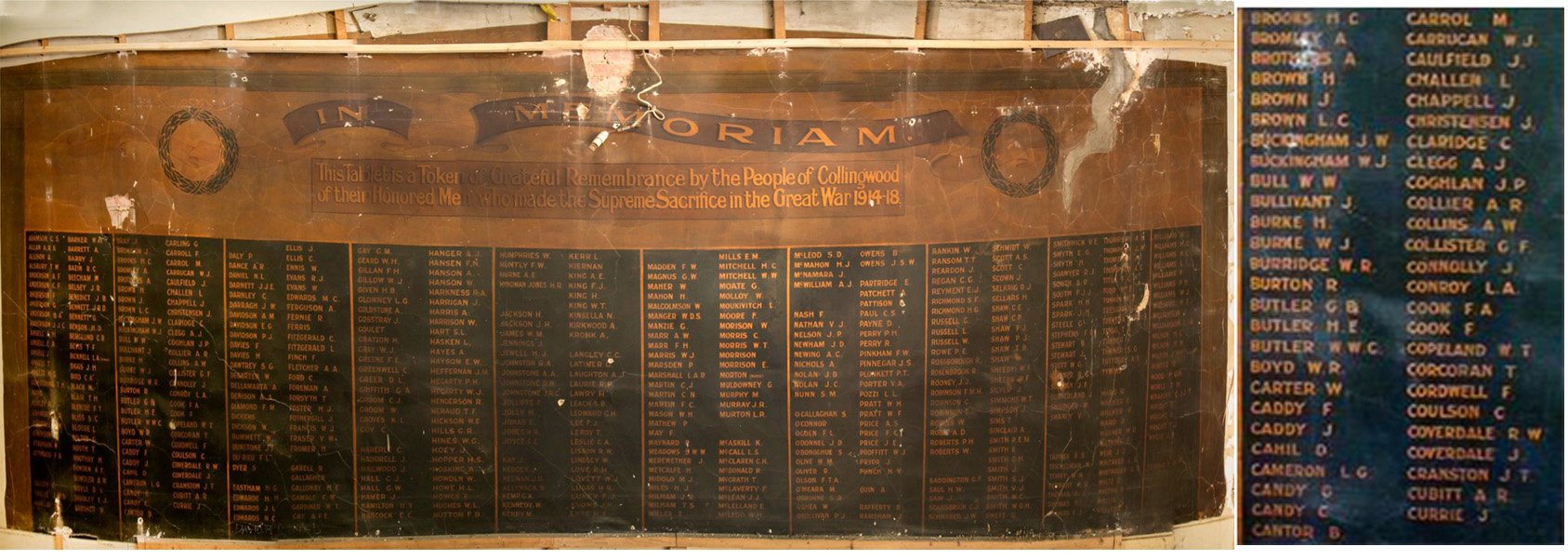
George is commemorated on a family memorial, VC Corner Australian Cemetery Memorial, Fromelles, on Panel 169 at the Australian War Memorial in Canberra and on the Collingwood War Memorial Board.
Family Reflections - George’s Great Niece, Deborah Freeman-Bryant
My aunt always said that George was killed as soon as he walked onto that field. She also mentioned that she thought he had died at Pozieres (Ed note – a commonly used place-name for Fromelles at the time). My Great Grandmother Candy had to write a letter of permission for George to go to war as George was just 15 years old. He was her only son. But then I have only discovered recently - by going back to his almost unreadable birth certificate - that he was born 23 June 1900. He was only one month past 15 when he enlisted! His sixteenth birthday was in the Mediterranean on his way to Marseille.
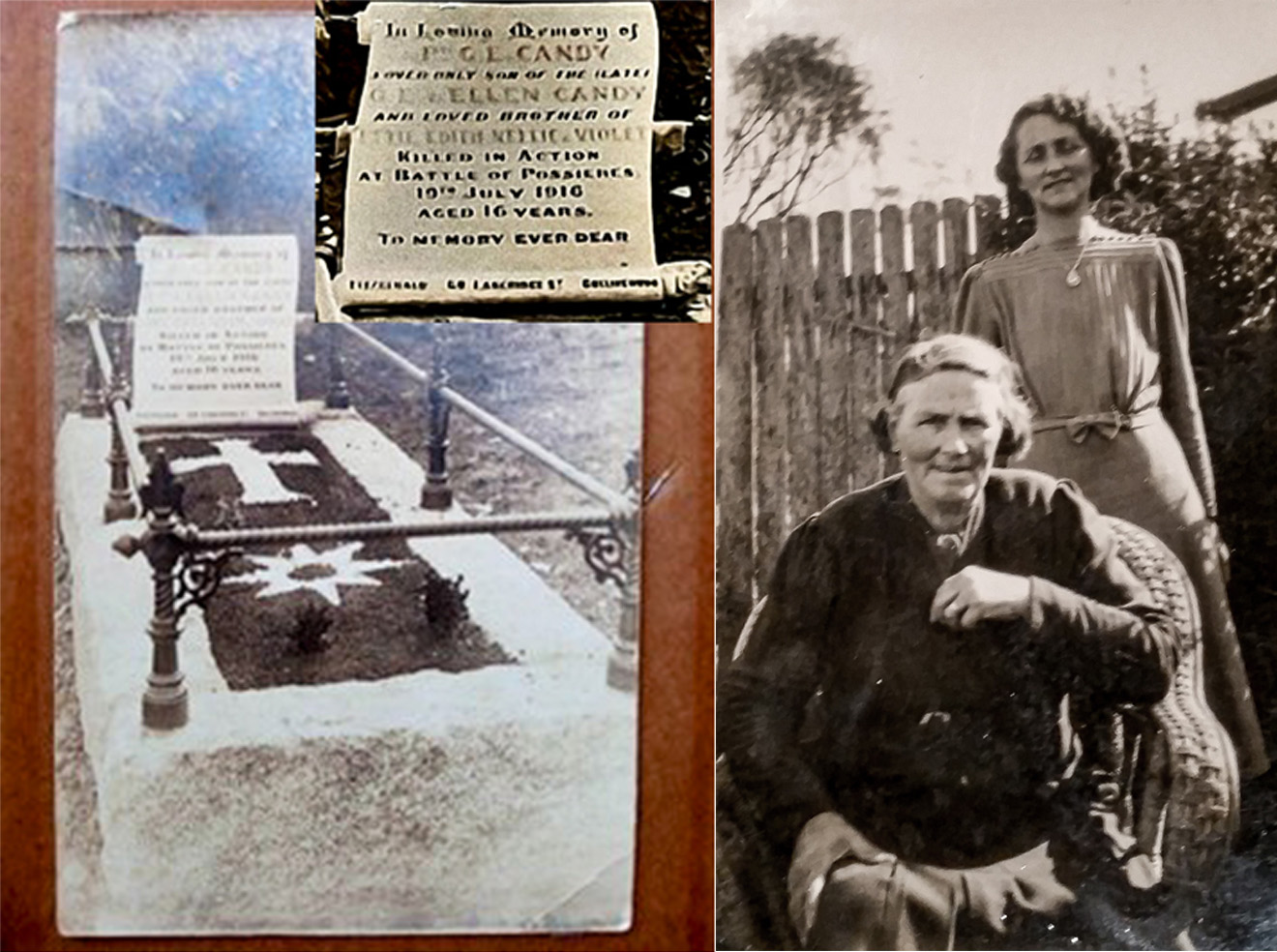
Many family photos have come down to me and the one that remains a mystery, but says so much, is the empty grave memorial which Georges’ mother could easily visit, a demonstration of family devotion and ongoing grief. It seems that the stonemason was John Fitzgerald (who was my Great Grandmothers sister’s husband and lived 2 doors from my Great Grandma Candy.)
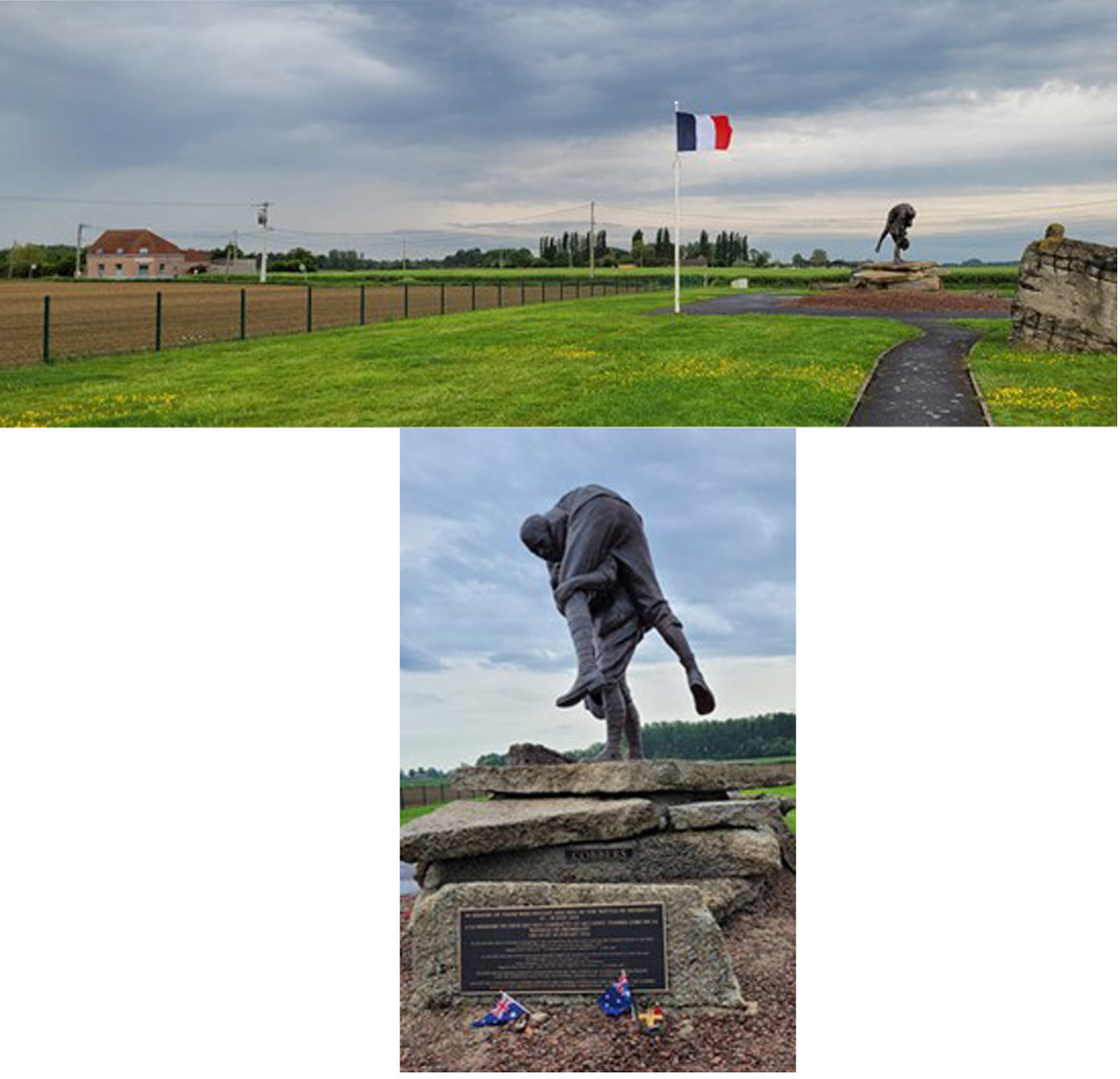
And to complete this, I went to France and can now work out where the FAA battle map was. These pics were taken within the Memorial Park and the bunkers and the paddock opposite where the tour fellow told me the battle was.
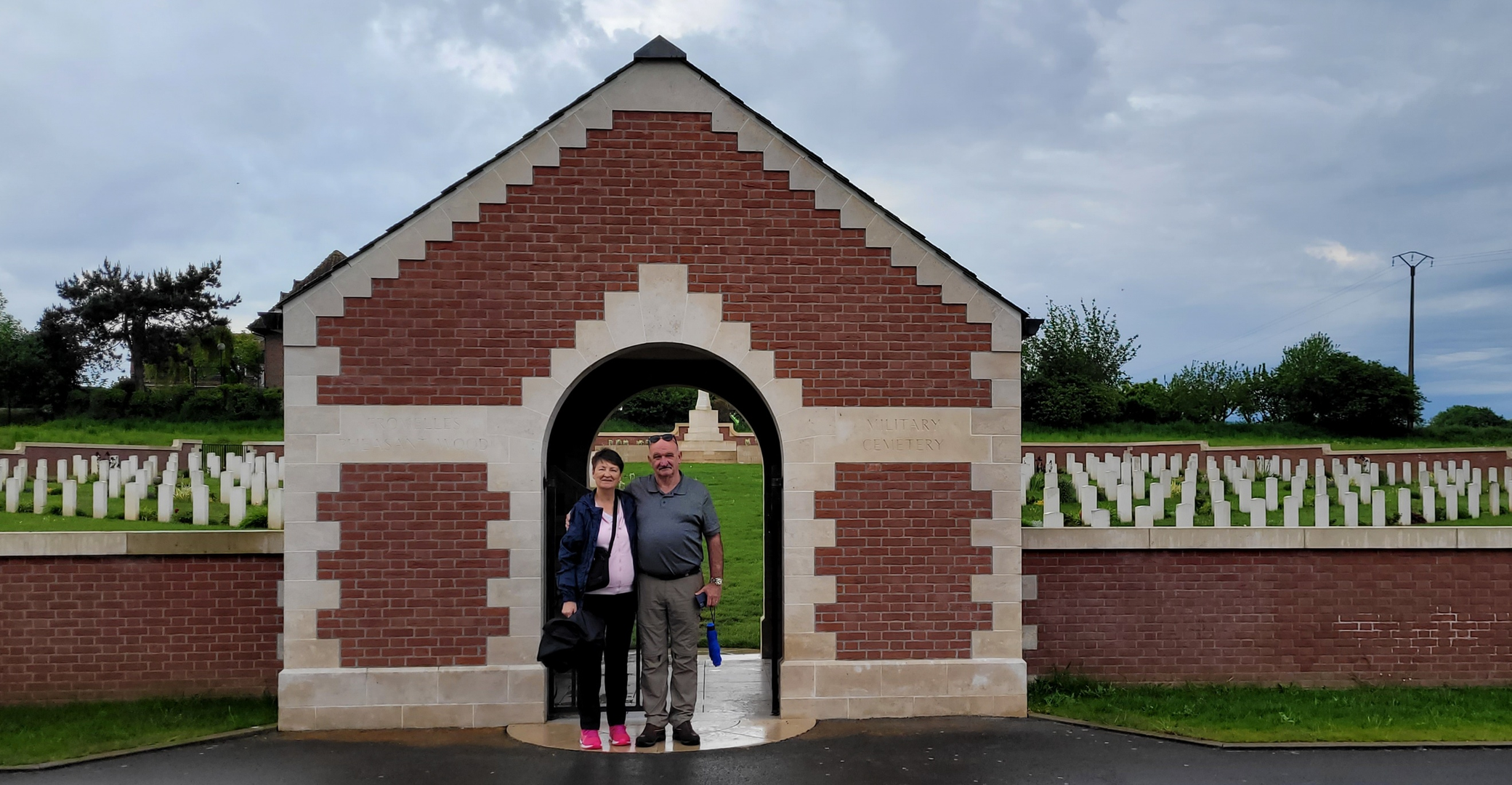
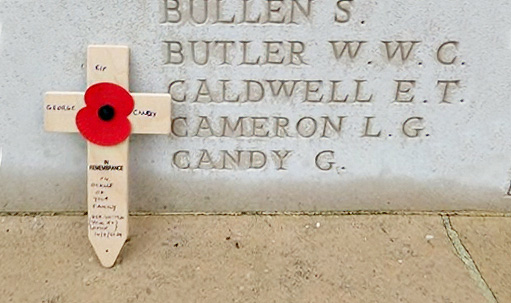
We also went to Pheasant Wood and VC corner where I placed a poppy at George's plaque.”
Perhaps through this story we will find George.
Finding George
George’s remains were not recovered; he has no known grave. After the battle, the Germans recovered 250 Australian soldiers and placed them in a burial pit at Pheasant Wood. This grave was discovered in 2008 and since then efforts have been underway to identify these soldiers by DNA testing from family members. As of 2026, 181 of the soldiers have been identified, including two of the 313 unidentified soldiers from the 60th Battalion.
We welcome all branches of George’s family to come forward to donate DNA to help with his identification. If you are related or know someone who might be connected to his family, particularly those with roots in Victoria, inner Melbourne. We hope that one day George will be named and honoured with a known grave.
Please visit Fromelles.info to follow the ongoing identification project and George’s story.
DNA samples are being sought for family connections to
| Soldier | George Elliott Candy (1900–1916) aged just 16 |
| Parents | George Elliott Candy (1868–1901) and Jane Ellen “Nellie” Lauder (1875–1964) |
| Siblings | Harriett (Ettie) Jane (1895–1964) | ||
| Edith May (1896–1988) | |||
| Nellie (1899–1956) | |||
| Half-sibling: | Violet Mavis (1915–1957) |
| Grandparents | |||
| Paternal | George Candy (1834–1915) and Georgina Eliza Gardiner (1842–1929) | ||
| Maternal | Archibald Campbell Lauder (1848–1932) and Agnes Annie McDonald (1848–1904) |
Links to Official Records
Seeking DNA Donors

Contacts
(Contact: carla@fromelles.info or geoffrey@fromelles.info).
(Contact: army.uwc@defence.gov.au or phone 1800 019 090).
Donations
If you are able, please contribute to the upkeep of this resource.
(Contact: bill@fromelles.info ).