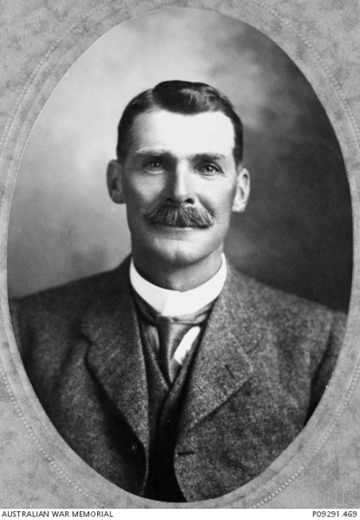
Arthur Hurtle MORPHETT
Eyes grey, Hair brown, Complexion medium
Arthur Hurtle Morphett - “A Terrible Suspense”
Can you help us identify Arthur?
Arthur was killed in Action at Fromelles, but his body has never been identified.
A mass grave was found in 2008 at Fromelles, a grave the Germans dug for 250 Australian soldiers they recovered after the battle. As of 2026, 181 of these soldiers have been able to be identified via DNA testing from family members.
Arthur may be among these remaining 69 unidentified men. There is still a chance to identify him — but we need help.
We welcome all branches of his family to come forward to donate DNA to help with his identification, especially those with roots in Adelaide, South Australia.
See the DNA box at the end of the story for what we do know about his family.
If you know anything of contacts for Arthur, please contact the Fromelles Association.
Arthur’s Family
Arthur came from a very prominent family of early South Australia. His grandfather, John Morphett, was one of the most energetic advocates In London in the early 1830s for the establishment of a convict-free colony in South Australia on the principle of systematic colonisation. John arrived in South Australia in September 1836, three months before the colony’s proclamation. In the first elections, John was elected to the legislative council and later went on to become its President. He also was a director for several business organisations as well as the Vice-President of the Adelaide Cricket Club was it was formed in 1853.
In 1870 John was knighted for his services to South Australia. Prior to becoming involved in politics, John had been a land agent for the South Australian Company and had secured valuable land for his family and clients. In 1839 he bought 8,000 acres on the Murray River which became the family’s Woods Point Estate. In 1838, he married Elizabeth (Bessey) Fisher, the daughter of the first Resident Commissioner in South Australia, James Hurtle Fisher, who had arrived in Australia on the ‘Buffalo’ with the first Governor in December 1836. John and Bessey had five sons and six daughters. Their eldest son, John Cummins Morphett, was Arthur’s father.
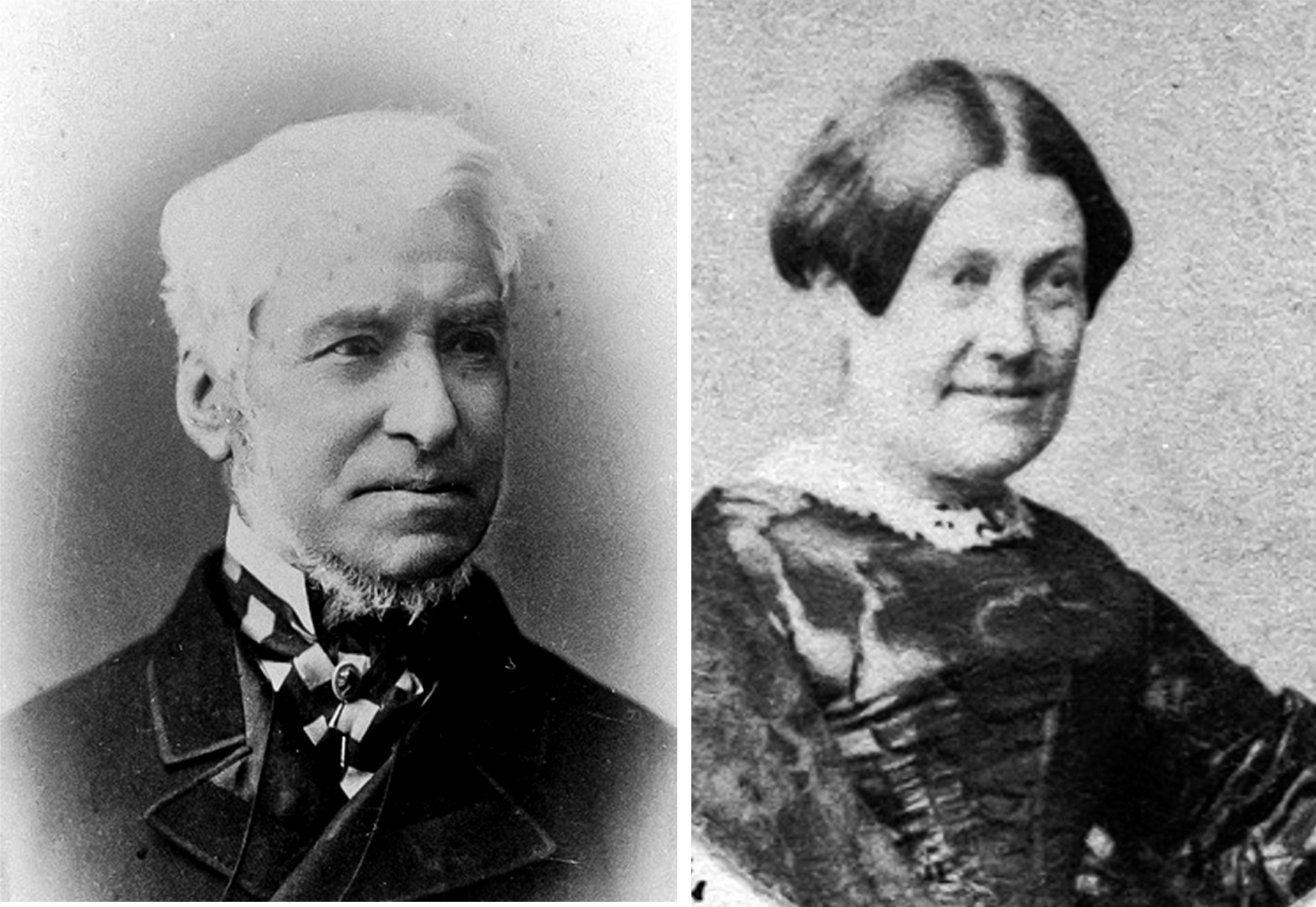
Sir John Morphett and Elizabeth ‘Bessey’ Morphett
Arthur’s maternal grandparents were William and Harriet (nee Carstairs) Sanders who had married in Scotland before arriving in Adelaide in 1838. William became an agent, businessman and pastoralist and also had extensive property interests in both Adelaide and country South Australia. William and Harriet had one son and three daughters. Their youngest daughter, Mary Frances Sanders was Arthur’s mother.
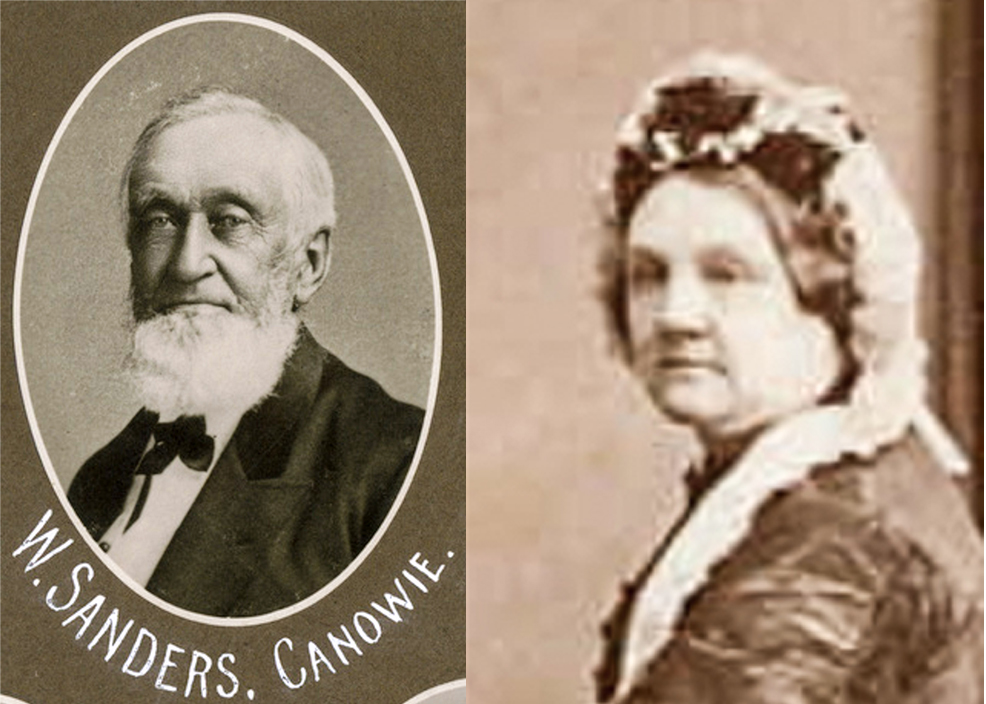
William and Harriet Sanders
Early Life
Arthur’s parents married in Adelaide in 1875. His father had a distinguished career of 47 years as a public servant in both Houses of the South Australian Parliament. He was an authority on parliamentary procedure and was Clerk of the House of Assembly.
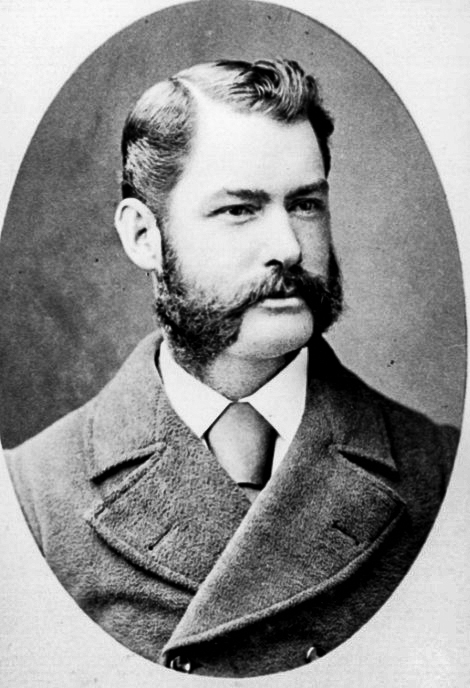
He and Mary had six children. Arthur, born in 1877, was their second child. His siblings were:
- George Cummins (1876-1963)
- Annie Elizabeth (1879-1952)
- Bessey (1880-1947)
- Mary Eleanor (1882-1882)
- Lucy (1883-1946)
Arthur grew up in leafy Grove St, Unley Park. He also spent time at Cummins House, his paternal grandparents’ home on their 134-acre estate near the Morphettville Racecourse. In 1905, Cummins House, now heritage listed, became the home of Arthur’s parents after his grandmother died.
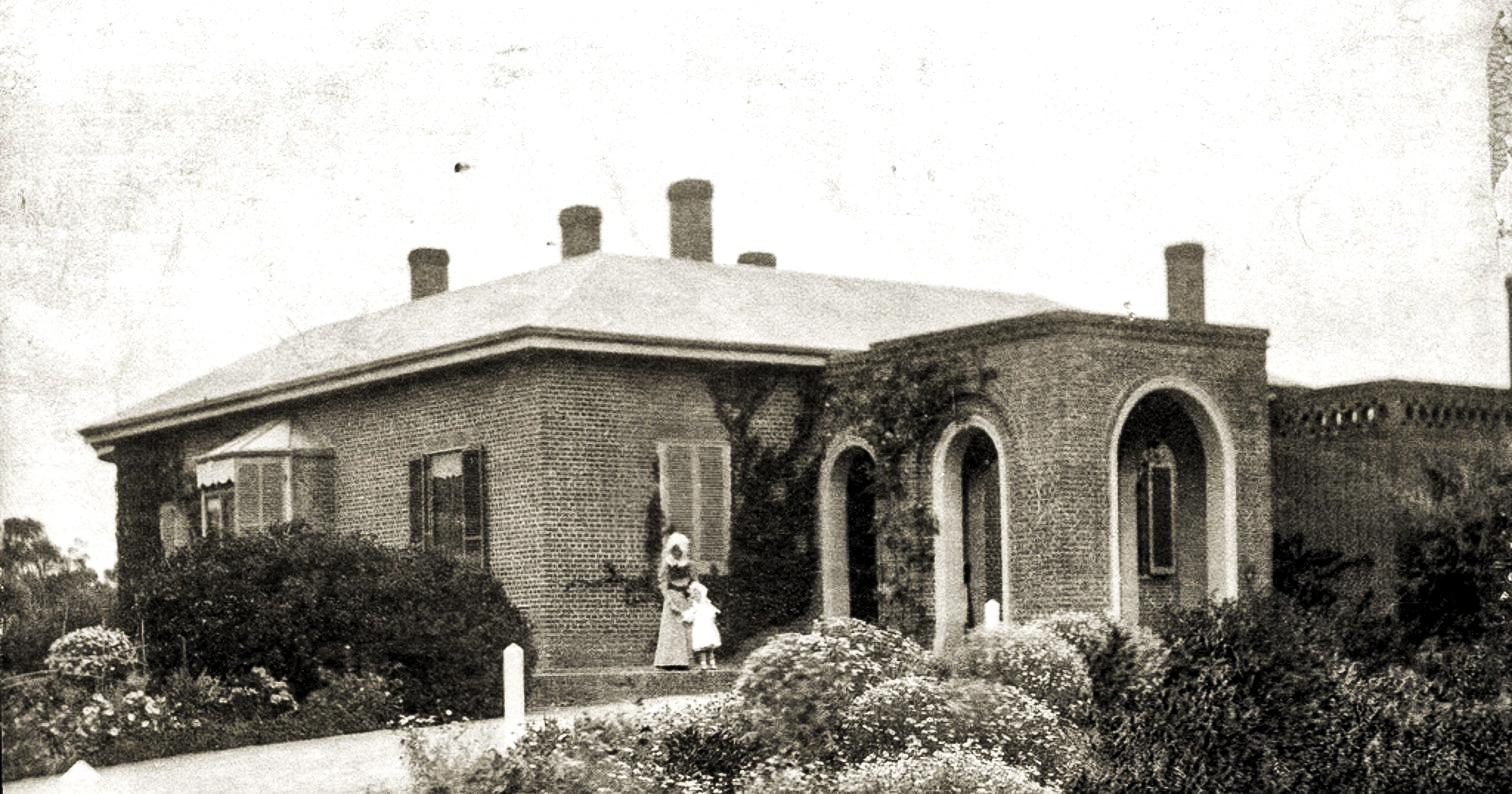
Arthur was educated at Queens School in North Adelaide and at the prestigious St Peter’s College before studying at Roseworthy Agricultural College, preparing to manage properties owned by his family. He shared a room at the College with Albert Robinson, later a state and Federal politician. In 1928, Robinson remembered his ‘bosom pal’ as “a man with high ideals, who left behind a wonderful record and reputation at Roseworthy College.”
Source - "In and Out of the City" The Register (Adelaide, SA 1901 - 1929) 22 October 1928 10. Web. 17 Aug 2026
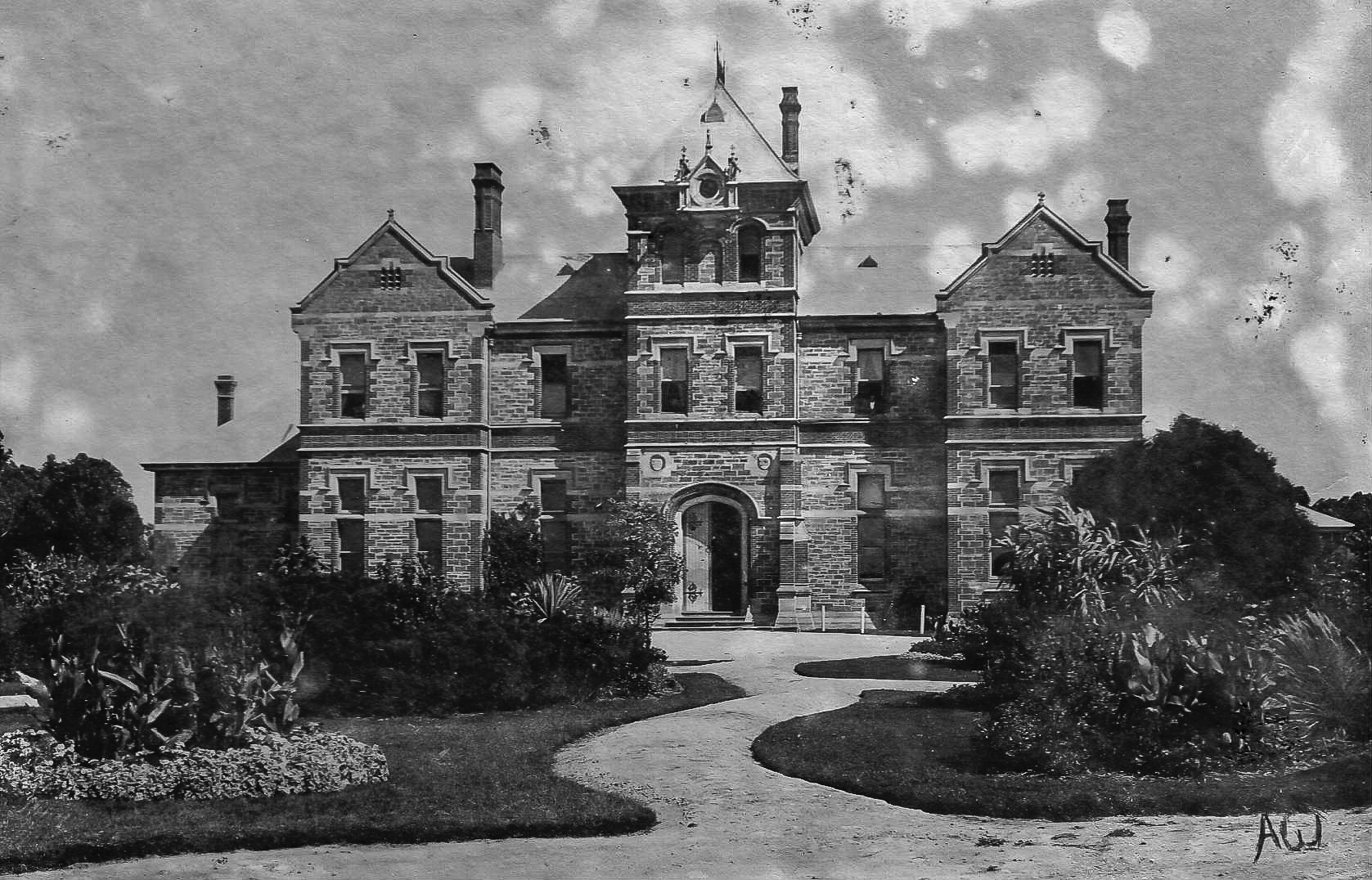

In the late 1890s, Arthur managed a very large dairy farm at Tower Hill, near Warrnambool in Victoria, before moving back to South Australia where he was manager and part owner (with his uncle, Hurtle Morphett) of a large family property at Woods Point on the banks of the Murray River near Murray Bridge. Arthur was highly respected by the families that worked on Woods Point. After the war, Hurtle Morphett said that at the time Arthur enlisted in the AIF, the process of his own retirement and the transfer of his interest in the Woods Point estate to Arthur Morphett had begun, but ‘death intervened’.
From a Grazier to the War
In June 1915, Arthur, aged 37 and single, decided that it was his duty to enlist in the AIF. Despite his wealth and privileged upbringing, he enlisted as a private at Keswick Barracks in Adelaide, naming his mother, Mary Morphett as his next of kin. Arthur was assigned to A Coy of the 32nd Battalion when it was formed at Mitcham Camp on 9 August 1915. A and B Companies were made up of recruits from South Australia and C and D Companies came from Western Australia. There was much fanfare about this new battalion in South Australia, with gatherings, community support, such as the Cheer-up Society and reviews of the troops by the Premier. Arthur was appointed as a Provisional Sergeant in A Company on 16 August, 1915.
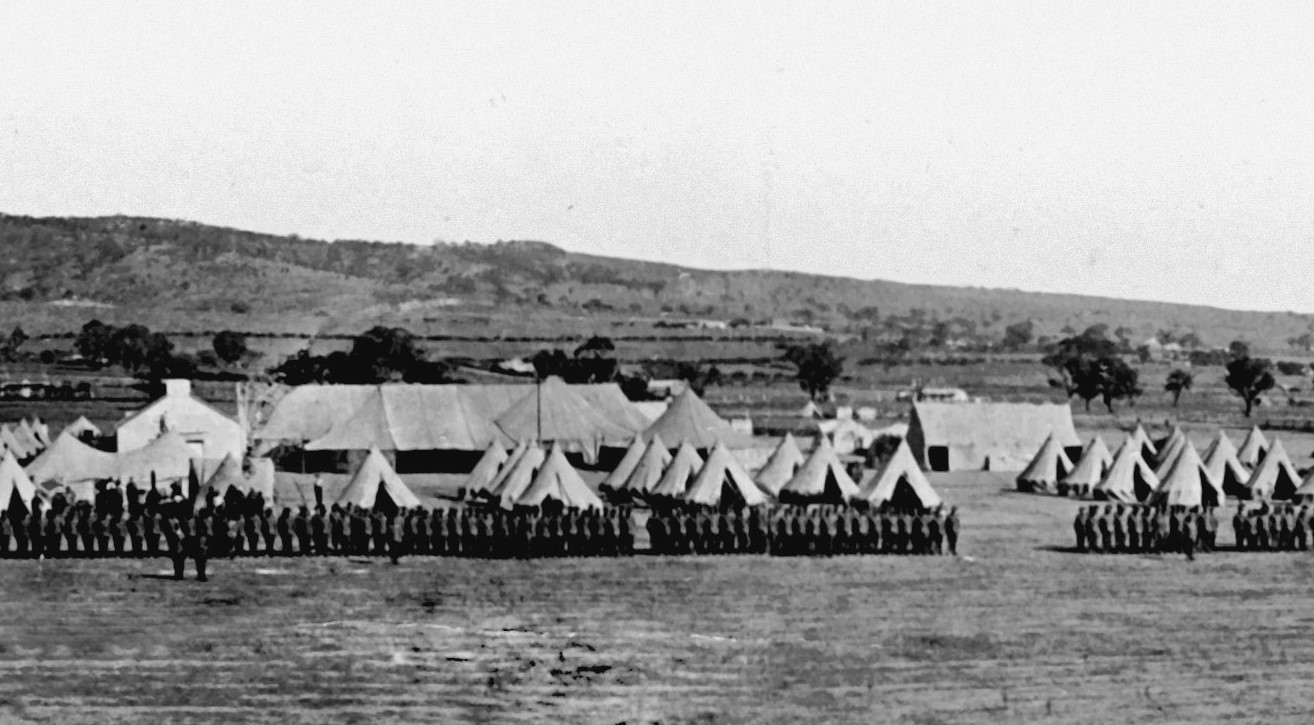
The Western Australian men had trained at Blackboy Hill Camp near Perth before arriving in Adelaide at the end of September. With their arrival, the whole battalion assembled at Cheltenham Racecourse Camp and continued training in preparation for overseas service. Arthur was still a provisional Sergeant but early in October, he was transferred back to Mitcham to attend the NCO School at that camp. However, at the beginning of November, he rejoined the 32nd at Cheltenham as a Private.
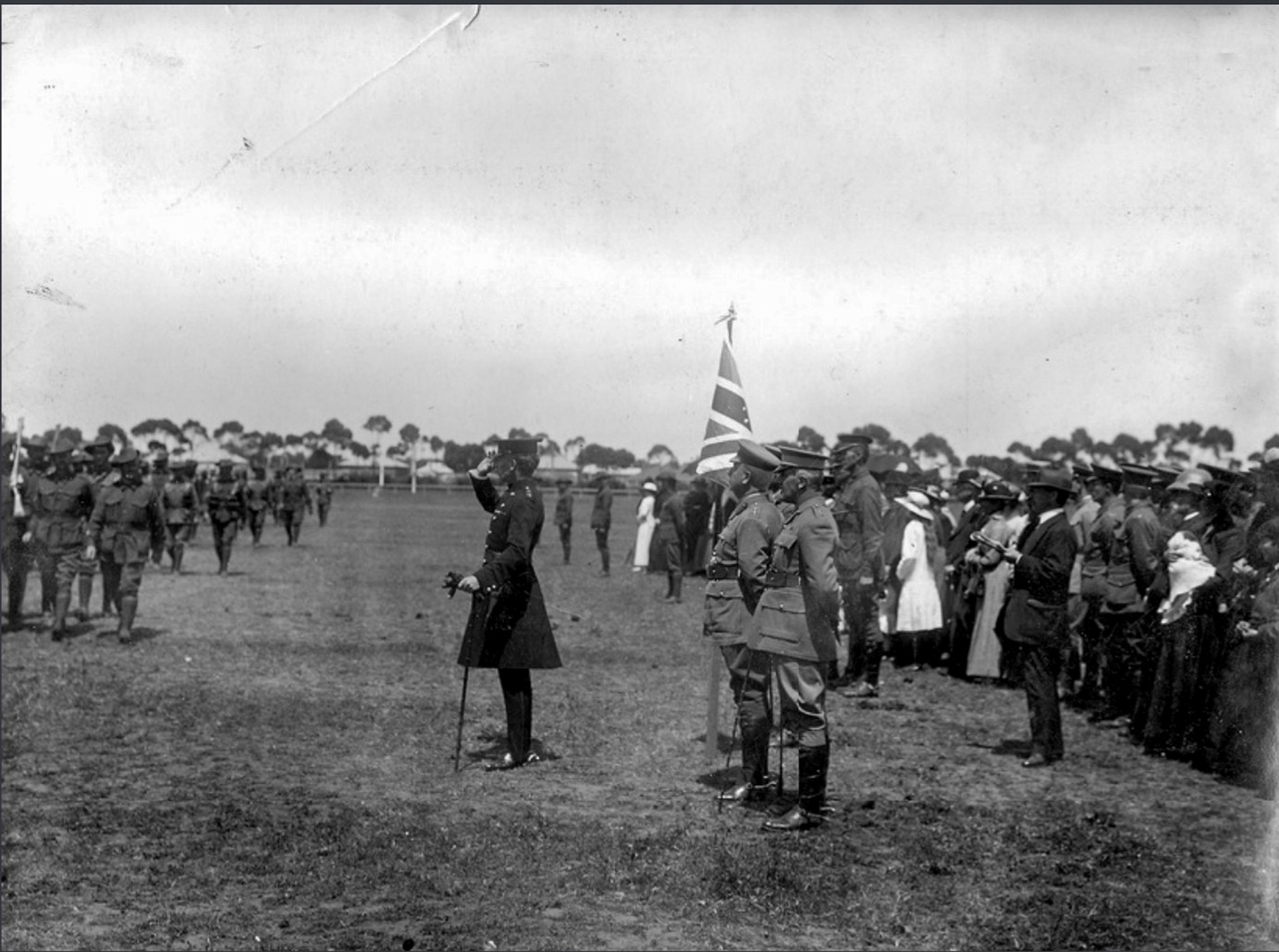
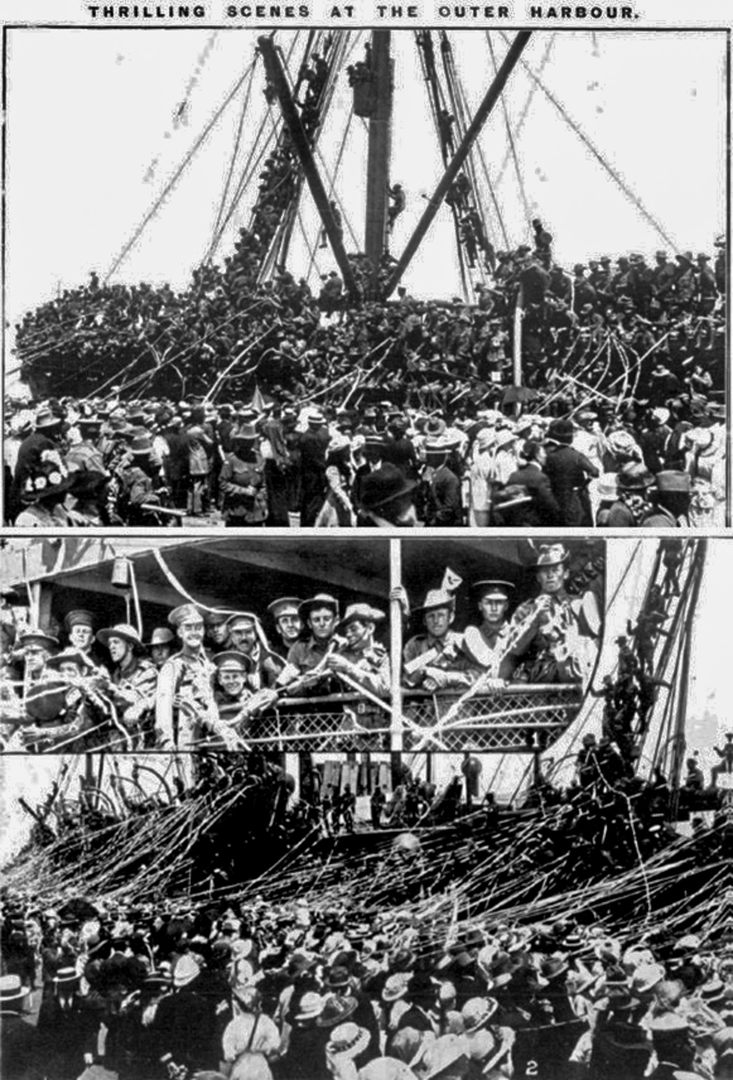
Training continued until the battalion departed for Egypt on 18 November 1915, with the unit being split between two troop ships HMAT A2 Geelong and HMAT A13 Katuna. As reported in The Adelaide Register:
“The 32nd Battalion went away with the determination to uphold the newborn prestige of Australian troops, and they were accorded a farewell which reflected the assurance of South Australians that that resolve would be realized.”
The 32nd arrived in Suez on 14 December 1915 and moved to El Ferdan just before Christmas. A month later they marched to Ismailia and then to the major camp at Tel-el-Kebir where they stayed for February and most of March. Tel-el-Kebir was about 110 km northeast of Cairo and the 40,000 men in the camp were comprised of Gallipoli veterans and the thousands of reinforcements arriving regularly from Australia.
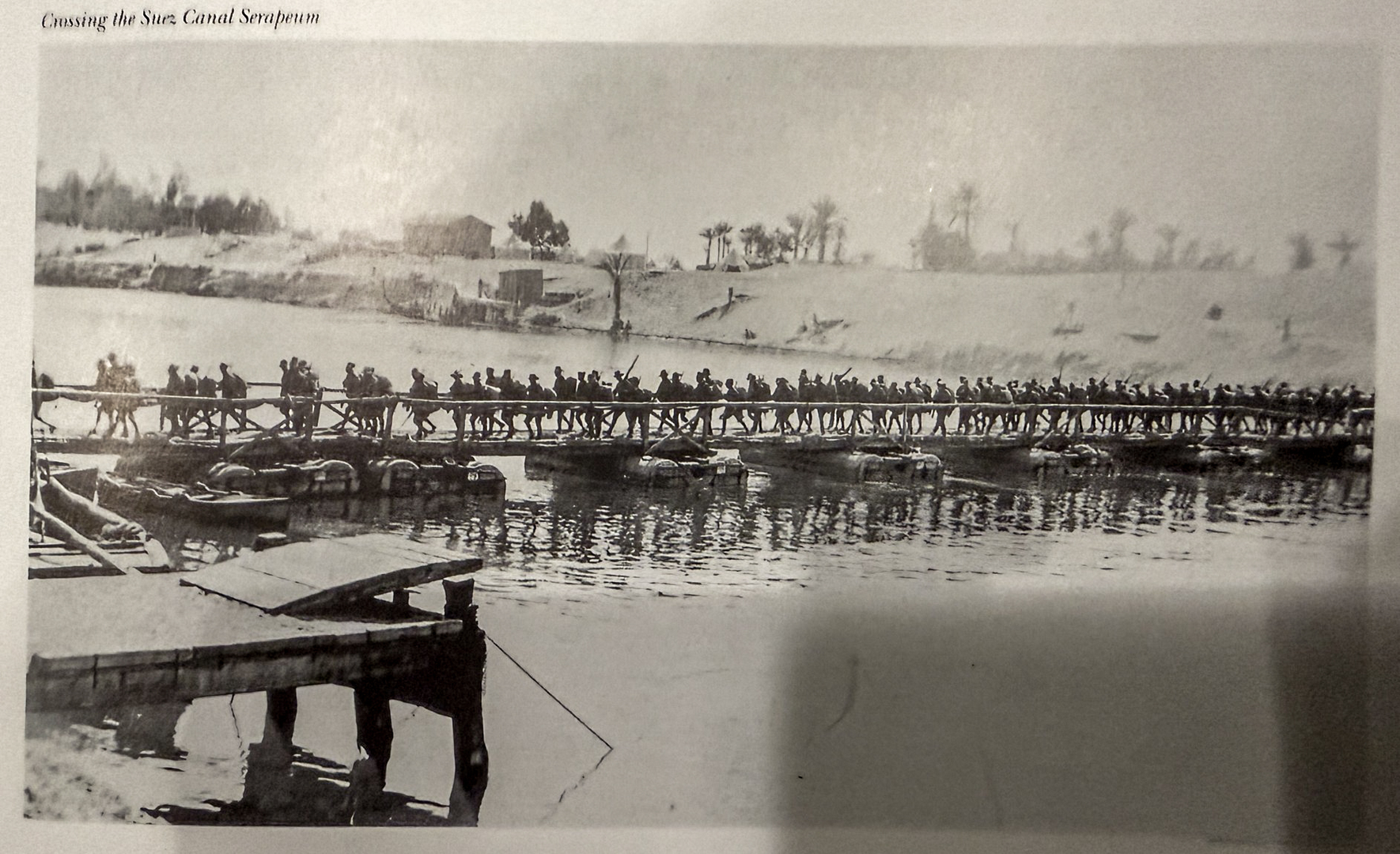
Their next stop was at Duntroon Plateau and then at Ferry Post until the end of May where they trained and guarded the Suez Canal. While at Ferry Post, Arthur was promoted to Lance Corporal. The battalion’s last posting in Egypt was a few weeks at Moascar.
One soldier’s diary complained of being “sick up to the neck of heat and flies”, of the scarcity of water during their long marches through the sand and he described some of the food as “dog biscuits and bully beef”. He did go on to mention good times as well with swims, mail from home, visiting the local sights and the like.
Source - AWM C2081789 Diary of Theodor Milton PFLAUM 1915-16, page 29, page 12
During their time in Egypt the 32nd had the honour of being inspected by H.R.H. Prince of Wales.
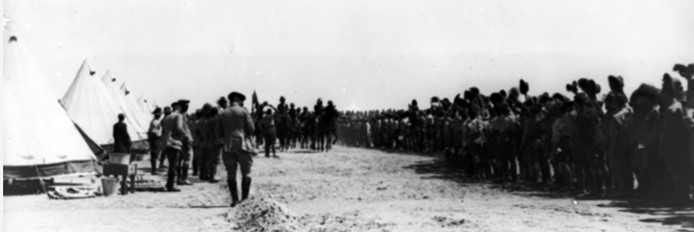
After spending six months in Egypt, the call to support the British Expeditionary Force on the Western Front came in mid-June. The 32nd left from Alexandria on the ship Transylvania on 17 June 1916, arriving at Marseilles, France on 23 June 1916 and they then immediately entrained for a three-day train trip to Steenbecque. Their route took them to a station just out of Paris, within sight of the Eiffel Tower, through Boulogne and Calais, with a view of the English Channel, before disembarking and marching to their camp at Morbecque, about 30 kilometres from Fleurbaix. Theodor Pflaum (No. 327) and Wesley Choat (No. 68) wrote about the trip:
“The people flocked out all along the line and cheered us as though we had the Kaiser as prisoner on board!!” – Theodore Pflaum
“The change of scenery in La Belle France was like healing ointment to our sunbaked faces and dust filled eyes. It seemed a veritable paradise, and it was hard to realise that in this land of seeming peace and picturesque beauty, one of the most fearful wars of all time was raging in the ruthless and devastating manner of "Hun" frightfulness”. – Wesley Choat
They were headed to the area of Fleurbaix in northern France which was known as the ‘Nursery Sector’ – a supposedly relatively quiet area where inexperienced Allied troops could learn the harsh realities of Western Front trench warfare against the Germans. But the quiet times did not last long. Training continued with a focus on bayonets and the use of gas masks, assuredly with a greater emphasis, given their position near the front. The 32nd moved to the Front on 14 July and they were into the trenches for the first time on 16 July, only three weeks after arriving in France.
Battle of Fromelles
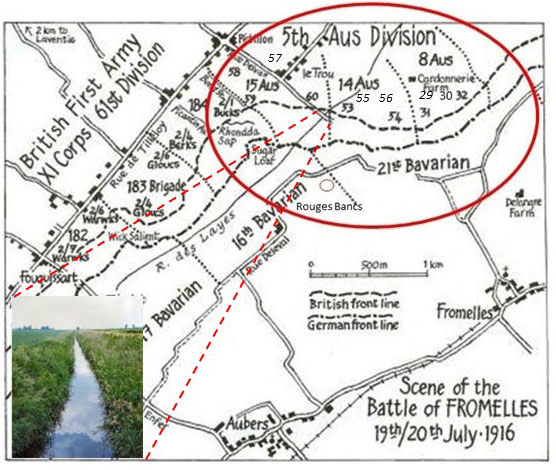
Inset - River Layes from the Australian Front Line looking towards the Sugar Loaf
D Company’s Lieutenant Sam Mills’ letters home were optimistic for the coming battle:
“We are not doing much work now, just enough to keep us fit—mostly route marching and helmet drill. We have our gas helmets and steel helmets, so we are prepared for anything. They are both very good, so a man is pretty safe.”
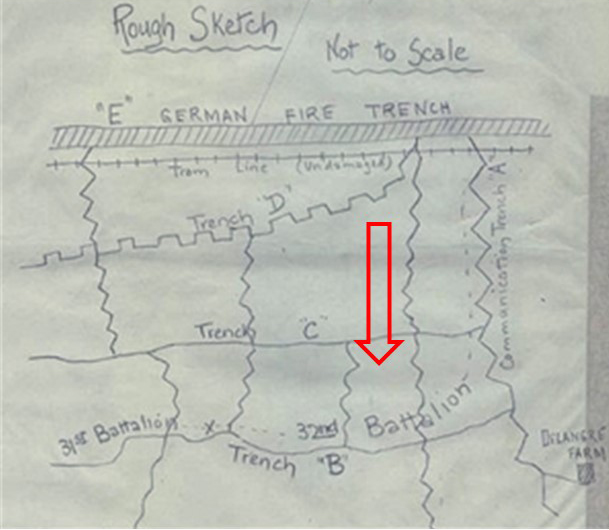
On the 17th they were reconnoitring the trenches and cutting passages through the barbed wire, preparing for an attack, but it was delayed due to the weather. The overall plan was to use brigades from the Australian Fifth Division to conduct a diversionary assault on the German trenches at Fromelles. The 32nd Battalion’s position was on the extreme left flank, with only 100 metres of No Man’s Land to get to the German trenches. As they advanced, they were to link up with the 31st Battalion on their right.
However, their position made the job more difficult, as not only did they have to protect themselves while advancing, but they also had to block off the Germans on their left, to stop them from coming around behind them. On the morning of the 18th, A Company and C Company went into the trenches to relieve B and D Companies, who rejoined the next day. Lieutenant Frederick Stolz described the calm before the storm:
“The fellows were wonderfully cool and not during the whole time did I see anyone get excited or do anything silly, and such a lot were only young boys of between 18 to 20.”
The Zero Hour for advancing from their front-line trenches was to be 5.45 PM, but the Germans knew this attack was coming and were well-prepared. They opened a massive artillery bombardment on the Australians at 5.15 PM, causing chaos and many casualties. The charge over the parapet began at 5.53 PM. A and C Company were in the first and second waves to go, B and D were in the third and fourth. They were successful in the initial assaults and by 6.30 PM were in control of the German’s 1st line system (map Trench B), which was described as:
“practically a ditch with from 1 to 2 feet of mud and slush at the bottom”.
Unfortunately, with the success of their attack, ‘friendly’ artillery fire caused a large number of casualties because the artillery observers were unable to confirm the position of the Australian gains. The 32nd were able to take out a German machine gun in their early advances, but were being “seriously enfiladed” from their left flank.
By 8.30 PM their left flank had come under heavy bombardment with high explosives and shrapnel. Return bombardment support was provided and the 32nd were told that “the trenches were to be held at all costs”.
Source - AWM4 23/49/12, 32nd Battalion War Diaries, July 1916, page 12
Fighting continued through the night. The Australians made a further charge at the main German line beyond Trench B, but they were low on grenades, there was machine gun fire from behind them from the emplacement at Delangre Farm and they were so far advanced that they were getting shelled by both sides. In the early morning of the 20th, the Germans began a counterattack from the Australian’s left flank, bombing and advancing into Trench A (map).
Given the Australian advances that had been made earlier, the rear Trench E had been left almost empty, which then enabled the Germans to regain that trench and envelop the men of the 32nd. At 5.30 AM the Germans attacked from both flanks in force and with bombing parties. Having only a few grenades left, the only resistance they could offer was with rifles:
“The enemy swarmed in and the retirement across No Mans’ Land resembled shambles, the enemy artillery and machine guns doing deadly damage.”
What remained of the 32nd Battalion had finally withdrawn by 7.30 AM on 20 July. The initial roll call revealed the scale of the disaster, with 71 killed, 375 wounded and 219 missing. The devastation remained visible long after the fighting had ended. When Australia's official war historian Charles Bean visited the battlefield two and a half years later, he observed bones, torn uniforms and Australian equipment still scattered across the ground. The final impact on the 32nd Battalion was devastating. 225 soldiers were killed or died from wounds sustained at Fromelles, of whom 166 were unidentified.
Lieutenant Sam Mills survived the battle. In a letter home he recalled the courage of the men as they went into the attack:
“They came over the parapet like racehorses……… However, a man could ask nothing better, if he had to go, than to go in a charge like that, and they certainly did their job like heroes."
After the Battle
With about 85% of the 32nd Battalion having been killed, wounded or taken prisoner, there was much confusion and great difficulty in working out what had happened to each man. Major efforts were undertaken to find the missing soldiers, but often weeks and months passed with no answers, only uncertainty. Arthur’s mother, as next of kin, was informed on 29 August that he had been missing since 20 July. No doubt to spare his wife the trauma of directly receiving further information, his father ensured that all future communication came to him.
In early September he arranged for a reply-paid cable to be sent through the South Australian Red Cross Information Bureau to the Red Cross in London asking them make enquiries about Arthur. There was no immediate response to this enquiry, but in the following months, enough information would be recorded to give some understanding of Arthur’s fate on that night.
What happened to Arthur?
A letter written three weeks after the battle by Private Alan Francis (228) had information about Arthur:
”I don’t know if you have heard any news concerning your friend, Lance-Corporal Morphett, but as far as I can find out, he is missing. … I saw Moff during the early part of the bombardment, (i.e. before the attack) and he was wounded in the hand, but he was one of those who wouldn’t give in. In fact he has said that he didn’t care what happened, as long as he ‘did for’ a few Germans, and he meant to kill as many as he could. He went out in the charge, and so far, I haven’t heard any more about him. He may have been wounded and taken prisoner, as we had to leave all our wounded behind.”
Another letter written in response to an unknown enquirer (could it have been Arthur’s father?) was from the highly respected 32nd Battalion Regimental Medical Officer, Henry Hagen:
”I don’t wish to raise false hopes in you for I am afraid of the worst. I feel certain I attended him for a wound early in the action, but as during the few hours I attended hundreds, I couldn’t be absolutely certain. However, if I did, he returned to the front line and was last seen on the third line of German trenches just before the retreat.
… Morphett was a splendid soldier, and was respected by officers and men alike, and is now very much missed. Like many others, he fought magnificently and inspired his comrades to do deeds of valour of which it is impossible to write. One cannot even imagine the conflict. It is only those who were actually in it, who could ever possibly imagine what it was like, and who can imagine such glorious deeds of heroism possible.”
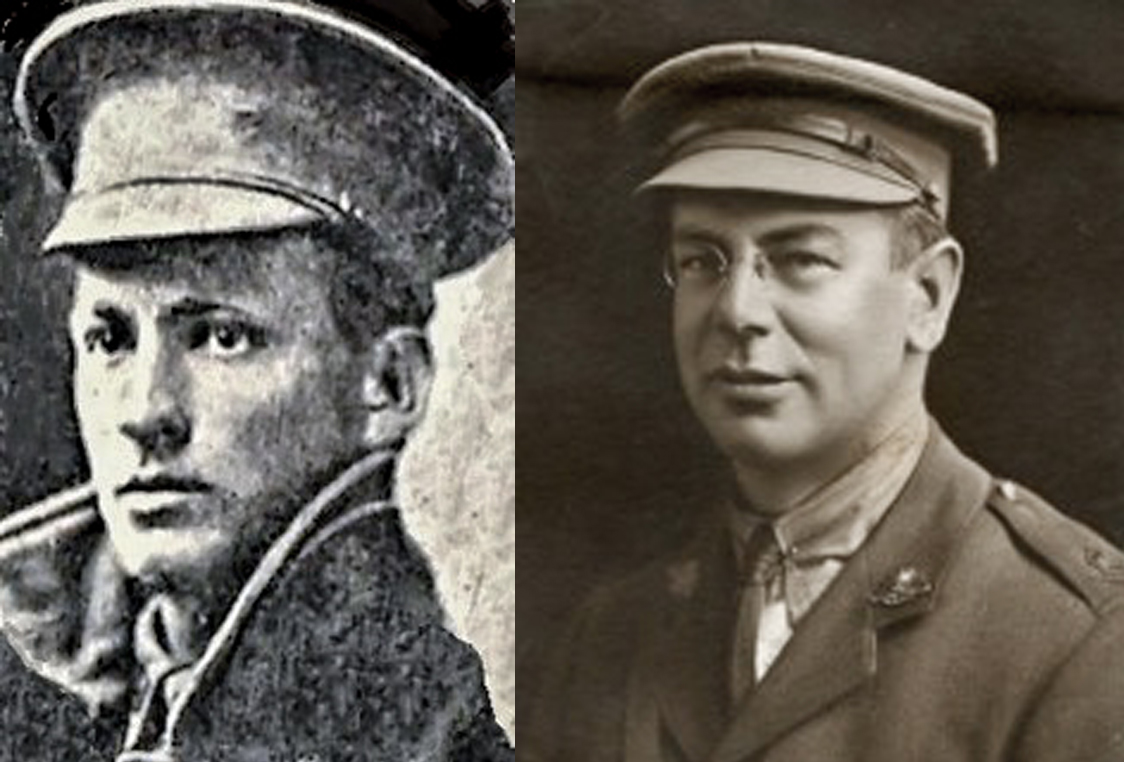
The Red Cross also gathered some information about Arthur. Working closely with the British Red Cross, the Australian Red Cross had a team of ‘searchers’ who visited wounded soldiers in hospitals and camps in England and France, trying to get eyewitness or second-hand reports about missing men in response to enquiries by distressed relatives and friends. The most significant information found by the Red Cross about Arthur came from Private Arthur Clarke (1589) who suggested to a searcher that Private Geoffrey Adamson should be contacted, as he had personal knowledge about the death of Arthur Morphett.
A Shell Hole In No Man’s Land
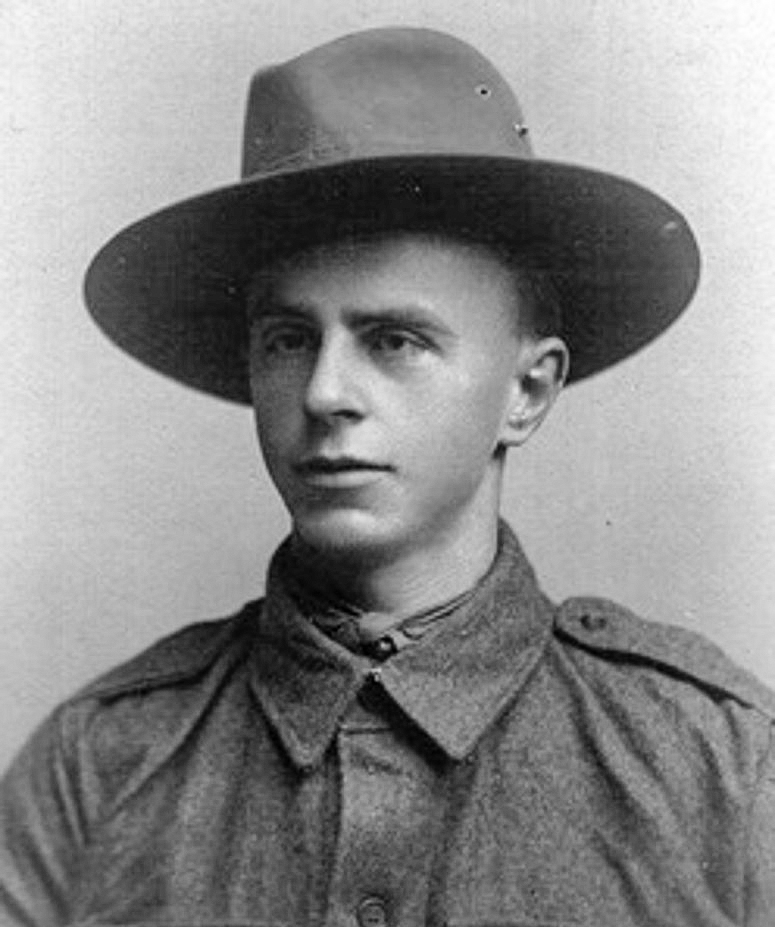
Geoffrey Middleton Adamson (665) spent over 48 hours in No Man’s Land after the retreat on the morning of 20 July, suffering severely from shell-shock.
In February 1917, after being contacted by the Red Cross asking if he had any information about Arthur Morphett, Adamson described what he knew about Arthur:
“I am afraid I cannot give you much satisfaction, but you may as well hear my story, and you can take it for what it is worth.
We were retreating from German lines about 4 a.m. on 20th July under very heavy machine gun fire. I finished up in German wire in No Man's Land and on regaining my senses discovered a man groaning by my side. I probably went off into a stupor and was awakened by something cold beside my face. It was this man's elbow and he was dead. I could not see him squarely but recognised him for a L/Cpl whom I had seen several times in Egypt and who was in A. Coy. of this unit.
On reaching hospital I met a Sgt of A. Coy. whom I know. I described the man who died in No Man's Land and also the one I had seen so often in Egypt and the Sgt said that must be L/Cpl Morphett.
It was too close to German parapet to interfere with the man as regards taking his disc or clearing his pockets. I reckon a machine gun bullet caught him in the body as were many others.
If you can send a small photo of him standing I could I think give a more definite answer. If I can be of any service to you in this direction please let me know and I will be only too pleased to help you.”
When John Morphett received this information, he thanked the Red Cross, and added:
”Although I have received similar information from other sources, nothing official has reached me except the bald intimation last August that my son was missing.
However we have quite given up hope of seeing him again and he is perhaps better dead than in the hands of such fiends as the enemy has proven themselves to be.”
Arthur’s father did, however, send a photo, and Geoff Adamson confirmed that Arthur was the man he saw dead in No Man’s Land. John Morphett was grateful to both the Red Cross and Adamson. He sent a cheque to the Red Cross which ‘I will I trust, help to bring comfort to some others who may be similarly placed,’ and another cheque to provide ‘a parcel of comforts’ for Adamson.
Source - South Australian Red Cross Information Bureau – Arthur Hurtle Morphett pp 31-32
On being informed by Red Cross that they only sent parcels to interned men, Morphett responded to their suggestion that they forward the cheque to Adamson by apologising for the trouble he was putting them to and telling them to retain the cheque for ‘furtherance of the work’ done by the Society. He would “make other arrangements for forwarding a parcel, as I should not like to send the money direct to the man who is a stranger to me, such action may be resented.’” Source - South Australian Red Cross Information Bureau – Arthur Hurtle Morphett pp 34-35
A Letter to the Minister about the “terrible suspense”
John Morphett was less happy with the military. If the Red Cross could get confirmation of Arthur’s death, why could the military not do the same? On 8 May 1917, the same day he acknowledged receipt of Adamson’s letter, he wrote to the Minister of Defence, expressing the frustration felt by so many families of men missing after the battle.
After stating that he had received official notification in August that Arthur was missing, he wrote:
”We have received information from various sources at different times as to his fate and by the last mail what appears to be authentic details of his death and the discovery of his body in a shell hole on July 22 – yet not a word has reached us from the authorities during the long interval of nearly ten months, except the bald intimation in August that he was reported ‘missing.
I have respectfully to request that you will refer the matter to the proper officer so that enquiries may be made with a view to obtaining official confirmation of his death or otherwise, and thus terminating the terrible suspense under which we have for so very long been living”
The letter was referred to Base Records who requested details of the information which had been received. However, it appears that there was no other communication with the family until September 1917, when the families of all men missing since Fromelles were informed that they had officially been declared killed in action.
Remembering Arthur
Unlike almost all families of men whose lives were cut short at Fromelles, Arthur’s family inserted no family notices in newspapers in the months and years after his death. A person totally relying on newspapers for information would have known nothing about Arthur’s death until December 1917, when it was reported that his will was entered for probate and his estate of £16000 (equivalent to well over $1 million today) had been left to his father. But, of course, he was remembered. His name is inscribed on the grave of his grandparents, John and Bessey Morphett, at West Terrace Cemetery in Adelaide, and on that of his parents, John Cummins and Mary Morphett, in St Jude’s Cemetery in Brighton.
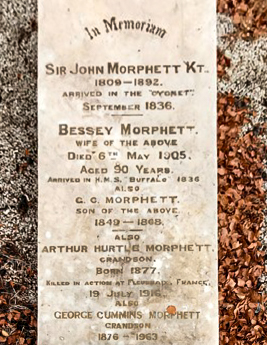
In several newspaper stories in later years, members of his family spoke of Arthur’s personal qualities. For example, in 1932, following a gift from Arthur’s mother in memory of her son, a ward at the Murray Bridge Soldier’s Memorial Hospital was named after Arthur. On that occasion, his uncle, Hurtle Morphett, remembered:
”Arthur’s life while here amongst us was one of honest work and upright conduct, and I may be pardoned for saying how sadly I have missed his assistance and companionship.” His elder brother, George, spoke of Arthur as “a man of kindly disposition, honour and integrity, and breadth of mind.”
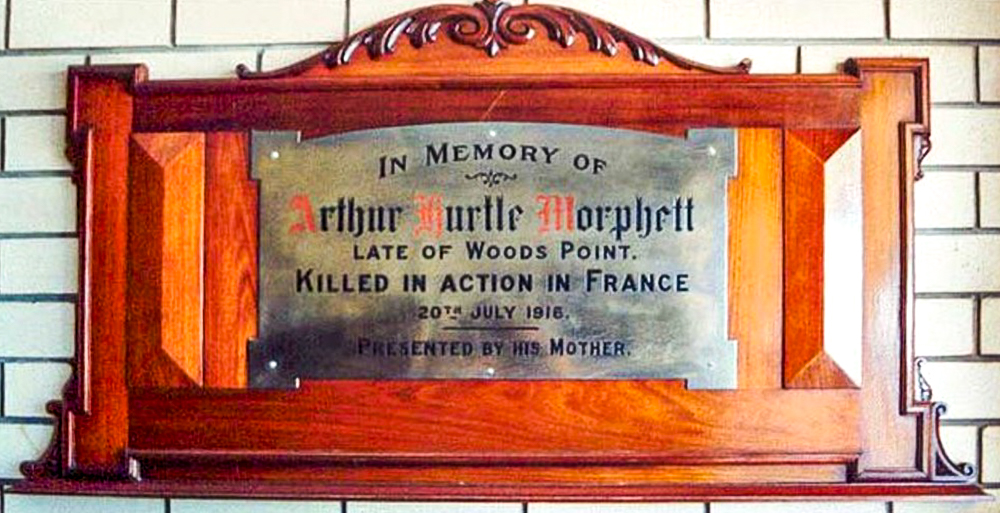
The Murray Bridge Roll of Honour, which includes Arthur’s name, is also in the foyer. The pillars of the original Memorial Gates to the hospital, which bear the names of those from the district who fell in the War, are now in the hospital grounds. In another newspaper story, a childhood friend noted that:
“The Morphett boys grew up with us, and of all my playmates I never met a finer, kinder, or more unselfish man than Arthur Morphett, who was killed in the Great War.
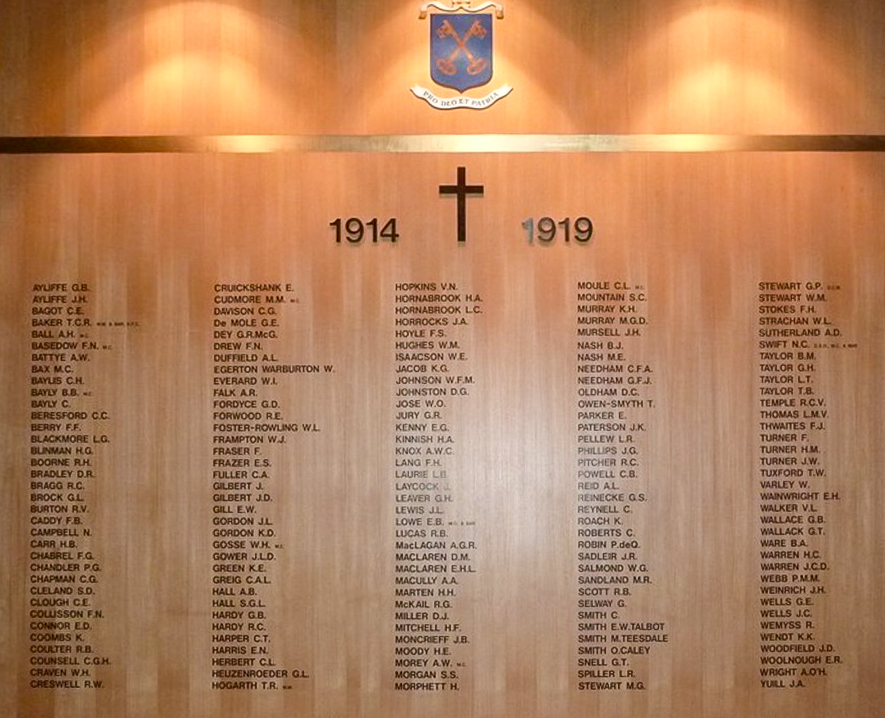
Because Arthur lived at Woods Point, he is remembered on the three memorials at the Murray Bridge Hospital and on the Brinkley District WW1 Roll of Honour. His name is also on the Queens School Honour Board, the St Peters College Fallen Honour Board, and the Roseworthy Agricultural College Roll of Honour. Nationally, he is recognised on the Australian War Memorial Roll of Honour, and the South Australian National War Memorial.
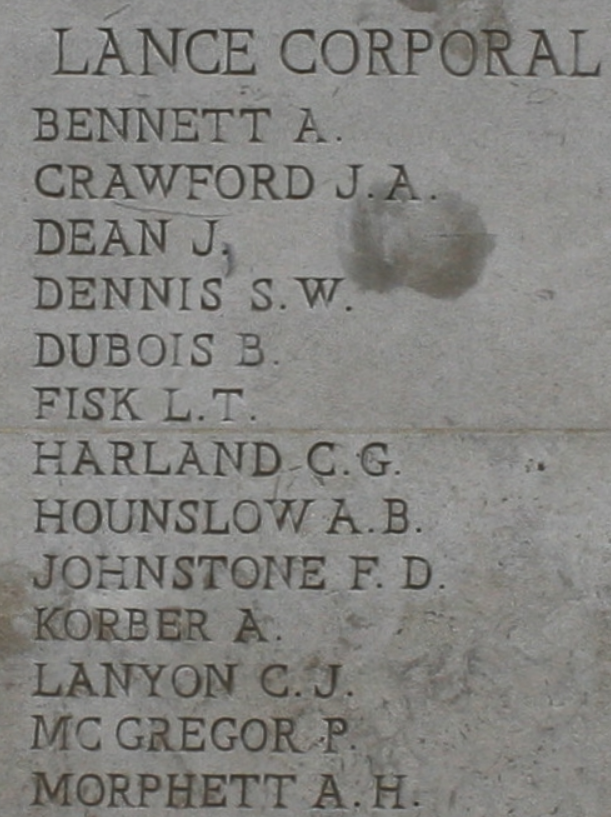
Importantly, Lance Corporal A. H. Morphett’s ’s name is inscribed on Panel 4 of the V.C. Corner Australian Cemetery Memorial at Fromelles which commemorates the Australians killed at Fromelles whose bodies were not recovered after the battle.
Finding Arthur
Arthur’s remains were not recovered; he has no known grave. After the battle, the Germans recovered 250 Australian soldiers and placed them in a burial pit at Pheasant Wood. This grave was discovered in 2008 and since then efforts have been underway to identify these soldiers by DNA testing from family members. As of 2026, 181 of the soldiers have been identified, including 41 of the 166 unidentified soldiers from the 32nd Battalion.
We welcome all branches of Arthur’s family to come forward to donate DNA to help with his identification. If you know anything of family contacts, please contact the Fromelles Association. We hope that one day Arthur will be named and honoured with a known grave.
Please visit Fromelles.info to follow the ongoing identification project and Arthur’s story.
DNA samples are being sought for family connections to
| Soldier | Arthur Hurtle Morphett (1877-1916) |
| Parents | John Cummins Morphett (1844-1936) b. Morphettville, SA ) d. Unley Park, SA and Mary Frances Sanders (1849-1931) b. Myrtle Bank SA d. Unley, South Australia |
| Siblings | George Cummins Morphett (1876-1963) (b. Adelaide, SA d. Novar Gardens, SA m. Alice Anderson, 4 children | ||
| Annie Elizabeth Morphett (1879-1952) b. Adelaide, SA, d. Adelaide, SA m. John Gunson, 6 children | |||
| Bessey Morphett (1880-1947) (b. Glenelg, SA, d. Randwick, NSW. Never married | |||
| Mary Eleanor Morphett (1882-1882) b. Adelaide, SA d. Glenelg, SA | |||
| Lucy Morphett (1883-1946) b. Glenelg, SA, d. Adelaide, SA m. Bruce Wills , 3 children |
| Grandparents | |||
| Paternal | John Morphett (1809-1892) b. London, England, d. Morphettville, SA. and Elizabeth ‘Bessy’ Fisher (1816-1906) b. St, Marylebone, England d. Adelaide, SA | ||
| Maternal | William Sanders (1801-1880) b. Scotland d. Glenelg, SA, and Harriet Carstairs (1806-1894) b. Scotland, d. Glenelg, SA |
Links to Official Records
Seeking DNA Donors

Contacts
(Contact: carla@fromelles.info or geoffrey@fromelles.info).
(Contact: army.uwc@defence.gov.au or phone 1800 019 090).
Donations
If you are able, please contribute to the upkeep of this resource.
(Contact: bill@fromelles.info ).