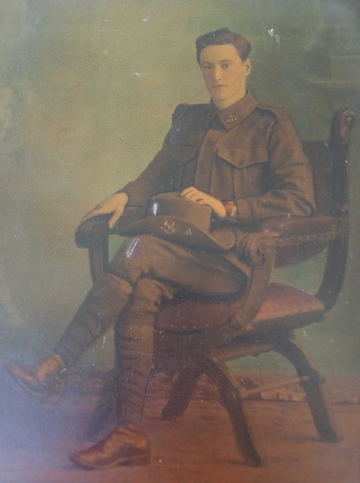
Ronald Arthur JONES
Eyes hazel, Hair Unknown, Complexion brown
Ronald Arthur Jones – Railwayman, Sniper and Survivor of Fromelles
Early Life
Ronald Arthur Jones was born on 18 October 1890 at Lithgow, New South Wales, the youngest son of Dennis Jones and Rebecca Cotton. Dennis was born on 1 February 1850 at Wellington, Shropshire, England, the son of Isaac Jones and Eliza Pearce. Rebecca was born on 22 February 1847 at Wombridge, Shropshire, the daughter of George Cotton and Cicely Rigby. They married in Shropshire on 17 October 1869 before deciding to seek a new life in Australia.
In 1878, Dennis and Rebecca emigrated to New South Wales with their five children, arriving on 13 May after departing from Plymouth, England. They eventually settled in the Lithgow district, where they raised their growing family. By the time Ron was born, the youngest of eleven children, his eldest sibling was already twenty-three years old. He grew up in a busy household surrounded by older brothers and sisters:
- Sarah Jane Jones (1867–1929)
- Gertrude Adeline Jones (1870–1954)
- Laura Jones (1873–1943)
- Eunice Jones (1874–1925)
- George Cotton Jones (1876–1971)
- Eleanor Jones (1877–1877) died in infancy
- Harry Jones (1878–1954)
- Edmond John Jones (1881–1882) died in infancy
- Cecily Roma Jones (1883–1966)
- Elsie Lovetta Jones (1885–1944)
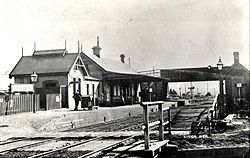
Growing up in Lithgow, Ron came of age in one of New South Wales’ important railway and industrial districts. Railways would become a defining part of his life. On 1 August 1907, at just sixteen years of age, he joined the New South Wales Railways as a probationary porter at Eskbank East Railway Station near Lithgow. Over the following decades he steadily built a long railway career, eventually retiring in 1947 as Assistant Station Master at Warwick Farm.
Off to War
Ron enlisted in the Australian Imperial Force at Warwick Farm, New South Wales, on 28 July 1915. At the time he was working as a porter with the New South Wales Railways and living at “Salopia,” Botany Street, Carlton, Sydney. Like many railwaymen of the period, he left behind secure employment to volunteer for overseas service. After initial training, Ron embarked from Sydney on 2 November 1915 aboard HMAT A14 Euripides as part of the 3rd Battalion, 11th Reinforcements.
The voyage took him through the Indian Ocean and the Suez Canal to Egypt, where the Australian Imperial Force was undergoing major reorganisation following the Gallipoli campaign. With the expansion and “doubling” of the AIF in early 1916, Ron was transferred into the newly formed 55th Battalion at Tel-el-Kebir on 14 February 1916. The battalion was created from experienced Gallipoli veterans of the 3rd Battalion together with newly arrived reinforcements from New South Wales. Training in Egypt was demanding and included musketry, bayonet fighting, route marches, trench construction and preparation for service on the Western Front.
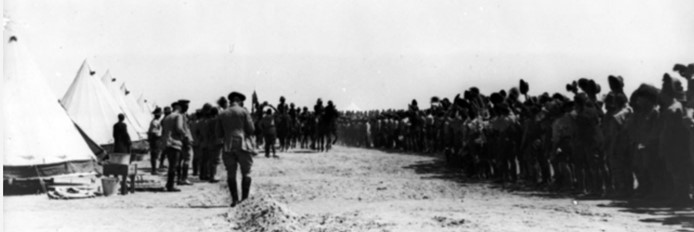
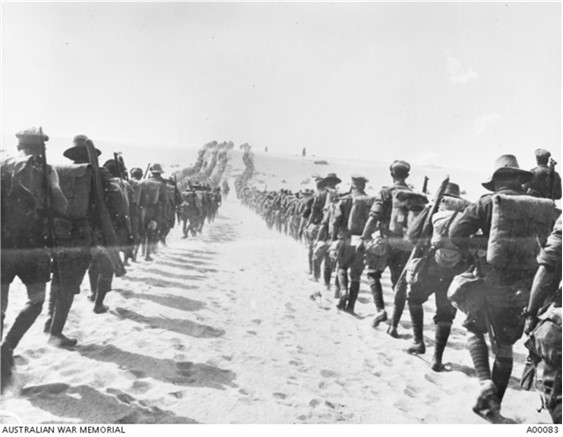
By March 1916, the battalion had completed much of its preliminary training and undertook the long march to Ferry Post near the Suez Canal. The journey was exhausting, with the men marching through deep sand and intense heat while carrying full equipment and ammunition. Like many of the men, Ron experienced the harsh realities of military life in Egypt before even reaching the battlefields of Europe.
On 19 June 1916, the 55th Battalion embarked from Alexandria aboard H.T. Caledonian for service with the British Expeditionary Force on the Western Front. After a voyage through the Mediterranean, the battalion disembarked at Marseilles on 29 June 1916 before travelling north by crowded troop trains towards French Flanders. The men soon entered the so-called “Nursery Sector” near Fleurbaix, where inexperienced Australian troops were introduced to trench warfare. Here they endured shellfire, mud, lice, sniper fire and the constant tension of life in the front line as preparations intensified for what would become the Battle of Fromelles.
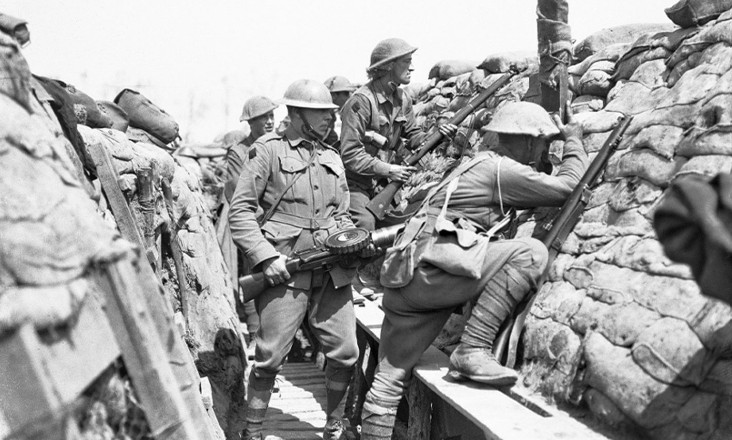
The Battle of Fromelles
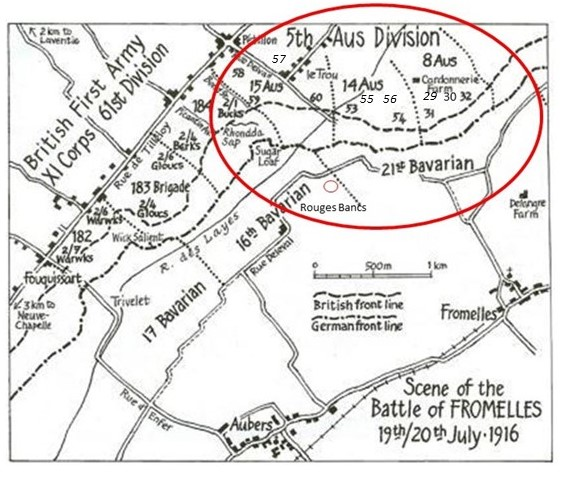
By July 1916, the 55th Battalion had moved into the Fleurbaix sector of northern France, where the Australians were introduced to trench warfare under difficult and dangerous conditions. The area opposite the German lines included the heavily defended “Sugar Loaf” salient, a position protected by strongpoints, machine guns and deep belts of barbed wire. The Battle of Fromelles was intended as a diversionary attack to support larger British operations on the Somme further south. The Australian 5th Division, including the 55th Battalion, would attack across open ground towards the German trenches on the evening of 19 July 1916.
In the days before the attack, the battalion endured constant shelling and difficult conditions in the trenches near Fleurbaix. Many soldiers later described the tension and uncertainty as they waited for the assault to begin. Charles Bean later wrote of the terrible conditions surrounding the attack and the devastating losses suffered by the Australians during the battle. At 5.53 pm on 19 July 1916, the artillery bombardment intensified before the infantry advanced shortly before sunset.
The men of the 55th Battalion climbed from their trenches and moved into No-Man’s-Land under heavy rifle and machine-gun fire. The German defences around the Sugar Loaf caused catastrophic casualties among the attacking Australians. Despite the intense fire, parts of the battalion succeeded in reaching sections of the German front line. Fighting continued through the night as isolated groups of Australians attempted to hold captured positions while under bombardment and repeated counter-attacks. Communication broke down in many places and wounded men lay stranded across the battlefield. The 55th Battalion suffered devastating losses during the fighting. Many of the original men who had formed with the battalion in Egypt only months earlier were killed, wounded or missing by the end of the battle.
After the Battle
Ron survived the Battle of Fromelles and remained with the 55th Battalion as it rebuilt after the devastating losses suffered in July 1916. Only weeks after the battle, on 4 August 1916, he was detached to the School of Instruction (Snipers), later attending the 2nd Army School of Instruction (Snipers), before rejoining the battalion on 9 September 1916.
Source -NAA: B2455, JONES R A – First AIF Personnel Dossiers 1914–1920
Selection for sniper training was significant. Snipers were carefully chosen soldiers trained in observation, concealment and accurate shooting, often operating in dangerous forward positions close to the German lines. Ron’s selection for this work suggests he was regarded as a reliable and capable soldier during the battalion’s early service on the Western Front. After Fromelles, the 55th Battalion spent the winter of 1916–1917 in the trenches on the Somme. Conditions were appalling, with freezing temperatures, mud-filled trenches and constant shellfire placing enormous strain on the men.
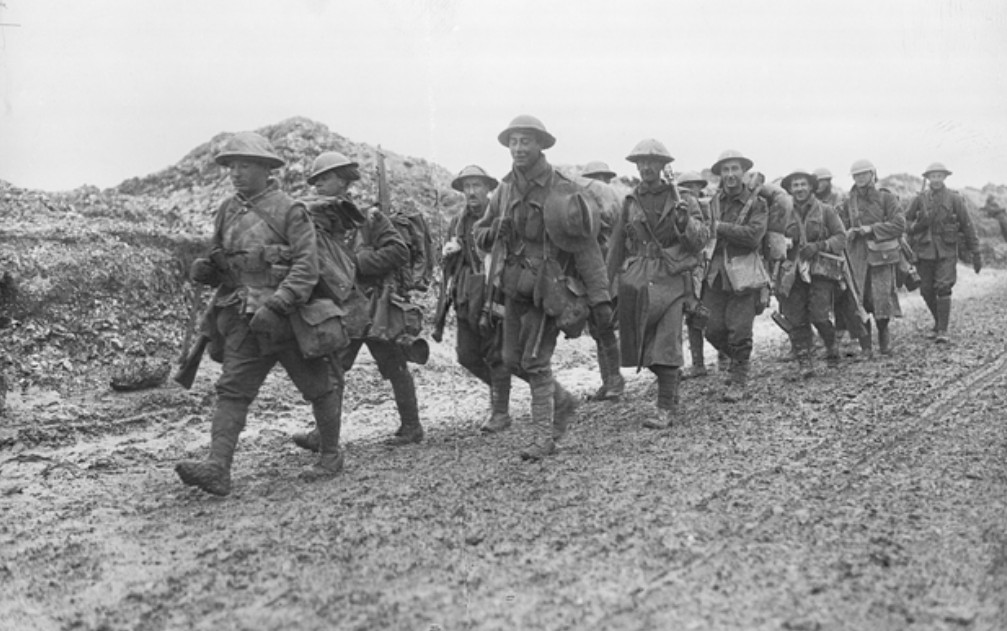
In early 1917, the 55th Battalion took part in the advance towards the Hindenburg Line following the German withdrawal to newly prepared defensive positions. The battalion later played a defensive role during the Second Battle of Bullecourt before moving north into Belgium where it participated in the Battle of Polygon Wood on 26 September 1917. During this period, on 19 July 1917, Ron was evacuated sick through the 10th Field Ambulance, the 2nd Australian Casualty Clearing Station and the 3rd Canadian General Hospital at Boulogne before rejoining the battalion on 19 August 1917. Ron continued with the 55th through Polygon Wood and Villers-Bretonneux and the Hundred Days Offensive in 1918
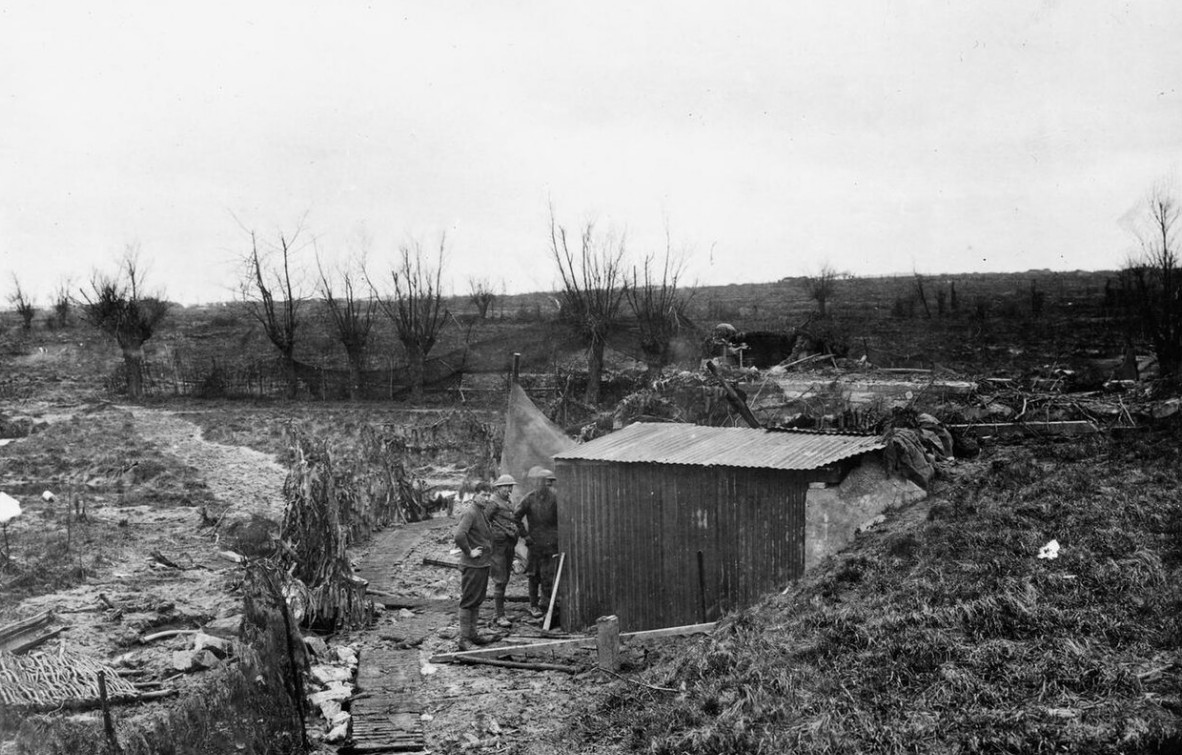
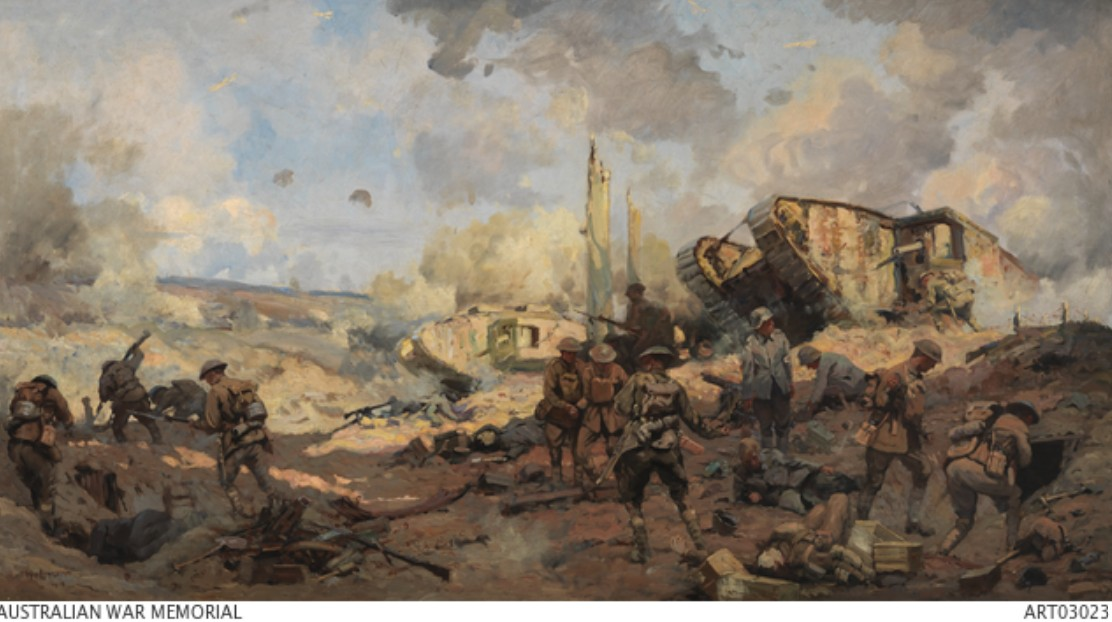
On 29 September 1918, Ron was wounded in action with a gunshot wound to the left thigh during these final offensives. He was evacuated through the 102nd Casualty Clearing Station before being admitted to the 16th General Hospital at Le Treport. Following treatment and recovery, he later returned to duty before the war ended. For a soldier of the 55th Battalion, surviving from Fromelles in 1916 through to the closing months of the war in 1918 was a remarkable achievement.
After the War
Following the Armistice, Ron remained in England while awaiting repatriation to Australia. During this period he met Ida Prince and, on 19 July 1919, exactly three years after the opening of the Battle of Fromelles, they were married at Warminster, Wiltshire. The significance of the date appears unlikely to have been accidental, particularly given Ron's service with the 55th Battalion at Fromelles.
The newly married couple later returned to Australia, where Ron resumed his long career with the New South Wales Railways. Ron returned to Australia aboard HT Karmala, arriving home in 1919 after almost four years overseas. Ron and Ida began building their life together while Ron resumed his long career with the New South Wales Railways. Their first daughter died in infancy in 1921. They later had three surviving children:
- Stanley Edgar Jones (1921–1994)
- Eldie Gordon Jones (1925–1999)
- Ida Fromelles Jones (1931–2008)
The naming of their daughter Ida Fromelles Jones suggests the experiences of the war and particularly the memory of the 55th Battalion and Fromelles remained deeply significant to Ron throughout his life. During the interwar years, the family lived in several New South Wales locations including Goulburn, Concord, Fairfield, Gordon and Gladesville as Ron continued his railway career. By 1947 he had risen to the position of Assistant Station Master at Warwick Farm after almost forty years of railway service.
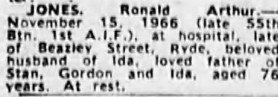
Despite already being a veteran of the Western Front, Ron again volunteered for military service during the Second World War, serving with the Citizen Military Forces under service number N372052. Ron retired from the New South Wales Railways on 7 October 1947. Ron was a member of the Ryde RSL and the Brish Park Bowling Club. After a long life marked by public service, war and family, Ron died at Concord Repatriation Hospital on 15 November 1966, aged 76.
Lest we forget
The Fromelles Association would love to hear from you

Contacts
(Contact: carla@fromelles.info or geoffrey@fromelles.info).
(Contact: army.uwc@defence.gov.au or phone 1800 019 090).
Donations
If you are able, please contribute to the upkeep of this resource.
(Contact: bill@fromelles.info ).