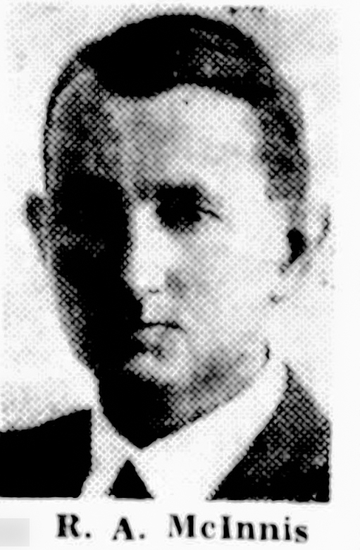
Ronald Alison MCINNIS
Eyes grey, Hair fair brown, Complexion fair
Ronald Alison McInnis – Sapper, Surveyor, Soldier, City Planner
Early Life
Ronald Alison McInnis was born on 20 November 1890 at Te Kowai, near Mackay in Queensland, the son of Duncan McInnis and Amelia Sophia Elizabeth Cunningham. Although both parents were born in England, Ronald grew up proud of his Scottish heritage, which had shaped the McInnis family identity for generations. He spent his childhood in the Mackay district before the family later moved to Maryborough and Brisbane. Ronald attended Maryborough Grammar School, where he developed strong academic interests and showed an early aptitude for mathematics and precise technical work, skills that would later define his military and professional life.
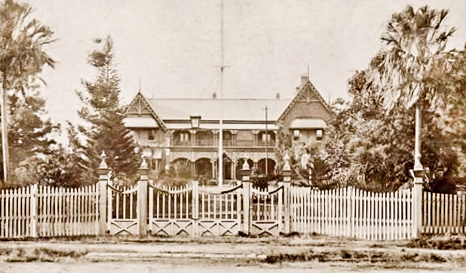
In 1909, at just nineteen, he commenced articles with surveyor B. C. Dupuy in Mackay, beginning the demanding apprenticeship required to qualify as a professional surveyor. He continued his training in Brisbane as a computing draughtsman with the Department of Public Lands, gaining the high-level technical skills that would make him invaluable to the Australian Engineers in the First World War. On 8 October 1912, after several years of study, field work, and examination, Ronald was formally registered as an authorised surveyor. By the time war broke out in 1914, he was already well-established in his field, respected for his precision, discipline, and methodical approach.
Off to War - Gallipoli
Note - Ronald kept an extensive diary, which is saved in the AWM, Diary of Ronald Alison McInnis, P11013294, and it is the source of all of his quotes in this story.
Ronald enlisted in the AIF on 21 May 1915, joining the newly raised 26th Battalion, B Company. With Gallipoli about to begin, he sailed from Brisbane just days after he enlisted headed for Sydney and then on to Egypt. aboard Ascanius. After a quiet trip, by 7 July he was settling into the Abbassieh Camp in Cairo to begin his military training and seeing the sights he would have only read about before he left. By mid August, Ronald and his mates were keen to get to Gallipoli, but cautious about what they would be up against –“I think there is nothing makes us so anxious to get the front, I don’t know exactly why.”
On 1 September he wrote:
“We have been preparing to move for some days, and may go at any time, and we are very excited about it. We are all heartily sick of Egypt.”
Soon they were on their way. Ronald reached Gallipoli on 16 September 1915. “We have reached our destination, Gallipoli, safely. I am in good health, the weather is lovely… our dug-out is assuming comfortable proportions.” “We have not been in the firing-line yet, but are engaged on fatigue work, most of which has to be carried on at night… we are in a very well protected position, Taylor’s Hollow.”
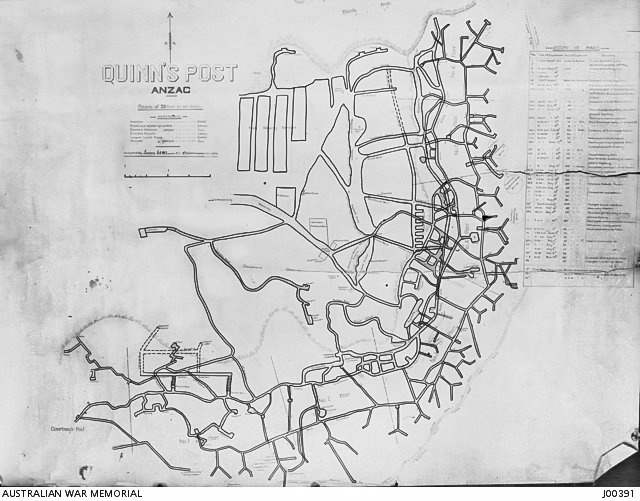
They were also able to swim in the Mediterranean, but he did say stray bullets were a danger. He wrote at the time “have been here a month, and are getting tired of it.” “…anyway we are anxious to be at the Turks. There are continual rumors of a big movement which never comes.” By 19 November he had been moved into action trench duty at Russell’s Top and was now under fire and grenade attacks. He was in charge of crews working bomb catapaults. A few days later, his technical skills were recognised and he was sent to the 5th Engineers at Quinn’s Post to do some surveying of the underground tunnels. He was also promoted to Lance Corporal at this time.
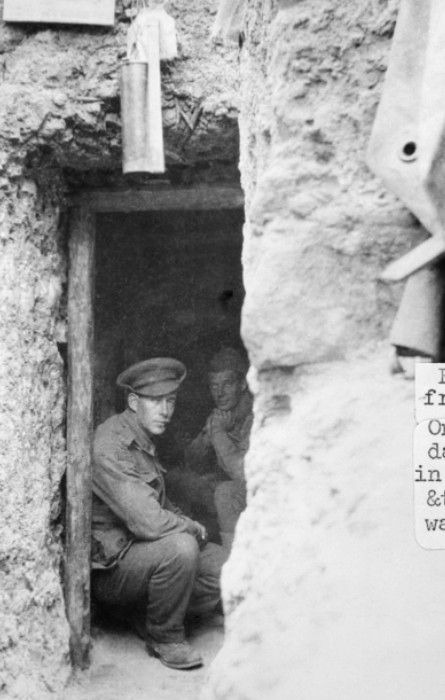
“It is a splendid change to be on congenial work again, and I can take an interest in it, as I practicaly my own boss.” And, an upgrade in his accommodations – “palatial…luxury”.
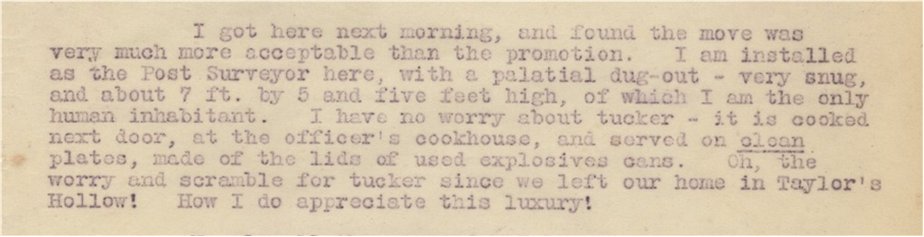
A “palatial” dug-out, “luxury”
On 2 December he applied for a formal transfer to the Engineering Company. Ronald described his time in Gallipoli as both monotony and danger in equal measure, noting the effects of cold, flies, and sickness, and describing the Turks’ rifle fire and “Jacko’s” habit of blowing mines near the Australian saps. “The name generally given to the Turks is ‘Jacko’… the sound of his rifle shot at close range is like the sharp crack of the rifle, followed immediately by the thud of the bullet on the parapet.”
Conditions became harsher as winter approached. Fatigue parties worked daily preparing winter quarters underground, grappling with storms, cold winds, and sickness. Ronald wrote of constant labour, “There is a fatigue party on every day now… we are not looking forward to the winter, although they tell us there isn’t much to worry about before Christmas, then blizzards and snow can be expected.”
On 26 November, he noted. “There has been a general air of supressed excitement the last couple of weeks – something seems to be impending – we don’t know what.” The evacuation from Gallipoli began not long after and Ronald was engaged in ensuring it proceeded withougt a hitch. After the evacuation, he recalled with some pride:
“Our Company of Engineers did great work previous to the evacuation in laying mines, digging emergency firing lines… the whole scheme of withdrawal was one of the most wonderfully organised parts of the campaign, and we all got off without a casualty.”
He left Gallipoli on 17 December for Lemnos Island and wrote on Christmas Day, “There is a real feeling of good will in our camp, and it seems a proper Christmas Day.” Next stop, back to Egypt. A good while after being saferly back in Egypt did some reflection of his time in Gallipoli. “I am a disappointing relic of the campaign – no wounds, perfect health, no promotion and no decoration.” However, he goes on (with a hint of pride) “Only my plan of Quinn’s Post to show that I was there and took an active part in it.”`
###Egypt and on to the Western Front
On 1 January his transfer to the Engineeers had come through “and I am a full-blown sapper.” With the Gallipoli campaign over and all the recruits streaming into Egypt, major reorganisations were ongoing. Ronald’s 5th Field Company Engineers was renamed the 8th Field Company Engineers. In March he applied for a move to a Survey Company, but was in the “also rans”. He was kept busy preparing for the next phase of the War. In early February, “We are working hard absorbing practical knowledge of building pontoon and trestle bridges, and other thingss which may be useful when we go to another front, but were useless on Gallipoli.” In early April his unit was moved to the Suez Canal:
“We have had another moving day, and Oh! It was a beauty. I shall never forget our march across the desert. Visions of “King Solomon’s Mines” and their dreadful march seem quite true to life now.”
Though conditions were harsh with scorching days (“it is as hot as he Kaiser’s next home”) and freezing nights, but Ronald maintained his dry humour. “We should be good soldiers after this, for we have got quite a lot of grit since we became nomads of the desert – we get it with our stew every day.” He was not so enamoured with the camels — “the most bad-tempered, disgusting brutes I have ever had anything to do with” . (He DID get assigned a horse and saddle for doing his surveying duties.) In mid-May he finished up his survey work in the Canal area and presented it to Headquarters.
He also took advantage of the situation to discuss the potential for a promotion, considering his work. He got encouragement, but did not get a result. He mused, “I shall know what to do before going to the next war.” On 16 June he was helping to pack up camp to head to Alexandria and then to the Western Front. He was not impressed to be back aboard the Manitou, “a boat can never be inviting when the horse-deck is immediately above the troop deck.”.
Ronald’s diary describes the long, uncomfortable rail journey north through Egypt and across the Mediterranean, navigating storms, seasickness, and repeated convoy escort changes. Steaming up through the French coast, he recorded the dramatic contrast, “Marseilles is a beautiful city… the town looks beautiful from the bay.” Once landed, they endured another long rail trip, squeezed tightly into carriages as they moved toward the front. France brought its own adjustments. As they moved towards Fleurbaix, his unit was billeted among ruined villages and bomb-blasted churches, with the sound of guns never far away. When he got settled in, he noted:
“There are practically no plans of this sector. I am to survey the portion from Shaftesbury Avenue communication trench to our right. We have no compass and no tools yet.”
He busily set out surveying/mapping and repairing communication trenches until the 17th.
The Battle of Fromelles
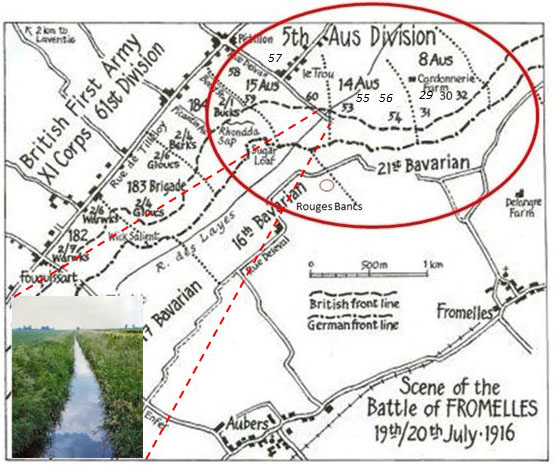
The overall plan was to use brigades from the Australian Fifth Division to conduct a diversionary assault on the German trenches at Fromelles. The main attack was planned for the 17th, but bad weather caused it to be postponed. On 19 July 1916, Ronald and the 8th Field Company Engineers were ordered forward to support the 5th Australian Division’s attack at Fromelles. The Zero Hour for advancing from their front-line trenches was to be 5.45 PM, but the Germans knew this attack was coming and were well-prepared:
“Just prior to launching the attack, the enemy bombardment was hellish, and it seemed as if they knew accurately the time set.”
Ronald’s diary reveals how the day began “We thought we knew something of the horrors of war, but we were mere recruits now we saw our full education in one day.” “We moved on almost immediately into a perfect Hell.”
The sappers were tasked with carrying picks, shovels and sandbags, guiding infantry through the communication trenches, and beginning a new trench across No Man’s Land once the German front line was taken. As they advanced, Ronald was knocked down by a shell-burst and his commander had been killed in the advance and the group was “hopelessly scattered”. They did proceed with placing white painted sign boards pointing out the track from their lines through the barbed wire to the German lines. Ronald’s group made it into the water filled tranches and were the on right side of the 32nd Battalion’s advances. Durning the night they piled up sandbags along trenches to provide protection from the Germans.
Ever the suveyor, “I knew from the direction of our ditch that the enemy could simply wipe us off by enfilading when daylight came and they could see where we were.”
When they began their retreat, Ronald was able to make it back, but once back in the Australian trench, he collapsed behind a wall of sand bags and was shaking violently. He couldn’t control the shaking, but soon fell asleep before he was roused by a fellow from another section, after which he was brought hot coffee with some rum in it and a piece of fried bacon on a slice of bread -‘”I will never forget how delicious that breakfast tasted.” Based on his unit’s diary, the initial cost to the 8th Field Company Engineers was assessed as five killed, thirty-three wounded and four missing. Amazingly, Ronald came away from his second major battle with just scratches on the back of his hand from the barbed wire.
But the War Goes On
In the weeks following the disaster at Fromelles, the 5th Division was shattered, exhausted, and in desperate need of reorganisation. During this rebuilding period, on 14 September, Ronald was transferred from the 8th Field Company Engineers to the 53rd Battalion. He also stepped into a new role as a 2nd Lieutenant. His analytic skills, leadership experience and coolness under fire made him a valuable addition. He was then promoted a full Lieutenant on 15 April 1917. From late 1916 onward, Ronald served with the 53rd Battalion on the Western Front, moving through the long, bitter winter that settled over the Somme. His diary captures the relentless routine of front-line rotations and fatigue duties - cold, mud, unstable trenches and the constant strain of bombardment. The battalion took part in the slow, grinding operations around Flers and Gueudecourt, where movement was often measured in yards and every advance won at significant cost.
Through 1917, the 53rd Battalion fought in the major actions of the year, including the German withdrawal to the Hindenburg Line, where the Australians followed up with raids, outpost fighting, and the capture and consolidation of newly abandoned positions. Ronald’s entries from this period align with the battalion’s movements—marches through ruined villages, extended work on trench systems, and preparations for set-piece attacks. Later that year, the battalion endured the fighting around Polygon Wood and the broader Third Ypres campaign, where the 5th Division faced constant shelling, collapsing duckboards and the infamous Flanders mud.
Although the 53rd’s role there was largely in support and consolidation, it was no less dangerous, and Ronald’s diary notes days of “heavy shelling” and nights with little rest. In 1918, the battalion was engaged throughout the German Spring Offensive and later the Allied counter-offensive known as the Hundred Days. Ronald’s notes describe extended periods of movement, long hours on the march, the fatigue of shifting lines, and the steady push east through devastated countryside. By the time the war ended, Ronald had served across every major phase of the AIF’s Western Front campaign: as a sapper in the tunnels of Gallipoli, as an engineer at Fromelles, and finally as an officer of the 53rd Battalion through the final hard years of the war.
After the War - a distinguished career as a surveyor and a civil planner
Ronald returned to Australia in mid-1919 after more than four years of continuous military service, with his AIF appointment ending on 21 July 1919. Only a month earlier, on 18 June 1919, he had married Ivy Gertrude Taylor Harris at St Andrew’s Church of England in South Brisbane. The following year, on 22 March 1920, the couple welcomed their daughter, Alison Bywater McInnis. During the 1920s Ronald’s civilian career flourished. He became a partner in the successful surveying firm McInnis & Manning and quickly established a reputation as one of Queensland’s leading surveyors. He served as President of the Queensland Institute of Surveyors (1923–1925) and played a central role in reviving the Town Planning Association of Queensland, providing expert evidence before commissions and committees as Brisbane grappled with traffic, expansion, and cross-river development. Increasingly drawn to large-scale planning projects, he designed and zoned the future township of Noosa in 1929 and prepared a comprehensive plan for Mackay, which was adopted in 1934 — the first official town plan for an established Queensland city.
By the mid-1930s he was already recognised as a pioneer of modern urban planning in Australia. In 1936 Ronald was engaged by the Brisbane City Council to conduct a full civic survey, and in April 1938 he was appointed City Planner. His zoning scheme, completed in 1940 and adopted in 1944, became a foundation of Brisbane’s future development. Ronald’s personal life changed dramatically during this period. His wife Ivy died in 1937, and on 7 November 1938 he married Maisie (“Gwen”) Hardy at St John’s Church of England, Wagga Wagga. Gwen, an X-ray specialist who had worked in Fiji, was the daughter of Charles Hardy (sen.), and sister of former Senator Charles Hardy. The marriage was widely reported in the national press, reflecting the family’s prominence. During the Second World War Ronald was seconded to the Federal Government to prepare a town plan for Darwin, transforming the wartime devastation into a blueprint for a “garden city.” In 1942–43 he served as Queensland Deputy-Director of Camouflage with the Department of Home Security.
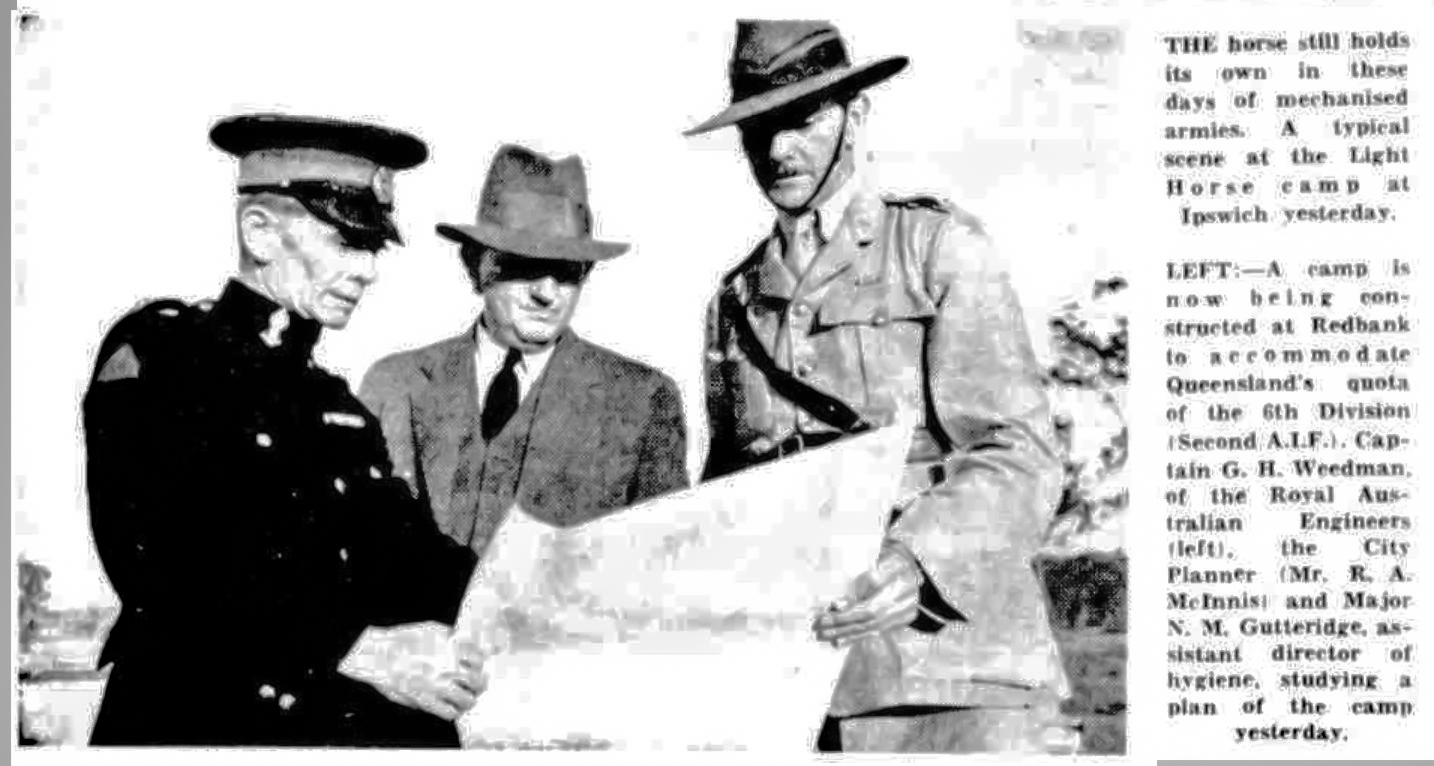
In January 1945 Ronald accepted the role of Town and Country Planning Commissioner for Tasmania, a position he held for more than a decade. He travelled extensively across the state, helping councils adopt planning schemes under the Town and Country Planning Act. By the time he retired in 1956, 41 of Tasmania’s 49 municipalities had adopted formal planning controls — a transformation credited largely to his work. Ronald spent his retirement in Lindisfarne, tending his garden, serving on community bodies, and remaining active in his local Anglican parish until losing his sight. Predeceased by Gwen in 1978 and by their daughter Alison, he died in Hobart on 8 May 1982, aged 91, and was cremated. Ronald is commemorated on:
- the Roll of Honour for staff of the Department of Public Lands Brisbane
- the East Brisbane War Memorial in Queensland
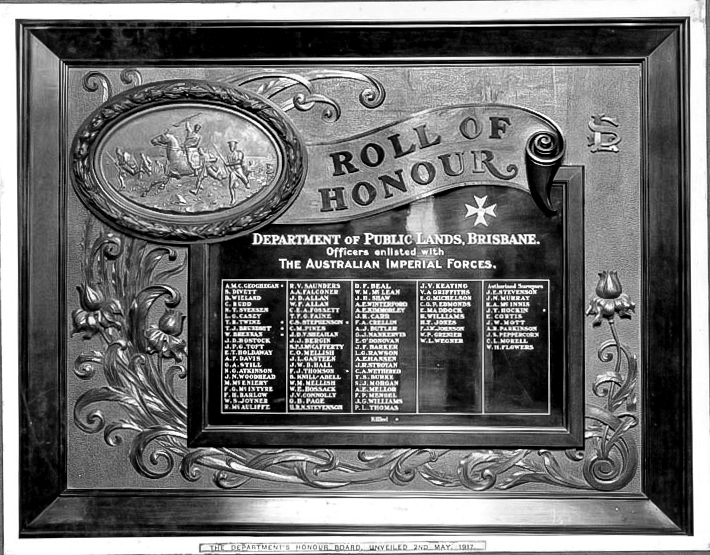
Ronald, 5th column
Today, Ronald is remembered as one of Australia’s early planning pioneers, a man who moved from the dim tunnels of Gallipoli to shaping how cities, towns, and landscapes would function for decades to come. His work endures in the street grids of Noosa, the civic structure of Mackay, the zoning spine of Brisbane, and the modern planning systems of Tasmania. Quiet, thoughtful, and meticulous, Ronald left a legacy measured not only in maps and municipal boundaries but in the communities that continue to live within the frameworks he built.
The Fromelles Association would love to hear from you

Contacts
(Contact: carla@fromelles.info or geoffrey@fromelles.info).
(Contact: army.uwc@defence.gov.au or phone 1800 019 090).
Donations
If you are able, please contribute to the upkeep of this resource.
(Contact: bill@fromelles.info ).