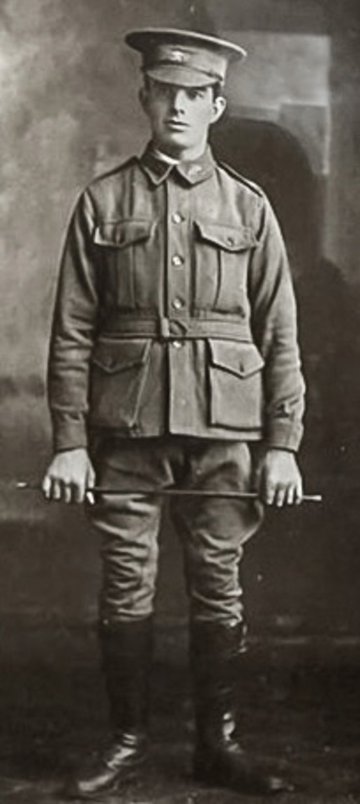
Horace Bertram HADDY
Eyes gray, Hair brown, Complexion fair
Horace Bertram Haddy – Prisoner of War, Husband, Father
With thanks to Geoff and James Haddy for their contribution to this story.
Early Life
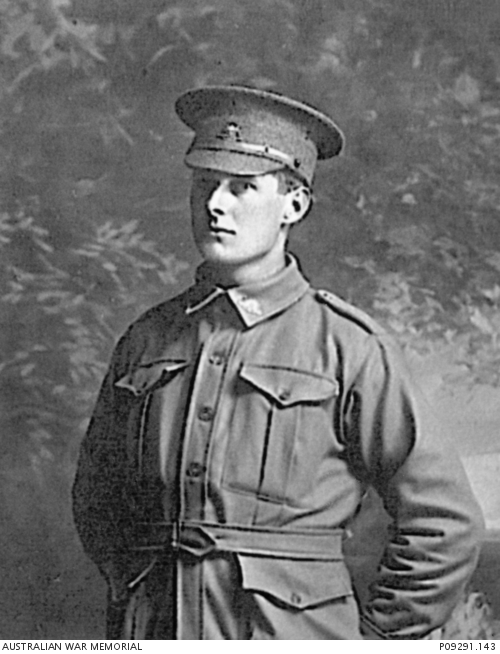
Horace Bertram Haddy was born at Mount Gambier, South Australia, on 11 May 1893, the eldest son of Allan Augustus Stephen Haddy and Marion Elizabeth (née Barrows).
His father was a highly respected educator, who served as headmaster of Sutton Town Public School for 39 years, becoming one of the district's best-known teachers. More than a century later, his contribution continues to be recognised, with one of Sutton Town Primary School's Sports Day houses bearing the name "Haddy" in his honour.
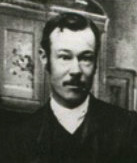
Growing up in a family that placed a strong emphasis on education, Horace attended Sutton Town Public School before winning a scholarship to Mount Gambier Grammar School in 1906. He continued his studies with distinction, appearing on the University of Adelaide Junior Examination Honour Roll in 1908. He went on to attended the University of Adelaide. Following his education, Horace joined the Australian Mutual Provident (A.M.P.) Society as a clerk in the Mount Gambier office before transferring to Adelaide.
His younger brothers were Cecil Frank Haddy and Allan Ross Haddy. Tragically, Cecil died in 1917 at just 20 years of age after contracting brain fever while working for the E.S. & A. Bank at Booleroo Centre.
Off to War
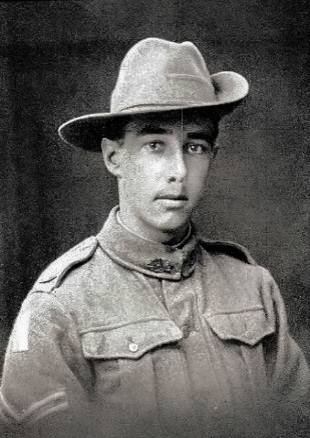
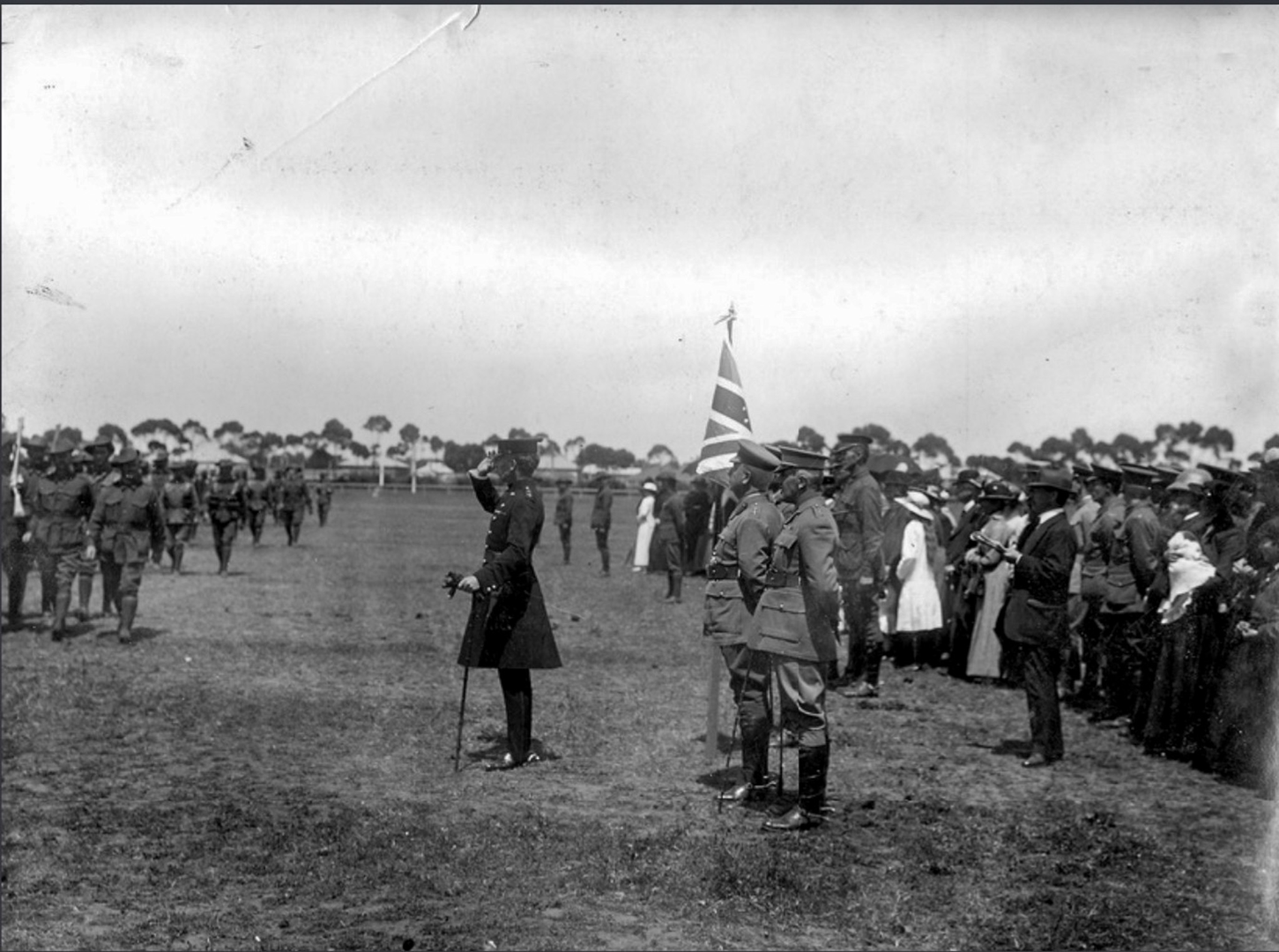
On 5 July 1915, Horace enlisted in the Australian Imperial Force at Adelaide and was posted to B Company of the newly raised 32nd Battalion at the Mitcham Camp. A and B Companies were made up of recruits from South Australia and C and D Companies came from Western Australia. There was much fanfare about this new battalion in South Australia, with gatherings, community support, such as the Cheer-up Society, and reviews of the troops by the Premier.
Having previously completed six months' service with the 1st Battalion, Senior Cadets (Volunteers), he quickly adapted to military life and was appointed Lance Corporal before the battalion embarked for overseas service.
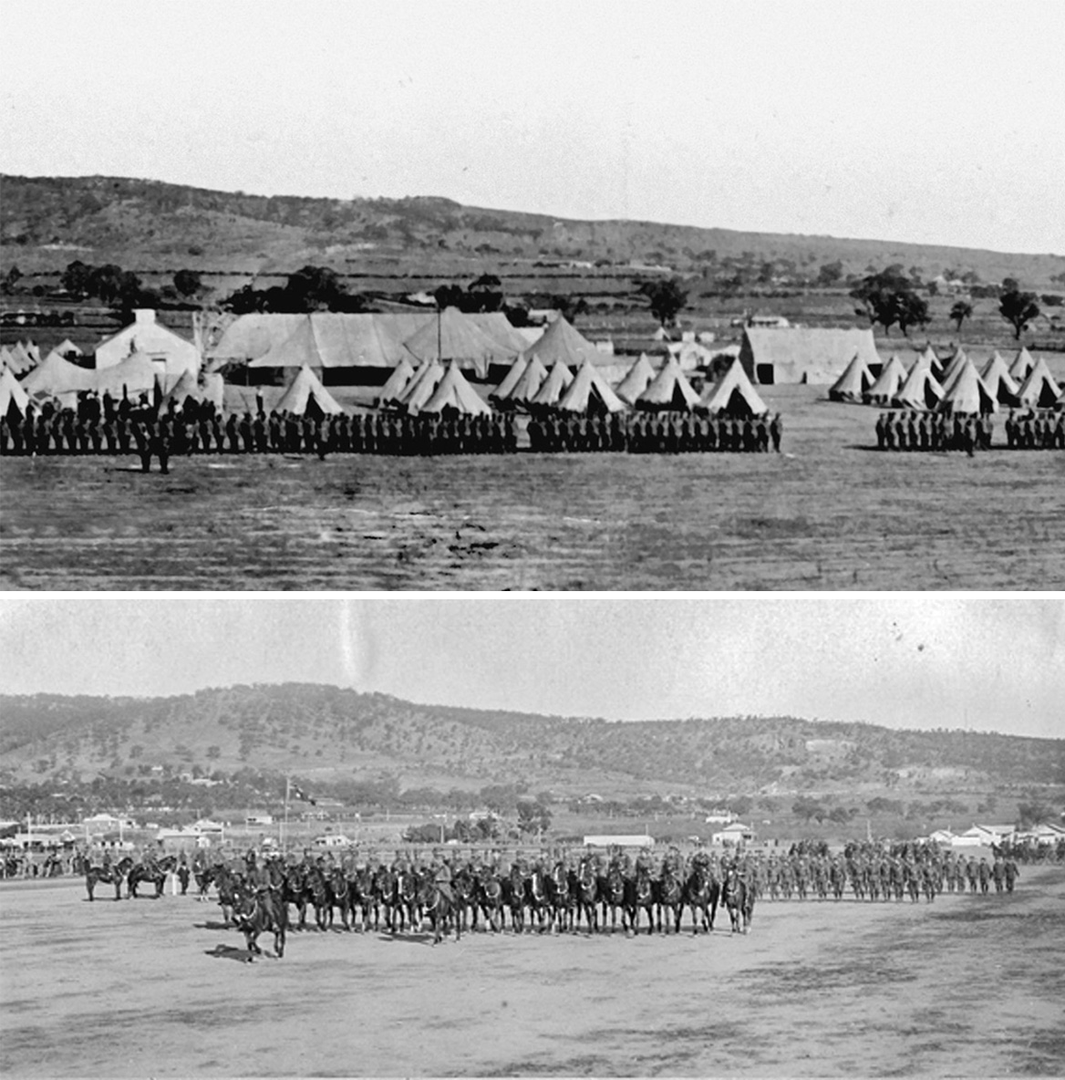
The Western Australian men had trained at Blackboy Hill Camp near Perth before arriving in Adelaide at the end of September. With their arrival, the whole battalion assembled at Cheltenham Racecourse Camp and continued training in preparation for overseas service.
Before leaving South Australia, Horace was farewelled on more than one occasion. In July 1915, he and fellow A.M.P. Society employees Sergeant J. H. Rogers and Corporal A. B. Hewish were honoured at a farewell dinner hosted by their colleagues. Each man received a suitably inscribed presentation, while speakers expressed confidence they would uphold the fine reputation already earned by Australian soldiers overseas.
Source - " FAREWELLS TO SOLDIERS. (1915, July 24). The Mail (Adelaide, SA 1912–1954), p. 11. http://nla.gov.au/nla.news-article59377389.
On the eve of his departure from Mount Gambier, his family and friends gathered at his parents' home in Powell Street for a farewell evening. The gathering featured games, music and singing before Horace was wished "God-speed and a safe return." The evening concluded with "For He's a Jolly Good Fellow", "Auld Lang Syne" and the National Anthem. Horace departed by train the following morning.
Source - AUSTRALIAN EXPEDITIONARY FORCES. (1915, November 3). The Border Watch (Mount Gambier, SA 1861 - 1965), p. 2. http://nla.gov.au/nla.news-article77780260
Horace departed for Egypt from Outer Harbor on 18 November 1915, with the unit being split between two troop ships HMAT A2 Geelong and HMAT A13 Katuna. They arrived at Suez one month later.
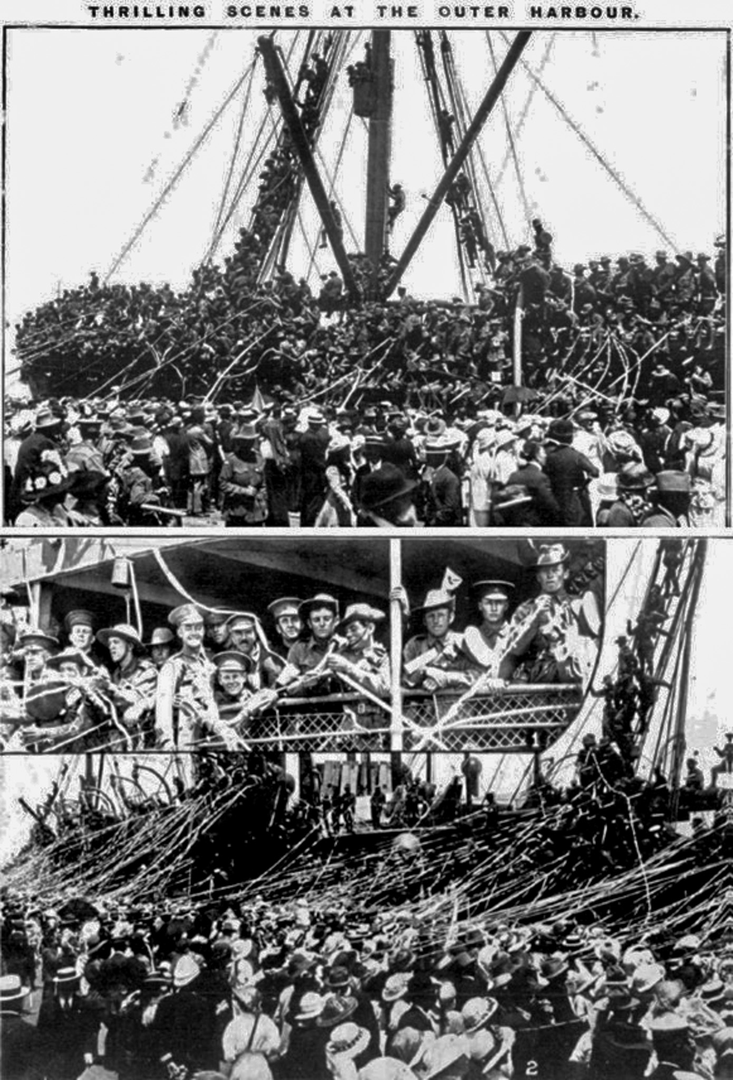
As reported in The Adelaide Register:
“The 32nd Battalion went away with the determination to uphold the newborn prestige of Australian troops, and they were accorded a farewell which reflected the assurance of South Australians that that resolve would be realized.”
Egypt
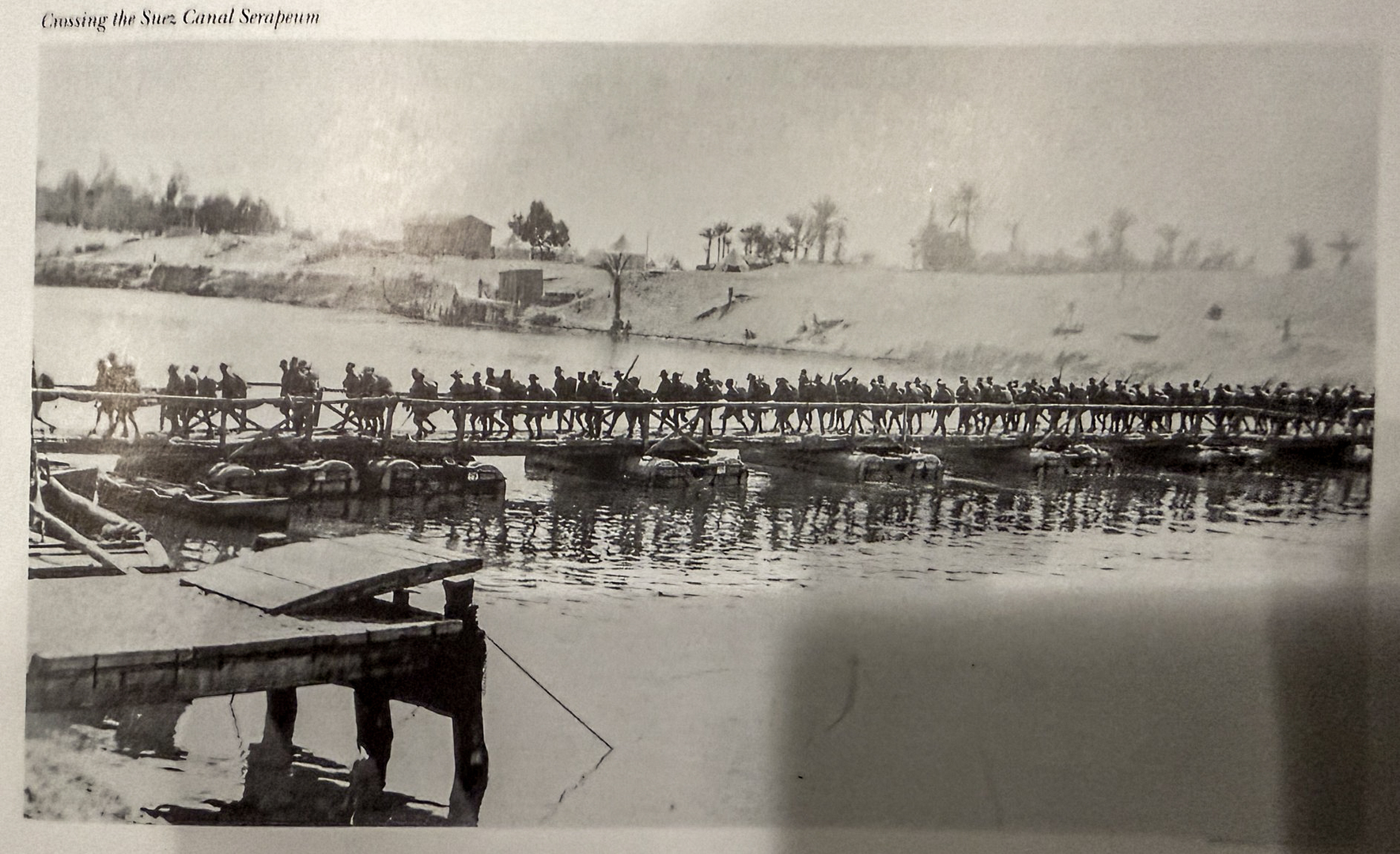
Horace arrived in Suez on 14 December 1915 and moved to the camp at El Ferdan just before Christmas. A month later the 32nd marched to Ismailia and then to the major camp at Tel-el-Kebir where they stayed for February and most of March. Tel-el-Kebir was about 110 km northeast of Cairo and the 40,000 men in the camp were comprised of Gallipoli veterans and the thousands of reinforcements arriving regularly from Australia. Their next stop was at Duntroon Plateau and then at Ferry Post until the end of May where they trained and guarded the Suez Canal. Horace was promoted to Corporal at the end of May. The battalion’s last posting in Egypt was a few weeks at Moascar.
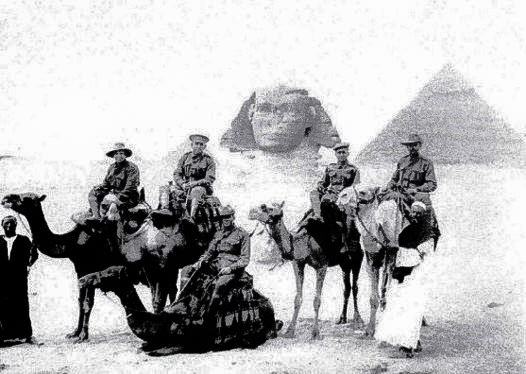
While training occupied most of the battalion's time, the men also had occasional opportunities to explore the ancient sights of Egypt. Like thousands of Australian soldiers before him, Horace visited the Pyramids and the Great Sphinx at Giza, where he posed for a photograph atop a camel with fellow members of the 32nd Battalion. The image captures a carefree moment before the battalion sailed for France in June 1916.
One soldier’s diary complained of being “sick up to the neck of heat and flies”, of the scarcity of water during their long marches through the sand and he described some of the food as “dog biscuits and bully beef”. He did go on to mention good times as well with swims, mail from home, visiting the local sights and the like.”
Source AWM C2081789 Diary of Theodor Milton PFLAUM 1915-16, page 29, page 12
In June 1916 the battalion embarked aboard Transylvania for France, disembarking at Marseilles on 23 June. Among Horace's companions was fellow Mount Gambier soldier Private Howard Rupert Wilson (211) of A Company. Writing home aboard ship on 2 June 1916, Howard told his family:
"Horace Haddy is with me, and we have just been watching some interesting sights through glasses."
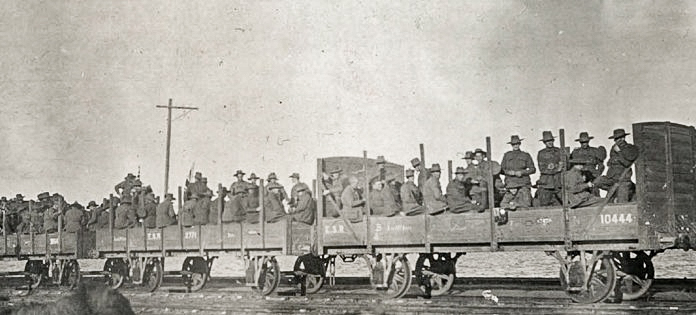
Travelling north by train, the Australians received an enthusiastic welcome from French civilians. Theodor Pflaum (No. 327) recalled:
"The people flocked out all along the line and cheered us as though we had the Kaiser as prisoner on board!!"
After arriving in France on 28 June, Howard wrote again, describing the countryside and the contrast with Egypt:
"There are wild red poppies amongst them. This and the trees and lanes and old houses make a beautiful scene. Everything seems so beautiful that it is difficult to realise that we are within sound of the guns."
They were headed to the area of Fleurbaix in northern France which was known as the ‘Nursery Sector’, a supposedly relatively quiet area where inexperienced Allied troops could learn the harsh realities of Western Front trench warfare against the Germans.
Neither man could know that within a few weeks they would enter the trenches together before the Battle of Fromelles, where their paths would diverge forever. The 32nd moved to the Front on 14 July and they were into the trenches for the first time on 16 July, only three weeks after arriving in France.
The Battle of Fromelles
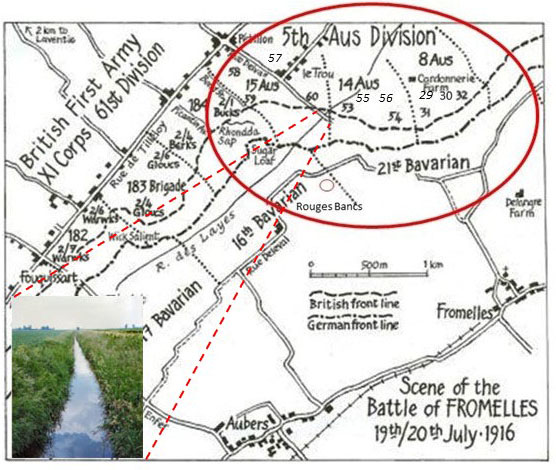
Inset - River Layes from the Australian Front Line looking towards the Sugar Loaf
The overall plan, as part of campaign in the Somme, was to use brigades from the Australian Fifth Division to conduct a diversionary assault on the German trenches at Fromelles. The 32nd Battalion’s position was on the extreme left flank, with only 100 metres of No Man’s Land to get to the German trenches. As they advanced, they were to link up with the 31st Battalion on their right. However, their position made the job more difficult, as not only did they have to protect themselves while advancing, but they also had to block off the Germans on their left, to stop them from coming around behind them. D Company’s Lieutenant Sam Mills’ letters home were optimistic for the coming battle:
“We are not doing much work now, just enough to keep us fit—mostly route marching and helmet drill. We have our gas helmets and steel helmets, so we are prepared for anything. They are both very good, so a man is pretty safe.”
Horace was serving as a Corporal in B Company. The attack had originally been planned for 17 July, but heavy rain forced a postponement of two days. During the delay, the men remained crowded in the assembly trenches under increasing German shellfire, waiting for the order to advance. Sergeant Frederick Stolz (later Lieutenant) described the calm before the storm:
“The fellows were wonderfully cool and not during the whole time did I see anyone get excited or do anything silly, and such a lot were only young boys of between 18 to 20.”
The Zero Hour for advancing from their front-line trenches was to be 5.45 PM, but the Germans knew this attack was coming and were well-prepared. They opened a massive artillery bombardment on the Australians at 5.15 PM, causing chaos and many casualties. At 5.53 PM on 19 July, the first waves of the 32nd Battalion moved into No-Man’s-Land behind the artillery barrage. A and C Companies led the advance, with Horaces’ B Company and D Company following as the battalion crossed approximately 100 metres of open ground towards the German trenches.
The men came under heavy machine-gun and rifle fire, particularly from the front and from the direction of Delangre Farm on the exposed left. Despite their losses, the 32nd Battalion reached and captured the German front-line trench by about 6.30 PM.
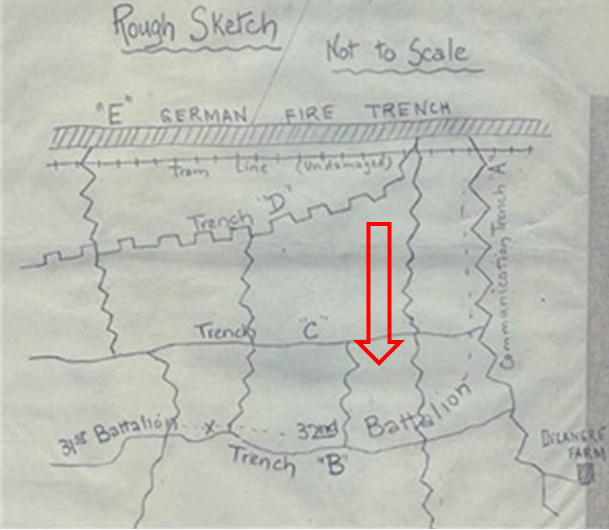
From there, the Australians pushed deeper into the German position. Some men passed beyond the first trench and moved towards the second line, while others attempted to consolidate the ground already taken. The trenches were badly damaged, flooded in places and difficult to defend. Communication with the Australian lines became increasingly uncertain, and ammunition, bombs and reinforcements were difficult to bring forward. By 8.30 PM their left flank had come under heavy bombardment with high explosives and shrapnel. Return bombardment support was provided and the 32nd were told that “the trenches were to be held at all costs”.
Source - AWM4 23/49/12, 32nd Battalion War Diaries, July 1916, page 12
Throughout the night, the battalion’s position became more dangerous. The attacks farther south had failed to secure the expected ground, leaving their flanks isolated. On the left, machine-gun fire from the Delangre Farm area continued to sweep the captured trenches and the approaches across No-Man’s-Land. The Australians were also subjected to shellfire from both German and British artillery. Horace’s exact movements during the night were not recorded, but as a Corporal in B Company he would have been among the men attempting to hold the captured position while the Germans gradually closed around them.
At about 3.45 AM on 20 July, German bombing parties began working into the Australian position from the left. Given their initial advances success, the rear trench had been left with too few defenders, allowing German troops to enter behind the Australians.
By 5.30 AM, the Germans were attacking both flanks in force. Men of the 32nd Battalion were now fighting in separate groups, some attempting to hold the trenches while others tried to break back across No-Man’s-Land:
“The enemy swarmed in and the retirement across No Mans’ Land resembled shambles, the enemy artillery and machine guns doing deadly damage.”
The withdrawal became increasingly chaotic as machine-gun and artillery fire struck the men returning towards the Australian lines. Many were unable to escape. Some were killed in the trenches or during the withdrawal, others were wounded or surrounded and forced to surrender. Horace was among those cut off behind the German lines and was captured on 20 July 1916. The surviving men of the 32nd Battalion continued withdrawing until about 7.30 AM. By then, the battalion had been shattered. The initial roll call revealed the scale of the disaster, with 71 killed, 375 wounded and 219 missing, including Horace.
The final impact on the 32nd Battalion was devastating. 225 soldiers were killed or died from wounds sustained at Fromelles, of whom 166 were unidentified.
Lieutenant Sam Mills survived the battle. In a letter home he recalled the courage of the men as they went into the attack:
“They came over the parapet like racehorses……… However, a man could ask nothing better, if he had to go, than to go in a charge like that, and they certainly did their job like heroes."
Prisoner of War
Horace survived the battle, but his war had changed completely. While some members of the battalion reached the Australian lines, he began a period of captivity that would last almost two years. Among those who did not return was fellow Mount Gambier soldier Howard Rupert Wilson. Howard was killed during the fighting and to this day has no known grave. Horace was disarmed, searched and assembled with hundreds of other Australian prisoners, Horace began the long march away from the battlefield towards Lille. Behind him lay hundreds of dead and wounded comrades. For Horace, the fighting at Fromelles had ended, but nearly two years of captivity had only just begun.
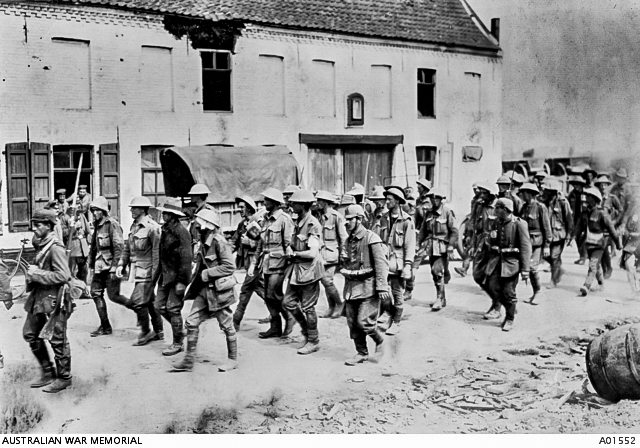
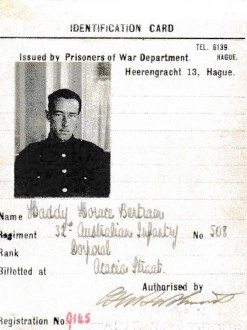
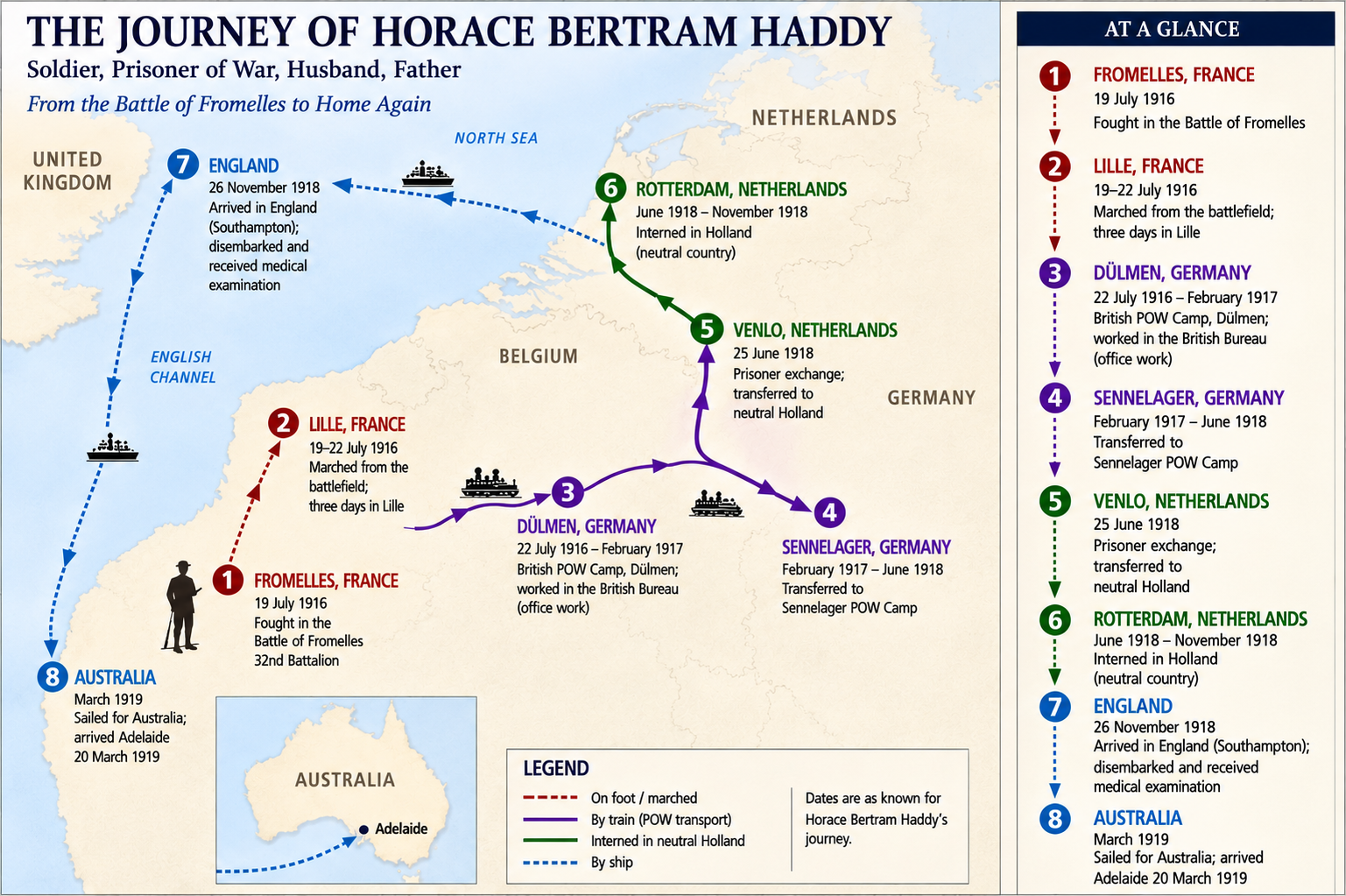
Horace was among approximately 470 Australians taken prisoner by the Germans. Along with other members of the 32nd Battalion, he was marched from the battlefield to Lille, where the exhausted prisoners remained for three days before being transported by rail to the prisoner-of-war camp at Dülmen, Westphalia. Before official notification reached Australia, Horace completed the standard German prisoner-of-war postcard advising his family that he was alive.
Dated 24 July 1916, it simply informed them:
"I am prisoner of war and stationed at Dülmen, Westf."
At the bottom of the card he added the words - "Send parcels."
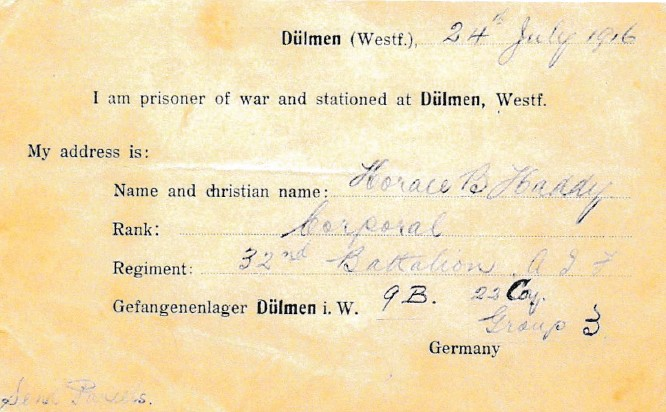
Those words must have brought immense relief to Allan and Marion Haddy, ending weeks of uncertainty after Horace had first been reported missing following the Battle of Fromelles.
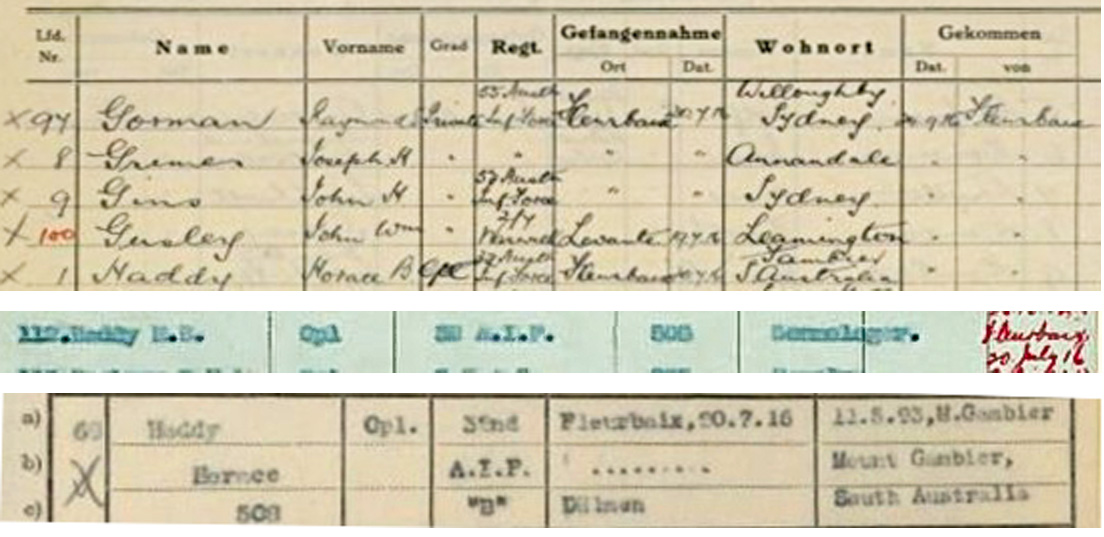
Prior to being captured, Horace displayed remarkable foresight. He carefully unsoldered the backs of several brass tunic buttons on his uniform and concealed gold sovereigns inside before soldering them closed again. When German guards searched him on arrival at Dülmen, the hidden coins went undetected. The sovereigns enabled him to purchase additional food during the difficult early months of captivity before his first Red Cross parcels arrived. Despite numerous searches, the Germans never discovered his ingenious hiding place.
Source - 1918 'LETTER FROM CORPL HADDY.', The Border Watch (Mount Gambier, SA 1861 - 1965), 30 August, p. 1. http://nla.gov.au/nla.news-article77658726
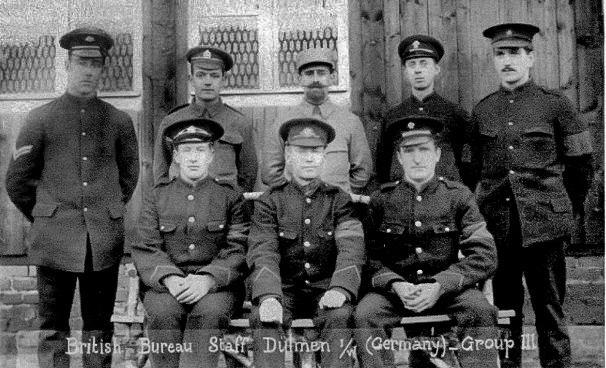
At Dülmen, Horace's civilian experience as a clerk with the A.M.P. Society proved invaluable. The Germans called for prisoners with office experience, and Horace volunteered to work in the camp's British Bureau. The British Bureau acted as the administrative office for British Empire prisoners, preparing camp records, handling correspondence and assisting with prisoner administration. Writing home in November 1916, he explained:
"The Germans are evidently short of clerks, as they called for volunteers among the prisoners, and I offered my services. I like my new occupation very well."
Although grateful to avoid labour detachments, conditions remained difficult. Horace shared a wooden hut with eight other prisoners and was permitted a hot shower only once each week. He reassured his parents that he was well but appealed for biscuits and other food because German rations alone were insufficient. Noting other soldiers. He remarked:
"I have seen nothing of MacArthur or Higgs lately, and very little of Carr."
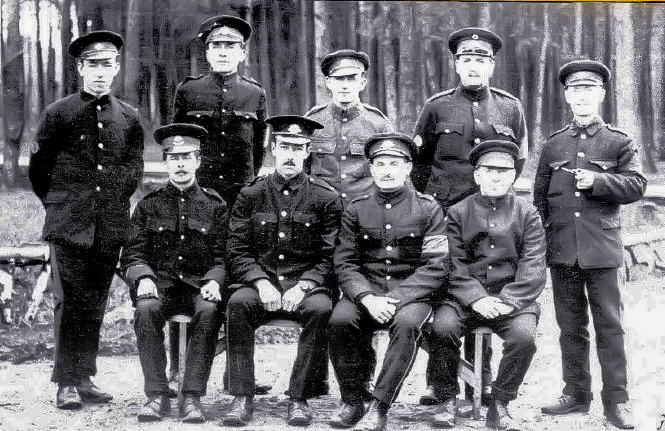
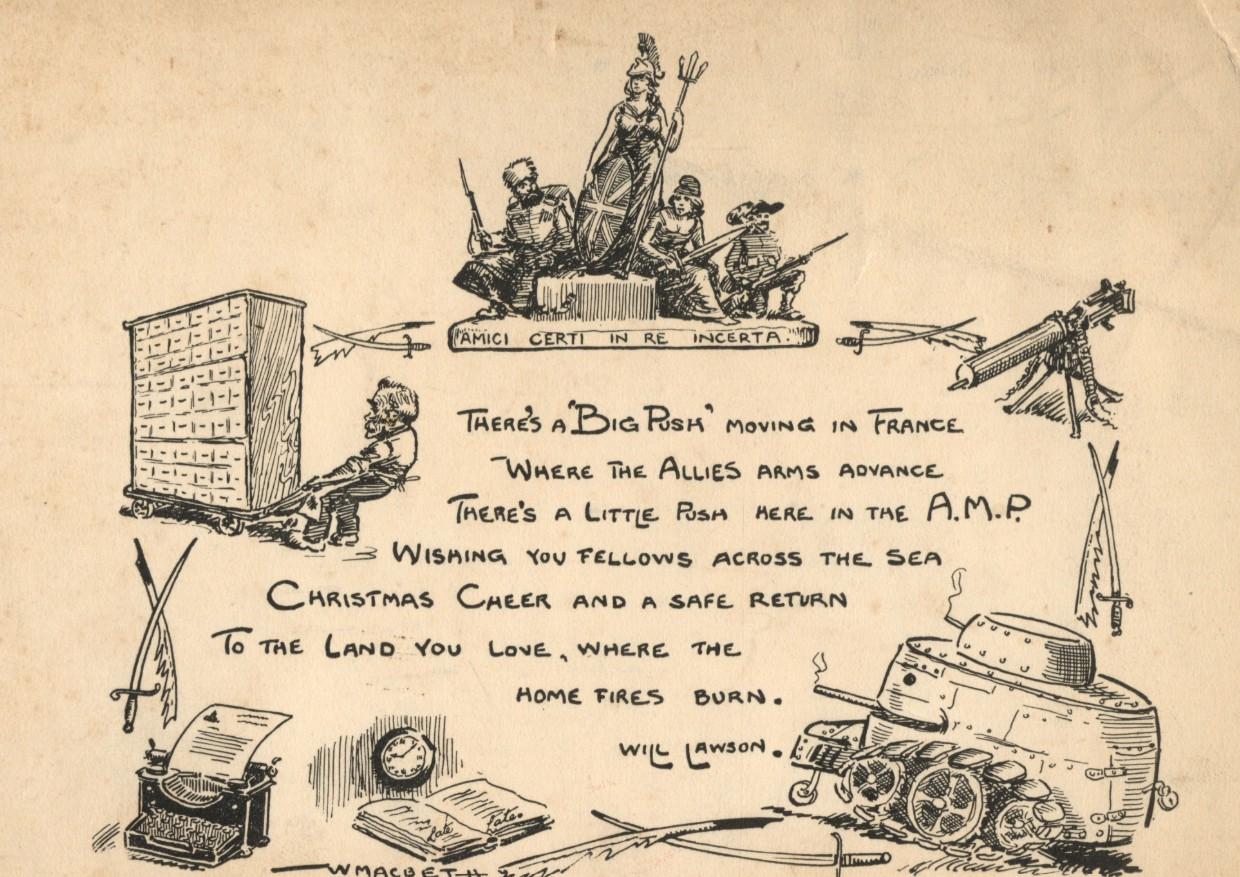
Throughout his imprisonment, food parcels from home and the Australian Red Cross became Horace's lifeline. Australian Red Cross food parcels became essential to survival. As a former employee of the AMP Society, he also remained in the thoughts of his workmates. During the war, AMP staff produced special Christmas cards for colleagues serving overseas, expressing their hope for a safe return. For Horace, who spent two Christmases behind barbed wire in Germany, such messages from home must have carried special meaning.
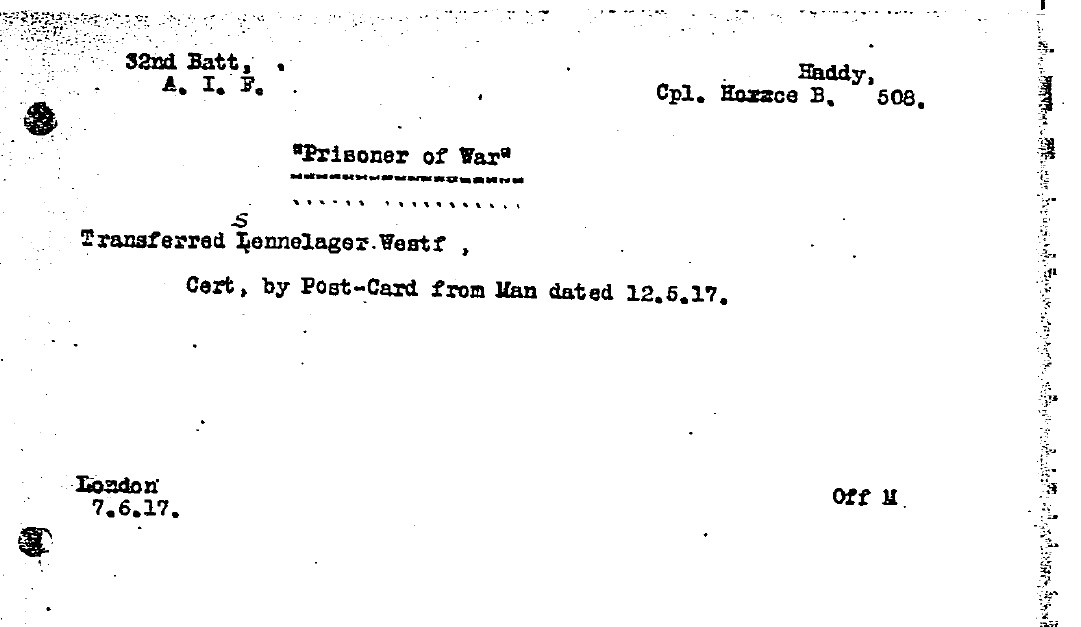
Horace remained at Dülmen for approximately ten months. On or about 12 May 1917, Horace was transferred to Sennelager, one of Germany's largest prisoner-of-war camps in Westphalia.
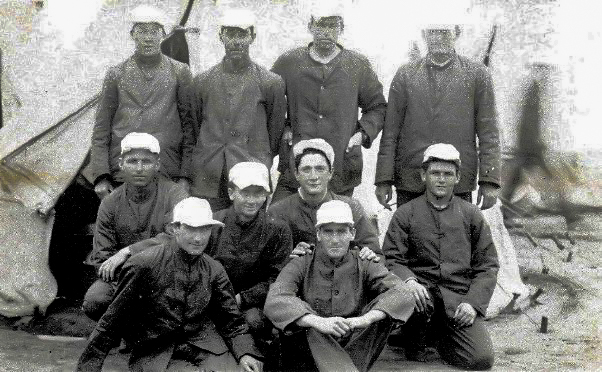
Horace spent more than a year at Sennelager, where conditions remained harsh, but he sent a nuber of photographs home during his captivity provide a rare glimpse into daily life at Sennelager. One shows Horace wearing the coarse work clothing issued to prisoners while undertaking camp duties.
Early in 1918 Horace learned that he had been selected for exchange. Writing to his parents on 25 March 1918, he explained:
"The Australian Red Cross advise me that I am now available for exchange. When I arrive in Holland they will cable you, so address all letters c/o Australian Red Cross, 36 Grosvenor Place, London, S.W."
On 7 June 1918, Horace finally left Sennelager and made his way towards Holland.
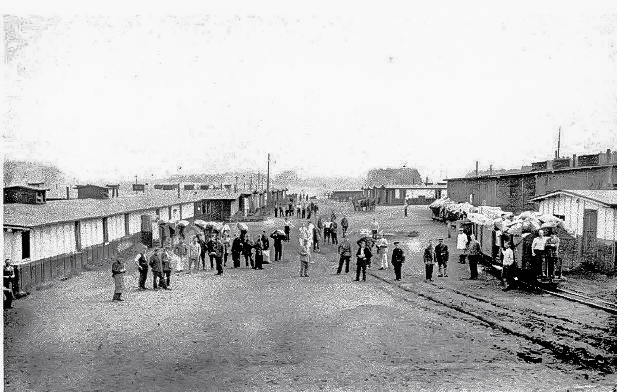
After several weeks in Holland, Horace wrote a series of detailed letters to his parents, many of which were published in The Border Watch. Free from German censorship, they reveal both his delight at liberty and his reflections on nearly two years in captivity. "My last letter notified that I would soon be out of Germany, but I arrived in civilised country. But to start off. On Friday, June 7, three of us from Sennelager got a 2.30 for the bath-house for disinfection. Clothes, underclothes, etc., all went into a bath and were fumigated. There was a good few others with us going out on commando, and who were awaiting their respective send-offs the following morning." Rather than sleep on the camp mattresses one last night, the departing prisoners made an unusual decision "We slept on a couple of tables."
Travelling west by train across Germany, Horace vividly recalled the emotions of finally reaching the Dutch frontier. "What a relief to be once more in a free land! We did not give any very loud demonstrations of our feelings, but it was a glorious sensation to watch that frontier board fade into the distance."
At Venlo, the exchanged prisoners received a warm welcome. "To hear your own tongue spoken again, and by a female voice, was music indeed." The reception continued through Rotterdam before they reached Scheveningen, where the Queen of the Netherlands had arranged a welcome meal. Horace never forgot his first taste of fresh bread after nearly two years in captivity. "I was glad once again to taste new bread — over three weeks old German black."
Nor did he overlook the luxury of proper bedding. "The beds are very comfortable, with two white sheets (don't laugh, they are luxuries) and three fine woollen blankets." Although food remained rationed in Holland, Horace concluded - "Liberty is far too precious to let a small item like food spoil the full enjoyment of it."
As life gradually returned to normal, Horace embraced the freedoms he had been denied for so long. He wrote of cycling through the Dutch countryside, swimming, attending French lessons and enjoying long walks through the woods at Wassenaar.
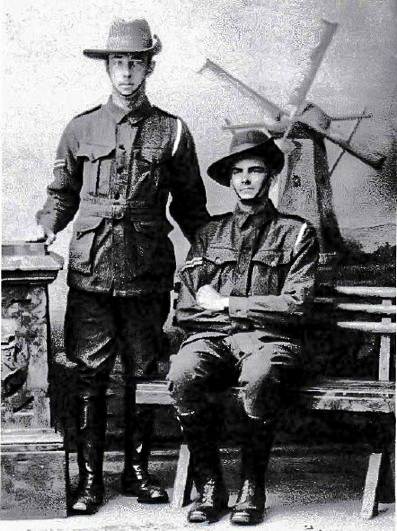
"I often enjoy a walk along a quiet country road, bordered by canals and luxuriant fields."
Horace remained grateful to those who had supported him throughout his captivity. Australian Red Cross volunteer Tess Naylor regularly forwarded copies of The Border Watch, allowing him to catch up on almost two years of news from home "They are the first South Australian papers I have seen for over two years." He also reflected on the censorship imposed in Germany. "In Germany we only had the German newspapers, with their distorted views on war matters." Despite enjoying his freedom in Holland, Horace's thoughts remained firmly fixed on home:
"South Australia... God's own country, without a doubt."
Nearly two years in captivity had profoundly shaped his views on war. Writing from Holland, he concluded:
"Even I have seen enough of militarism to engender such a hatred of its exponents as I hope will never die out. No sacrifice is too great to bring to dust a people who would wish to dominate the world with such organised brutality. As to some instances of this, as applied to prisoners on commandoes, I expect you will have read of them in the papers. If not, there will be plenty of tongues to speak when all this business is over."
After the War
Following the Armistice, Horace left Holland for England on 18 November 1918, exactly three years after sailing from Australia with the 32nd Battalion. On 18 January 1919, he embarked aboard HT Ulysses for the voyage home, disembarking at Port Adelaide on 1 March 1919, after the requisite quarintine. He was formally discharged from the Australian Imperial Force on 24 April 1919, bringing to an end nearly four years of military service, including almost two years as a prisoner of war.
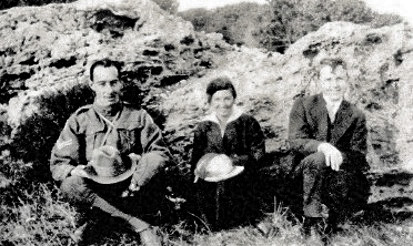
Within weeks of returning to South Australia, Horace travelled home to Mount Gambier, where an extraordinary public welcome awaited him:
Together with fellow returned soldiers Private James Aspinall (32) and Private J. H. Mollison, he was met at the railway station by the Mayor, George E. Truman, Colonel F. H. Daniel and a large crowd of well-wishers. A combined band from the Vice-Regal and Salvation Army Bands played welcome-home marches as the returned soldiers arrived.
As the first Mount Gambier soldier to return after enduring almost two years as a prisoner of war in Germany, Horace received a particularly enthusiastic reception. Members of the Mount Gambier Grammar School Old Scholars' Association, of which he was a former student, lifted him onto their shoulders and carried him from the railway station to the Town Hall, where hundreds of townspeople had gathered to welcome the returned soldiers.
Welcoming Horace home, the Mayor reminded those assembled of the uncertainty that had surrounded his fate following the Battle of Fromelles.
"Corpl. Haddy was one of Mount Gambier's own boys, and for a long time was reported missing. That was the cause of a good deal of anxiety to his friends, but afterwards they learned that he was a prisoner in Germany."
The principal of Mount Gambier Grammar School, J. M. Carozzi, proudly welcomed back one of the school's old scholars, while Colonel Daniel expressed the hope that Horace would one day share the story of his experiences in Germany. Deeply moved by the reception, Horace replied.
`"I thank you from the bottom of my heart for that very enthusiastic welcome. It is certainly very fine to return once more and breathe the Mount Gambier air."`
He also acknowledged those whose support had sustained him throughout his captivity.
"Had it not been for the efforts of the Red Cross and other patriotic societies I would not be here tonight."
The demonstration concluded with cheers for the returned soldiers, those still making their way home from Europe, and the singing of the National Anthem.
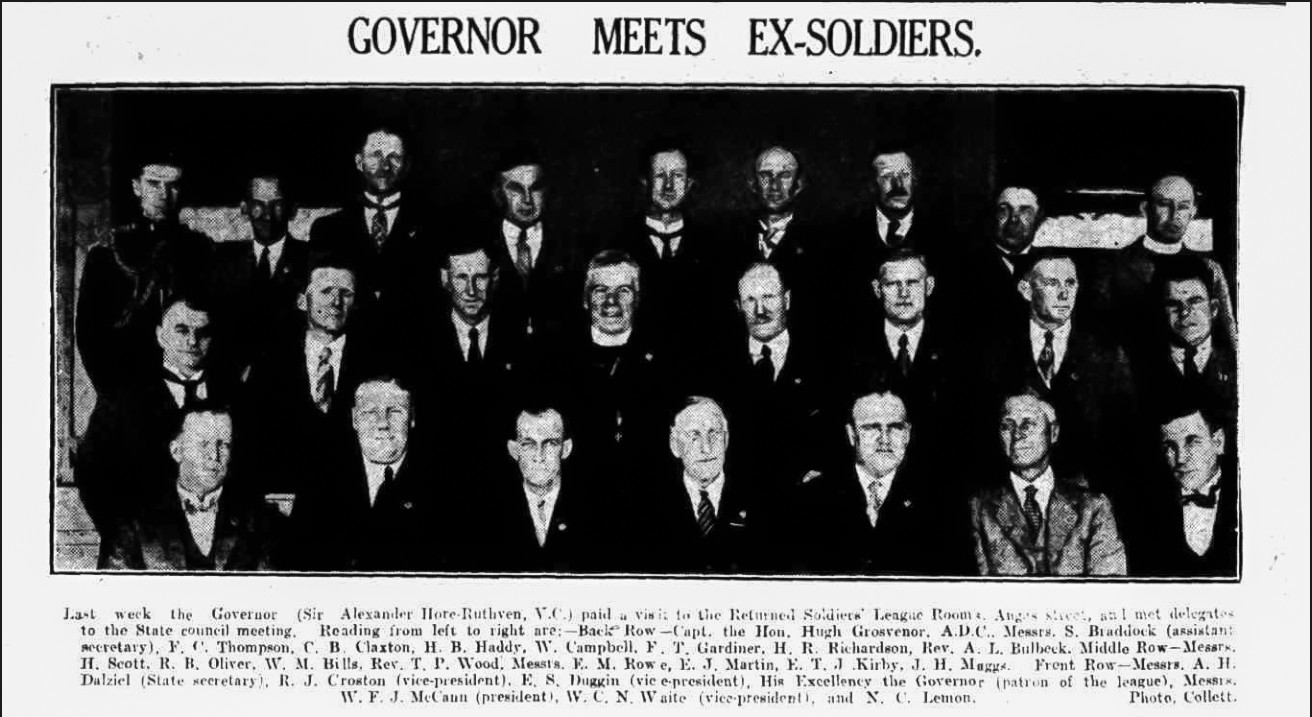
Returning to civilian life, Horace resumed his career with the A.M.P. Society, where he remained for the rest of his working life. He was also an active member of the local Mount Gambier RSL. According to Haddy family records, the A.M.P. showed great loyalty and support to its returned servicemen, continuing to stand by Horace despite the long-term effects of his wartime service becoming more apparent in later life. Although known as Horace to family and friends, his work colleagues knew him simply as "Alf”. On 2 October 1927, Horace married Jean Isobel Miller at Christ Church, Mount Barker.
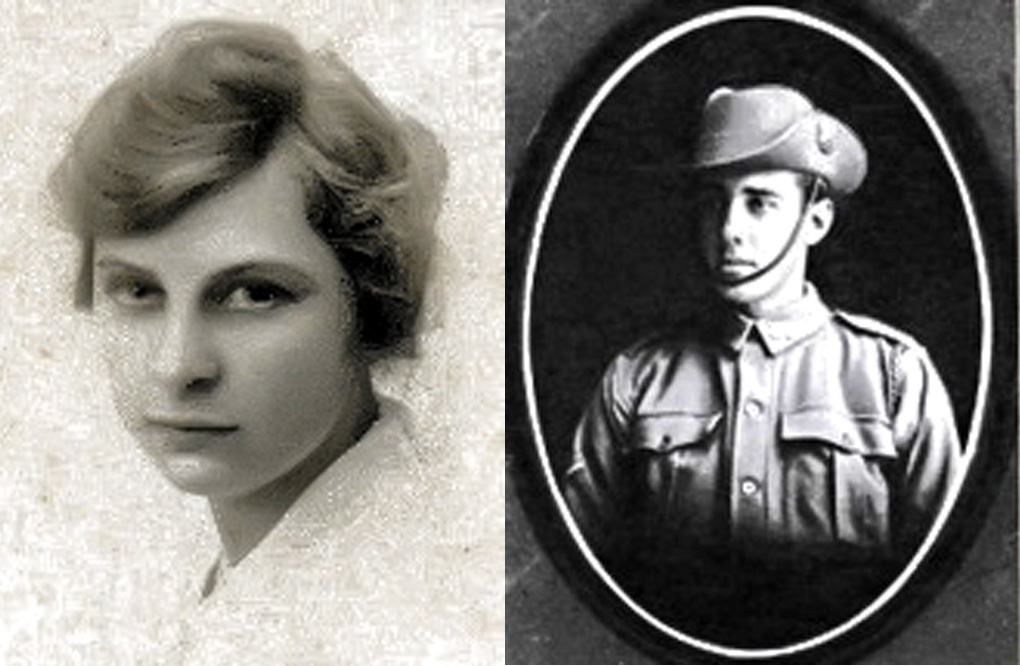
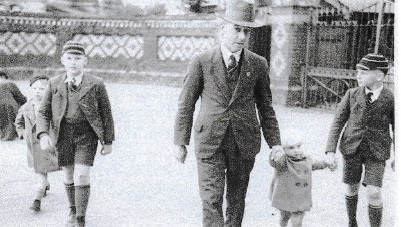
Together they made their home in Adelaide and raised five sons – Robert, Donald, Ian, Colin and Geoff. Over the years the family grew to include 16 grandchildren and 31 great-grandchildren, ensuring that Horace's remarkable story would continue to be passed down through future generations.
While Horace was a prisoner in Germany, his parents continued to support the war effort at home. In 1917, Allan and Marion Haddy donated the Sutton Town Public School Roll of Honour, recognising former pupils who had enlisted for service during the First World War. Their gift was particularly poignant, coming at a time when their own eldest son remained in German captivity following the Battle of Fromelles.
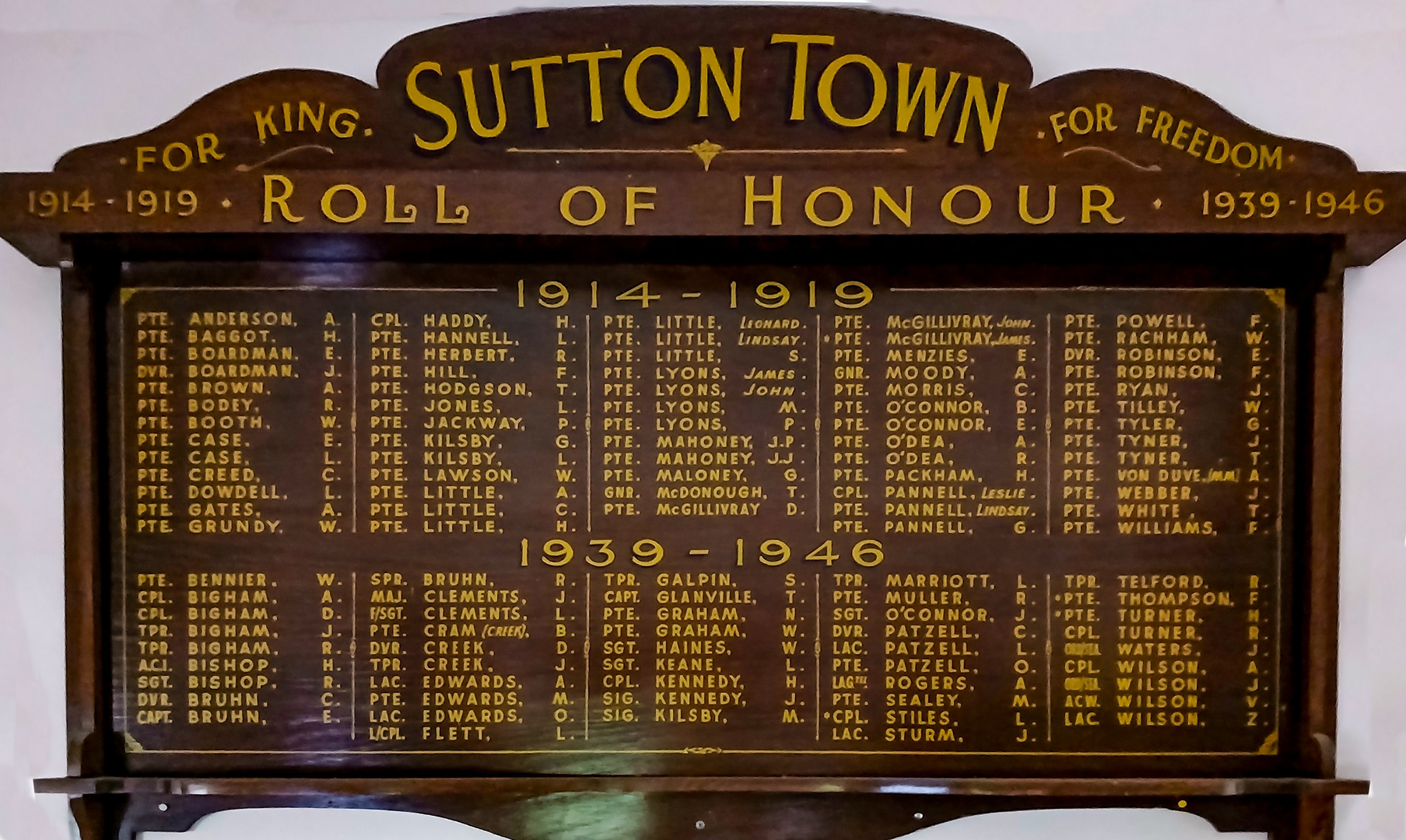
During the Second World War, Horace again volunteered to serve, enlisting in the Citizen Military Forces for home service in South Australia. He also remained active in veterans' organisations and maintained close friendships with fellow returned servicemen.
Horace is commemorated at:
- Australian Ex-Prisoners of War Memorial, Ballarat, Victoria
- Mount Gambier Pictorial Honour Roll, Mount Gambier, South Australia
- Sutton Town Primary School Roll of Honour (formerly Sutton Town Public School),
- Sutton Town Roll of Honour, South Australia
Horace Bertram Haddy died in Adelaide on 22 March 1964, aged 70, and was buried at Centennial Park Cemetery, Pasadena, South Australia.
Legacy
Although Horace rarely spoke about the horrors of the Battle of Fromelles or his years as a prisoner of war, his experiences were never forgotten by his family. His medals, photographs, letters and personal papers were carefully preserved, allowing future generations to understand the extraordinary journey he endured.
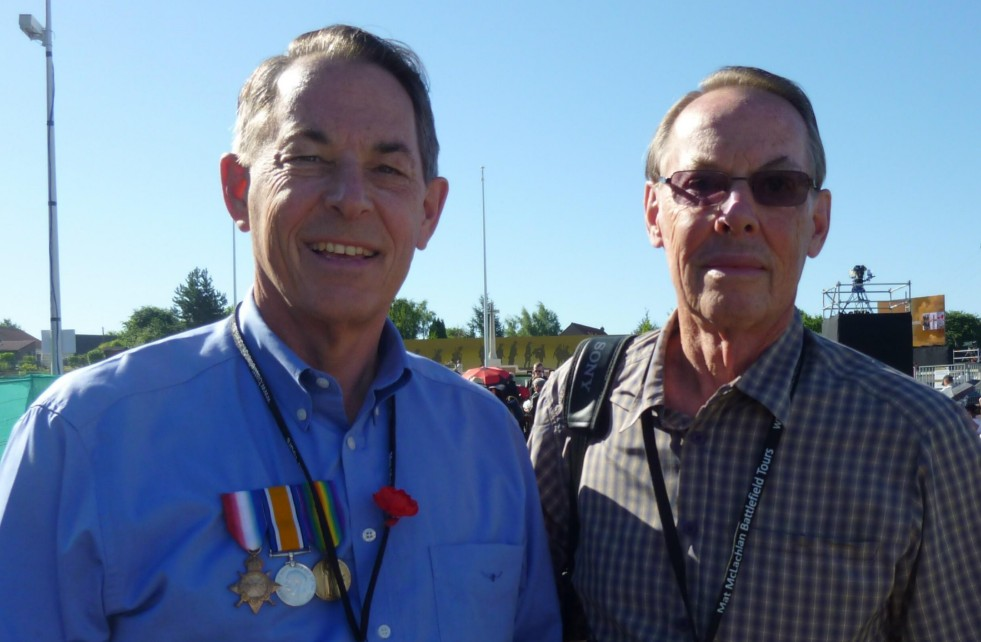
In July 2010, almost ninety-four years after the Battle of Fromelles, two of Horace's sons, Ian and Geoff Haddy, together with family members Alison and Lis, travelled to France for the dedication of the new Fromelles (Pheasant Wood) Military Cemetery. For the family, the pilgrimage was deeply personal, providing an opportunity to stand on the ground where Horace had fought, been captured and begun his long journey through captivity. Reflecting on the visit, Geoff wrote - "The significance for us was that Dad fought in that disastrous battle on 19/20 July 1916 and, fortunately, was captured by the Germans. So, on behalf of the family, we were able to honour his comrades who fell and to gain a little understanding of the events he endured."
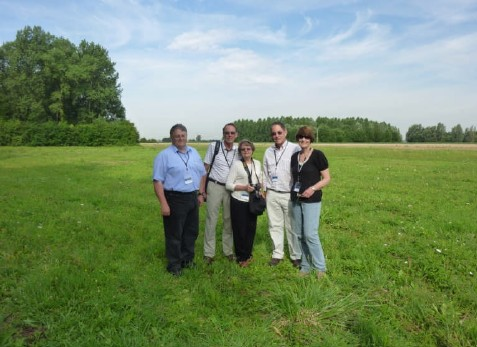
Walking along Rue de la Cardonnerie towards the site of Delangre Farm, Geoff tried to imagine the battlefield his father had described only sparingly. "Imagine this in an extremely wet July 1916, barely a blade of grass, trees destroyed, a mass of gluey mud, shell holes, flooded trenches, hideous noise all around, well in sight of German fortified and slightly raised positions—and dead everywhere. Not a pretty sight!"
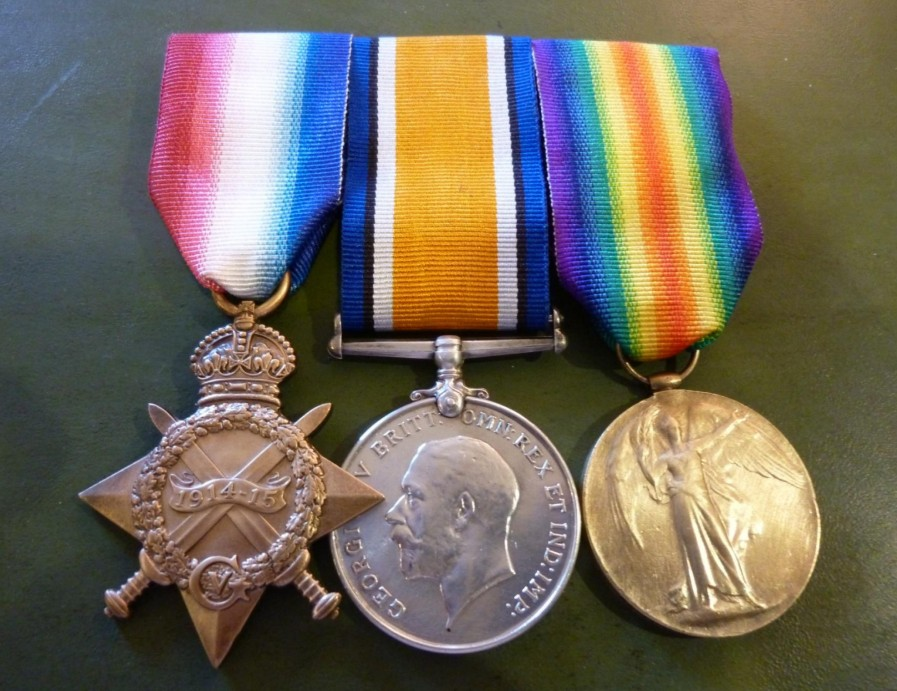
The occasion carried special significance for Geoff, who wore his father's original First World War medals during the dedication ceremony. "I was particularly honoured to be wearing Dad's medals which we took to France for the occasion. So many there had replica medals—it was great to have originals."
Reflecting on his father's character, Geoff observed "I'm not aware of him speaking to any of us about the horrors of those 24 hours but am sure he thought much about them and his fallen comrades, especially when he attended over many years the annual Anzac Day service and march."
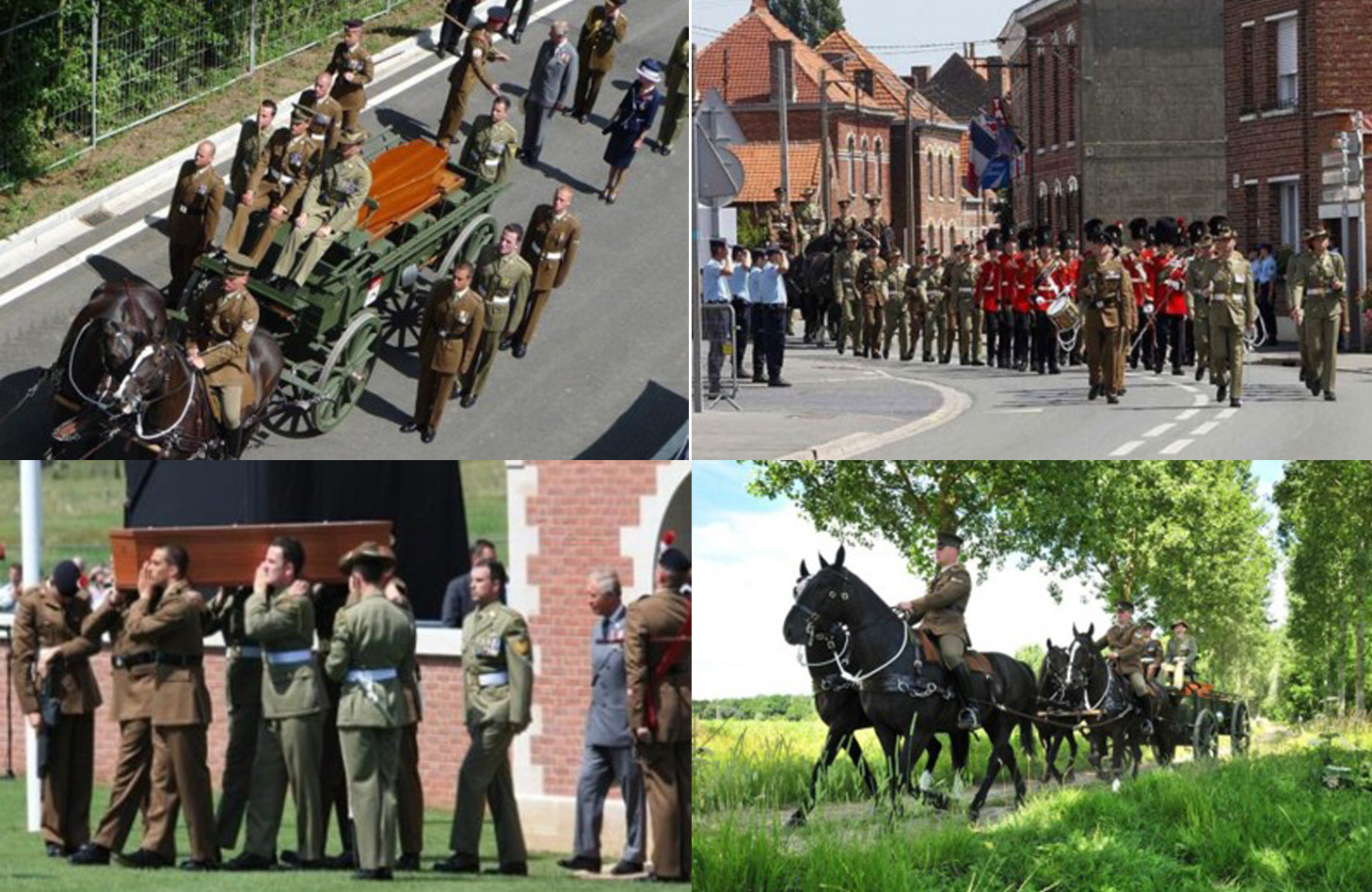
Standing at Pheasant Wood, Geoff realised that had his father not been captured, there was every chance he too would have lain among the unidentified dead recovered almost a century later. Today, Horace's legacy lives on through his descendants—five sons, 16 grandchildren and 31 great-grandchildren—and through the remarkable collection of photographs, letters and memorabilia they have preserved. Their generosity in sharing these treasures has ensured that Horace's story, and the experiences of one of the 32nd Battalion's Fromelles survivors, will continue to educate and inspire future generations.
Links to Official Records
The Fromelles Association would love to hear from you

Contacts
(Contact: carla@fromelles.info or geoffrey@fromelles.info).
(Contact: army.uwc@defence.gov.au or phone 1800 019 090).
Donations
If you are able, please contribute to the upkeep of this resource.
(Contact: bill@fromelles.info ).