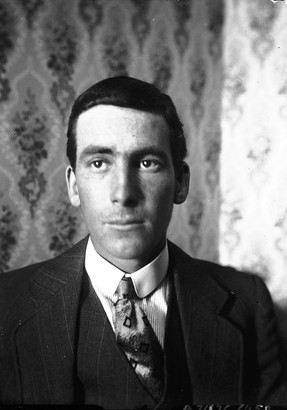
Charles Francis PLUNKET
Eyes brown, Hair dark, Complexion medium
Charles Francis Plunket - “From a loving and outdoor family”
Can you help us identify Charlie?
Charlie Plunket’s body was never found after the Battle of Fromelles and there are no records of his burial.
A mass grave was found in 2008 at Fromelles, a grave the Germans dug for 250 Australian soldiers they recovered after the battle. As of 2026, 181 of these soldiers have been able to be identified via DNA testing from family member donors.
Charlie may be among these remaining 69 unidentified men. There is still a chance to identify him — but we need help. We welcome all branches of his family to come forward to donate DNA to help with his identification, especially those with roots in Melbourne, Adelaide, London or Christchurch New Zealand.
See the DNA box at the end of the story for what we do know about his family.
If you know anything of contacts for Charlie, please contact the Fromelles Association.
Charlie’s Family, Early Life
Charlie’s paternal grandparents James Plunket and Katherine Prestage were both born in England. James arrived in Melbourne in 1853 aged 21. After a short period on the Bendigo goldfields, he returned to Melbourne and worked as a journalist. He married Katherine in 1864, two weeks after she arrived in Melbourne from England.
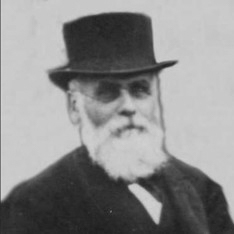
The same year he opened a boarding school for ‘young Catholic gentlemen’ in Elsternwick, but it closed in 1868. In 1871, he moved with his family to Auckland, New Zealand where he opened another school. When it closed, he became a newspaper reporter and editor in Auckland and Christchurch. James and Katherine had six children. Charlie’s maternal grandfather James Rouvray arrived in Melbourne in 1852 with his parents and eight siblings. He was a railway porter. James married Eliza Jane Passenger in Melbourne in 1867. They had seven daughters and one son. Charlie’s father, John Bernard Marie (Pup) Plunket, was born in Melbourne in 1867. When he was four, he moved with his family to New Zealand, but returned alone to Melbourne, probably in 1888. John married Eliza (Lizzie) Rouvray in Melbourne in 1889. Lizzie had trained as a dressmaker before her marriage. They had ten children in the next 20 years. Charlie, their third child, was born on 21 November 1893 in Richmond, Victoria. Charlie’s siblings were:
- James (1890-1891)
- Katherine (Kate) Florence (1892-1971)
- Elizabeth (Lizzie) Frances (1895-1972)
- Mary Helen (1897-1898)
- Violet (Viv) (1899-1937)
- Hubert John (Jack) (1901-1925)
- Rose (1904-1995)
- Hazel Constance (1906-2005)
- Dorothy (Dot) Adelaide (1909-1987)
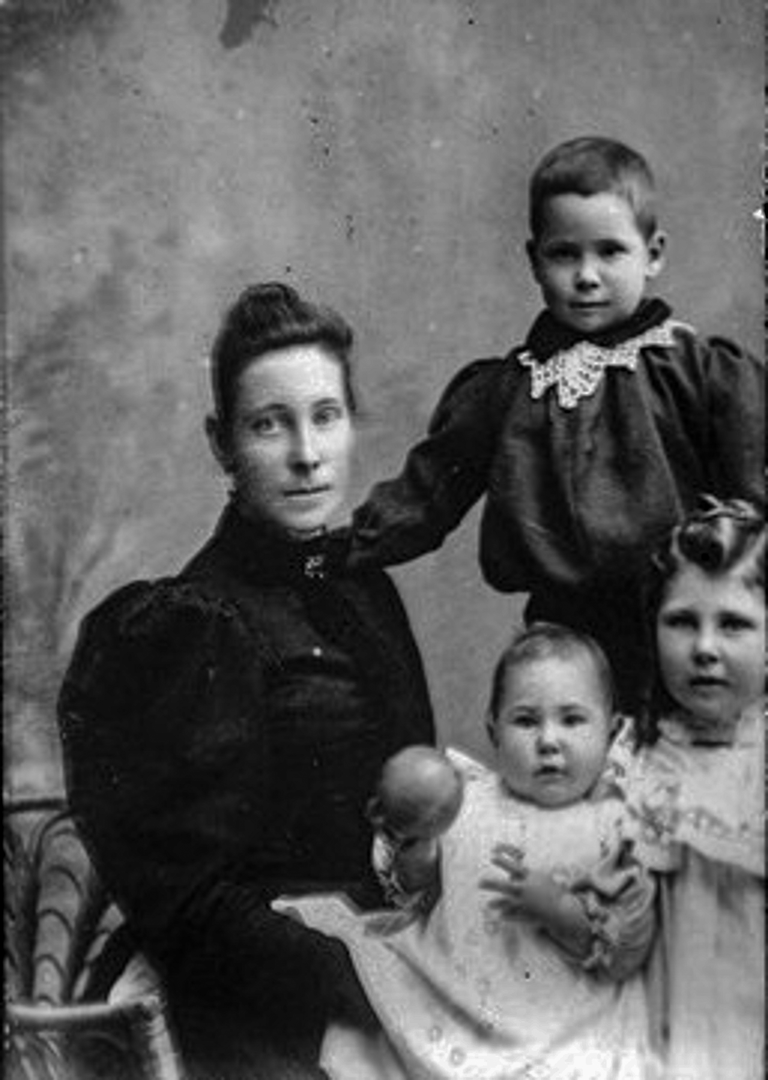
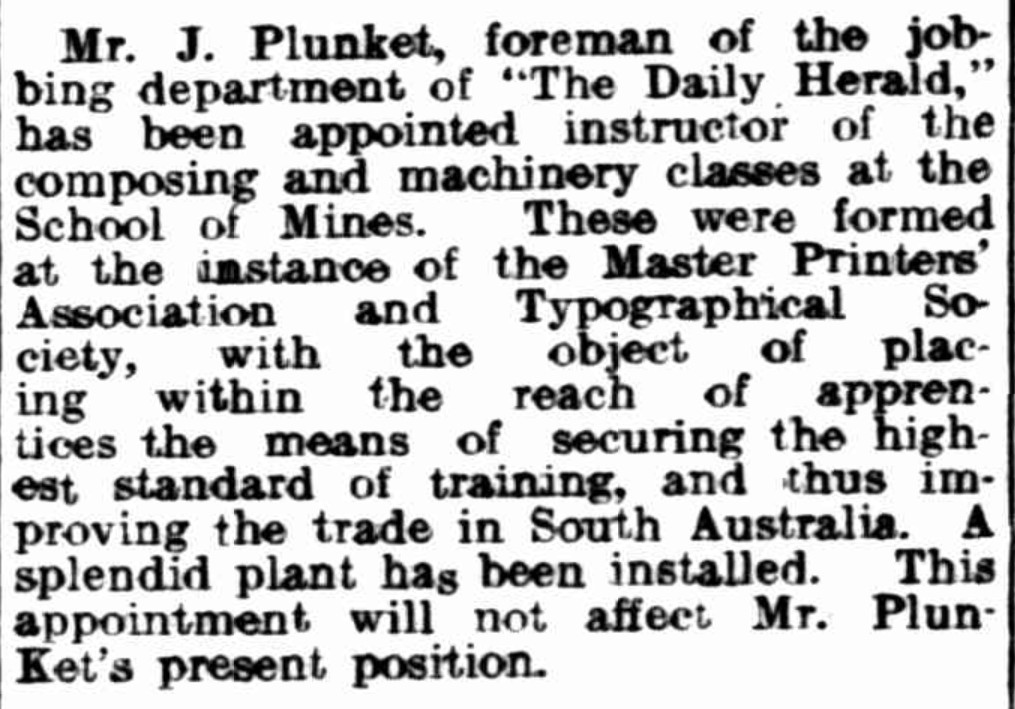
John (Pup) Plunket was a compositor who worked in the Government Printing Office in Melbourne. In 1907, the family moved to Adelaide where John was employed by the Adelaide Herald, (later the Daily Herald), the newspaper of the Trades and Labor Council. In 1912, when he was foreman of the jobbing department, he took on the additional role of instructor of the composing and machinery classes at the Adelaide School of Mines. After the Daily Herald closed in 1924, he worked in the printing department of the Harris Scarfe department store.
The family lived at 303 Waymouth St. in Adelaide, in one of four single storey terrace houses known as Adelaide Villas.
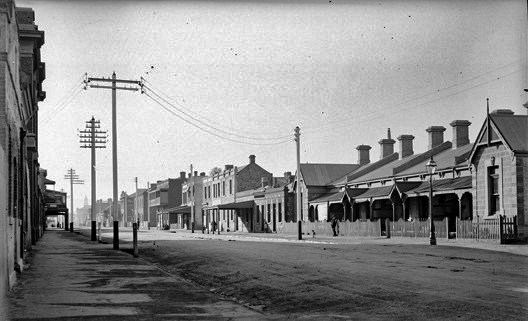
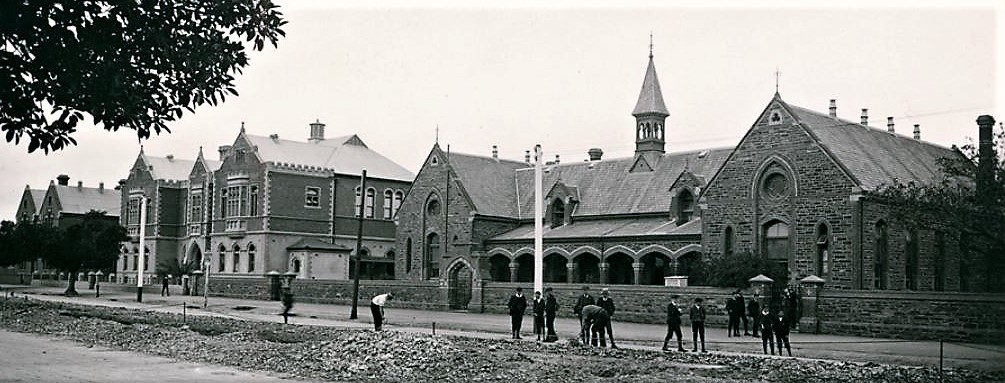
Charlie and his younger siblings were enrolled at the Observation School (later Currie St School). In 1908, Charlie transferred to Adelaide High School, which was opened in that year as the first free coeducational public secondary school in Australia.
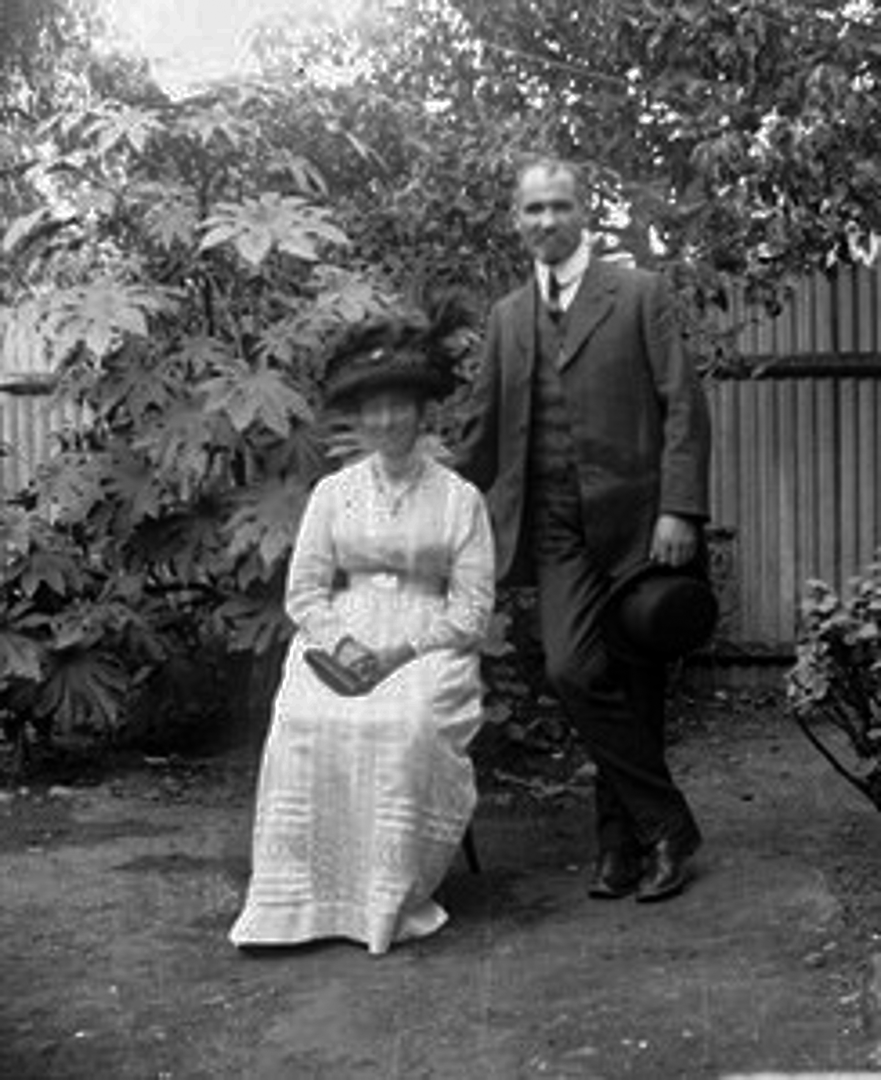
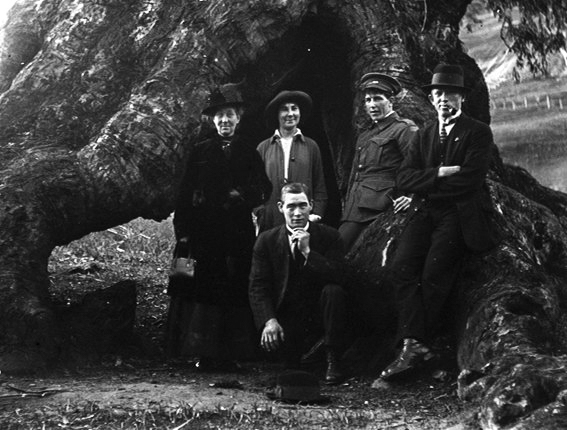
Charlie was a close friend of Theo Bachman, who lived at 49 West Terrace. just around the corner from the Plunket’s home. Theo became a keen photographer and a collection of hundreds of his glass plate negatives are in the State Library of South Australia (B71826). Dozens of these photos feature the Plunket family. There is evidence to suggest that Charlie was also interested in photography and that he may have taken some of the photos that are in the collection. One photo taken at Brownhill Creek, for example, is labelled ‘One of Charlie’s first’.
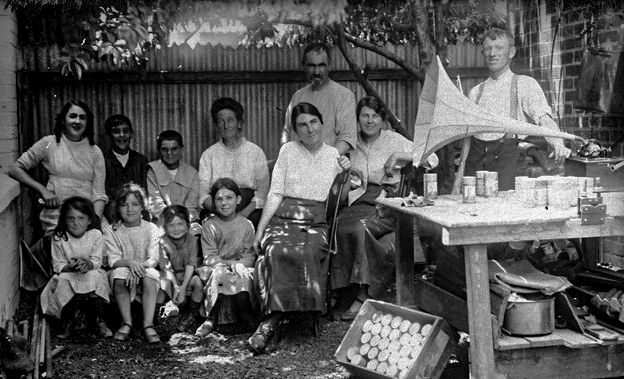
The photos (which begin in about 1912 when Charlie was a young man) suggest that Charlie had an engaged and happy life with a loving and close family, who were active, did things together and loved the outdoors. The backyard photos show happy and relaxed family groups, together with pets, including Bob the dog and an aviary. Pup Plunket, often with a pipe in his mouth, is an obviously loving father. Lizzie Plunket is in many of the photos, proud of her large family.
Charlie loved the outdoors and getting out into the bush. There are many photos of him hiking with friends in the Adelaide Hills, camping in tents, fishing, swimming in swimming holes and of Charlie’s close friends.
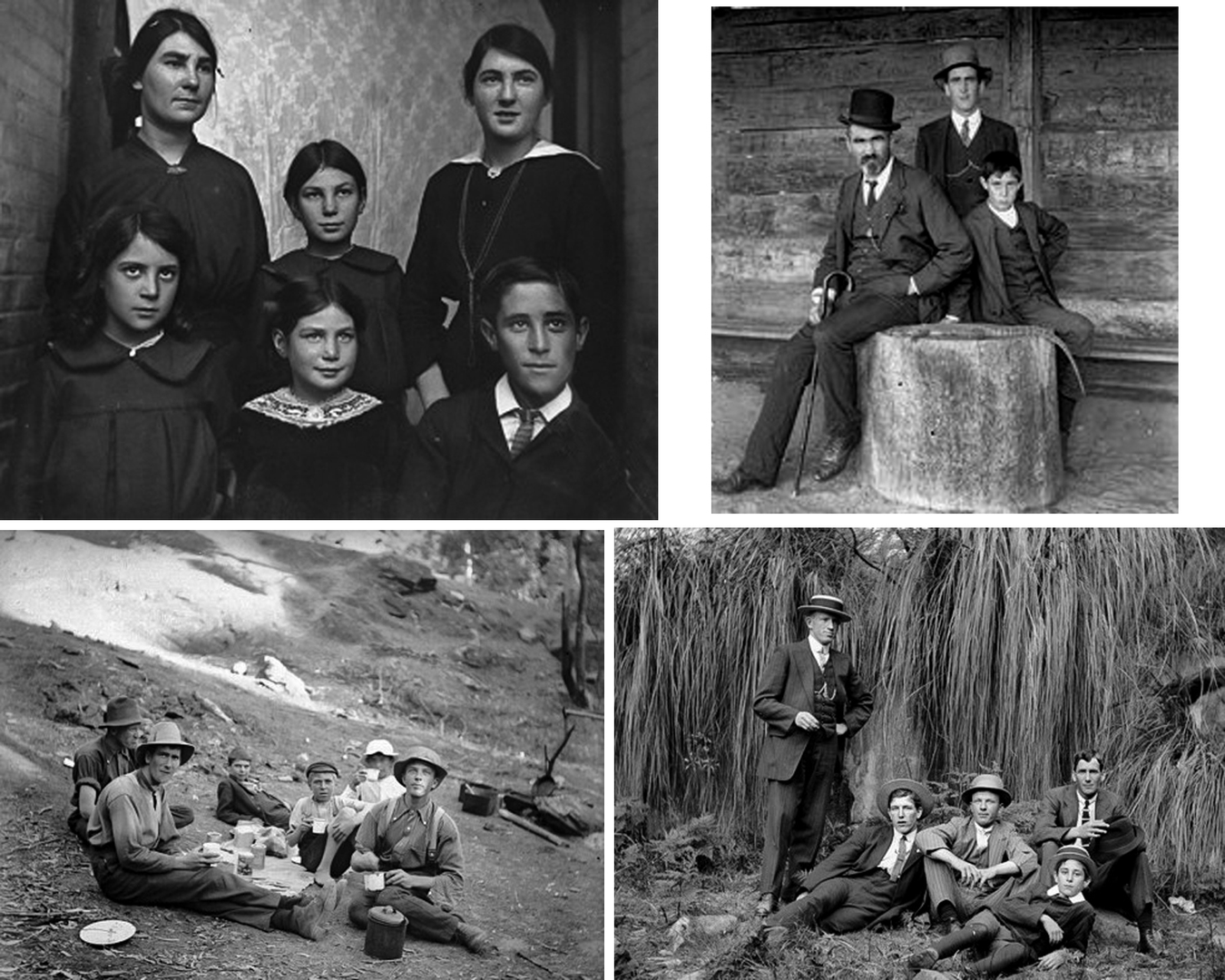
2) The men of the family - Pup Plunket, Charlie, Jack (1913)
3) ‘A carrying party at Sturt’. Charlie in front, second from left
4) Charlie (second from left), and friends relaxing beside a creek. Jack Plunket is on the right
Off to War
In July 1915 there was a surge in enlistment as in the wake of the landing at Gallipoli men decided that it was their duty to fight ‘for the Empire’. On Friday 2 July 1915, Charlie went to Keswick Barracks to enlist. He passed his medical and was told to report to Mitcham Camp on the following Monday. From 1911, young men were required to complete 16 days of training per year in the citizen militia forces, so the Army routines would not have been completely new to Charlie.
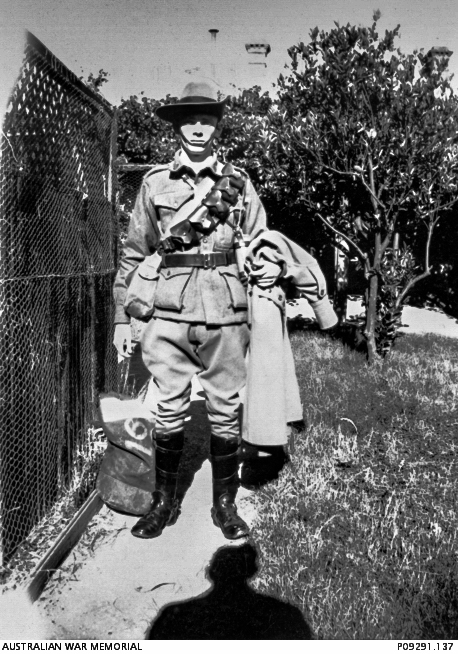
Charlie reported to Mitcham Camp on July 5. Entering camp on the same day was Roy Bolto, a 24-year-old blacksmith. Charlie and Roy became best mates, a friendship which continued when both were assigned to B Company of the 32nd Battalion. The 32nd Battalion was formed at Mitcham, South Australia on 9 August 1915. A and B Companies were made up of recruits from South Australia and C and D Companies came from Western Australia.
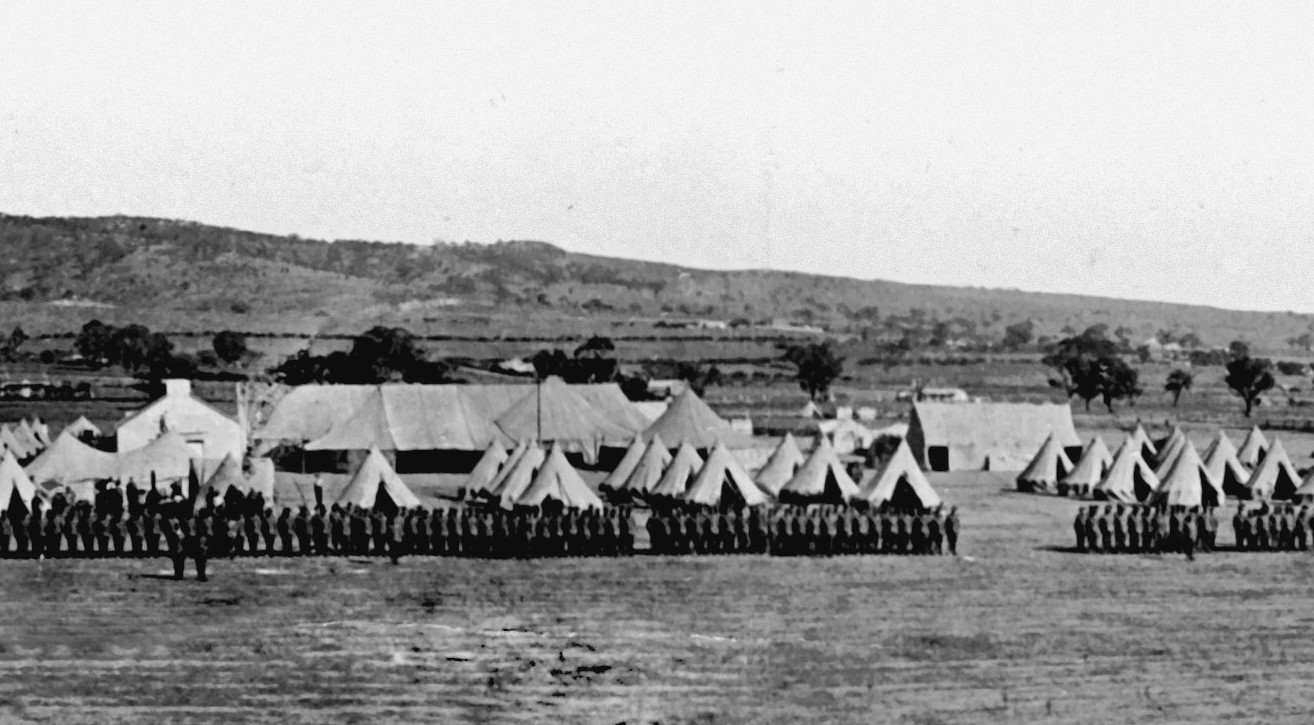
There was much fanfare about this new battalion in South Australia, with gatherings, community support, Cheer-up Society activities, reviews of the troops by the governor, and parades through the streets of Adelaide. On 16 September, the South Australian members of the Battalion moved to a new camp at Cheltenham Racecourse, where they were joined at the end of September by the West Australians who had begun their training at Blackboy Hill near Perth. Training continued at Cheltenham until their departure.
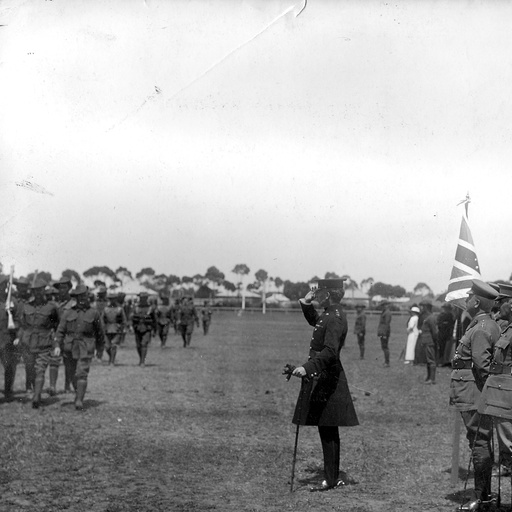
The departure of troops was subject to censorship, so newspapers did not report pre-departure events. However, on Friday 12 November, six days before departure, a significant number of 32nd Battalion men were fined two days’ pay for ‘quitting the ranks’ at Adelaide Railway Station, which suggests that there had been a parade through the city on that day. Charlie, who had an otherwise clean disciplinary record while in camp was one of those fined. Perhaps men were anxious to spend as much time with their families before departure and decided they could not wait for a delayed dismissal.
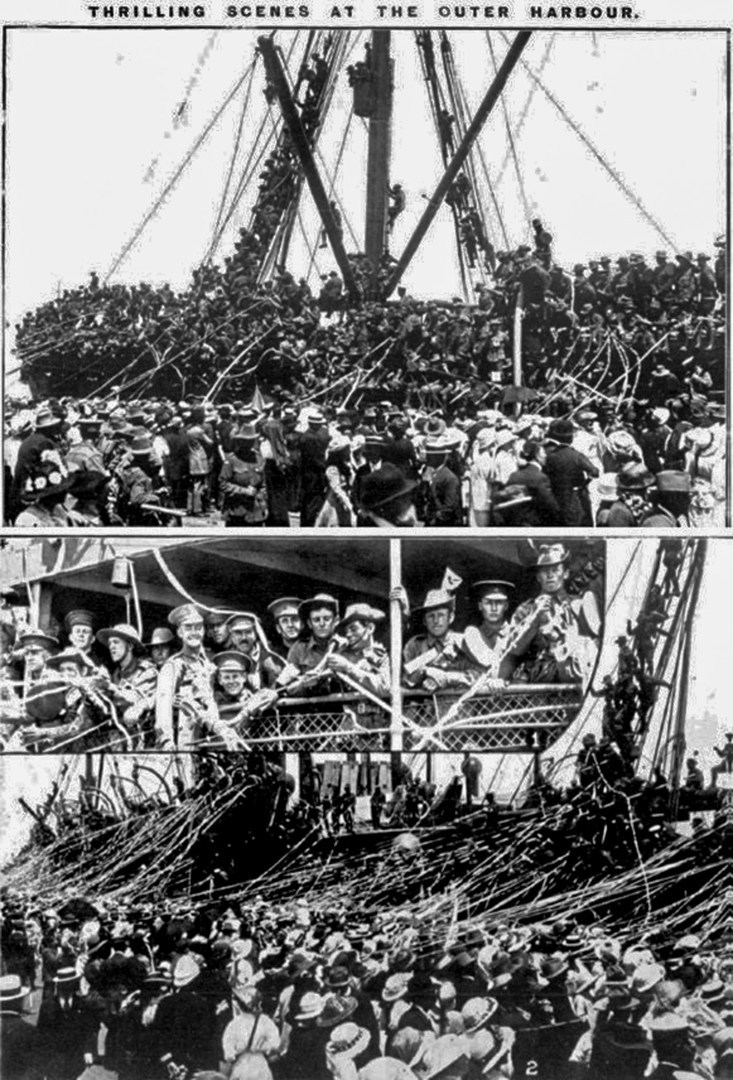
Most of the Battalion, including Charlie, departed for Egypt on 18 November 1915, HMAT A2 Geelong, the transport section had left ten days earlier on HMAT A13 Katuna. As reported in The Adelaide Register:
“The 32nd Battalion went away with the determination to uphold the newborn prestige of Australian troops, and they were accorded a farewell which reflected the assurance of South Australians that that resolve would be realized.”
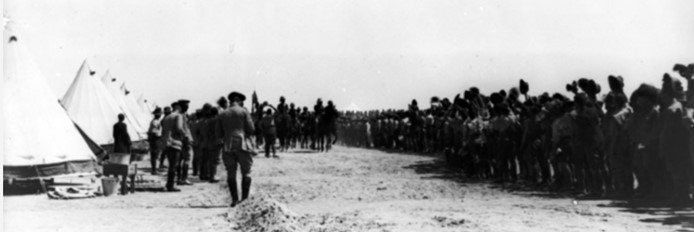
The 32nd arrived in Suez on 14 December 1915 and moved to El Ferdan just before Christmas. A month later they marched to Ismailia and then to the major camp at Tel-el-Kebir where they stayed for February and most of March. Tel-el-Kebir was about 110 km northeast of Cairo and the 40,000 men in the camp were comprised of Gallipoli veterans and the thousands of reinforcements arriving regularly from Australia. The battalion’s next stop was at Duntroon Plateau and then they were at Ferry Post until the end of May, where they trained and guarded the Suez Canal. Their last posting in Egypt was a few weeks at Moascar. One soldier’s diary complained of being “sick up to the neck of heat and flies”, of the scarcity of water during their long marches through the sand and he described some of the food as “dog biscuits and bully beef”. He did go on to mention good times as well with swims, mail from home, visiting the local sights and the like.
Source - AWM C2081789 Diary of Theodor Milton PFLAUM 1915-16, page 29, page 12
During their time in Egypt the 32nd had the honour of being inspected by H.R.H. Prince of Wales.
After spending six months in Egypt, the call to support the British Expeditionary Force on the Western Front came in mid-June. The 32nd left from Alexandria on the ship Transylvania on 17 June 1916, arriving at Marseilles, France on 23 June 1916 and they then immediately entrained for a three-day train trip to Steenbecque. Their route took them to a station just out of Paris, within sight of the Eiffel Tower, through Boulogne and Calais, with a view of the English Channel, before disembarking and marching to their camp at Morbecque, about 30 kilometres from Fleurbaix. Theodor Pflaum (No. 327) and Wesley Choat (No. 68) wrote about the trip:
“The people flocked out all along the line and cheered us as though we had the Kaiser as prisoner on board!!” – Theodor Pflaum
“The change of scenery in La Belle France was like healing ointment to our sunbaked faces and dust filled eyes. It seemed a veritable paradise, and it was hard to realise that in this land of seeming peace and picturesque beauty, one of the most fearful wars of all time was raging in the ruthless and devastating manner of "Hun" frightfulness”. – Wesley Choat
They were headed to the area of Fleurbaix in northern France which was known as the ‘Nursery Sector’ – a supposedly relatively quiet area where inexperienced Allied troops could learn the harsh realities of Western Front trench warfare against the Germans. But the quiet times did not last long. Training continued with a focus on bayonets and the use of gas masks, assuredly with a greater emphasis, given their position near the front. The 32nd moved to the Front on 14 July and Charlie was into the trenches for the first time on 16 July, only three weeks after arriving in France.
The Battle of Fromelles
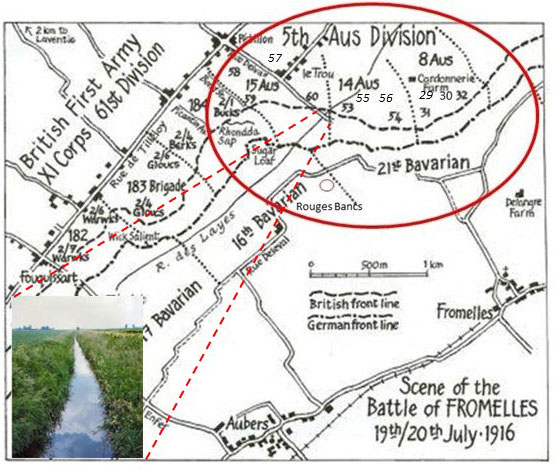
Inset - River Layes from the Australian Front Line looking towards the Sugar Loaf
The overall plan was to use brigades from the Australian Fifth Division to conduct a diversionary assault on the German trenches at Fromelles. The 32nd Battalion’s position was on the extreme left flank, with only 100 metres of No Man’s Land to get the German trenches. As they advanced, they were to link up with the 31st Battalion on their right. However, their position made the job more difficult, as not only did they have to protect themselves while advancing, but they also had to block off the Germans on their left, to stop them from coming around behind them. D Company’s Lieutenant Sam Mills’ letters home were optimistic for the coming battle:
“We are not doing much work now, just enough to keep us fit—mostly route marching and helmet drill. We have our gas helmets and steel helmets, so we are prepared for anything. They are both very good, so a man is pretty safe.”
On the 17th they were reconnoitring the trenches and cutting passages through the barbed wire, preparing for an attack, but it was delayed due to the weather. On the morning of the 18th, A Company and C Company went into the trenches to relieve B and D Companies, who rejoined the next day. The Zero Hour for advancing from their front-line trenches was to be 5.45 PM, but the Germans knew this attack was coming and were well-prepared. They opened a massive artillery bombardment on the Australians at 5.15 PM, causing chaos and many casualties. A Company, along with C Company were in the first and second waves to go over the parapet at 5.53 PM. Charlie’s B Company & D Company were in the third and fourth. The men, despite heavy losses, were successful in the initial assaults and by 6.30 PM were in control of the German’s 1st line system (map Trench B), which was described as “practically a ditch with from 1 to 2 feet of mud and slush at the bottom”.
Source - AWM4 23/49/12, 32nd Battalion War Diaries, July 1916, page 11
Unfortunately, with the success of their attack, ‘friendly’ artillery fire caused a large number of casualties because the artillery observers were unable to confirm the position of the Australian gains. They were able to take out a German machine gun in their early advances, but were being “seriously enfiladed” from their left flank.
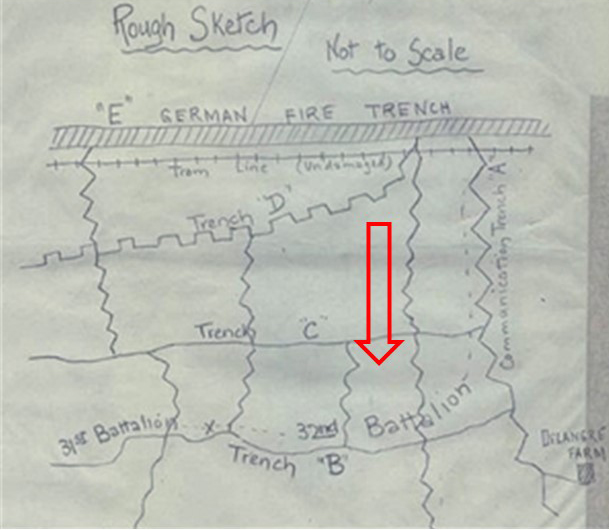
By 8.30 PM their left flank had come under heavy bombardment with high explosives and shrapnel. Return bombardment support was provided and the 32nd were told that “the trenches were to be held at all costs”.
Source - AWM4 23/49/12, 32nd Battalion War Diaries, July 1916, page 12
Fighting continued through the night. The Australians made a further charge at the main German line beyond Trench B, but they were low on grenades, there was machine gun fire from behind them from the emplacement at Delangre Farm and they were so far advanced that they were getting shelled by both sides. In the early morning of the 20th, the Germans began a counterattack from the Australian’s left flank, bombing and advancing into Trench A (map). Given the Australian advances that had been made earlier, the rear Trench E had been left almost empty, which then enabled the Germans to regain that trench and envelop the men of the 32nd. At 5.30 AM the Germans attacked from both flanks in force and with bombing parties. Having only a few grenades left, the only resistance they could offer was with rifles:
“The enemy swarmed in and the retirement across No Mans’ Land resembled shambles, the enemy artillery and machine guns doing deadly damage.”
What was left of the 32nd had finally withdrawn by 7.30 AM on the 20th. The initial roll call count was devastating – 71 killed, 375 wounded and 219 missing, including Charlie. To get some perspective of the battle, when Charles Bean, Australia’s official war historian, attended the battlefield two and half years later, he observed a large quantity of bones, torn uniforms and Australian kit still on the battlefield. The final impact was that 228 soldiers of the 32nd Battalion were killed or died from wounds sustained at the battle and, of this, 166 were unidentified. Lieutenant Sam Mills survived the battle. In his letters home, he recalls the bravery of the men:
“They came over the parapet like racehorses……… However, a man could ask nothing better, if he had to go, than to go in a charge like that, and they certainly did their job like heroes."
After the Battle
About 85% of the 32nd Battalion were casualties at Fromelles, killed, wounded or taken prisoner. In the immediate aftermath, there was much confusion and great difficulty in working out what had happened to each man. Charlie Plunket was killed in action at the Battle of Fromelles. No record or eye-witness account survives to give any indication about what might have happened to him during the battle. His mate, Roy Bolto (447) had survived and he tried to find out what had happened to Charlie. After describing in his diary how ‘those of us fortunate in escaping from the fire wandered wearily back to our billets, heartsick and fairly knocked up’, Roy wrote:
”My mate Charlie was killed in this charge I believe, for I cannot find any word concerning him, and the AMC say that he had not passed through any of the dressing stations as being wounded. The loss of Charlie was a big blow to me as we had been mates ever since enlisting. The only hope now is that he may be a prisoner of war.”
(Note - Of general interest, according to the research of Roger Freeman, Roy Bolto may have been the last surviving Fromelles veteran from the 32nd Battalion when he died in January 1990. Roy also was awarded the Military Medal for “great gallantry and devotion to duty during the battle of Bellicort on 29 September 1918.”)
Source – NAA B2455, Roy Luis Coppin Bolto – First AIF Personnel Dossiers 1914–1920, p 22
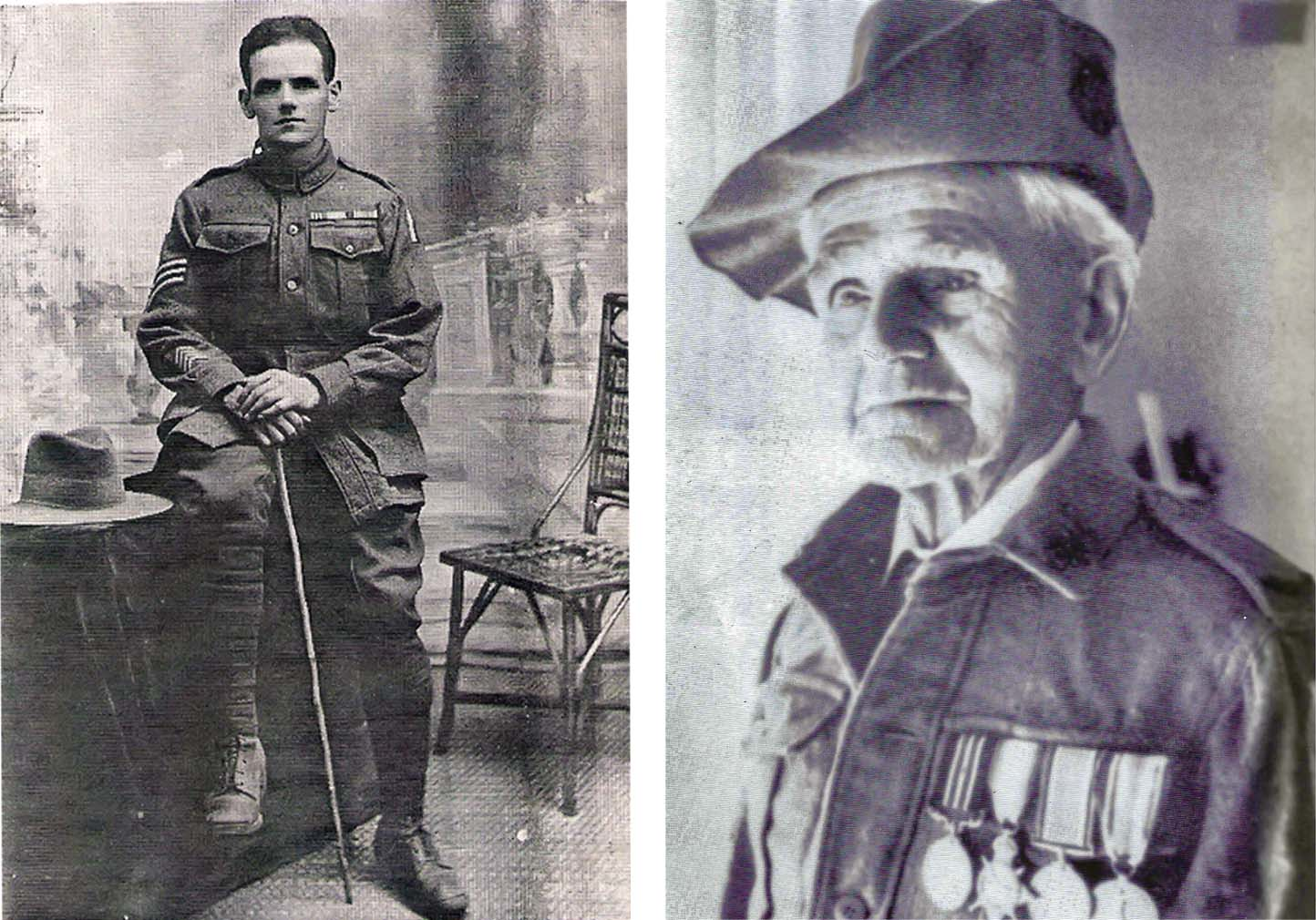
There is little record of the anxiety that must have been felt by the Plunket family in the months after Fromelles. On 28 August 1916, they were advised that Charlie was missing. On 1 March 1917, the YMCA wrote to the military on behalf of Charlie’s mother asking for any information as ‘his mother has not heard of him since June 30 and is naturally very anxious.’ The reply only confirmed that he was missing. In September 1917, they were advised that he had been officially declared killed in action.
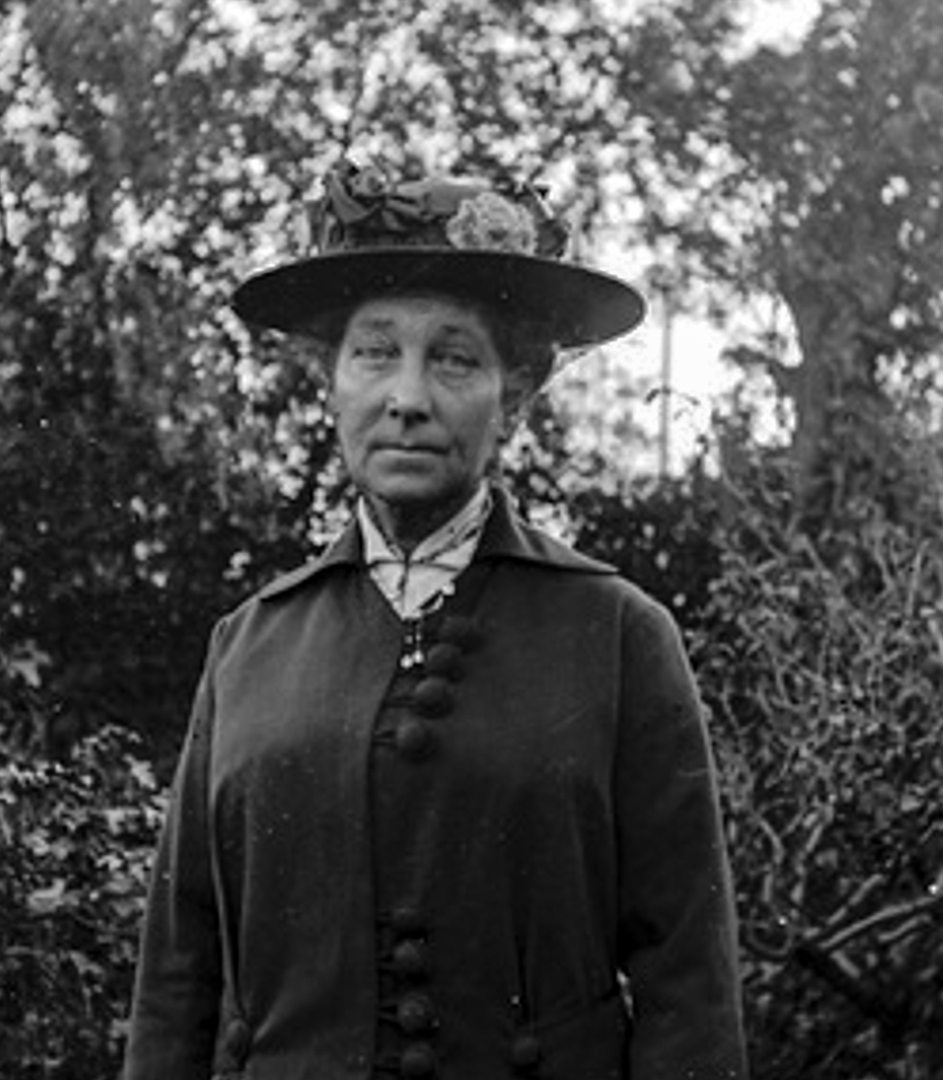
The Plunket’s’ only recorded communication with the military was in response to a 1921 circular to the families of men who had no known grave, seeking any information which might help in finding their remains. John Plunket responded:
’’We have delayed writing re our son’s fate because we have not hitherto had much information of a definite character. However recently a gentleman named Clarence Thorsen who was a private in the 32nd Battalion tells us he knew our son well, and the last he saw of him was going ‘over the top’ at Fleurbaix on 19-20 July 1916. The Defence authorities informed us at about this time that he was missing, but did not disclose any information regarding the neighbourhood.
”It seems conclusive enough therefore that he fell at Fleurbaix on the above date.”
(Note - men who fought in the battle referred to it as Fleurbaix – the name of the village on the allied side of the front line.)
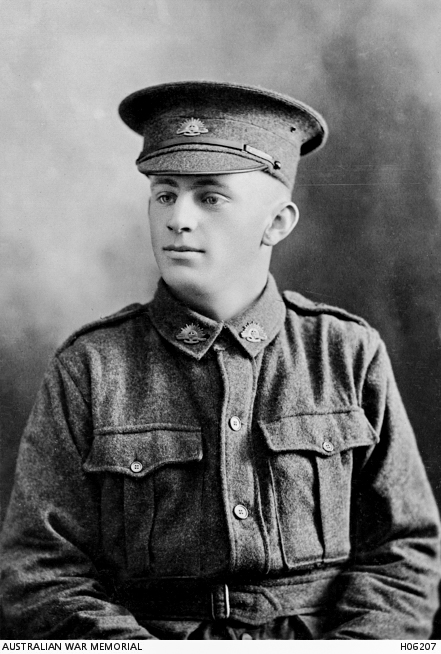
He spoke to the Plunket family about Charlie
Remembering Charlie Plunket
Charlie’s eldest sister, Kate, had married Norman Torode in May 1916. Their first child was born in October 1917, only weeks after the family was informed that Charlie had officially been declared killed in action. Kate and Norman named their son Charles. With Charlie’s death confirmed in September 1917, the first opportunity for the family to publicly remember him on the anniversary of his death was in 1918.
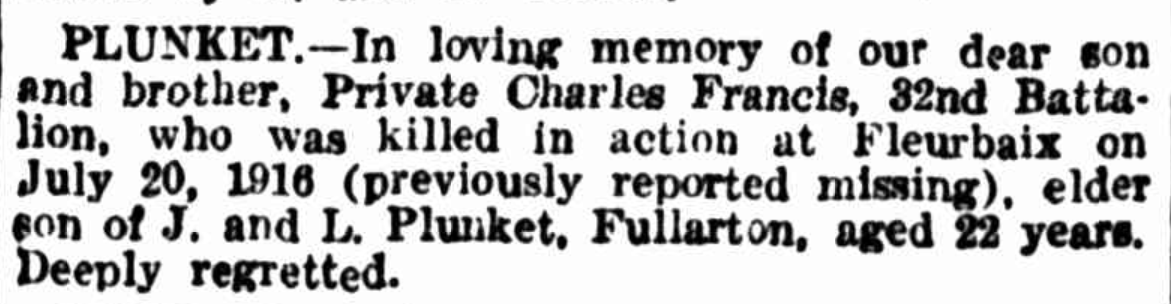
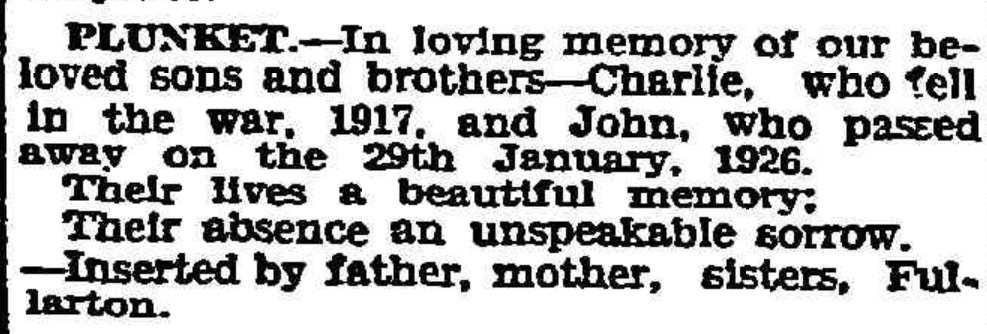
Every year after that, until the mid-1930’s there was a similar remembrance, sometimes combined with their remembrance of their only other son who had died in 1926. Their continuing pain was obvious.
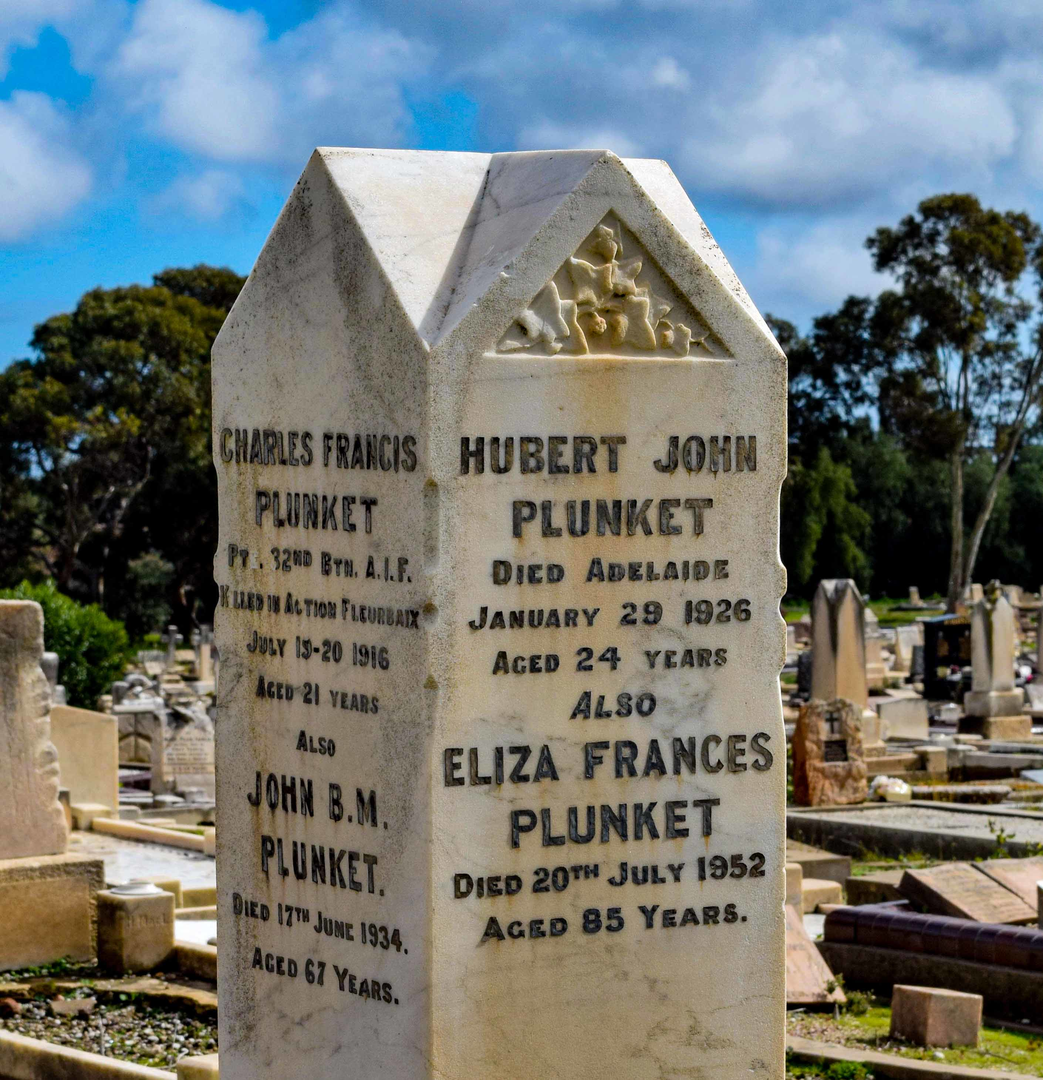
Charlie was also remembered by his family on the family gravestone in the West Terrace cemetery in Adelaide.
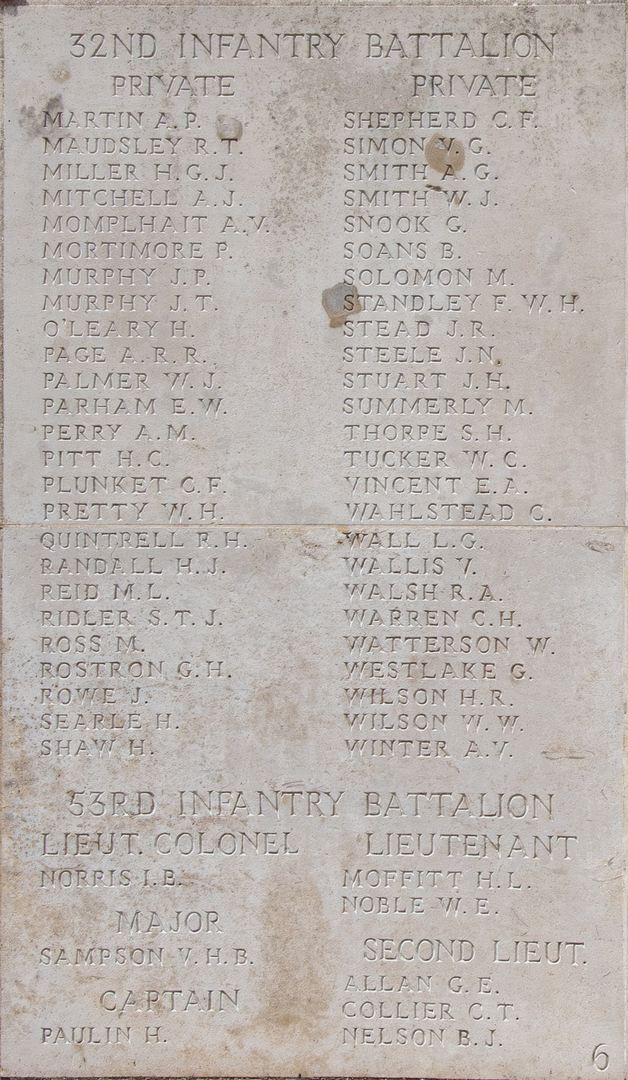
Charlie was awarded the 1914-15 Star Medal, the British War Medal, the Victory Medal, a Memorial Plaque and a Memorial Scroll. Charlie is remembered on Panel 6 at the V.C. Corner Australian Cemetery which honours all Australians who died at Fromelles and who have no known grave.
Charlie’s name is on the Adelaide High School Great War Honour Board, the Australian War Memorial Roll of Honour and the South Australian National War Memorial.
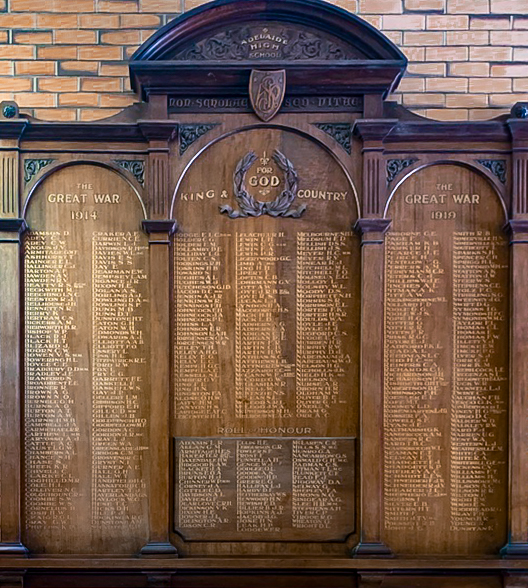
Charlie – Roll of Honour Centre Inset
In 1926, Jack, a teacher and the Plunket’s only surviving son after Charlie was killed, died of peritonitis.
Finding Charlie
Charlie’s remains were not recovered; he has no known grave. After the battle, the Germans recovered 250 Australian soldiers and placed them in a burial pit at Pheasant Wood. This grave was discovered in 2008 and since then efforts have been underway to identify these soldiers by DNA testing from family members. As of 2026, 181 of the soldiers have been identified, including 41 of the 166 unidentified soldiers from the 32nd Battalion. We welcome all branches of Charlie’s family to come forward to donate DNA to help with his identification. If you know anything of family contacts, especially those in Melbourne, Adelaide, London or Christchurch New Zealand, please contact the Fromelles Association.
We hope that one day Charlie will be named and honoured with a known grave. Please visit Fromelles.info to follow the ongoing identification project and Charlie’s story.
DNA samples are being sought for family connections to
| Soldier | Charles Francis Plunket (1893-1916) |
| Parents | John Bernard Marie (Pup) Plunket (1867-1934)) b. Brighton, Victoria, d. Adelaide, South Australia, and Eliza (Lizzie) Frances Rouvray (1867-1952) b. Melbourne, Vic d. Adelaide, South Australia |
| Siblings | James Plunket (1890-1891) b. and d. Richmond, Vic | ||
| Katherine (Kate) Florence Plunket (1892-1971), b. Richmond, Vic. d. Adelaide, SA, m. Norman Torode (1889-1950) 1 child | |||
| Elizabeth (Lizzie) Frances Plunket (1895-1972) b. Richmond Vic. d. Adelaide, SA, m. Owen Rodda (1882-1972) no children | |||
| Mary Helen Plunket (1897-1898) b. and d. Richmond, Vic | |||
| Violet (Viv) Plunket (1899-1937) b. Richmond, Vic d. Newcastle NSW, m. John Main, 2 children | |||
| Hubert John (Jack) Plunket (1901-1925) b. Richmond Vic. d. Adelaide, | |||
| Rose Plunket (1904-1995) b. Elsternwick, Vic, d Adelaide SA, m. Norman Cotterell (1904-1987) no children | |||
| Hazel Constance Plunket (1906-2005) Elsternwick Vic, d. South Australia m. Stuart Kippist (1907-2000) no children | |||
| Dorothy (Dot) Adelaide Plunket (1909-1987) b. Adelaide SA, d. SA m. Harry Adams (1913-2004) no children |
| Grandparents | |||
| Paternal | James Francis Truman Plunket (1831-1917) b. Southampton, England, d. Christchurch, New Zealand and Katherine Marie Prestage (1835-1917) b. London, England, d. Christchurch, New Zealand | ||
| Maternal | James Alexander Rouvray (1838-1906) b. London, England d. Melbourne (Vic) and Jane Eliza Passenger (c1845-1908) b. London, England, d. Melbourne (Vic) |
Links to Official Records
Seeking DNA Donors

Contacts
(Contact: carla@fromelles.info or geoffrey@fromelles.info).
(Contact: army.uwc@defence.gov.au or phone 1800 019 090).
Donations
If you are able, please contribute to the upkeep of this resource.
(Contact: bill@fromelles.info ).