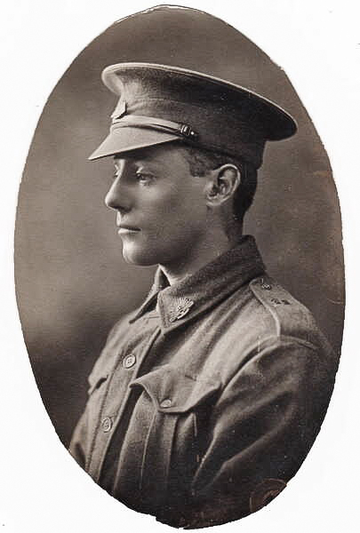
Bernard Cameron DUBOIS
Eyes hazel, Hair dark brown, Complexion medium
Bernard Cameron Dubois – Adelaide Artist
Can you help us identify Bernard?
Bernard Cameron Dubois’ body was never found after the Battle of Fromelles and there are no records of his burial.
A mass grave was found in 2008 at Fromelles, a grave the Germans dug for 250 Australian soldiers they recovered after the battle. As of 2026, 181 of these soldiers have been able to be identified via DNA testing.
Bernard may be among these remaining 69 unidentified men. There is still a chance to identify him — but we need help. We welcome all branches of his family to come forward to donate DNA to help with his identification, especially those with roots in the Adelaide area.
See the DNA box at the end of the story for what we do know about his family.
If you know anything of contacts for Bernard, please contact the Fromelles Association.
Early Life
Bernard Cameron Dubois was born in Findon, South Australia on 19 December 1887, the fourth of six children of Charles and Isabella (nee Wauchope) Dubois. On his father’s side, Bernard was descended from French Huguenots, religious refugees who settled in London at the end of the 17th century. His grandfather, John Gain Dubois (1766 -1836) was born and died in Spitalfields, the most concentrated Huguenot settlement in England. Bernard’s father, Charles (1817-1914) was a commercial clerk before he emigrated to South Australia with his first wife and four children, as unassisted passengers on the Irene in 1853.
Another daughter was born in Adelaide. In 1883, three years after his first wife died, he married the widowed Isabella Eadon (nee Wauchope). Isabella was born in Yatala, near Adelaide in 1856, the daughter of William Nelson (or Neilson) Wauchope and Isabella Lillias (or Lillian) Pringle Cameron, who had married in 1854. Despite a large age difference – Charles was 65 and Isabella was 27 when they married – the couple had six children, five of whom lived to adulthood. Bernard’s full siblings were:
- Wiliam Lewis Sedgewick (1884-1954)
- Harold Goodenough Wauchope (1885-1975)
- Gertrude Isabel (1886-1970)
- Ivy (1891-1966)
His older half siblings included Charles Louis Dubois (11842-1913), who had nine children. Bernard attended Nailsworth Primary School while the family was living in Prospect area of Adelaide. According to the Roll of Honour circular completed by his sister Ivy, he completed his education at Perth Boys School in Western Australia – he won the writing award for Standard VII in 1901. South Australian school records show that Ivy was attending Adelaide schools at this time, so why Bernard was in Perth is not clear.
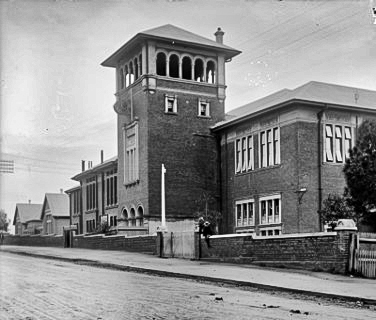
Following in his father’s footsteps, Bernard became an accountant and was employed for ten years by the prominent Adelaide legal firm, Glynn, Parsons and McEwin until his enlistment in 1915. However, Bernard’s main interest was the arts, and it was as an artist and as a prominent member of the Adelaide arts community that he was well known. He studied at the Adelaide School of Design and, with other students who had studied in the Life Class, formed the Adelaide Drawing and Sketching Club, of which he became the honorary secretary. In 1910, to raise funds for the facilities needed to make the Club a success, Bernard edited The High Light a 110-page collection of literary and artistic contributions, which in his introductory editorial he claimed to be the first of its kind in Australia. Bernard contributed two charcoal sketches, a drawing and a self-illustrated short story to The High Light .
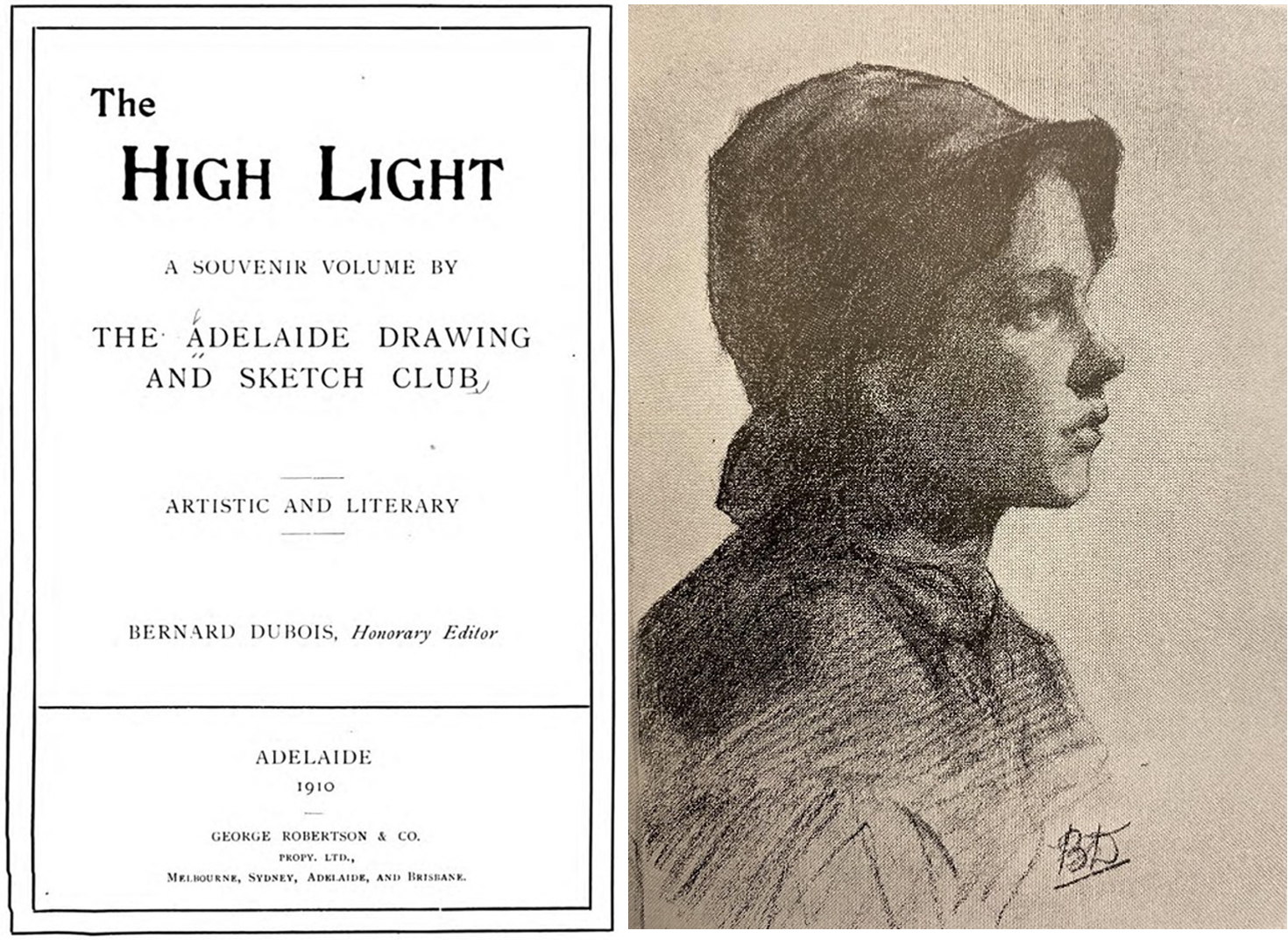
The High Light was reviewed extensively and favourably newspapers around the country. It was “In every way creditable to the contributors and editor”,
Source - AN ARTISTIC-PRODUCTION. The Advertiser 11 August 1910: p.12. http://nla.gov.au/nla.news-article5256270
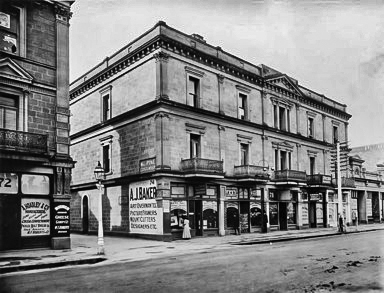
Photo taken in 1909, probably the year the Club moved into the building
Thanking the generosity of artists and writers who contributed to and supported the publication, he saw it as a ‘pleasing manifestation of the bon esprit among Bohemians and dilettanti of Australia’. The contributor with the most enduring fame was Mary Gilmore (later Dame Mary) whose first volume of poetry had been published in the same year. But there were eleven other contributors, writers, poets, artists, cartoonists and others who are included in the Australian Dictionary of Biography. Six other contributors are readily found in online databases. Bernard had clear ideas of the essentials for a good work of art (‘drawing, delicacy and good colour’) and on several occasions he provoked public discussion by writing to Adelaide newspapers to express his concern about standards in Adelaide art exhibitions.
For example, in November 1912, he reacted strongly to the choices made for display in an exhibition of the Society of the Arts. He wrote of “the number of appalling canvasses, lacking in all delicacy and feeling which cover the walls of the present exhibition”, and the “huge and unsightly canvasses which dominate the walls in the best position, to the exclusion of other smaller and infinitely more artistic works”.
Source - THE ART EXHIBITION AND THE NATIONAL GALLERY. The Register) 23 November 1912: p11 http://nla.gov.au/nla.news-article59240928
Bernard was also well known in lacrosse and yachting circles in Adelaide. The Struggle, his short story in The High Light’ described the efforts of a sailor to get his boat back to shore during a storm, during which the only other crewman was swept overboard and drowned. During this time, Bernard developed a friendship and working relationship with Edward Alfred Wolff, with whom he shared similar interests.
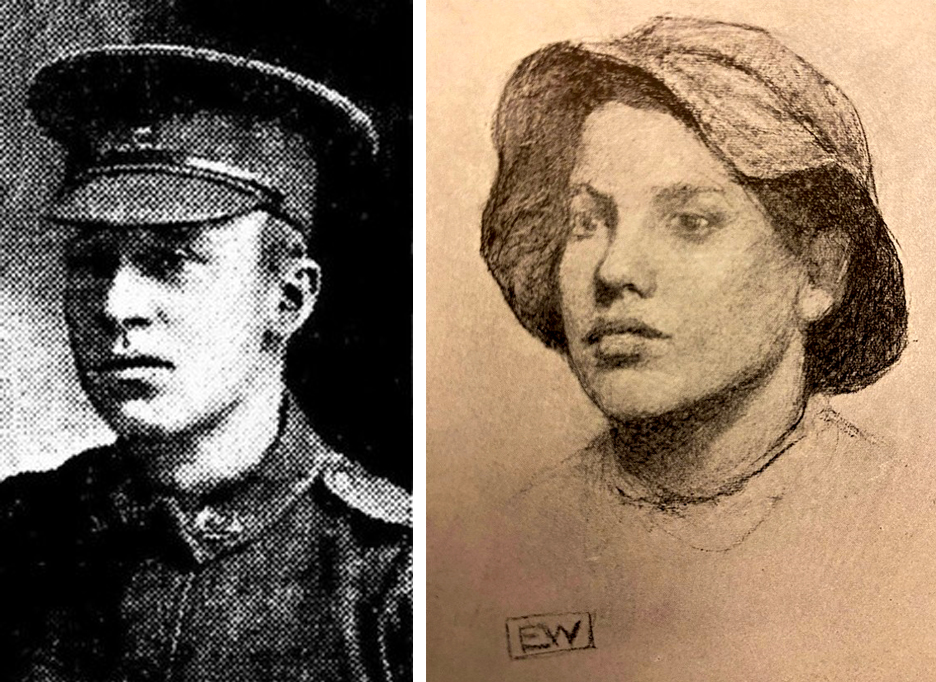
Edward, one year older than Bernard, was a photo engraver also well known in art circles in Adelaide. He was a member of the Drawing and Sketch Club and he worked closely with Bernard in the production of The High Light. It is likely that, as a photo engraver, he was responsible for the high quality of the reproductions of artistic work. For three years from 1911, Wolff was in France and America gaining further experience in his trade. When war broke out, he returned to Australia from America and renewed his friendship with Bernard Dubois.
Off to War
It is almost certain that Bernard Dubois and Edward Wolff made the decision to go together to Keswick Barracks in Adelaide to enlist. The dates in their attestation papers are identical for both men – they filled in forms and had their medicals on 14 July 1915 and began their service when they reported to Mitcham Camp on 20 July. Bernard named his younger sister, Ivy, who also worked for Glynn, Parsons and McEwin, as his next of kin. Bernard and Edward were assigned to the 32nd Battalion when it was formed in August, and both became members of A Company.
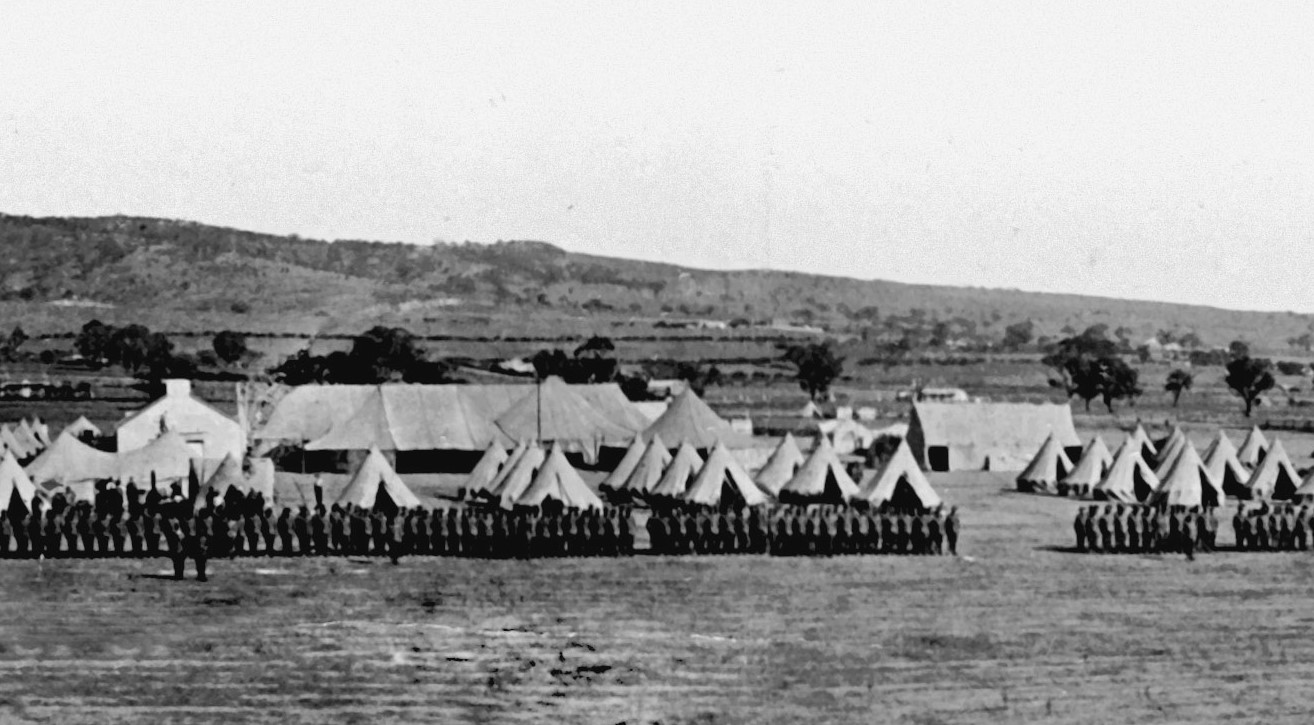
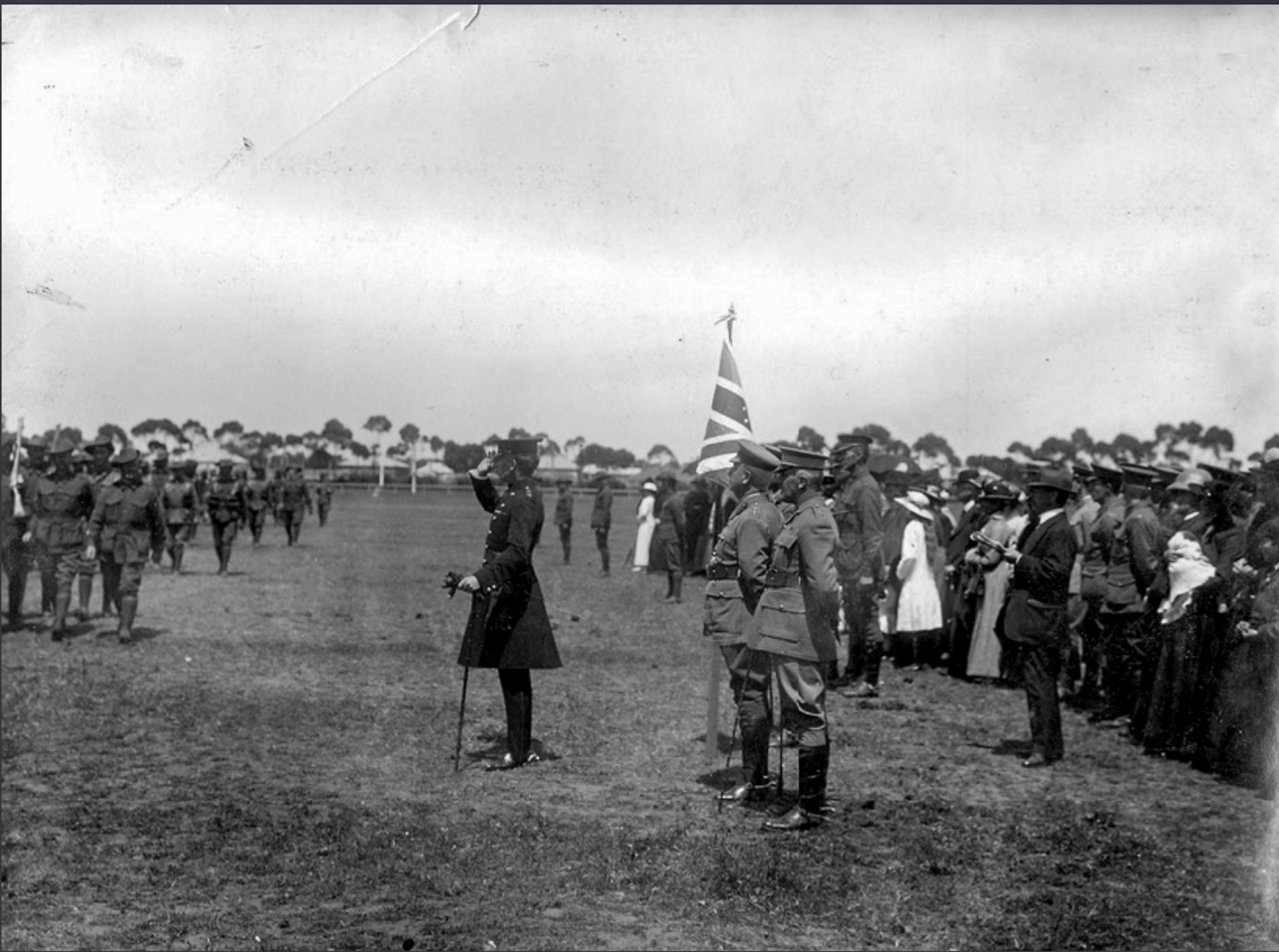
The 32nd Battalion was made up of recruits from South Australia and Western Australia. There was much fanfare about this new battalion in South Australia, with gatherings, community support, Cheer-up Society activities, reviews of the troops by the governor, and parades through the streets of Adelaide. On 16 September, the South Australians members of the Battalion moved to a new camp at Cheltenham Racecourse and the West Australians who had begun their training at Blackboy Hill near Perth joined them at the end of September. On 4 November, two weeks before embarkation for the camps in Egypt, Bernard was promoted to Lance Corporal, a rank he held until the Battle of Fromelles.
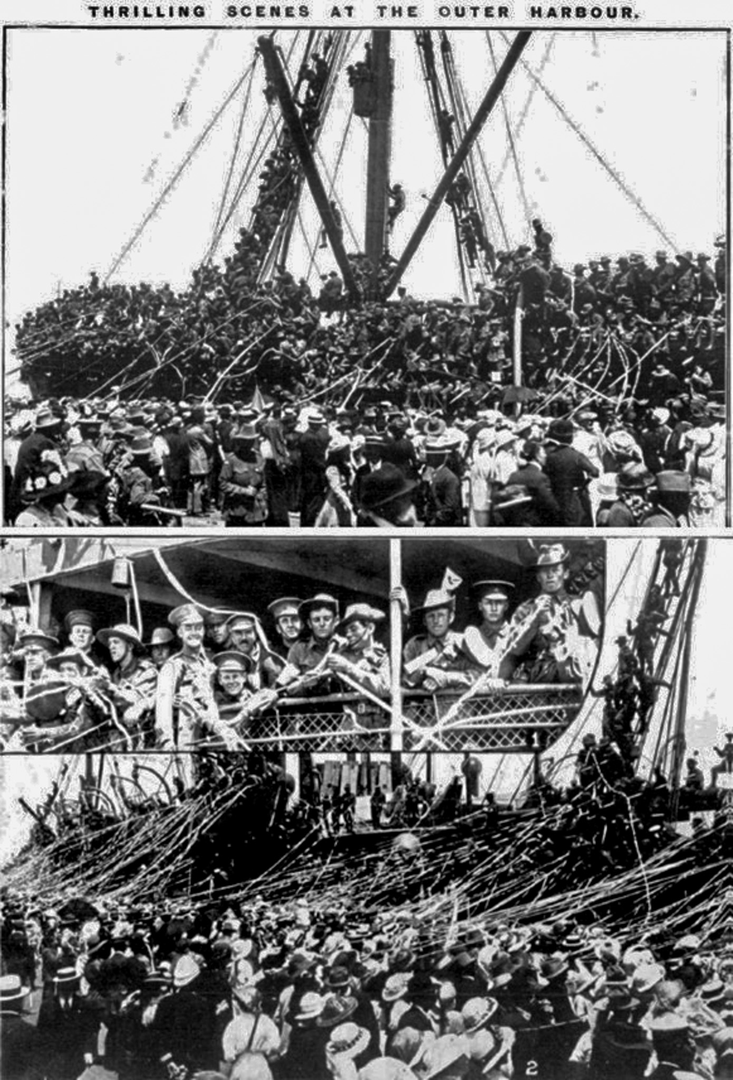
The 32nd Battalion departed for Egypt on 18 November 1915 on HMAT A2 Geelong . As reported in The Adelaide Register:
“The 32nd Battalion went away with the determination to uphold the newborn prestige of Australian troops, and they were accorded a farewell which reflected the assurance of South Australians that that resolve would be realised.
The 32nd arrived in Suez on 14 December 1915 and moved to El Ferdan just before Christmas. A month later they marched to Ismailia and then to the major camp at Tel-el-Kebir where they stayed for February and most of March. Tel-el-Kebir was about 110 km northeast of Cairo and the 40,000 men in the camp were comprised of Gallipoli veterans and the thousands of reinforcements arriving regularly from Australia. Their next stop was at Duntroon Plateau and then they were at Ferry Post until the end of May, where they trained and guarded the Suez Canal.
Their last posting in Egypt was a few weeks at Moascar. One soldier’s diary complained of being “sick up to the neck of heat and flies”, of the scarcity of water during their long marches through the sand and he described some of the food as “dog biscuits and bully beef”. He did go on to mention good times as well with swims, mail from home, visiting the local sights and the like.
Source - AWM C2081789 Diary of Theodor Milton PFLAUM 1915-16, page 29, page 12 During their time in Egypt the 32nd had the honour of being inspected by H.R.H. Prince of Wales.
After spending six months in Egypt, the call to support the British Expeditionary Force on the Western Front came in mid-June. The 32nd left from Alexandria on the ship Transylvania on 17 June 1916, arriving at Marseilles, France on 23 June 1916 and they then immediately entrained for a three-day train trip to Steenbecque. Their route took them to a station just out of Paris, within sight of the Eiffel Tower, through Boulogne and Calais, with a view of the English Channel, before disembarking and marching to their camp at Morbecque, about 30 kilometres from Fleurbaix. Theodor Pflaum (No. 327) and Wesley Choat (No. 68) wrote:
“The people flocked out all along the line and cheered us as though we had the Kaiser as prisoner on board!!” – Theodore Pflaum
“The change of scenery in La Belle France was like healing ointment to our sunbaked faces and dust filled eyes. It seemed a veritable paradise, and it was hard to realise that in this land of seeming peace and picturesque beauty, one of the most fearful wars of all time was raging in the ruthless and devastating manner of “Hun” frightfulness”. – Wesley Choat
They were headed to the area of Fleurbaix in northern France which was known as the ‘Nursery Sector’ – a supposedly relatively quiet area where inexperienced Allied troops could learn the harsh realities of Western Front trench warfare against the Germans. But the quiet times did not last long. Training continued with a focus on bayonets and the use of gas masks, assuredly with a greater emphasis, given their position near the front. The 32nd moved to the Front on 14 July and Bernard was into the trenches for the first time on 16 July, only three weeks after arriving in France.
The Battle of Fromelles
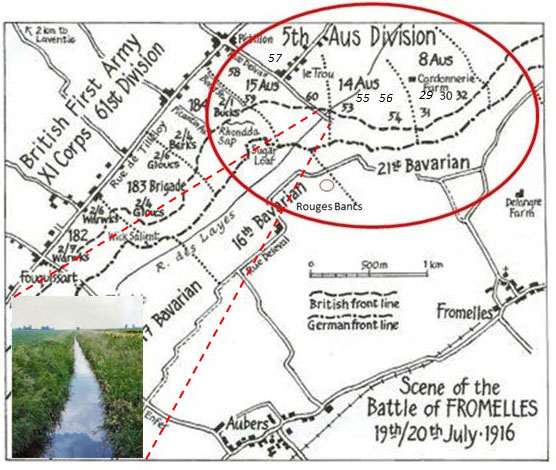
Inset - River Layes from the Australian Front Line looking towards the Sugar Loaf
On the 17th they were reconnoitring the trenches and cutting passages through the barbed wire, preparing for an attack, but it was delayed due to the weather. D Company’s Lieutenant Sam Mills’ letters home were optimistic for the coming battle:
“We are not doing much work now, just enough to keep us fit—mostly route marching and helmet drill. We have our gas helmets and steel helmets, so we are prepared for anything. They are both very good, so a man is pretty safe.”
The overall plan was to use brigades from the Australian Fifth Division to conduct a diversionary assault on the German trenches at Fromelles. The 32nd Battalion’s position was on the extreme left flank, with only 100 metres of No Man’s Land to get the German trenches. As they advanced, they were to link up with the 31st Battalion on their right. However, their position made the job more difficult, as not only did they have to protect themselves while advancing, but they also had to block off the Germans on their left, to stop them from coming around behind them. On the morning of the 18th, Bernard’s A Company and C Company went into the trenches to relieve B and D Companies, who rejoined the next day.
The Zero Hour for advancing from their front-line trenches was to be 5.45 PM, but the Germans knew this attack was coming and were well-prepared. They opened a massive artillery bombardment on the Australians at 5.15 PM, causing chaos and many casualties. Bernard’s A Company, along with C Company were in the first and second waves to go over the parapet at 5.53 PM. B Company and D Company were in the third and fourth. The men, despite heavy losses, were successful in the initial assaults and by 6.30 PM were in control of the German’s 1st line system (map Trench B), which was described as “practically a ditch with from 1 to 2 feet of mud and slush at the bottom”.
Source - AWM4 23/49/12, 32nd Battalion War Diaries, July 1916, page 11
Unfortunately, with the success of their attack, ‘friendly’ artillery fire caused a large number of casualties because the artillery observers were unable to confirm the position of the Australian gains. They were able to take out a German machine gun in their early advances, but were being “seriously enfiladed” from their left flank.
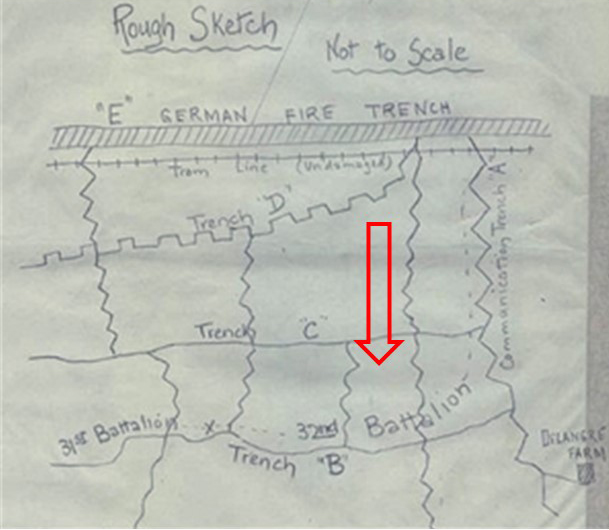
By 8.30 PM their left flank had come under heavy bombardment with high explosives and shrapnel. Return bombardment support was provided and the 32nd were told that “the trenches were to be held at all costs”.
Source - AWM4 23/49/12, 32nd Battalion War Diaries, July 1916, page 12
Fighting continued through the night. The Australians made a further charge at the main German line beyond Trench B, but they were low on grenades, there was machine gun fire from behind them from the emplacement at Delangre Farm and they were so far advanced that they were getting shelled by both sides. In the early morning of the 20th, the Germans began a counterattack from the Australian’s left flank, bombing and advancing into Trench A (map). Given the Australian advances that had been made earlier, the rear Trench E had been left almost empty, which then enabled the Germans to regain that trench and envelop the men of the 32nd. At 5.30 AM the Germans attacked from both flanks in force and with bombing parties. Having only a few grenades left, the only resistance they could offer was with rifles:
“The enemy swarmed in and the retirement across No Mans’ Land resembled shambles, the enemy artillery and machine guns doing deadly damage.”
What was left of the 32nd had finally withdrawn by 7.30 AM on the 20th. The initial roll call count was devastating – 71 killed, 375 wounded and 219 missing, including Bernard and his mate Edward Wolfe. To get some perspective of the battle, when Charles Bean, Australia’s official war historian, attended the battlefield two and half years later, he observed a large quantity of bones, torn uniforms and Australian kit still on the battlefield. The final impact was that 228 soldiers of the 32nd Battalion were killed or died from wounds sustained at the battle and, of this, 166 were unidentified. Lieutenant Sam Mills survived the battle. In his letters home, he recalls the bravery of the men:
“They came over the parapet like racehorses……… However, a man could ask nothing better, if he had to go, than to go in a charge like that, and they certainly did their job like heroes."
An Unofficial Telegram
About 85% of the 32nd Battalion were casualties at Fromelles, killed, wounded or taken prisoner. In the immediate aftermath, there was much confusion and great difficulty in working out what had happened to each man. Bernard Dubois was one of the many men missing after the battle. It took several weeks for there to be an awareness in South Australia that the 32nd had been involved in a momentous battle and that there had been many casualties. However, on 31 July, ten days after the battle, an unofficial telegram was received from London at the offices of Bernard’s employer, the legal firm of Glynn, Parsons and McEwin in King William Street, Adelaide.
It had originally been sent on 22 July. It stated, along with names of three other casualties, that Bernard was missing. No doubt Ivy Dubois, who also worked with the firm, would have been quickly informed. The other casualties mentioned in the telegram, all from the 32nd Battalion, were Edward Wolff (missing), Corporal Bryan Humphris (killed) and Lt. Allan Campbell (wounded).
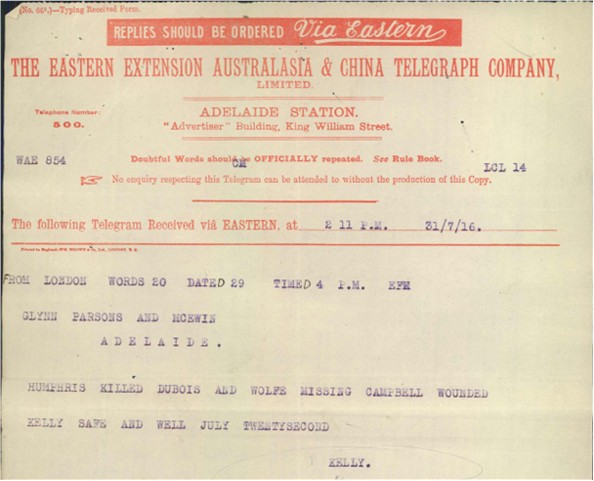
How it made its way to London and then to the legal offices in Adelaide is unclear, but it meant that these families were made aware of what happened to their sons during the battle much earlier than the families of other casualties. The information was correct, although it did not become official for several weeks (and the Humphris family was, in the meantime, incorrectly informed by the military that he had been wounded.) The message, from 122 Lance Corporal Lawrence Stewart Kelly, who was a clerk in the 32nd Battalion Orderly Room, is a good example of how pre-war mates looked after one another.
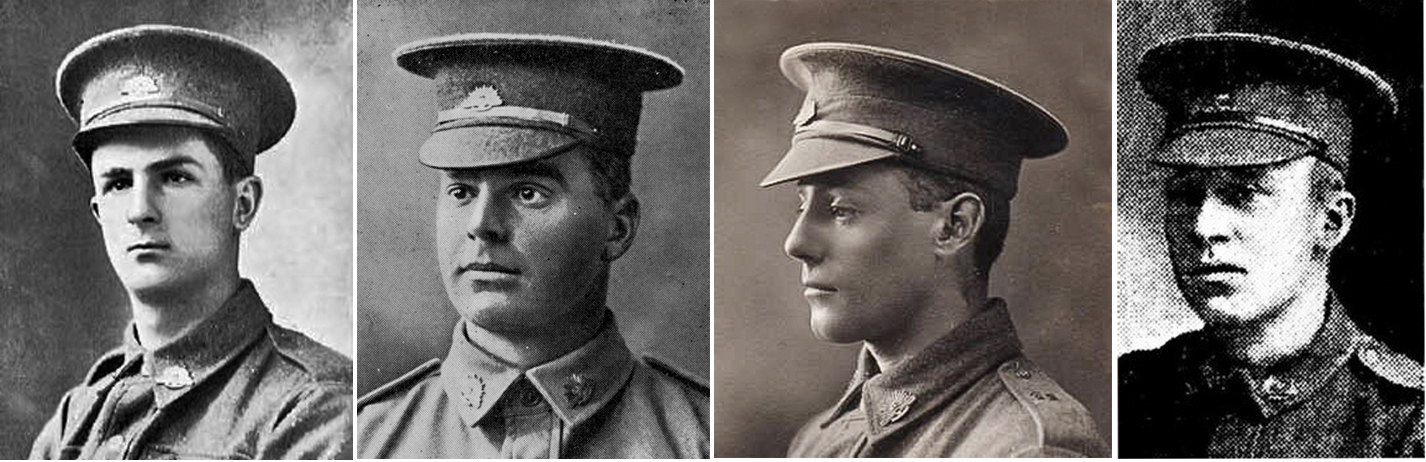
Bryan Humphris and Lawrence Kelly were both employees of the National Bank, and Bernard Dubois and Edward Wolff were long-time friends. Bernard had been an accountant at the law firm to which the cable was sent. An additional reason for the telegram being sent to the law firm was that a friend of at least two of the men was an articled clerk at the firm. Hubert Scott was from Moonta and he and Bryan Humphris had both played in the Moonta lacrosse team in the Yorke Peninsula competition. Also, on the anniversary of Fromelles in 1920, Hubert inserted a newspaper memorial, “In memory of my good friends, Corporal Bryan Humphris and Lance-Corporal B. Dubois, both 32nd Battalion, killed in action at Fleurbaix, 19/7/1916.” Hubert later acted for the Humphris, Dubois and Wolff families as they sought clarification of the fate of the three men.
Source – "Family Notices" The Advertiser 19 July 1920: 6. http://nla.gov.au/nla.news-article37525386
The anxious families sought definite information from the military through the SA Red Cross Information Bureau about the fate of Bernard, Edward Wolff and Bryan Humphris. In early September Ivy Dubois was officially informed by Base Records that Bernard was missing. The Wolff family received similar news, and the death of Bryan Humphris was officially confirmed.
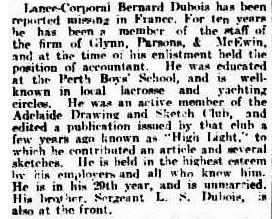
Although the Army and the Red Cross undertook major efforts to find the missing, there are no witness statements or other documentation about where Bernard was in the battle. Bernard remained officially missing until September 1917 when Ivy was informed (along with the next of kin of other missing men) that a Court of Enquiry had determined that he had been killed in France on 20 July 1916.
What happened to Bernard?
It wasn’t enough for families to have a man’s death confirmed – they wanted details of where and how he had died and they wanted him to be found. They had not been told by the military where a man had died. In a letter enquiring about Bernard’s belongings that had not been returned to her, Ivy Dubois referred to him being killed at ‘Pozieres?’ (her question mark), which began just days after Fromelles. This was a common assumption, indicative of the lack of public information about the Battle of Fromelles, and of information given to families about a man’s death. Ivy, by talking with families of other men in his unit, was able to find out more about the possible circumstances of his death.
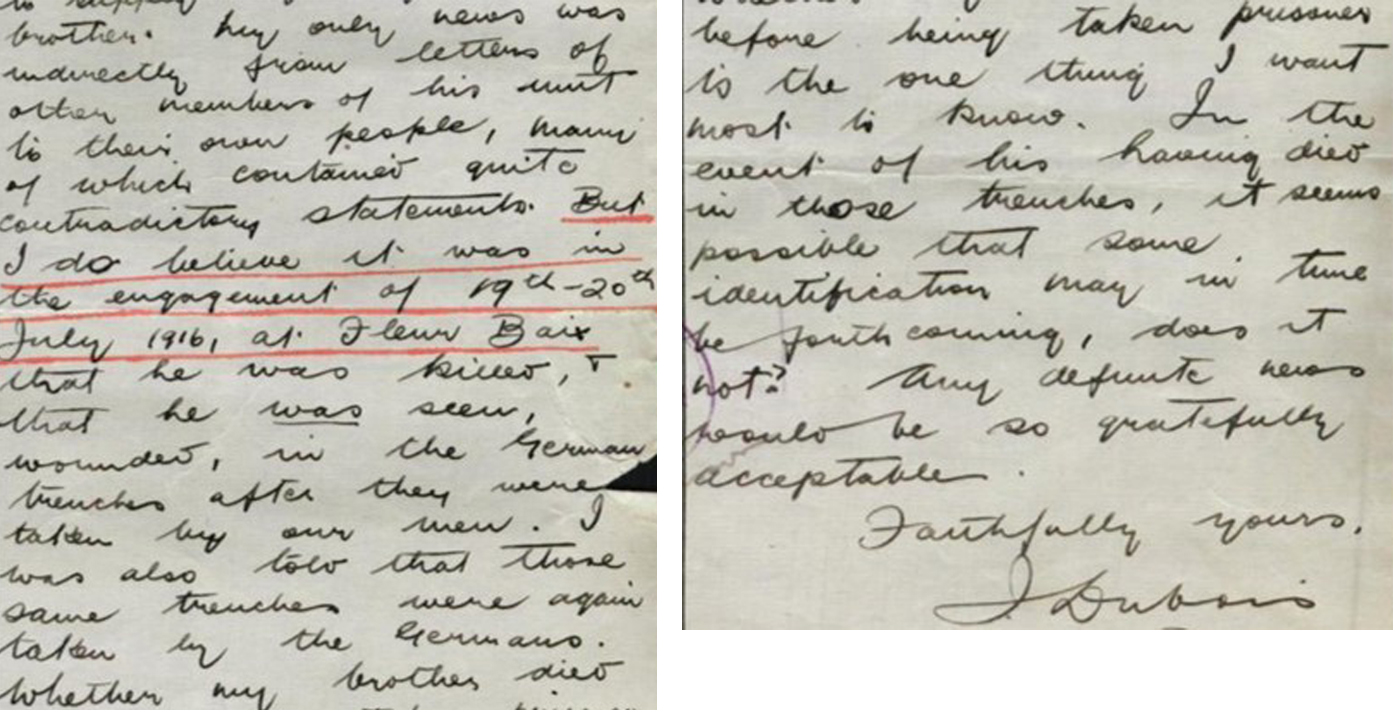
In a note in response to a circular sent to families of missing men in 1921, she wrote that she understood that he had died at ‘Fleurbaix’ (the battle name used by the men at the time, referencing the village on the allied side of No Man’s Land rather than the German side). She believed that he had been seen, wounded, in the German trenches which had been taken in the initial charge, and that these trenches were again taken by the Germans. What she really wanted to know was whether Bernard had died before being taken prisoner. Ivy would have known what happened to Bernard’s friend, Edward Wolff. Like Bernard, he had been declared missing (both in the early telegram and later by the military).
However, it was later confirmed that Edward had been wounded in the German lines, before being taken prisoner when the trenches were retaken. Suffering from a GSW (either shrapnel or a bullet) to his neck which had damaged his spinal cord, he died of his wounds in a German hospital on 5 September. He was buried in a military cemetery at Douai, in France. Bernard, Ivy believed, had also been wounded in the German lines but there was no evidence that he had been taken prisoner:
”In the event of his having died in those trenches, it seems possible that some identification may in time be forthcoming, does it not? Any definite news would be so gratefully accepted.”
Frustrations for Ivy
Ivy knew that Bernard had ‘a camera, silver cigarette case and the like’ with him in France. In 1919, she wrote to Base Records stating, “I have never on any occasion received back any of his kit, nor have any of his letters been returned to me”. She hoped Base Records could help to get “any of his little personal items returned to me”. Nothing ever came, especially disappointing if she knew that the few personal items that Edward Wolff had when he died as a prisoner of war had been returned to Edward’s family by his German captors.
Source: NAA: 2455 DUBOIS, Bernard- First AIF Personnel Dossiers, 1914-1920, p.20
In the same letter she asked for advice from Base Records about an issue faced by some families of men who, like Bernard, had been insured with AMP Society. “Although nearly three years have elapsed, this society still refuses to finalize matters on the grounds that insufficient evidence of death has been given”.
Source: NAA: 2455 DUBOIS, Bernard- First AIF Personnel Dossiers, 1914-1920, p.20
The response, understandably, was that the Court of Enquiry had sifted all available evidence, and providing a certificate of death was all they could do. It is not known when AMP was finally convinced to pay out. Ivy, as Bernard’s designated next of kin, has much to deal with after his death. However, based on Army protocols of the time, she was not the automatic recipient of his medals and other memorials of his service. She would have been grateful to her brother, Lewis Sedgewick Dubois who waived his right to all Bernard’s medals in her favour. There is no doubt she would have valued them.
Lawrence Kelly – their mate who met with a tragic end
Lawrence Kelly advanced from the position of clerk in the Battalion Orderly Room while in Egypt to become an Orderly Room Sergeant and was awarded the Meritorious Service Medal for his devotion to duty. Lawrence, who qualified as an accountant after the war, may have been a delayed casualty of the war. In November 1930, he took his own life by drinking poison in the sandhills at Brighton in Adelaide. The inquest into his death linked it to his war experience.
“William James Kelly, of Rosefield (father of deceased), said that his son was a returned soldier who had been badly gassed at the war. He was sometimes morose and despondent.”
Source - "BODY IN SANDHILLS" The News (Adelaide, SA : 1923 - 1954) 14 November 1930: 11 (HOME EDITION). Web. 24 Aug 2026, http://nla.gov.au/nla.news-article128953997
Bernard’s eldest brother, Lewis Sedgewick Dubois
Lewis Dubois (born William Lewis Sedgewick Dubois) enlisted in the AIF in early 1915, He was attached to Divisional Trains, vital horse-drawn logistics units in the Army Service Corps responsible for supplying fighting units, until the end of the war. Lewis was at Gallipoli from 12 September 1915 until the withdrawal on 20 December. Promoted to Sergeant in Egypt, he embarked for France in April 1916. According to one source, he was in the Fromelles area at the time of the Battle of Fromelles, and subsequently was in support at Pozieres, Mouquet Farm and other major battles until May 1918 when he was transferred to the AASC Training Depot in England.
He returned to Australia in early 1919. When Bernard was listed as missing in September 1916, Ivy Dubois became Lewis’ nominated next of kin. In 1941 at the age of 57, Lewis enlisted in the 2nd AIF, and as a Sergeant, detached to duty at Loveday Italian POW Camp 9, in the South Australian Riverland. He was discharged at the end of December 1944.
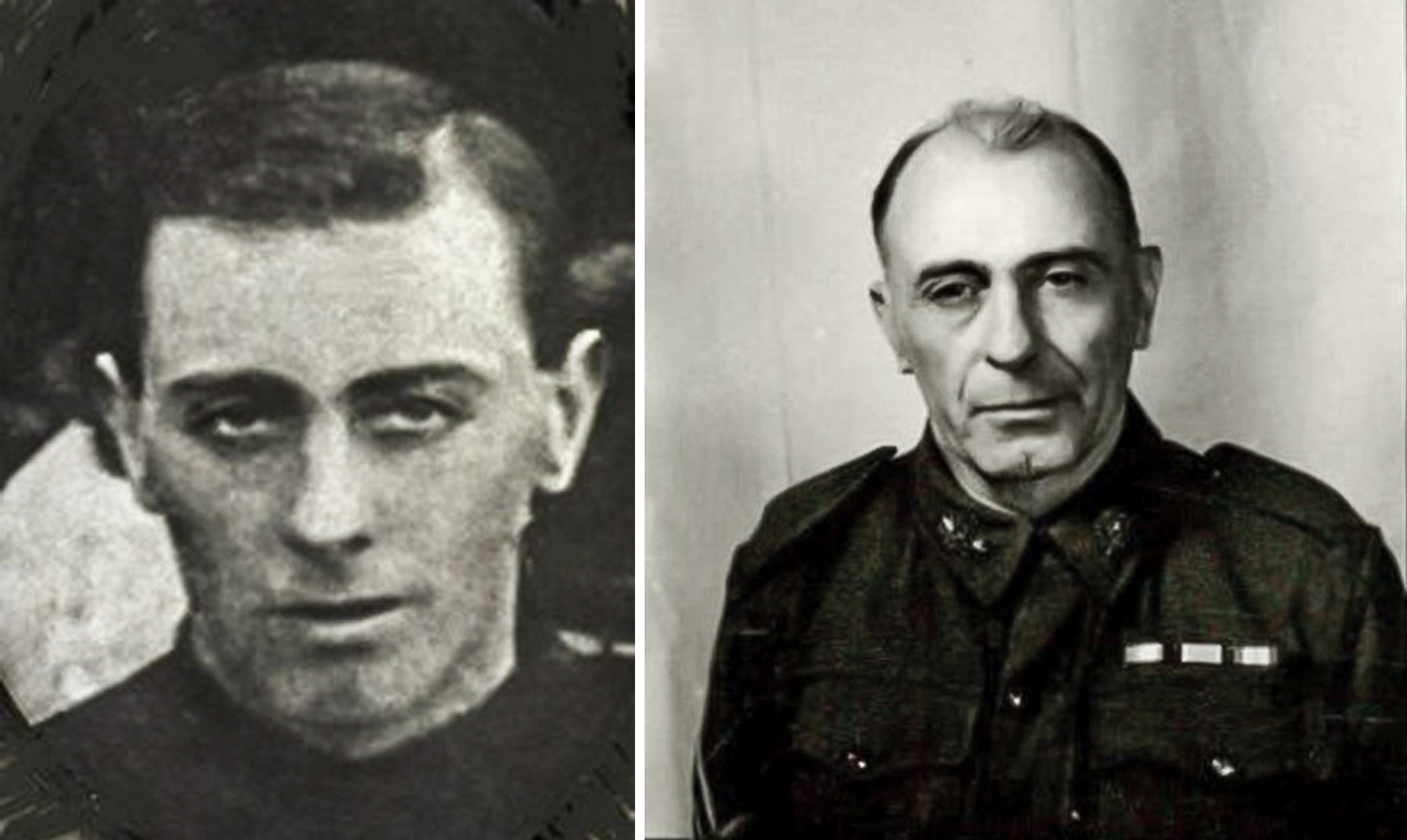
Left- as a younger man around the time of WW1. Right- from his WWII War Records
Remembering Bernard Dubois
The arts community in Adelaide honoured Bernard Dubois. In 1918 an exhibition at the studio of Archibald Collins (who had been a contributor to The High Light in 1910) had a special feature of the “brilliant efforts” of the two artists who had “made the supreme sacrifice”, Bernard Dubois and Edward Wolff. At the same exhibition, “beautiful studies by Miss Marjorie Church” were sold in aid of the Trench Comforts Fund. Marjorie had been another significant contributor to Bernard’s 1910 publication.
Source - PICTURES AND THE WAR." The Register 10 April 1918: p.8. http://nla.gov.au/nla.news-article60345712
Bernard is commemorated at:
- Panel 4 at the VC Corner Australian Cemetery and Memorial, Fromelles, France
- the Nailsworth Primary School Great War Roll of Honour
- the South Australian National War Memorial
- the Australian War Memorial Roll of Honour
Finding Bernard
Bernard’s remains were not recovered; he has no known grave. After the battle, the Germans recovered 250 Australian soldiers and placed them in a burial pit at Pheasant Wood. This grave was discovered in 2008 and since then efforts have been underway to identify these soldiers by DNA testing from family members. As of 2026, 181 of the soldiers have been identified, including 41of the 166 unidentified soldiers from the 32nd Battalion.
We welcome all branches of Bernard’s family to come forward to donate DNA to help with his identification, especially those in the Adeliade area. If you know anything of family contacts, please contact the Fromelles Association. We hope that one day Bernard will be named and honoured with a known grave.
Please visit Fromelles.info to follow the ongoing identification project and Bernard’s story.
DNA samples are being sought for family connections to
| Soldier | Bernard Cameron Dubois (1887–1916) |
| Parents | Charles Lewis Dubois (1817–1914), born Essex, England, died Adelaide, South Australia, and Isabella Wauchope (1856–1906), born Yatala, South Australia, died Glenelg, South Australia |
| Siblings | William Lewis Sedgewick Dubois (1884–1954), born Findon, died Arno Bay, South Australia, never married | ||
| Harold Goodenough Wauchope Dubois (1885–1975), born Findon, died Tailem Bend, married Ivy Muriel Clarke, three children | |||
| Gertrude Isabella Dubois (1886–1970), born Reedbeds, died Norwood, South Australia, married Clarence Hilton McMurray, one child | |||
| Ivy Dubois (1891–1966), born Edwardstown, died McLaren Flat, South Australia, never married | |||
| Half-siblings | Charles Louis Dubois (1842–1913), born Stepney, London, died Port Lincoln, South Australia, married Susanna Marie Bogue, nine children | ||
| Agnes Dubois (1852–1934), born England, died South Australia, married Charles Ive, three children | |||
| Kate Elizabeth Dubois (1854–1936), born Norwood, died South Australia, married Charles Barry, four children | |||
| Helen Dubois, married James Williams |
| Grandparents | |||
| Paternal | John Gain Dubois (1776–1836), born and died Spitalfields, London, and Mary Duffield (1796–1877), born and died England | ||
| Maternal | William Neilson Wauchope (1823–1893) and Isabella Lillias “Lilian” Pringle Cameron (1839–1903), born Edinburgh, Scotland, died Adelaide, South Australia |
Links to Official Records
Seeking DNA Donors

Contacts
(Contact: carla@fromelles.info or geoffrey@fromelles.info).
(Contact: army.uwc@defence.gov.au or phone 1800 019 090).
Donations
If you are able, please contribute to the upkeep of this resource.
(Contact: bill@fromelles.info ).