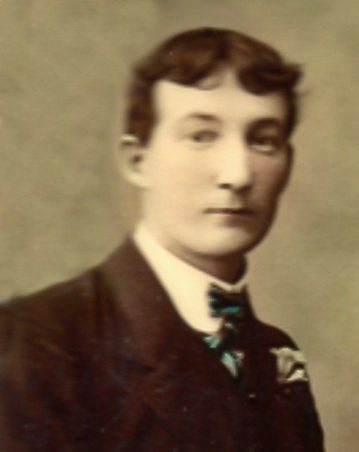
Frederick James HOLMES
Eyes hazel, Hair dark, Complexion medium
Frederick James Holmes – “Home Sweet Home”
Early Life
Frederick James (“Fred”) Holmes was born at Sandford, Victoria, in 1887, the son of George Holmes (1855-1934) and Julia Harman (1861-1896).George had been born in England in 1855. In September 1856, when he was still an infant, George arrived in Victoria aboard the Saldanha with his parents George Holmes and Jane (Tyers) Holmes and three of his siblings. The family settled in Victoria’s Western District.In 1882, George married Julia Harman in Victoria. Their children were:
- Ethel May (1882–1964)
- Herbert George (1884–1974)
- Percy (1886–1980)
- Frederick James (1887–1973)
- Arthur Leonard (1889–1918)
- Goldie (1891–1972)
- Alma Jane (1895–1913)
Unfortunately, Fred’s mother Julia died in 1896, when he was about nine years old. George married Betsy Swain in 1900 and they had one daughter, Bessie Imelda (1903–1985), Fred’s half-sister. George worked as a miller and the family lived at Casterton. Fred and his younger brother Arthur attended Casterton State School. In May 1917, both brothers were included on the school’s Honour Roll of former pupils who had enlisted during the war. Fred’s first cousin, Edgar Charles Holmes, was also born at Sandford, in 1891. Edgar was the son of George’s brother, William Tyers Holmes, and Elizabeth Jane Baxter. The cousins grew up in the same district and both later went off to war. Fred served with the 32nd Battalion, while Edgar served with the 59th Battalion.
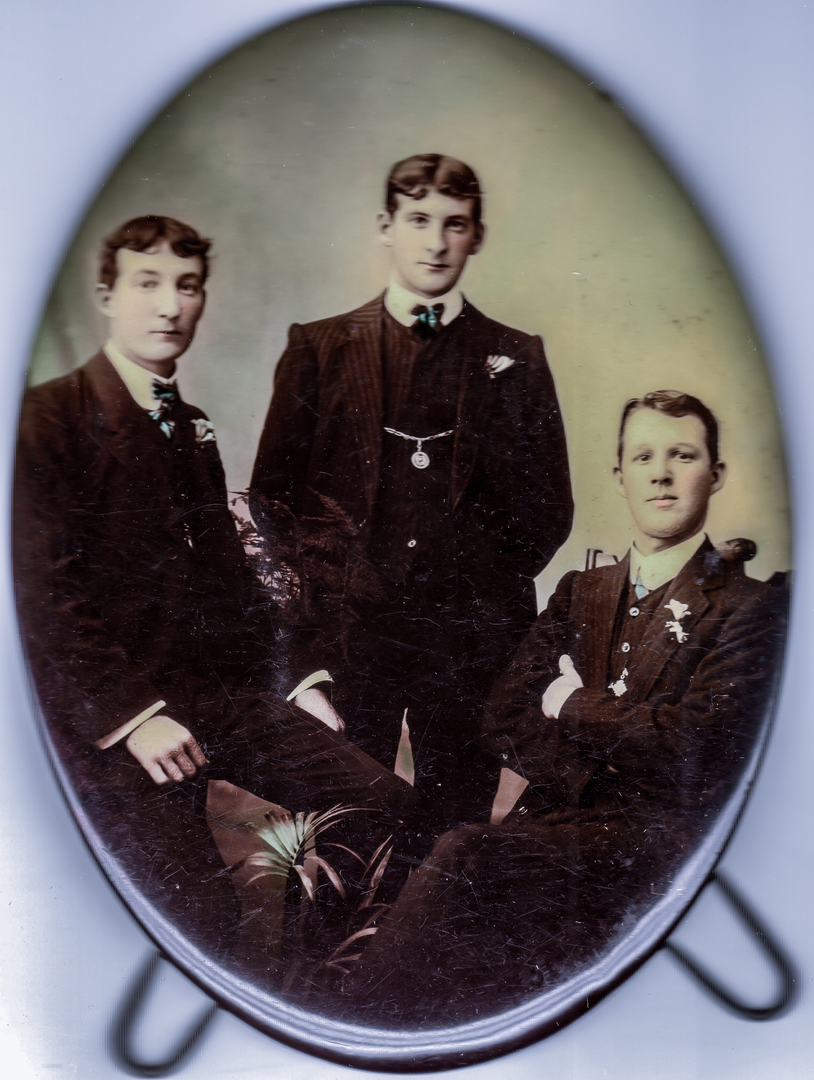
Before enlisting, Fred moved to Mount Gambier and worked as a telegraph linesman. He was also a talented musician and became a valued tenor trombone player with the Mount Gambier Vice-Regal Band. He remained a regular member of the band until leaving for military camp in September 1915.
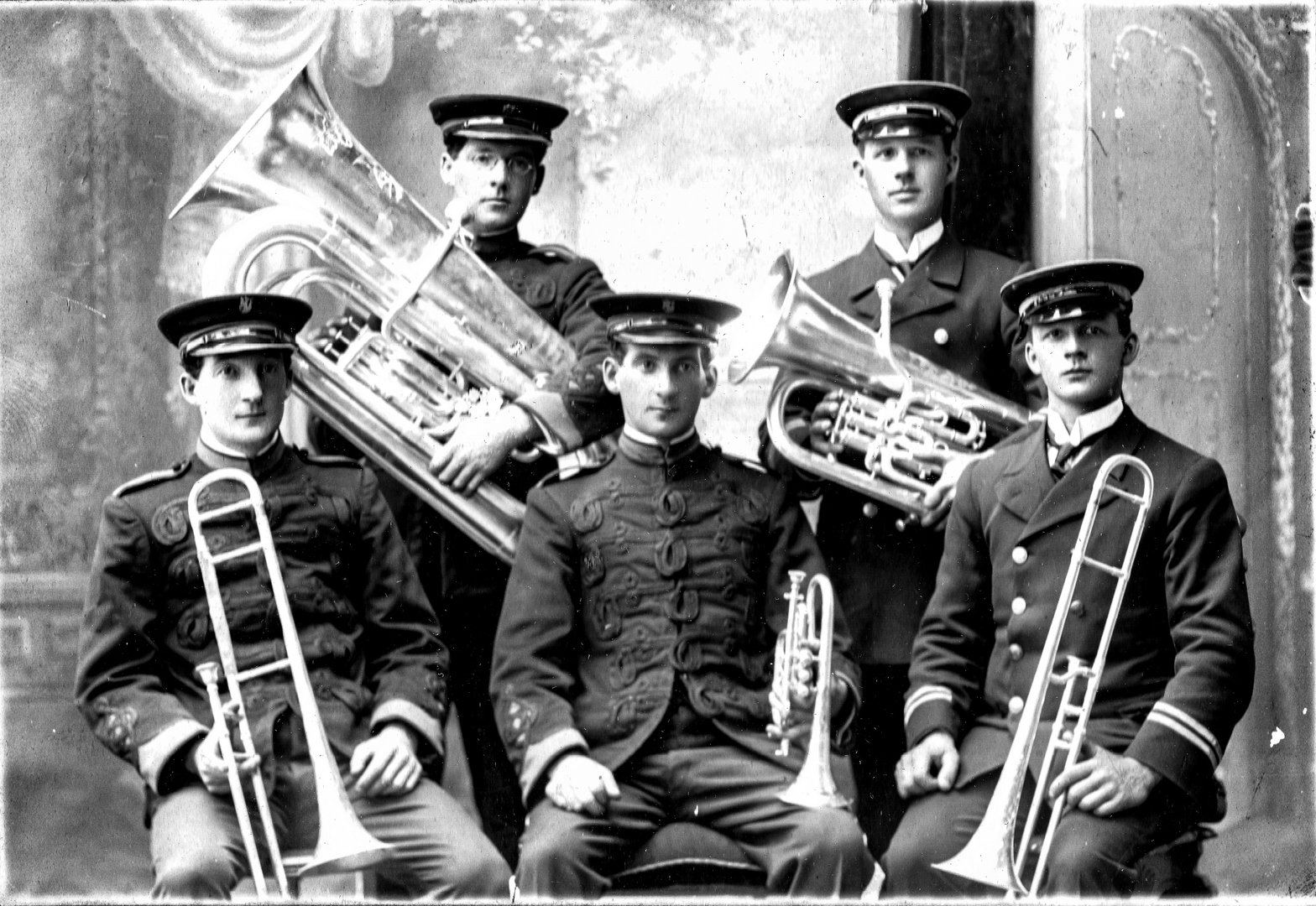
Back row: Brother Percy, Cousin Jack
Front row: Fred, Brother Goldie, Cousin Ernest
Off to War
On Monday evening, 6 September 1915, Frederick was among nineteen young men farewelled at the Mount Gambier railway station before leaving for military camp in Adelaide. A large crowd gathered to wish the recruits good luck. The Mayor J. F. Palamountain and Colonel F. H. Daniel addressed the men and praised their courage. The Vice-Regal Band attended the farewell and played appropriate music. Fred and fellow bandsman E. Heffernan were each presented with a set of military hairbrushes. As the train departed, the crowd cheered and the band played the National Anthem.
Source - ‘Soldiers Farewelled’, The Border Watch, 8 September 1915, p. 3. http//nla.gov.au/nla.news-article77778457
Fred enlisted at Adelaide on 7 September 1915. He was 27 years and 11 months old, single and working as a telegraph linesman. He was allotted service number 266 and posted as a private to A Company of the newly raised 32nd Battalion.
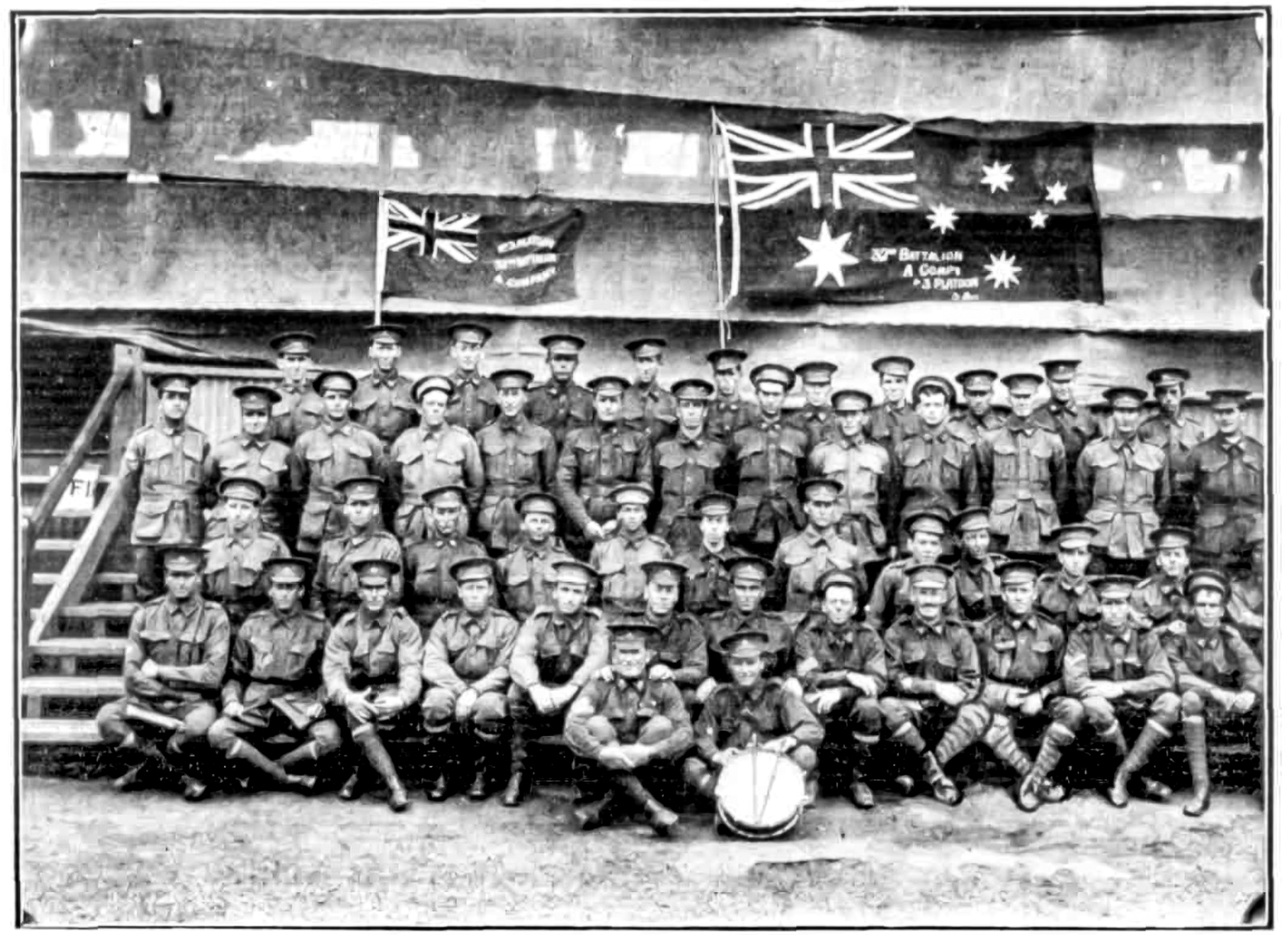
The 32nd Battalion had been raised in August 1915 as part of the newly formed 8th Brigade. It was a composite unit, with the right half of the battalion drawn from South Australia and the left half from Western Australia. There was much fanfare about this new battalion in South Australia, with gatherings, community support, such as the Cheer-up Society and reviews of the troops by the Premier. Training for the South Australians began at Mitcham Camp in Adelaide, where the officers and recruits began to form one fighting unit.
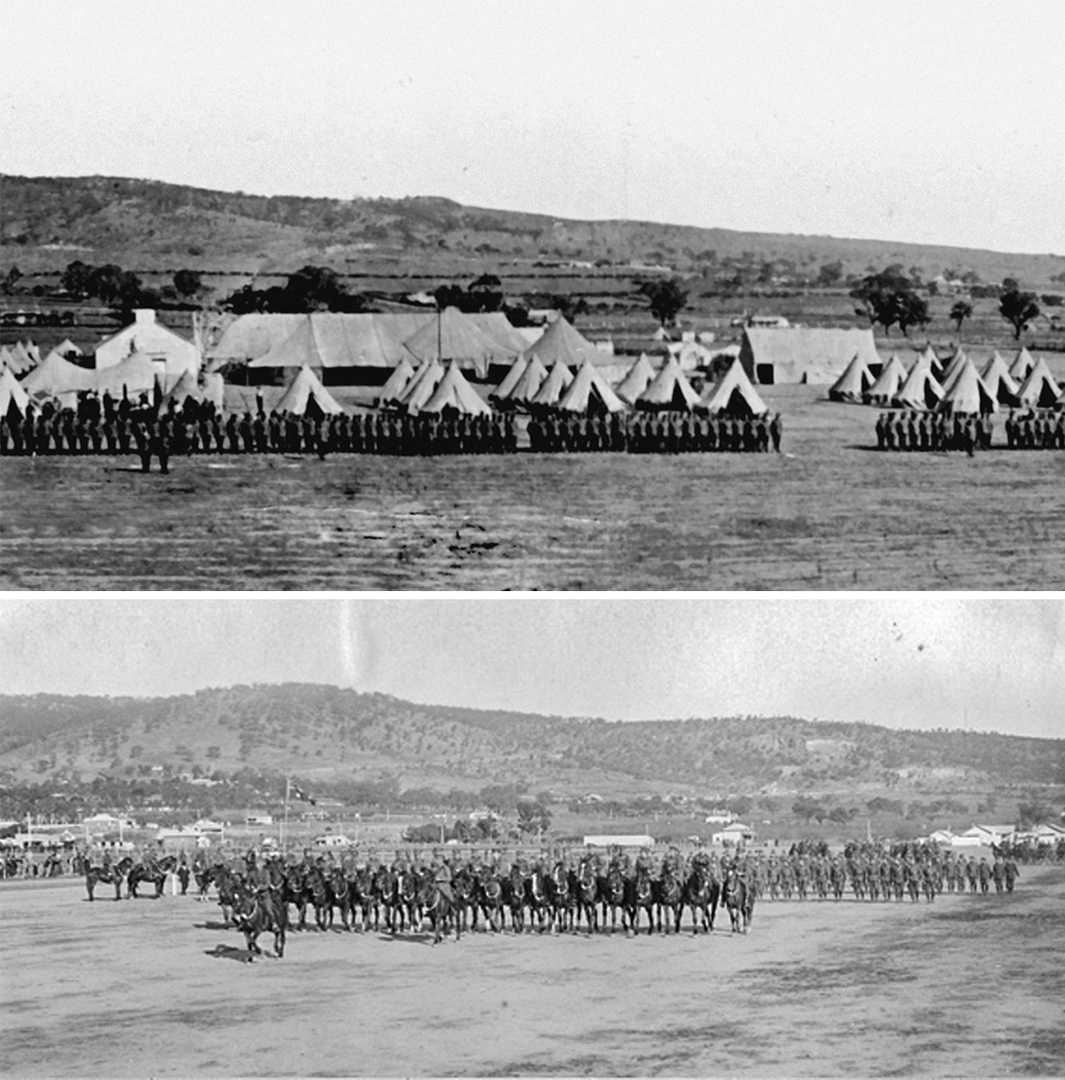
The Western Australian men had trained at Blackboy Hill Camp near Perth before arriving in Adelaide at the end of September. With their arrival, the whole battalion assembled at Cheltenham Racecourse Camp and continued training in preparation for overseas service.
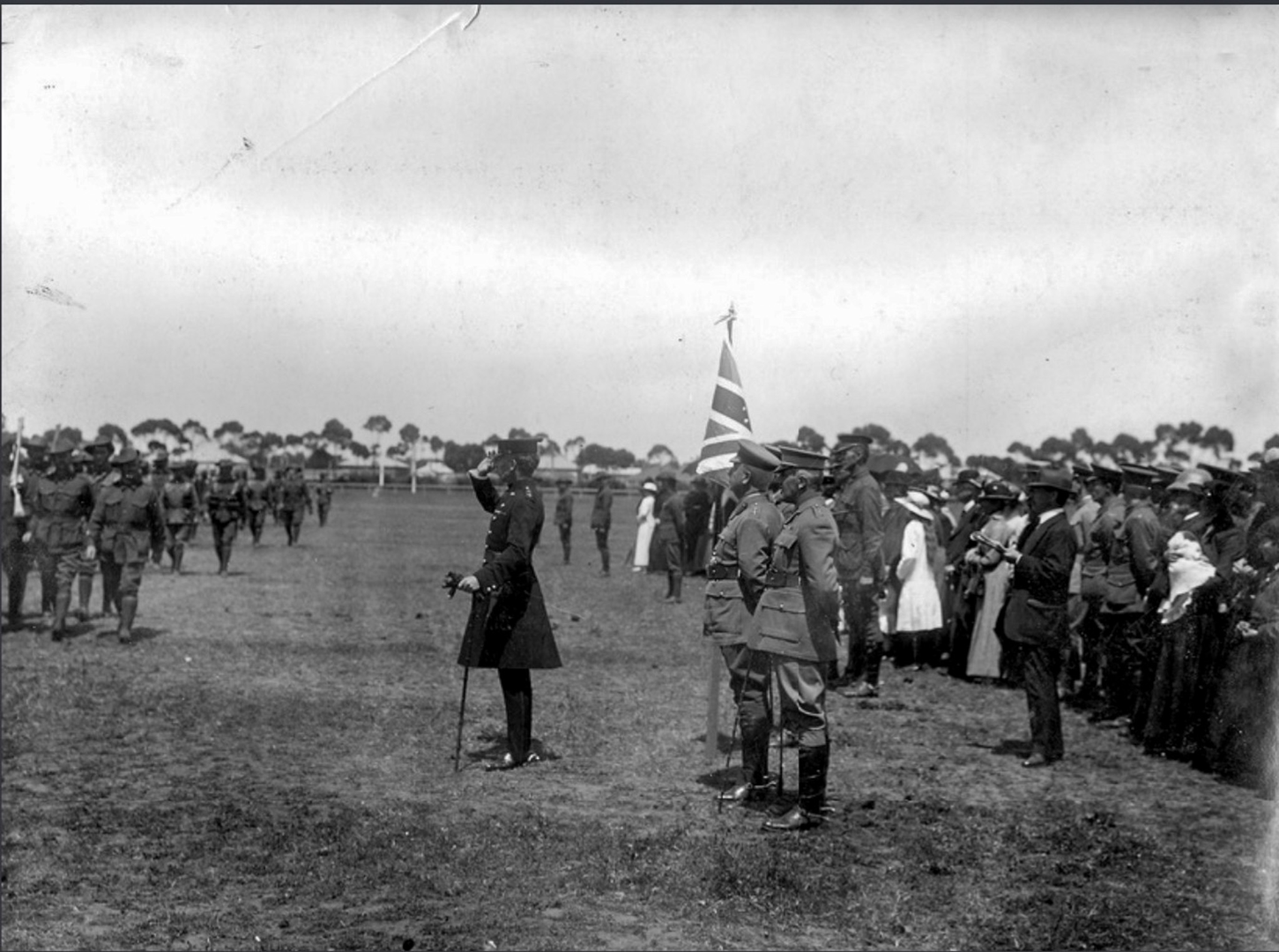
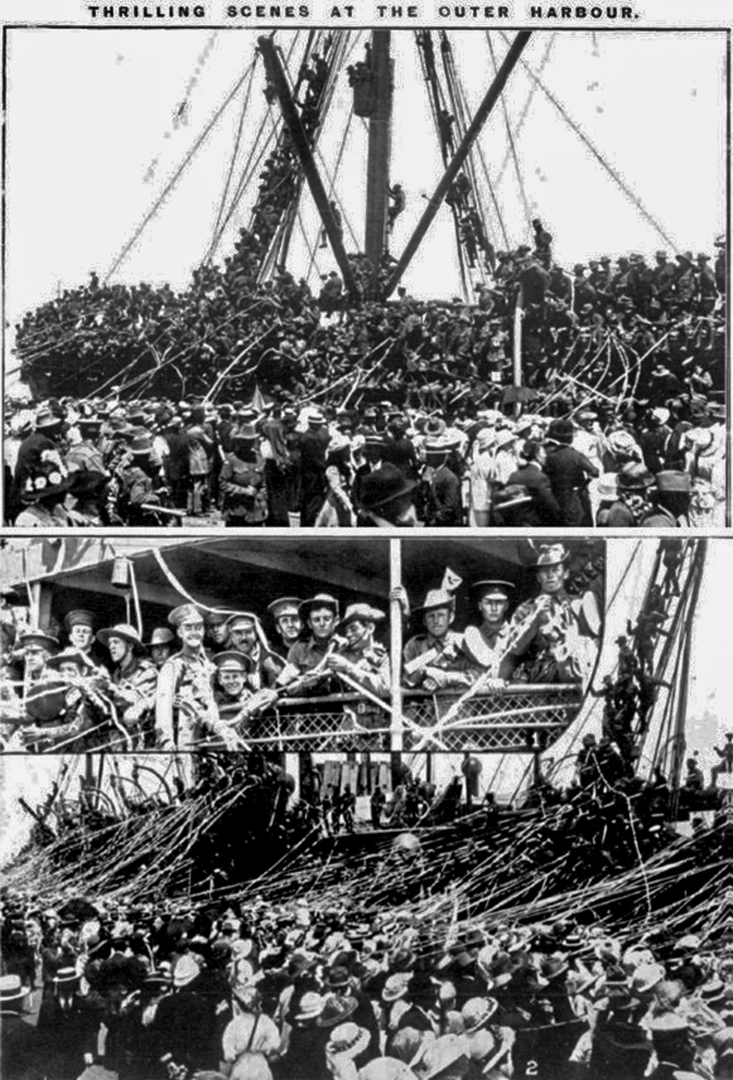
Fred embarked with the 32nd Battalion on 18 November 1915 from Adelaide, South Australia, on the HMAT A2 Geelong. As reported in The Adelaide Register:
“The 32nd Battalion went away with the determination to uphold the newborn prestige of Australian troops, and they were accorded a farewell which reflected the assurance of South Australians that that resolve would be realized.”
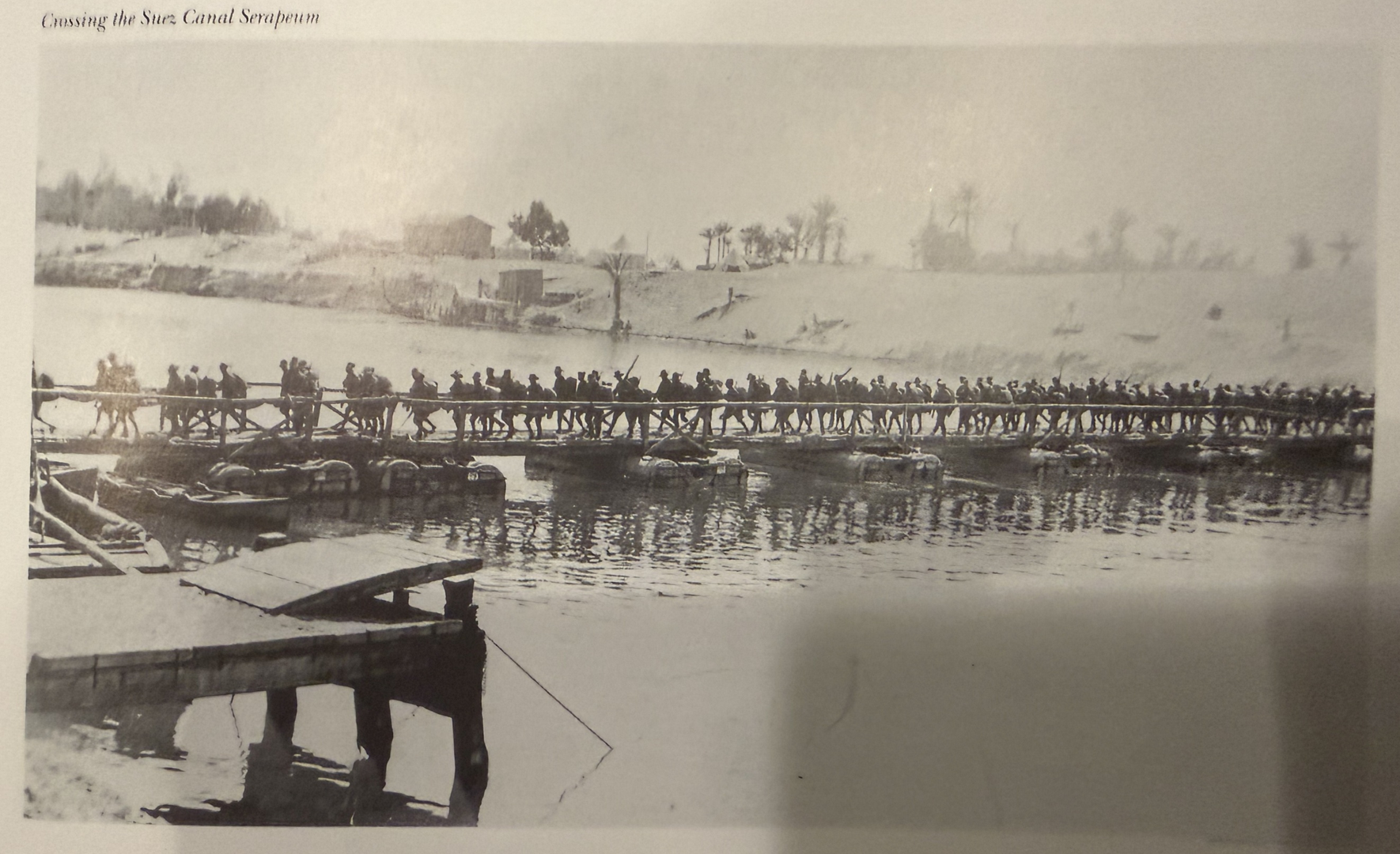
The battalion reached Suez a month later and spent the following six months moving between El Ferdan, Ismailia and Tel el Kebir. Tel-el-Kebir was about 110 km northeast of Cairo and the 40,000 men in the camp were comprised of Gallipoli veterans and the thousands of reinforcements arriving regularly from Australia. Their next stop was at Duntroon Plateau and then at Ferry Post until the end of May where they trained and guarded the Suez Canal. At Duntroon Plateau and Ferry Post, the men undertook guard duties along the Suez Canal before completing their training at Moascar in May 1916.
The heat, flies, monotonous duties and unchanging rations made conditions difficult. One South Australian private wrote that he was “sick up to the neck of heat and flies… dog biscuits and bully beef.” He did go on to mention good times as well with swims, mail from home, visiting the local sights and the like.
Source - Australian War Memorial. Diary of Theodor Milton Pflaum 1915–16, C2081789
In June 1916, the 32nd Battalion boarded the Transylvania at Alexandria heading for France. The men disembarked at Marseilles on 23 June and travelled north by train through the French countryside. Private Theodor Pflaum recalled the enthusiastic reception they received:
“The people flocked out all along the line and cheered us as though we had the Kaiser as prisoner on board!!”
For many of the men, the change from the heat and sand of Egypt to the green fields of France was welcome. Private Wesley Choat described the contrast:
“The change of scenery in La Belle France was like healing ointment to our sunbaked faces and dust filled eyes. It seemed a veritable paradise, and it was hard to realise that in this land of seeming peace and picturesque beauty, one of the most fearful wars of all time was raging in the ruthless and devastating manner of ‘Hun’ frightfulness.”
They were headed to the area of Fleurbaix in northern France which was known as the ‘Nursery Sector’ – a supposedly relatively quiet area where inexperienced Allied troops could learn the harsh realities of Western Front trench warfare against the Germans. But the quiet times did not last long. By the middle of July, the battalion had moved into billets near Estaires and Morbecque. On 14 July, the men moved into the front area for the first time. Two days later, they entered the trenches in the Bois Grenier sector, opposite the German positions near Fromelles. Fred had been in France for less than a month and the 32nd Battalion was about to enter its first major battle on the Western Front.
The Battle of Fromelles
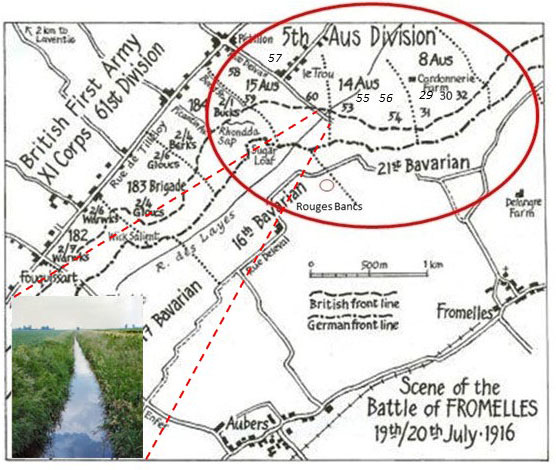
The overall plan, as part of campaign in the Somme, was to use brigades from the Australian Fifth Division to conduct a diversionary assault on the German trenches at Fromelles. The 32nd Battalion’s position was on the extreme left flank, with only 100 metres of No Man’s Land to get to the German trenches. As they advanced, they were to link up with the 31st Battalion on their right. However, their position made the job more difficult, as not only did they have to protect themselves while advancing, but they also had to block off the Germans on their left, to stop them from coming around behind them. D Company’s Lieutenant Sam Mills’ letters home were optimistic for the coming battle:
“We are not doing much work now, just enough to keep us fit—mostly route marching and helmet drill. We have our gas helmets and steel helmets, so we are prepared for anything. They are both very good, so a man is pretty safe.”
On the 17th they were reconnoitring the trenches and cutting passages through the barbed wire, preparing for an attack, but it was delayed due to the weather. On the morning of the 18th, A Company and C Company went into the trenches to relieve B and D Companies, who rejoined the next day. Sergeant Frederick Stolz, who was later commissioned, remembered the composed attitude of the young soldiers around him before the advance:
“The fellows were wonderfully cool and not during the whole time did I see anyone get excited or do anything silly, and such a lot were only young boys of between 18 to 20.”
The Zero Hour for advancing from their front-line trenches was to be 5.45 PM, but the Germans knew this attack was coming and were well-prepared. They opened a massive artillery bombardment on the Australians at 5.15 PM, causing chaos and many casualties. The plan was for C and A Companies to move out first, followed by B and D Companies. Instead of charging immediately, the first two waves moved into No Man’s Land and lay down, waiting for the British artillery bombardment to lift. At 6.00 PM, the barrage lifted and the order came to advance.
The 32nd Battalion rushed towards the German trenches under devastating machine gun and rifle fire from the front and left flank. Fred advanced with A Company in the second wave. Fred was aware of the gravity of the situation he was in and he described the opening moments of the attack in a letter to his father (as written by the newspaper):
“He felt, before he was wounded, that he was going to “get it”…but he did not know where it would catch him.”
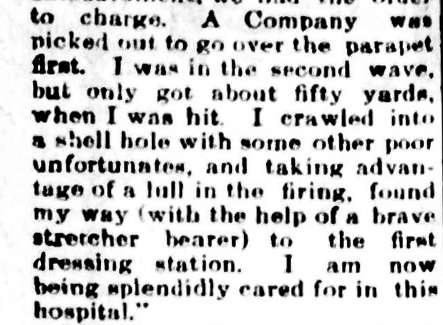
“A Company was picked out to go over the parapet first. I was in the second wave, but only got about fifty yards, when I was hit.”
He was struck by a bullet at the front of his right shoulder and it knocked him to the ground. His rifle went in one direction and his headgear in another, leaving him dazed between them. He later said that the pain was not initially intense and that the impact felt as though he had been struck with a blunt instrument. The bullet entered through a small wound beneath his right collarbone, passed through his shoulder and emerged through a larger wound beneath his right shoulder blade. His wartime letter described it as a machine gun bullet, while a later newspaper account called it a descending rifle bullet.
Fred crawled into a shell hole where several other wounded men had gathered. It took some time for him to understand what had happened. He could not lift his right hand, and the feeling in his shoulder indicated where he had been wounded. When the firing temporarily eased, Fred attempted to make his way back. With the assistance of a stretcher bearer, whom he described as “brave”, he reached the first dressing station.
While Fred was being removed from the battlefield, the surviving men of the 32nd Battalion continued their advance. Despite the heavy fire, they succeeded in capturing the first German trench system by 6.30 PM. Throughout the night, fighting continued as the Australians pressed into the second line. The trenches were flooded and waist deep in water, making movement and defence extremely difficult. Private William Ludemann later recalled - “They flooded it and the chaps were up to their waists in water all night.”
Source - DIGGER 59, June 2017. “Lieutenant Frederick Carl Stolz, 32nd Battalion.”
The situation rapidly deteriorated. As the 14th and 15th Brigades on the right failed to gain or hold ground, the 8th Brigade became dangerously isolated. Ammunition and grenades were running low. Enfilading machine gun fire from the German strongpoint at Delangre Farm swept the captured trenches. The 32nd Battalion was also subjected to shellfire from both German and British artillery. At 4.00 AM on 20 July, the Germans launched a counterattack from the Australian left. The rear trench line, stripped of defenders to reinforce the forward positions, had been left almost empty. German forces exploited the gap and began moving behind the 32nd Battalion. By 5.30 AM, German bombing parties were attacking both flanks in force. The 31st Battalion War Diary, whose men were fighting beside the 32nd Battalion on the flank, recorded the chaos of the withdrawal:
“The enemy swarmed in and the retirement across No Mans’ Land resembled shambles, the enemy artillery and machine guns doing deadly damage.”
Many men were trapped or cut off in the German trenches. Some attempted to hold their positions while others tried to return across No Man’s Land under fire. The final impact on the 32nd Battalion was devastating. 225 soldiers were killed or died from wounds sustained at Fromelles, of whom 166 were unidentified. Lieutenant Sam Mills survived the battle. In a letter home he recalled the courage of the men as they went into the attack:
“They came over the parapet like racehorses……… However, a man could ask nothing better, if he had to go, than to go in a charge like that, and they certainly did their job like heroes."
The losses reverberated across South Australia and Western Australia. Families and communities lost brothers, sons, husbands, friends, workmates and sporting teammates in a single night. Many of the battalion’s dead were never recovered from the battlefield. Some were buried by German troops in mass graves behind their lines at Pheasant Wood. Fred survived the battle, but the damage caused by the bullet would profoundly affect the use of his right arm. His cousin Edgar Charles Holmes, serving nearby with the 59th Battalion, was killed in action that same evening. Edgar’s body was never recovered, and he has no known grave.
After the Battle
Fred was taken from the battlefield to a dressing station before being transferred through a succession of hospitals in France and England. He later recalled that after being wounded, he knew nothing more until he found himself in a hospital in Yorkshire. The bullet had severely damaged the brachial plexus, the network of nerves controlling movement and sensation in the shoulder, arm and hand. Medical examinations recorded wasting of the muscles in Fred’s right arm, particularly the biceps, and impairment of the muscles controlling his wrist and fingers.
He had almost completely lost the use of his right hand, wrist and forearm. Surgery was performed in an attempt to repair the damaged nerves and muscles. Fred passed through five hospitals, the last being the Victoria Hospital at Keighley in Yorkshire, where he remained for several months. Writing to his father from Keighley, Fred remained hopeful about his recovery - “I am now in Victoria Hospital at Keighley, Yorkshire, England. My trouble is a bullet from a machine gun in the right shoulder. The doctor has hopes for a speedy recovery.”
He reassured his family that he was being “splendidly cared for” in the hospital.
Source - ‘The Great Somme Battle’, The Casterton News and the Merino and Sandford Record, 18 September 1916, p. 4. http//nla.gov.au/nla.news-article74487045
Once considered well enough to travel, Fred left England for Australia from Plymouth on 13 February 1917. He arrived back in his hometown of Casterton by the Penola coach on 18 April and was welcomed outside the Mechanics Hall. Fred was driven home in Mrs Shipham’s motor car, a local shop owner and war effort supporter, accompanied by his parents and the Glenelg Shire president, Councillor A. Mitchell. As the car arrived, the local band played selections from “Auld Lang Syne”, “Home, Sweet Home” and the National Anthem. Councillor Mitchell formally welcomed Fred home.
His father thanked the gathering and said that he and the entire family were pleased to see Fred back. A representative of the band described Fred as a splendid player whose absence had been keenly felt. There was concern that the injury to his arm might prevent him from playing the trombone again, but those present continued to hope for his recovery. A week later, Fred travelled by coach from Casterton to Mount Gambier, arriving on Wednesday afternoon, 25 April. The following evening, the Mount Gambier Vice-Regal Band held a welcome-home gathering for him in its band room. Before enlisting, Fred had been a valued trombone player and a regular member of the band.
The chairman praised his bravery and patriotism and expressed the hope that his wound would soon heal. The assembled bandsmen then sang “For He’s a Jolly Good Fellow”. In responding, Fred spoke about his six months in Egypt, his transfer to France and the short period he had spent in the trenches before being shot. At that time, his right arm remained paralysed. Fred was discharged from the AIF as medically unfit on 12 October 1917. With hospital treatment, the paralysis gradually improved, although his right hand remained contracted and partly unusable.
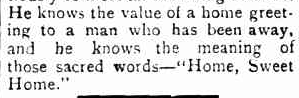
Despite this lasting disability, Fred was able to resume playing the tenor trombone. Unlike a cornet, the trombone required little finger movement, allowing him to play as well as he had before the war. By April 1918, he was reported to be in good health and cheerful. He remained closely involved with the band and regularly joined its members in welcoming other returned soldiers home. Having experienced such a welcome himself, Fred understood the importance of a homecoming and the meaning that “Home, Sweet Home” held for a soldier returning from war.
Family at War
Fred was one of several members of the wider Holmes family who served during the First World War. His younger brother Arthur Leonard (“Len”) Holmes (4059) and their first cousin Edgar Charles Holmes (4115) also enlisted in the AIF.
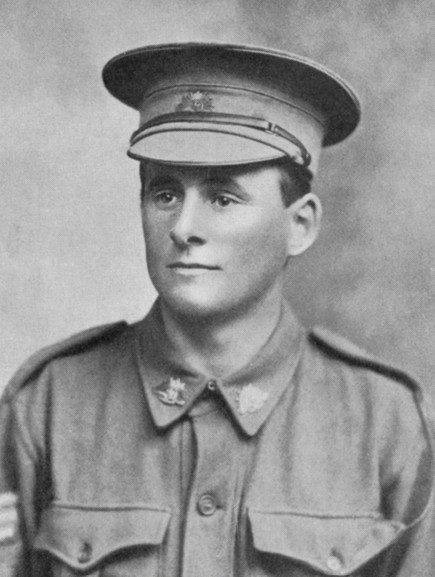
Len Holmes was born at Sandford in 1889. Before the war, he worked as a bodymaker (building coaches) and, like Fred, was involved in the musical life of Mount Gambier. Len was a member of the Mount Gambier Town Band and also played with the Mount Gambier Orchestra. Like a good number of soldiers, between enlistment and embarkation Len married, Alice Edith Osborne, in 1916. He embarked with the 10th Reinforcements of the 29th Battalion on 21 October 1916 from Melbourne, Victoria, on the HMAT A16 Port Melbourne.
While serving on the Western Front, Len was wounded by gas. He died of his wounds in France on 13 June 1918, leaving Alice a widow. He was buried in Crouy British Cemetery at Crouy-sur-Somme, France, in Plot IV, Row E, Grave 25. When reporting Len’s death, the press described him as the brother of Private F. Holmes, “who recently returned invalided from the war”. Fred’s first cousin, Edgar, became a schoolteacher and university student before enlisting in July 1915. He served with the 59th Battalion and entered the Battle of Fromelles on 19 July 1916, the same evening that Fred advanced with the 32nd Battalion. Edgar was killed in action, aged 25. His body was never recovered, and he has no known grave. He is commemorated at VC Corner Australian Cemetery Memorial, Fromelles. A heavy toll for one family – one son lost, one son with a permantly disabling wound and a cousin lost, never to be found.
After the War
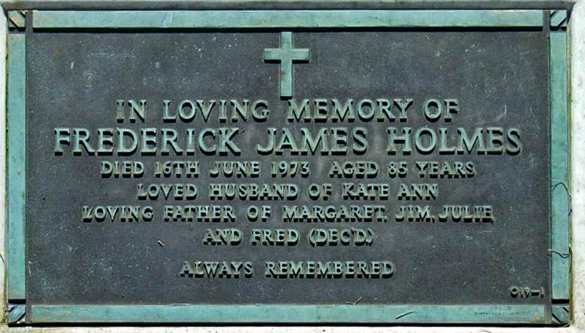
Fred made his postwar home at Mount Gambier. On 4 April 1923, he married Katherine Ann Keegan at the Deanery in Mount Gambier. They had four children:
- Margaret Noel
- Frederick Herbert
- James Harman “Jim”
- Julie Ann
Fred returned to his former occupation as a telegraph linesman and was recorded working in that profession at Mount Gambier in 1941. Frederick James Holmes died at Mount Gambier on 16 June 1973, aged 85. He was buried at Carinya Gardens Cemetery, Mount Gambier. Katherine survived him by five years and died in 1978.
Lest we forget.
The Fromelles Association would love to hear from you

Contacts
(Contact: carla@fromelles.info or geoffrey@fromelles.info).
(Contact: army.uwc@defence.gov.au or phone 1800 019 090).
Donations
If you are able, please contribute to the upkeep of this resource.
(Contact: bill@fromelles.info ).