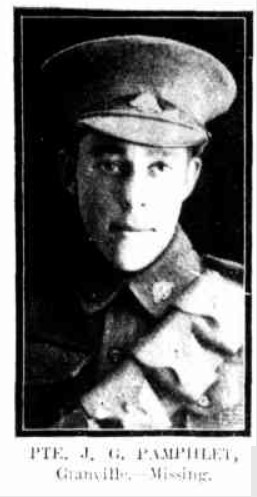
James George PAMPHLET
Eyes hazel, Hair dark, Complexion fair
James George Pamphlet – Granville’s Young Railway Morse Operator
With thanks to John Olley for help in writing this story
Can you help find James?
James George Pamphlet’s body was never found after the Battle of Fromelles, and there are no records of his burial.
A mass grave was found in 2008 at Fromelles, a grave the Germans dug for 250 Australian soldiers they recovered after the battle. As of 2026, 181 of these soldiers have been able to be identified via DNA testing.
James may be among these remaining unidentified men. There is still a chance to identify him — but we need help. We welcome all branches of his family to come forward to donate DNA to help with his identification, especially those with roots in London, ENG
See the DNA box at the end of the story for what we do know about his family.
If you know anything of contacts for James, please contact the Fromelles Association.
Please contact the Fromelles Association of Australia to find out more.
Early Life
REMEMBERING A FORGOTTEN SOLDIER AND A GRIEVING WOMAN
Family historian John Olley only discovered James's story decades later after a previously unknown cousin returned James's Memorial Plaque ("Dead Man's Penny") to the family. His research uncovered the intertwined stories of James and his sister Emma, preserving a family history that had almost been forgotten.
James George Pamphlet was born on 5 May 1898 at the East Dulwich Workhouse, Camberwell, Surrey, England. His mother was Eliza Pamphlet (1867–1911), however no father was recorded on his birth certificate. James grew up in the poor working-class district around Blue Anchor Lane and “The Orchard” at Peckham in south London. Census records show the Pamphlet family living in crowded conditions, with his mother working as a laundress, charwoman, general servant, and later as a feather picker to support the family.
Children of Eliza Pamphlet:
- Amy Charlottem known as Emma (1888–1955) married William Allison
- James George (1898–1916)
- Alice Eliza (1904–c1904 )
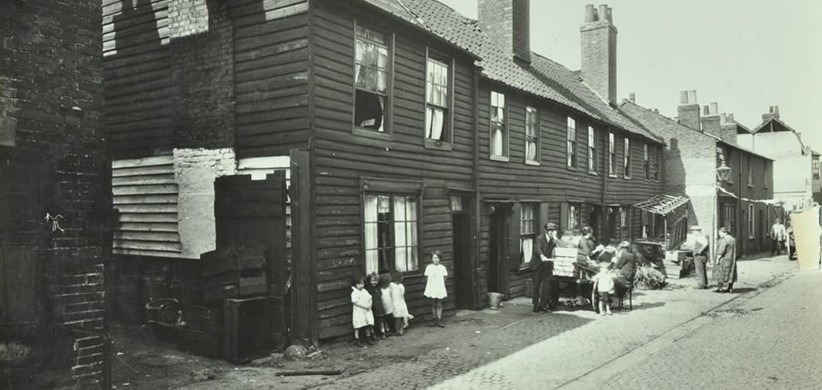
Despite the difficult circumstances, the wider Pamphlet family remained closely connected across several generations living in the same neighbourhood. In March 1907, Eliza was admitted to the Epileptic Colony at Epsom, Surrey, suffering from chronic illness. She died there on 8 September 1911, aged 44. At that stage both Emma and James were continuing living with Pamphlet grandparents at Blue Anchor Lane. Following Eliza’s death, James’s older sister Emma, emigrated to New South Wales with relatives seeking a new beginning.
Given the family poverty, it is not surprising that Emma welcomed the opportunity to migrate to New South Wales. Alice Mary Pamphlet, Eliza’s younger sister had married Albert Tookey in 1894 and by 1911 the Tookeys were preparing to migrate. Emma may well have been included in the planning from the beginning, especially with her mother’s health and then death, and her possible friendship with William Allison.
Albert (fitter, age 42) went ahead, leaving London on the “Geelong” 27 July 1911, arriving Sydney 18 September. Relevant to Emma’s future is the next person on the passenger list, “Wm. Allison, engineer, 23”. Alice and the children followed nine months later, leaving London 23 April 1912 in the “Zealandia”. The shipping list includes all of Alice and Albert’s children named in the 1901 and 1911 censuses, the eldest Albert now 16 – but heading all the children is “Emma, daughter, 20”. It is apparent that with Eliza’s death it was easy to link Emma with the Tookeys.
New Year’s Day 1913 was marked by Emma’s marriage to William Ewart Gladstone Allison in St Mark’s Church, Granville. Alice and Albert Tookey were the witnesses. Surprise - the marriage certificate has Emma’s parents as “James Pamphlet (deceased)” and “Eliza Brown (deceased)”! She has given Eliza her mother’s maiden name, but why James?
Around this time, on 2 April, Emma’s 15-year old brother, James George departed London on the “Themistocles”, arriving Sydney on 18 May. (Coincidentally, my mother Dorothy’s birth was on his sixteenth birthday.) His occupation was given as “errand boy”. The future must have looked bright for the family, contrasting greatly to the life all had experienced in London. William’s trade was in demand, the family were healthy and housing was spacious. There were many possibilities for James.
Presumably James would have lived with his sister and family in Granville. Emma’s address with her husband William and daughter Dorothy b 1914, was ‘Aliston’ Woodville Rd, Granville, in 1915. The future must have seemed bright for the young English migrant. Soon after arriving, James joined the NSW Government Railways. He first worked as a switcher in the Electrical Branch at Sydney from 29 October 1914. By July 1915 he was employed as a probationer at Clyde and later described his occupation as “Morse Operator for Railways”.
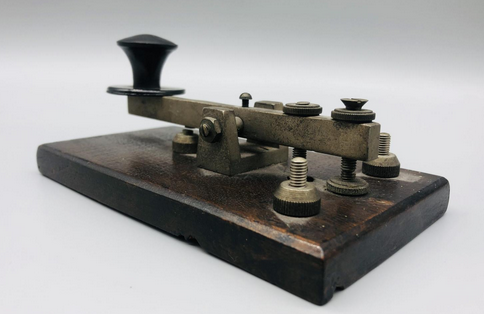
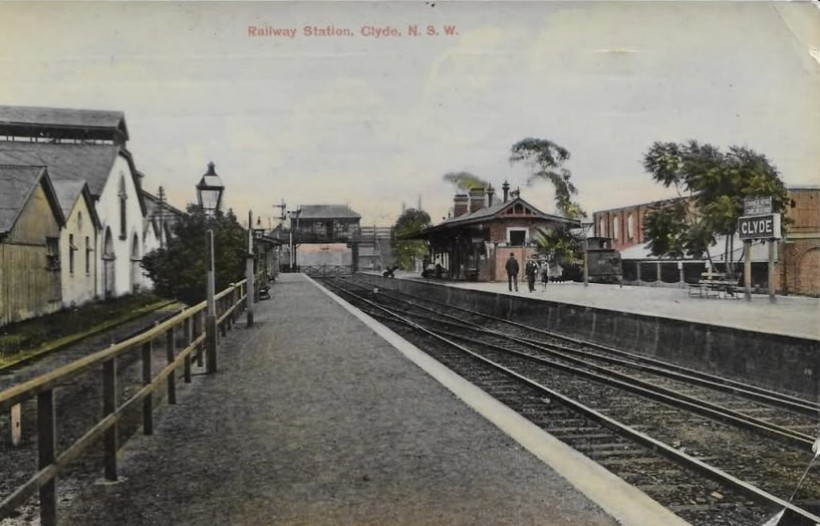
When war spread across Europe, James was still only a teenager. Like many young men eager to serve, he overstated his age when he enlisted in the Australian Imperial Force in 1915. Although he claimed to be 18 years and 4 months old when he enlisted in the Australian Imperial Force, records indicate James was actually only 17 years old. His NOK address at one stage was his aunt, c/o Mrs Tookey, William St Granville, this happened when Emma returned to England with her husband William Allison, who had been recruited for war-related munitions and engineering work.
Off to War
James enlisted in the Australian Imperial Force at Holsworthy, New South Wales, on 5 October 1915. He was initially allotted to the 9th Reinforcements of the 20th Battalion and embarked from Sydney aboard HMAT A54 Runic on 20 January 1916.
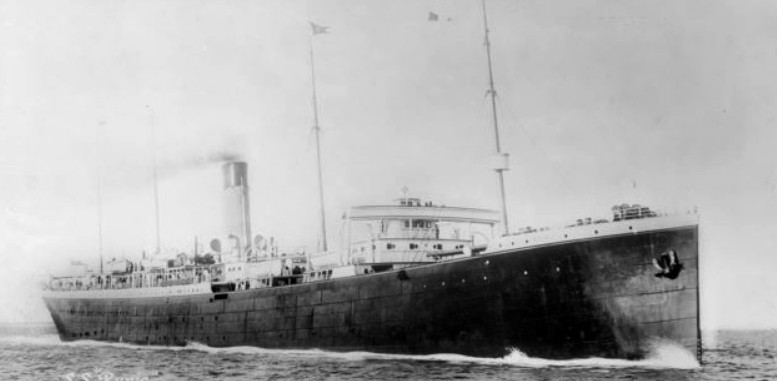

After arriving at Alexandria on 26 February 1916, James entered the major reorganisation of the AIF following the Gallipoli campaign. On 3 April 1916 he was transferred to the newly formed 56th Battalion at Zeitoun before transferring again to the 59th Battalion at Ferry Post on 18 May 1916. The 59th Battalion was raised in Egypt during the expansion of the AIF. Half of its men were experienced Gallipoli veterans from the 7th Battalion, while the remainder were reinforcements newly arrived from Australia. The battalion became part of the 15th Brigade of the 5th Australian Division. Training in Egypt was demanding. The men undertook route marches in intense desert heat, musketry training, trench exercises, and canal defence duties along the Suez Canal while preparing for service on the Western Front.
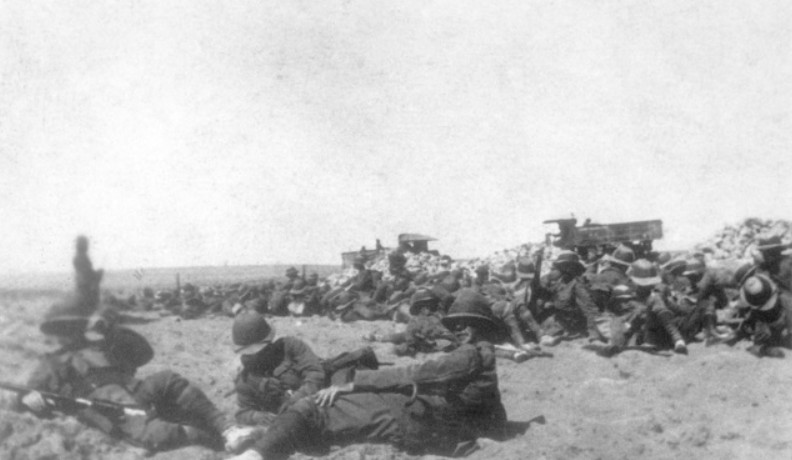
C.E.W. Bean later described the vast camps in Egypt and the challenge of turning the newly expanded divisions into effective fighting formations. James trained at places such as Zeitoun, Moascar, and Ferry Post during this period of preparation.
Source: Bean, C.E.W. The Official History of Australia in the War of 1914–1918, Vol III: The A.I.F. in France: 1916
On 18 June 1916, James embarked aboard Kifaune Castle from Alexandria for France. The battalion disembarked at Marseilles on 29 June before travelling north by crowded troop trains towards the Fleurbaix sector near Fromelles. For many of the reinforcements, including James, the trenches around Fleurbaix were their first experience of front-line warfare. The contrast with Egypt was immense — from desert heat and open camps to muddy trenches, shellfire, sniping, and the constant tension of the Western Front.
The Battle of Fromelles
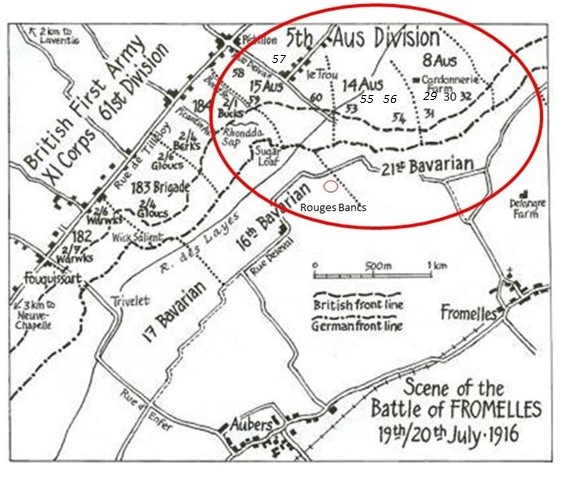
At 4.00pm on 18 July 1916, the 59th Battalion entered the front-line trenches, relieving the 57th. The trenches faced the Sugarloaf salient, where the German positions were especially strong. At 5.45pm on 19 July, the battalion launched its assault in four waves at five-minute intervals, with A and B Companies leading, followed by C and D. The attack took place in broad daylight, across flat ground under full enemy observation. The German defences responded immediately. Heavy rifle and machine-gun fire swept the field, particularly from the Sugarloaf strongpoint on the right. War diary messages sent back during the attack revealed the scale of the resistance:
Every man who rises is shot down.
“Cannot get on — the trenches are full of the enemy.”
They were enfiladed by machine guns in the Sugar Loaf and melted away.
The battalion’s commanding officer was incapacitated by shell shock early in the attack. His second-in-command, Major Herbert T.C. Layh, assumed command but was later wounded after being blown into a water-filled shell hole. The British 184th Brigade, positioned to the right of the 59th, faced the same fire and halted their advance by 8.00pm. However, poor communication across the line meant the Australians continued their attack without support from their exposed flank. Some parties of the 59th reached the German parapet and even captured prisoners, but without reinforcement or reliable contact with adjacent units, they were forced to withdraw or dig in under fire.
At 11.15pm, a message acknowledged that the 59th was attempting to consolidate a position 100 yards forward of the German line. However, the terrain was untenable. Early on 20 July, the brigade ordered a general withdrawal. By 8.00am, only four officers and ninety other ranks had reported in from the entire battalion.
Sergeant James Aikins later summed up the battle:
" I say if Hell is any worse I do not care to go there."
Sergeant George Martindale, one of the few surviving members of the battalion, later recalled:
“We went into action… a regiment at full strength – ninety seven answered their names – not one in ten.”
The brigade’s operational report, signed by Brigadier Elliott, described the outcome bluntly:
“The attack was made in broad daylight… The effect of the fire was devastating and order was lost.”
Initial figures recorded 26 men killed or died of wounds, 394 wounded, and 274 missing — a total of 694 casualties. Later analysis confirmed that 338 men of the 59th were killed in action or died of wounds. Over 200 wounded were recovered from no-man’s-land the following day. More than 240 of the dead were never identified. One soldier from the 59th was confirmed to be among the remains recovered from the mass grave at Pheasant Wood — where German forces had buried 250 Australian and British soldiers after the battle. As of 2025, 181 of those men have been positively identified through DNA matching.
When Charles Bean, Australia’s official war historian, visited the Fromelles battlefield more than two years later, he observed torn uniforms, Australian kit, and bones still lying on the ground — silent evidence of the scale of the disaster. The 59th Battalion was withdrawn from the line and rebuilt over the following months, but for those who survived, the memory of Fromelles would never fade.
After the Battle
James was reported missing after the Battle of Fromelles on 19 July 1916. Like hundreds of Australian families, his relatives endured months of uncertainty while the fate of the missing was investigated. For more than a year no definite information could be found. Finally, at a Court of Enquiry held on 29 August 1917, James was officially declared to have been killed in action on the night of the battle. Despite extensive post-war searches, his grave could not be located or identified. James became one of the many Australian soldiers from Fromelles with no known resting place.
His sister, Mrs Emma Allison, spent years trying to learn more about what had happened to her younger brother. Much of the information she received about James came slowly, and often incompletely. In July 1921, Base Records informed Emma that “We have been unable to obtain any trace of the last resting place of your brother.”. Emma later replied that while she had been living in England during the war she had received very little information, adding:
A friend of mine told me his battalion was fighting near the 59th Batt. on July 19, 1916 near Pozieres, France and the enemy let the dam on them and a lot were drowned. Perhaps that is why you have had difficulty in tracing.
The confusion and rumours reflected how little many families truly understood about the chaos of Fromelles. Another letter written by Emma in October 1921 stated:
I am his only relation alive no half sisters or brothers or any other nearer relation than myself.
James is commemorated at:
- VC Corner Australian Cemetery and Memorial, Fromelles, France
- Australian War Memorial Roll of Honour, Canberra
- Granville War Memorial, New South Wales
- Haymarket NSW Government Railway and Tramway Honour Board
- V.C. Corner Australian Cemetery Memorial, Fromelles
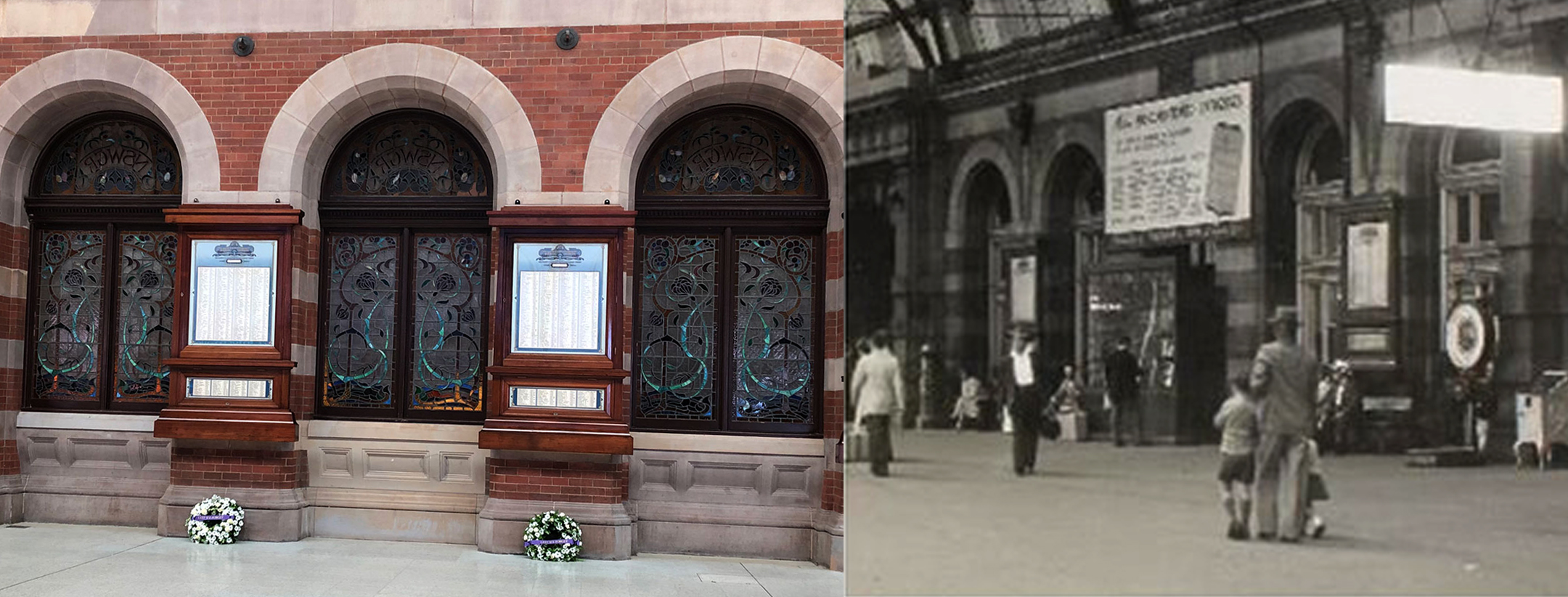
Quite a number of soldiers killed at Fromelles had worked for the New South Wales Tramways and Railways, reflecting the strong connection between the transport workforce and the AIF during the First World War. These included Ronald Arthur Jones, George Henry Lucre, John William Nicholl, Harry Carlin, William Beith, Walter Ernest Potter, and James George Pamphlet — young railway and tramway employees who left civilian service to enlist and never returned home.
Family at War
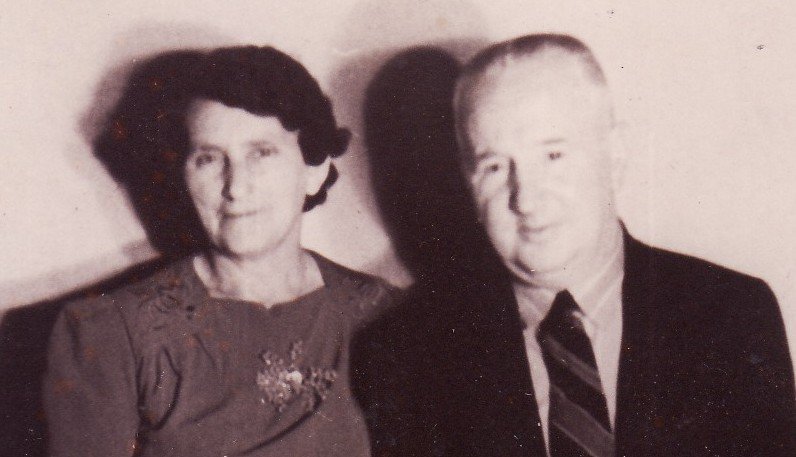
Emma continued to correspond with the army across the years. On return to Australia after the war, the Allison family had three more children, William, Jack and Jeanne. The Allison family would suffer another devastating wartime loss during the Second World War.
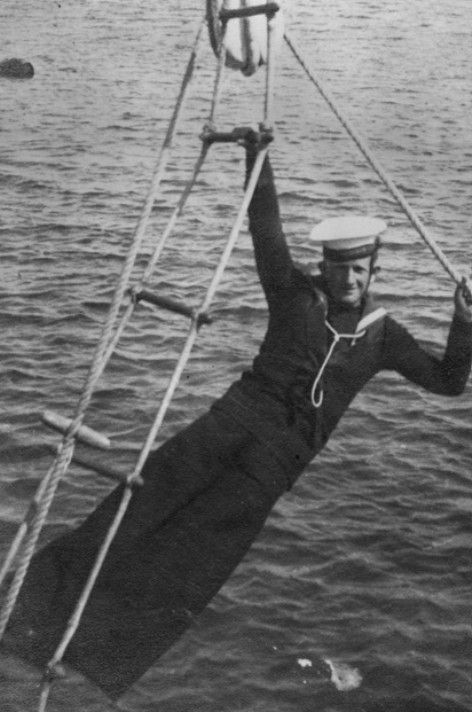
Emma’s son, John “Jack” Albert Curtis Allison enlisted in the Royal Australian Navy on 9 July 1940. Born in Sydney on 13 January 1922, Jack grew up in Granville, New South Wales, only a few years after his uncle James George Pamphlet had been declared missing at Fromelles. Jack served as an Able Seaman aboard HMAS Sydney II. On 20 November 1941, the cruiser was lost during its engagement with the German raider Kormoran in the Indian Ocean.
All 645 men aboard were lost. Like his uncle James, Jack was only 19 years old when he died and for many years had no known grave. He is commemorated on the Plymouth Naval Memorial in England, the Australian War Memorial Roll of Honour, the Carnarvon HMAS Sydney II Memorial, and the Granville Honour Roll.
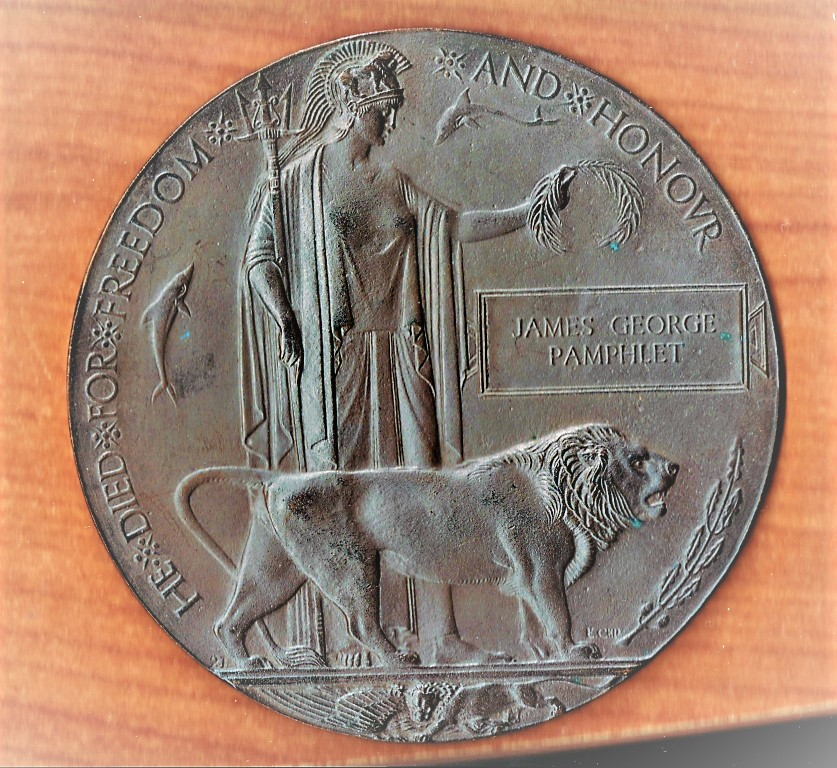
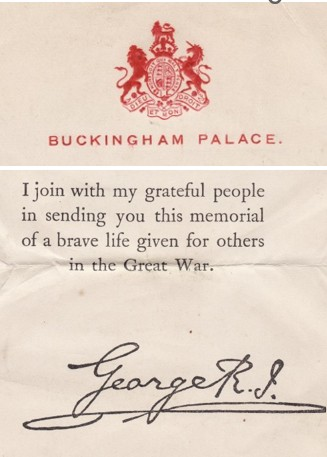
In 1922, James’s Memorial Plaque — commonly known as the “Dead Man’s Penny” — and the accompanying Buckingham Palace letter signed by King George V were mistakenly sent to relatives in England instead of to Emma in Granville. The plaque remained there for decades before eventually being returned to the family in Australia many years later.
Reflection from John Olley
I grew up knowing that my mother’s brother Jack had been on HMAS Sydney II, but never heard of her uncle James. I subsequently found that she and her sister had a vague memory of their mother’s brother killed in World War I—or was it another close relative? None of us knew that James Pamphlet was a member of the A.I.F., killed in the first hours of the battle of Fromelles, France. Filling in the gaps began in 2001 when my mother’s sister, Jeanne Bowman (née Allison) in NSW was contacted by a hitherto unknown cousin on her father’s side. Surprisingly he had a “Dead Man’s Penny” inscribed with the name James George Pamphlet, her uncle, my grandmother’s brother. Migrating from England to NSW after retiring, the cousin had been researching family history and tracked down Jeanne. He thought it appropriate to pass the plaque on to her as James’s closest living relative.
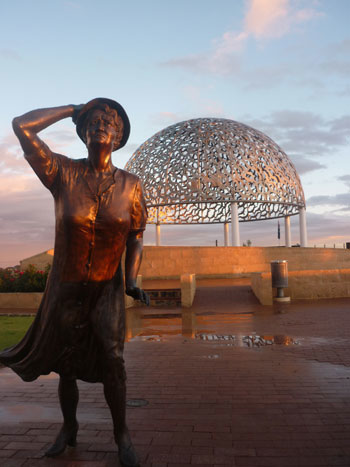
I too had been researching the Pamphlet and Allison families, so learning of James and obtaining his World War I service records was a boon. This is also the story of my mother’s mother, including her movements during the war and afterwards. The stories of sister and brother are intertwined.” ‘A personally moving experience was to visit the HMAS Sydney II Memorial in Geraldton, WA with its statue of the woman looking to sea, wondering. The image was uncannily like my grandmother, Emma was always looking, whether to fill in the uncertainties of the death of her brother or the mystery surrounding her son, both “missing” before the age of 20, both without recoverable remains. Brother and son are remembered by name in war memorials, now a grieving sister/mother has a representative statue.
"War has long term costs for families who live with the uncertainties of the loss of loved ones.’
Finding James
James Pamphlet’s body was never recovered after the Battle of Fromelles, and he has no known grave. Following the battle, records noted that he was “Presumed to be Buried In No Man’s Land approx 5J90 43 to 5K02.5.1 Sheet Hazebrouck 5A.” Like many soldiers of the 59th Battalion, James may have been among the men buried by German forces in mass graves near Pheasant Wood after the battle. In 2008, one of those graves was uncovered at Pheasant Wood near Fromelles. It contained the remains of 250 Australian and British soldiers recovered and buried by the Germans shortly after the battle. As of 2026, 181 of those soldiers have now been positively identified through DNA matching and historical research.
James was born in England and had only a small surviving family network in Australia, centred around his sister Amy Charlotte “Emma” Allison.
Descendants connected to the Pamphlet, Brown, Allison, or related family lines may still be able to assist ongoing identification efforts. Although more than a century has passed since the battle, there is still hope that James may one day be identified and formally laid to rest under his own name.
DNA samples are being sought for family connections to
| Soldier | James George Pamphlet (1898–1916) |
| Parents | Father unknown & Eliza Pamphlet (1867–1911) |
| Siblings | Amy Charlotte "Emma" Pamphlet / Allison (1888–1955) | |||
| Alice Eliza Pamphlet (1904– ) |
| Maternal Grandparents | William Charles Pamphlet (1840–1917) & Elizabeth Maria Brown (1840–1917) |
Seeking DNA Donors

Contacts
(Contact: carla@fromelles.info or geoffrey@fromelles.info).
(Contact: army.uwc@defence.gov.au or phone 1800 019 090).
Donations
If you are able, please contribute to the upkeep of this resource.
(Contact: bill@fromelles.info ).